Before choosing Hanoi, Ninh Binh, Hoi An, the Mekong Delta, or another destination, ask yourself one simple question: What would you most like to experience during your 2 weeks in Vietnam?
Vietnam offers an impressive diversity of experiences. You may be interested in history and heritage, looking for spectacular natural landscapes, eager to explore Vietnamese cuisine, curious about local life, keen on hiking, or simply hoping to balance sightseeing with time to relax. The challenge, therefore, is not finding enough things to do, but choosing between the many possibilities.

When planning a trip to Vietnam, start by identifying two or three main priorities. A culture-focused trip will require a different itinerary from one centered on nature and hiking. Likewise, a couple who wants to leave plenty of time to relax together will not need the same pace as a photography enthusiast who is happy to set off early every morning. This first step helps you avoid a common mistake: choosing the most famous destinations one by one and then trying to squeeze them all into the 14 days available.
-> Why should you choose your destinations before booking?
Because every destination you add involves much more than simply adding another line to your itinerary. It may mean changing hotels, arranging a transfer, allowing time for preparation, taking another journey, and sometimes spending an additional day adjusting to a new environment.
A Vietnam itinerary 2 weeks can therefore look impressively full on paper while leaving very little time to actually enjoy each place. The goal is not to limit your trip to just a few destinations, but to make sure that every stop has a clear purpose and genuinely adds value to your journey.
One of the best ways to organize 2 weeks in Vietnam is to avoid thinking of those days as 14 full days of sightseeing.
If your trip includes international flights to Vietnam, your arrival and departure already take up part of your stay. You also need to factor in airport transfers, domestic flights if any, overland journeys, and changes of accommodation. This becomes particularly important when you plan to visit several regions during the same trip.
Distinguish between trip length and actual sightseeing time
A 2-week trip to Vietnam may include a late arrival in Hanoi, a full day spent on a long transfer, and an early departure from another city. The number of days shown on your booking therefore does not necessarily correspond to the number of full days actually available for sightseeing.

Before choosing your destinations, work out your usable travel time instead:
Total trip duration - arrival and departure time - major transfers = actual time available for exploring.
When planning 2 weeks in Vietnam, this simple approach can completely change the way you build your itinerary. It also helps explain why adding another destination does not always make a trip more complete. If reaching a new place requires a full day of travel for only a few hours of sightseeing, it may ultimately throw the entire itinerary off balance.
Once you have defined your priorities, avoid choosing every city straight away. Start by deciding on the overall structure of your trip.
For example, you could focus mainly on northern Vietnam, combine two complementary regions, or travel through several parts of the country using transport suited to longer distances. When planning a 2-week trip to Vietnam, this approach is more effective than simply starting with a list of must-see places.
This approach can suit travelers who want to focus on landscapes, traditions, mountains, villages, and local life. It allows you to spend more time at each destination while limiting long-distance travel.
Organize 2 weeks in Vietnam, this route offers a variety of experiences without trying to cover the entire country. It can combine a major city, natural landscapes, cultural sites, and a more peaceful destination.

A multi-region itinerary provides greater variety, but it requires more careful transport planning. When distances become significant, domestic flights can help save valuable time that can instead be spent exploring. The key is therefore to establish a coherent geographical route before adding too many destinations.
For a first trip to Vietnam, it is generally better not to try to cover every region of the country. Depending on your preferred pace, two major regions can already offer a rich variety of experiences. An itinerary covering northern, central, and southern Vietnam, meanwhile, requires more careful consideration of travel times.
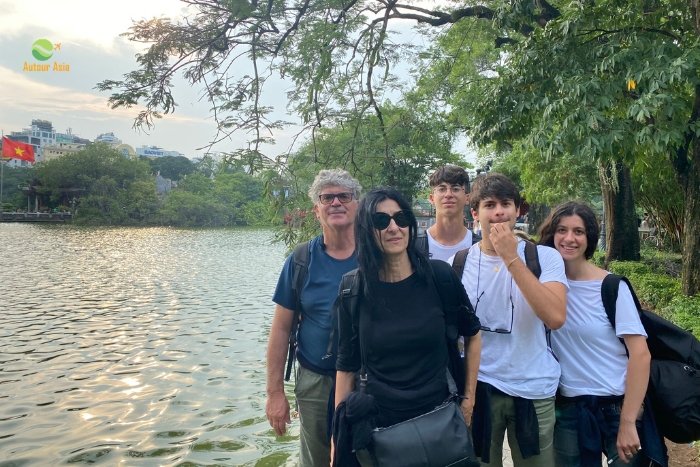
How to organize a 2-week trip to Vietnam without overloading your itinerary? The goal is not necessarily to limit the number of destinations, but to make sure that every new region offers a genuinely different experience. For example, combining a major city, a natural area, and a few days of relaxation can create a more balanced trip than moving from one city to another with similar experiences.
When your list of destinations for a Vietnam itinerary 2 weeks becomes too long, divide them into three categories.
These are the places that directly match your priorities. If you are particularly interested in karst landscapes, for example, a nature destination can become a central part of your itinerary rather than simply an excursion squeezed between two cities.
These destinations add a different experience and fit easily into your route. Keep them if their location and the time required to visit them work well with the rest of your itinerary.

These are places that appeal to you but are not essential to the overall coherence of your trip. Add them only if the transport connections, season, and pace of the journey allow it. This approach is particularly useful if you have a long list of places saved on Google Maps or collected from travel guides.
When planning a Vietnam 2-week trip, instead of asking yourself, “How can I fit everything in?”, ask a more useful question: “Which destinations would genuinely make my trip better?” The difference may seem small, but it can help you create a much more balanced and enjoyable itinerary.
When organizing 2 weeks in Vietnam, it is easy to underestimate the time spent getting from one place to another. A map may make two destinations look close, while the actual journey involves winding roads, a private transfer, a distant train station, or a trip to and from an airport.
That is why a good itinerary should not be built around destinations alone, but also around the time needed to travel between them. Every change of region comes at a cost
Moving from one region to another often means:

Even when the journey itself is comfortable, this succession of steps can take up a significant part of your day. This is why two itineraries featuring exactly the same destinations can provide completely different experiences depending on the order in which they are arranged.
This is particularly important in Vietnam, where distances between major regions can be considerable. A journey that looks straightforward on a map may actually involve several stages: a transfer from your hotel, a trip to a train station or airport, waiting time, the main journey, and then another transfer to your accommodation.

Planning a trip to Vietnam, these travel times should therefore be taken into account from the very beginning. It is often more efficient to group destinations that are geographically close together rather than making repeated journeys between distant regions. This leaves more time for exploring and helps maintain a comfortable pace throughout your trip.
If your route can progress in one direction, you can generally avoid wasting time returning to a region you have already visited. This becomes even more important when your itinerary covers several distant regions. Think of your journey as a natural progression rather than a series of disconnected points.
Another key question when planning 2 weeks in Vietnam is how long to stay in each destination. There is no universal rule stating that every place deserves exactly two or three nights. The right amount of time depends on what you want to do there and how long it takes to reach it.
One night can make sense when a destination is mainly a stopover or when the main experience can be enjoyed within a large part of a single day. However, too many one-night stops can quickly make you feel as though you are constantly traveling and repacking your bags every morning.
For a 2-week Vietnam itinerary, two nights often allow you to have a full day dedicated to exploring after arrival. This can be particularly useful when you want to discover a destination without constantly changing hotels.

Some destinations deserve more time if you want to hike, enjoy the beach, experience local life, or simply slow down. For a 2-week trip to Vietnam as a couple or a family holiday with children, spending several consecutive nights in the same place can also make the journey considerably more comfortable.
The number of nights should therefore depend not only on how much there is to see, but also on how you want to travel. In practice, it is better to base your decisions on the time you actually have rather than applying the same rule to every destination.
When organizing a 2-week trip to Vietnam, a destination that requires several hours of travel may justify a longer stay, while an easily accessible place can sometimes be incorporated more easily into the itinerary.
In Vietnam, transport choices are not only about price. Plan a Vietnam 2-week trip, you should also consider how much time each option saves or takes.
Flying is often useful for connecting distant regions quickly, provided you factor in travel to and from the airport, check-in, and waiting time. Trains can be a good option when the journey itself is part of the experience and you prefer a more leisurely way to travel. A private car, meanwhile, is particularly convenient when you want to visit several sites during the same journey.
When organizing 2 weeks in Vietnam, there is therefore rarely any need to rely on just one form of transport throughout the trip. You can combine flights, trains, and private cars depending on the distances involved and the experiences you are looking for.
The key is to find the right balance between travel time and time spent exploring. A longer journey can be worthwhile if it allows you to enjoy the scenery or make several stops along the way, while a domestic flight can free up several valuable hours for sightseeing.
When planning 2 weeks in Vietnam, the season should not be the only starting point for your itinerary, but it should be considered from the early stages of planning. The climate can vary considerably between northern, central, and southern Vietnam, which may affect how suitable certain destinations are during your travel dates.
Start by defining the type of experience you are looking for, then check whether the regions you are considering are suitable for your travel period. If one destination is less suitable for your dates, it may be easier to adjust that part of the itinerary rather than abandon your entire travel plan.
In other words, consider two questions together: “Where would I like to go?” and “Which region is best suited to my travel dates?”
Seasonality then becomes a useful tool for refining your Vietnam itinerary 2 weeks rather than a constraint that determines the entire trip on its own.
The two should always be considered together. For example, a traveler primarily interested in hiking will not necessarily choose the same regions as someone whose main priority is the beach. The season should therefore be assessed in relation to your travel plans, rather than considered in isolation.
-> Leave some free time in your schedule
A 2-week trip to Vietnam does not require every day to be planned down to the smallest detail. Leaving a few hours free gives you room to deal with unexpected changes, enjoy a spontaneous discovery, or simply rest between busy sightseeing days.
This flexibility is particularly useful when traveling with children, after physically demanding activities, or when changing regions frequently. An itinerary that looks perfect on paper can quickly become tiring in practice.
Leaving some space in your schedule deliberately makes the journey more flexible, comfortable, and enjoyable.
How to organize 2 weeks in Vietnam? Before booking your hotels, flights, and activities, take one final look at your itinerary and put it to the test.
1. Have I planned too many destinations? If you constantly feel the need to add another stop, your itinerary may already be too ambitious.
2. How many times will I have to repack my bags? The number of hotel changes is a good indicator of the actual pace of your trip.
3. How many days will I really have for sightseeing? Do not simply count the days on your calendar. Deduct long transfers and arrival or departure days.
4. Have I planned balanced days? A demanding hiking day followed by a long transfer can be far more exhausting than it initially appears.

5. Do my transport arrangements work with my activities? An early departure can affect an excursion planned for the previous day. The order of your activities should therefore take transport schedules into account.
6. Have I allowed enough time to enjoy each destination? If every day starts early and ends late, you may be trying to fit too many experiences into your trip.
7. If I remove one stop, will my trip actually be less interesting? This final question can be particularly revealing.
If removing a destination makes almost no difference to your overall experience, it may not be essential to your itinerary.
There is no single way to organize 2 weeks in Vietnam. The right balance depends above all on your priorities and preferred pace.
Depending on your interests, several itinerary structures are possible without trying to see everything.
Whatever your plans, start by defining the experience you are looking for, then make sure your destinations, travel times, and overall pace are compatible with the time you actually have.
-> When should you book the key elements of your trip?
Once you have defined the overall structure of your itinerary, you can move on to booking.
The elements that shape your route should generally be secured first: accommodation in your main destinations, cruises, domestic flights when necessary, and certain highly requested transport options or experiences.
However, not every activity needs to be booked several weeks in advance. Keeping some flexibility can be useful if you want to adjust your pace depending on how you feel during the trip.
A logical order is therefore:
priorities → trip structure → destinations → pace → transport → bookings → secondary activities
This is much more effective than booking a hotel simply because you like it and then trying to build your entire trip around that one reservation.
Organizing 2 weeks in Vietnam independently is entirely possible when your travel plans are relatively straightforward. However, planning becomes more complex when you want to combine several regions, different modes of transport, and very different types of experiences.
A customized Vietnam itinerary 2 weeks can be particularly useful when you have fixed travel dates, are traveling with children or older travelers, have specific accommodation preferences, have dietary requirements, or want to combine sightseeing, hiking, and relaxation.
In such cases, the value lies not simply in receiving a list of destinations. It is about making sure all the different elements of the trip work well together: schedules, distances, accommodation, transfers, activities, and daily pace.

At Autour Asia - your local travel agency in Vietnam this is also the foundation of how we design tailor-made journeys. The aim is to create a coherent itinerary based on each traveler's priorities, while taking into account distances, transport options, preferred pace, and the time of year. The value of personalized planning is therefore not simply about adding more destinations. It is about finding the right balance between the experiences you want and the time you actually have, so that every part of the journey fits naturally into the overall itinerary.
🔥 🔥 🔥 WANT TO EXPLORE VIETNAM IN A DIFFERENT WAY?
Autour Asia offers small-group tours of Vietnam (6 to 8 travelers/group) at a simply incredible price. Discover our four most unforgettable experiences, our travelers' favorites!
✔ 10 days in Vietnam from 999 USD/person
✔ 2 weeks in Vietnam from 1495 USD/person
✔ 15 days in Vietnam from 1590 USD/person
✔ 3 weeks in Vietnam from 2199 USD/person
➜ Each itinerary is carefully designed to let you experience the true essence of Vietnam, at your own pace and according to your travel dreams, with the price of Vietnam trip with Autour Asia that remains fair and transparent!
📞 Contact AUTOUR ASIA today!
🌐 Website: https://autourasia.com/
📧 Email: [email protected]
☎️ Hotline: +84 971 33 77 08
The key takeaway is that the best way to organize 2 weeks in Vietnam is not to start by trying to see everything. Begin by defining your priorities, calculate the time you actually have, choose a logical geographical route, and then select only the destinations that genuinely add value to your trip. Next, consider travel times, the number of nights in each destination, your transport options, and the season before confirming your bookings. A successful Vietnam itinerary 2 weeks is therefore not the one that includes the greatest number of destinations. It is the one where every stop has a purpose, every journey makes sense, and the pace leaves enough time to discover, experience, and enjoy. In Vietnam, knowing what not to add to your itinerary can sometimes be just as important as knowing what to visit.




Phan Thiet, a coastal city in Binh Thuan Province, is best known for Mui Ne, an internationally renowned seaside destination. With its beaches, fishing villages, and desert-like sand dunes, the region offers a diverse range of landscapes rarely found elsewhere in Southeast Asia. In November, temperatures remain pleasant for exploring the coast, although occasional showers are still possible. Visiting Phan Thiet Mui Ne in November requires a little preparation to make the most of your stay. This complete guide covers the weather, must-see attractions, transportation options, and practical tips to help you plan your trip to Vietnam in November.


Vietnam’s beaches are best enjoyed at different times of the year, depending on the region. From the turquoise waters of the South to the long stretches of white sand in the Central region and tropical islands, each area has its own climate patterns. To better understand when to visit Vietnam, it is important to consider the weather conditions in each destination. The best time to visit beaches in Vietnam depends on region you choose as well as the activities you have planned. The best time to swim in Vietnam also varies according to rainfall, water temperature and sea conditions. Understanding the Vietnam beach season helps you choose destinations that match your travel dates and enjoy the coastline in good conditions.
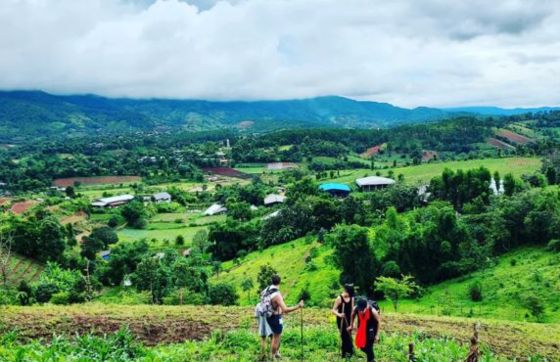

Discovering Thailand through its rice fields, plantations, and rural villages offers a different way to travel, far from traditional tourist circuits. But how can you choose the best agency for Thailand farm tours to enjoy authentic experiences with local communities? Several tour operators offer trips combining agriculture, gastronomy, and encounters with producers. Among them, Autour Asia is an option for travelers who want to personalize their itinerary. Known as Vietnam travel agency - Autour Asia, the company also offers tailor-made trips to several countries in Southeast Asia. With the local travel agency in Thailand - Autour Asia, travelers can explore a trip designed around their interests. Here are five organizations worth knowing, their distinctive features, and the essential criteria for planning a successful agricultural tour in Thailand.
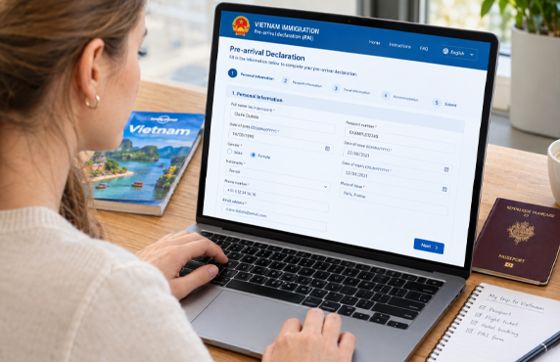

Planning a trip to Vietnam? Before packing your bags, take a few minutes to check the latest entry requirements and prepare the documents you may need at the airport.
Vietnam’s Pre-Arrival Information (PAI) system allows international travellers to submit selected personal, visa and travel details online before arriving in the country. After a successful submission, the system generates a QR code that travellers can save on their phones or print for use during immigration procedures. Although the online declaration is designed to help make arrival procedures smoother, travellers should understand when it applies, how to complete it correctly and which documents they still need to enter Vietnam.
In this practical guide, you will discover where to access the official PAI portal, what information to prepare, how to complete the declaration step by step, how to correct common mistakes and what to do when you arrive at the airport.


With its exotic landscapes, fascinating cultures and diverse experiences, Vietnam and Thailand are among the most popular destinations in Southeast Asia. However, safety remains an important criterion when planning your trip. So, how can you choose Vietnam or Thailand for a safe trip depending on the way you travel ? And is Vietnam safer than Thailand ? Each destination has its own characteristics and points to consider. In this article, Autour Asia helps you compare Vietnam and Thailand to better understand their differences and choose the destination that meets your expectations for your next trip to Asia.


Planning a trip to Hue in November requires a little more flexibility than at other times of the year. Visiting Hue in November means experiencing the rainy season in central Vietnam, with prolonged showers and a risk of flooding. However, this period can also be an opportunity to explore the former imperial capital’s royal heritage, pagodas and renowned cuisine in a quieter atmosphere. The key is to choose your activities carefully, prepare alternative plans and check the weather conditions before setting out.


When travelling in Cambodia, some everyday habits may raise questions about local customs. Is blowing your nose in public considered polite? How should you behave in restaurants, on public transport or during a visit? These small details matter when you want to respect the local culture. Discover how to manage blowing your nose in Cambodia discreetly, along with practical tips on using tissues during your trip. Autour Asia, Cambodia travel agency, helps you discover local customs with advice tailored to travellers. From Cambodia travel etiquette to personal hygiene and everyday situations, a few simple guidelines can make your journey more comfortable. In Phnom Penh, Siem Reap or Kampot, understanding local customs helps you avoid awkward moments while making the most of your stay.
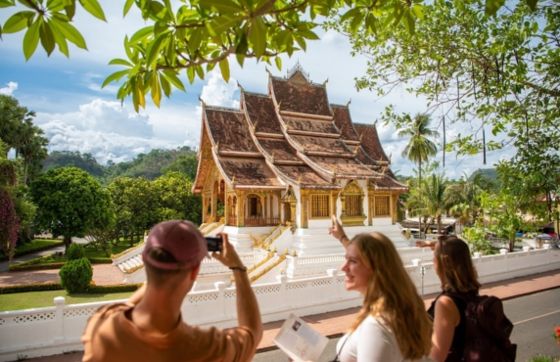

Blow your nose in Laos is not necessarily considered rude, but it is best to do so discreetly, especially in quiet places or during meals. If you have a cold, use a clean tissue and avoid blowing your nose loudly in public. In temples and other places of worship, respect the peaceful atmosphere and local customs. If you need to blow your nose frequently, step away from others for a moment whenever possible. Finally, dispose of used tissues in a rubbish bin. These simple habits will help you observe good manners during your trip to Laos.



 FR
FR EN
EN