Vietnamese food has spent the past year climbing every major global ranking, and the numbers back up what travelers already suspected: this is one of the most rewarding food destinations on the planet. TasteAtlas awarded Vietnam a score of 4.36 out of 5 in its 2025/2026 rankings, placing the country 16th out of 100 world cuisines and second in Southeast Asia, behind only Indonesia, a jump of three spots compared with the previous year. Condé Nast Traveller has been just as generous, ranking Vietnam 4th among the world's most attractive cuisines in its Readers' Choice Awards, praising the freshness of local ingredients and the sheer range of street food on offer, from the Cai Rang floating market to tiny alleyways in Ho Chi Minh City.
Noodles deserve their own mention. In TasteAtlas's 2025/2026 ranking of the world's best noodle dishes, Vietnam placed 18 dishes in the top 100, taking 2nd place globally for the sheer number of noodle dishes honored, from the many forms of pho (pho bo, pho ga, pho chay, pho xao, pho tron) to region-specific bowls like mi Quang, cao lau, banh canh and hu tieu. Add a coastline that stretches over 3,000 kilometers, three distinct culinary regions, and some of the most affordable fine dining in Asia, and it is easy to see why a 2-week food itinerary in Vietnam rewards travelers with an incredible variety of flavors and culinary experiences.
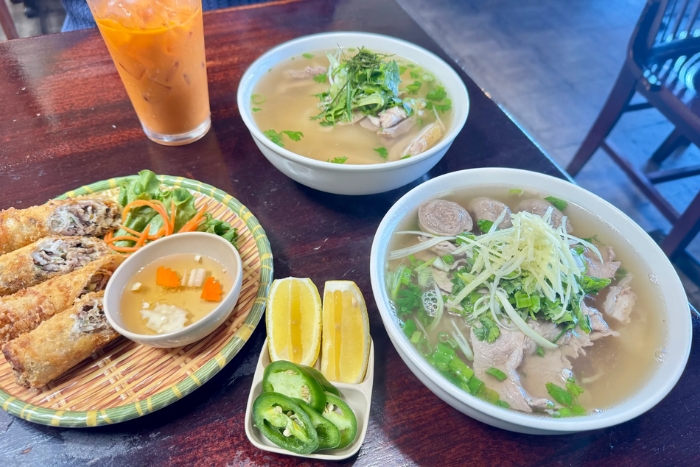
Vietnam's north-to-south geography created three distinct culinary traditions, each shaped by its own climate, history and neighboring influences. Understanding the differences before you go makes every meal on the road more meaningful.
Northern cuisine, centered on Hanoi, is famous for its restraint. Dishes lean on black pepper rather than chili, and on fish sauce rather than sugar, producing clean, balanced broths and light dipping sauces. This is the birthplace of pho, widely considered one of the best Vietnamese food experiences for first-time visitors. A bowl of pho is a must-try when exploring Hanoi Vietnamese cuisine, alongside bun cha, grilled pork served with vermicelli and fresh herbs, which makes for a typical Vietnamese lunch.
Other Northern specialties include cha ca La Vong (turmeric fish with dill), banh cuon (steamed rice rolls) and bun dau mam tom. To discover these dishes like a local, joining a Ha Noi food tour is a great way to explore the city's culinary traditions. Hanoi is also home to egg coffee, the rich, custard-like drink invented during a milk shortage in the 1940s.
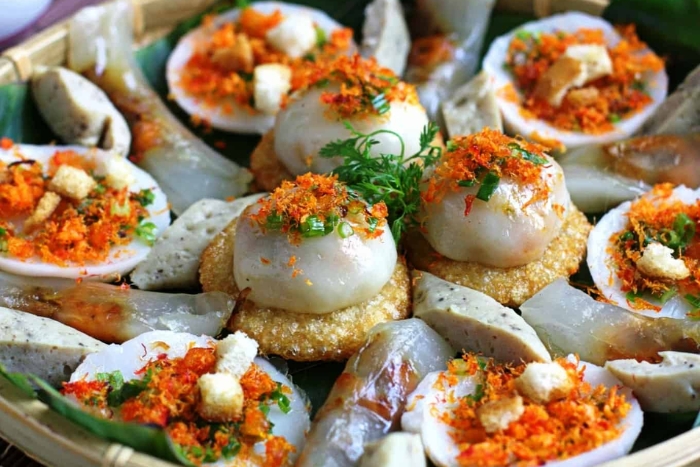
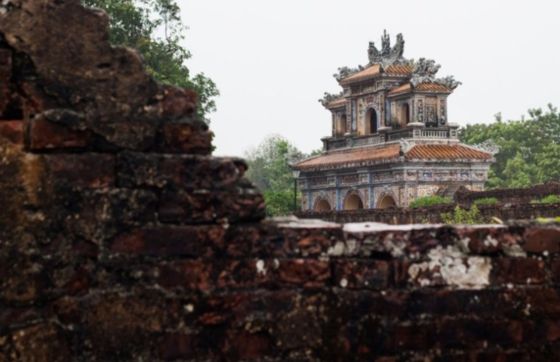
Central Vietnam, and Hue in particular, cooks with far more heat and far more ceremony. This region was the seat of Vietnam's last royal court, and its imperial kitchens developed an entire repertoire of small, intricate dishes: banh beo, banh nam, banh ram it and banh loc, served as delicate tasting plates. Among them, banh ram it stands out as a popular Vietnamese food, combining a crispy rice base with a soft, chewy dumpling on top. Many of these steamed and rice-based specialties can also be enjoyed as healthy Vietnamese dishes when paired with fresh herbs and vegetables.
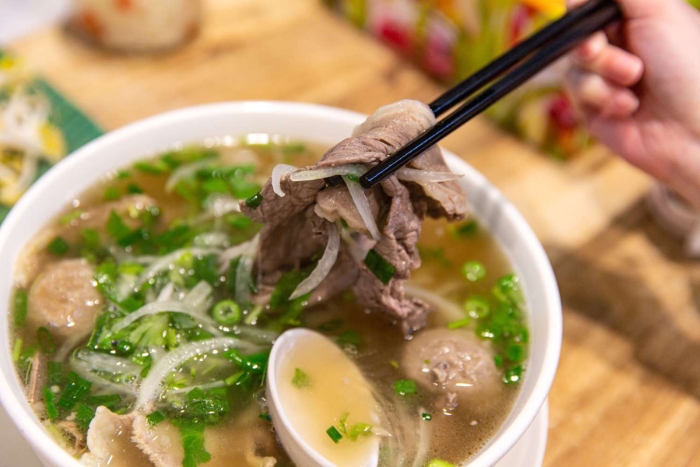
Bun bo Hue, a fiery lemongrass and beef noodle soup, is the region's headline dish, alongside banh khoai (crispy pancake) and com hen (baby clam rice). Further south along the coast, Hoi An adds its own noodle specialties, cao lau and mi Quang, both tied closely to local wells and turmeric-heavy broths. Exploring these dishes on a Hoi An street food adventure is an excellent way to experience the city's unique culinary heritage.
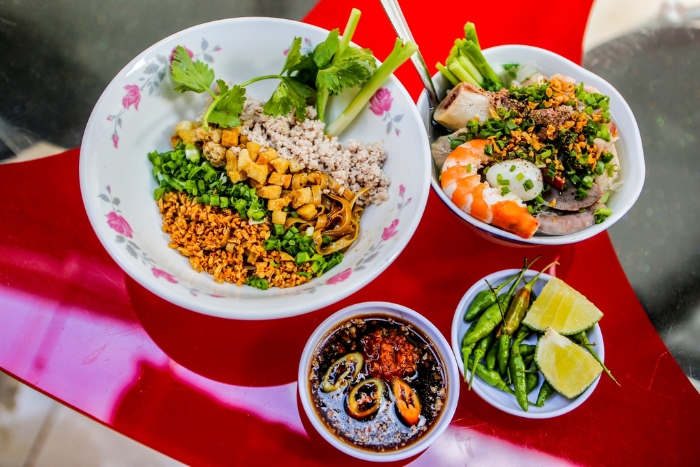
By the time the cuisine reaches Ho Chi Minh City and the Mekong Delta, the flavors turn sweeter and fresher, shaped by Khmer and Chinese influences and the abundance of the Delta's rice paddies, orchards and rivers. Coconut milk, palm sugar and a heavier hand with fresh herbs define dishes like com tam (Vietnamese broken rice), banh xeo (crispy pancake) and hu tieu (a noodle soup with Chinese-Khmer roots). Banh mi, the baguette sandwich, is eaten everywhere in Vietnam but reaches its most loaded and generous form in Saigon. If you're planning 2 weeks in Vietnam with friends, sharing these local specialties is also a great way to experience the flavors of Southern Vietnam together.
In Hanoi, a street food tour with a local guide takes you into the heart of the Old Quarter, where scooters weave through narrow streets and small shops serve some of the capital’s most beloved dishes. It is not only a chance to taste local specialties but also to discover the culinary traditions and everyday life of Hanoi.
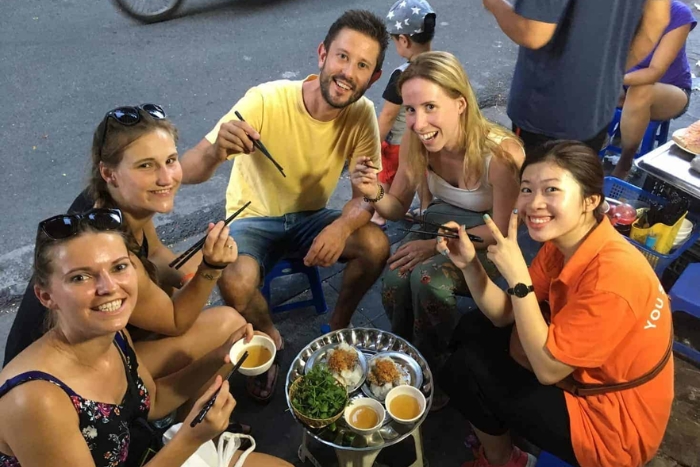
When to visit Vietnam for 2 weeks ? Autumn (September to November) is an excellent time to explore Hanoi’s food scene. The cooler weather makes walking around the Old Quarter more enjoyable, while seasonal specialties such as cốm (young green rice), chả rươi (sandworm omelet) and ốc luộc (boiled snails) bring a distinctly autumnal taste to the capital. A local street food tour is a great way to discover these traditional flavors while experiencing the lively streets of Hanoi.
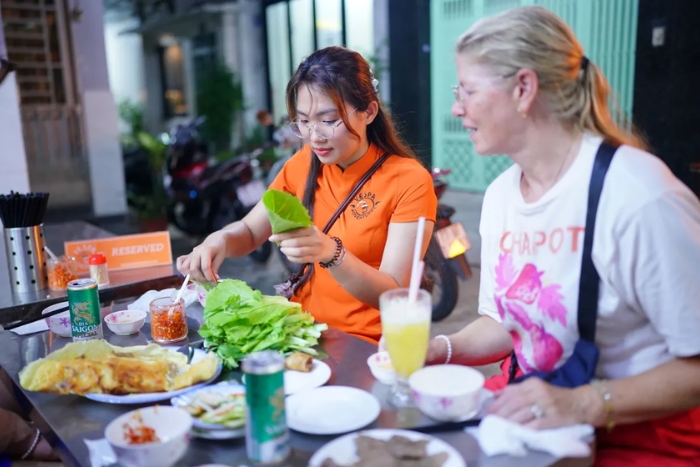
For a different taste of Saigon, join a Saigon food tour by Vespa and explore the city like a local. Ride through the lively streets and hidden alleys of Ho Chi Minh City with a local guide, stopping at markets, street food stalls and local restaurants to sample some of the city's favorite dishes. Depending on the tour, you may taste Vietnamese specialties such as bánh mì, bánh xèo, grilled seafood and other Southern Vietnamese dishes, while discovering local neighborhoods and learning more about Saigon's vibrant food culture.
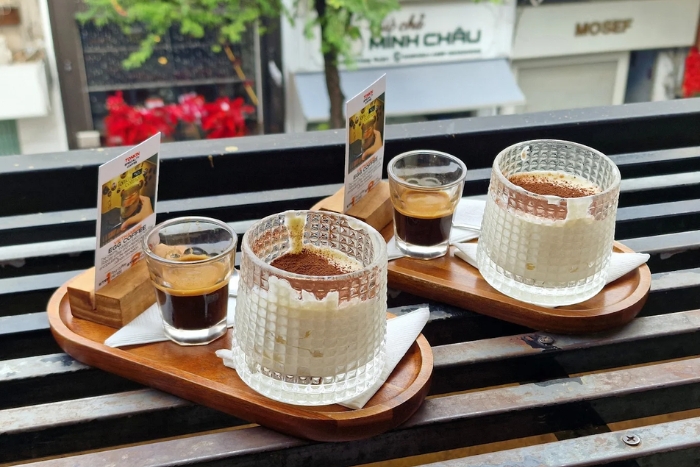
Coffee is an essential part of everyday life in Vietnam, and a Half Day Morning Guided Tour - Saigon’s Coffee Culture offers a closer look at the city’s unique coffee traditions. It is also a great addition to a 2-week food itinerary in Vietnam, allowing travelers to explore local cafés, discover how Vietnamese coffee is prepared and experience the relaxed café culture of Ho Chi Minh City.
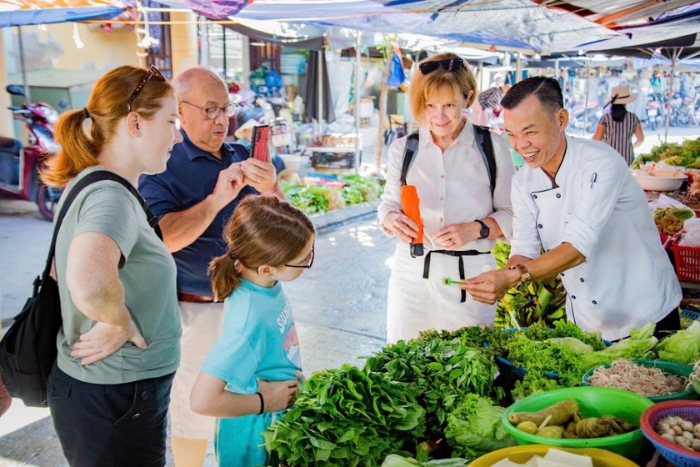
A private half-day cooking class is one of the best ways to experience Hoi An’s food culture. For families planning a 2 week family trip to Vietnam with kids, this hands-on experience offers a fun and engaging introduction to Vietnamese cuisine. Start with a visit to the local market to meet vendors and select fresh ingredients, then head to the kitchen for a cooking lesson with an experienced local chef.
Vietnam's length means no single season suits the whole country at once. The north (Hanoi, Ninh Binh) is coolest and driest from October to April, and hot and rainy from May to September. Central Vietnam (Hue, Hoi An, Nha Trang) sees its rainy season from September to January, with the driest, most pleasant months running from February to August. The south (Ho Chi Minh City, the Mekong Delta) has a dry season from December to April and a wetter one from May to November, though showers there tend to be short. For travelers planning 2 weeks in Vietnam in December, the south offers particularly favorable weather, while the north is cooler and Central Vietnam may still experience some rain.
| Day | Destination | Food to try | Where to eat |
| 1 | Arrival in Hanoi - Settle in and explore the Old Quarter | Bun cha, fried spring rolls, egg coffee | Bun Cha Huong Lien for the famous "Obama combo"; rooftop café in the Old Quarter for egg coffee |
| 2 | Hanoi Old Quarter food walk | Pho, cha ca, banh cuon, bun dau mam tom, fresh beer | Pho Gia Truyen (49 Bat Dan Street) for phở; Cha Ca La Vong for chả cá; local street stalls for bánh cuốn and bún đậu |
| 3 | Hanoi - Ninh Binh - Trang An or Tam Coc boat trip | Eel vermicelli, local specialties | Local restaurant in Ninh Binh |
| 4 | Ninh Binh specialties - Explore the countryside | Mountain goat, crispy rice and fresh fish | Family-run restaurants around Tam Coc |
| 5 | Ninh Binh - Hue - Travel by train or flight | Bun bo Hue, Hue sweet soups (che), royal herbal tea | Bun Bo Hue Mu Roi for a rich broth with beef, pork and other toppings |
| 6 | Hue imperial cuisine - Visit the Imperial City | Banh beo, banh nam, banh loc, banh ram it, banh khoai, com hen | Madam Thu Restaurant for a selection of Hue specialties; local eatery for cơm hến and bánh khoái |
| 7 | Hue - Da Nang - Hoi An - Scenic coastal route | Banh Mi, Hoi An chicken rice, Mót herbal drink | Banh Mi Phuong, famous for its generous Vietnamese baguettes; evening walk in Hoi An Ancient Town; Com Ga Ba Buoi - 22 Phan Chau Trinh |
| 8 | Hoi An noodle specialties - Explore the Ancient Town | Cao lau, mi Quang, banh mi, banh xeo, white rose dumplings | Cao Lau Khong Gian Xanh for cao lau; Ong Hai for mi Quang; family-run kitchens for local specialties |
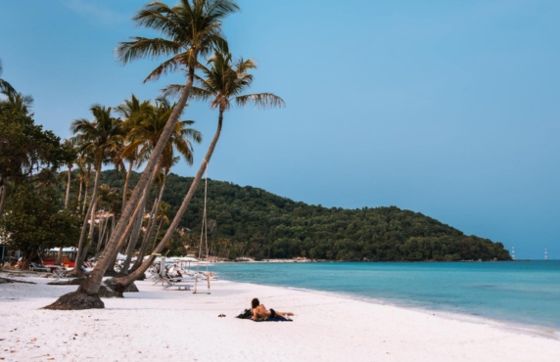
| 9 | Hoi An/Da Nang - Nha Trang - Relax by the beach | Fresh seafood | Lanterns or seafood restaurants along the Bo Ke promenade |
| 10 | Nha Trang seafood day | Bun cha ca, nem nuong Ninh Hoa, banh can, seafood pancakes, fresh seafood | Local restaurants and beachfront seafood spots |
| 11 | Nha Trang - Da Lat - Discover the highlands | Banh trang nuong, grilled chicken with é leaves, banh can, avocado ice cream, strawberries, hot soy milk, artichoke tea | Da Lat Night Market and surrounding street-food stalls |
| 12 | Da Lat - Ho Chi Minh City - Morning market visit | Artichoke tea, strawberries, avocado, bánh mì | Banh Mi Huynh Hoa for a famous, generously filled bánh mì |
| 13 | Ho Chi Minh City street food - Explore Ben Thanh Market | Com tam, banh mi, hu tieu, banh xeo, pha lau, iced milk coffee, bac xiu, craft beer | Com Tam Ba Ghien for com tam; local eateries and street-food stalls for hu tieu and banh xeo |
| 14 | Mekong Delta day trip - Cai Rang floating market | Hu tieu, straw-grilled snakehead fish, Mekong-style banh xeo, lau mam, fried elephant ear fish, tropical fruits, coconut candy | Cai Rang Floating Market for fresh fruit and local breakfast; riverside village for coconut candy; local restaurant for lunch |
Eat where the queue is. In Vietnam, a long line of locals outside a tiny storefront is a far better signal than a polished storefront with an English menu.
Order one dish per stop. Vietnamese meals are built around small, specific dishes rather than large plates, so plan to eat often and in small portions across the day.
Ask for the local version. Many dishes change dramatically by region: bun bo in Ho Chi Minh City is not the same as bun bo Hue, and com tam varies from stall to stall.
Bring cash in small bills. Most street food stalls and family-run restaurants do not take cards, and prices are often listed in thousands of dong.
Book ahead for sit-down tastings. Restaurants like Madam Thu in Hue or the imperial-style tasting menus fill up quickly with tour groups, especially during high season.
Pace your itinerary. Two weeks is enough to travel from north to south without rushing, but a 2-week Vietnam itinerary for seniors should include at least one free morning in each city to rest and recharge between food stops.
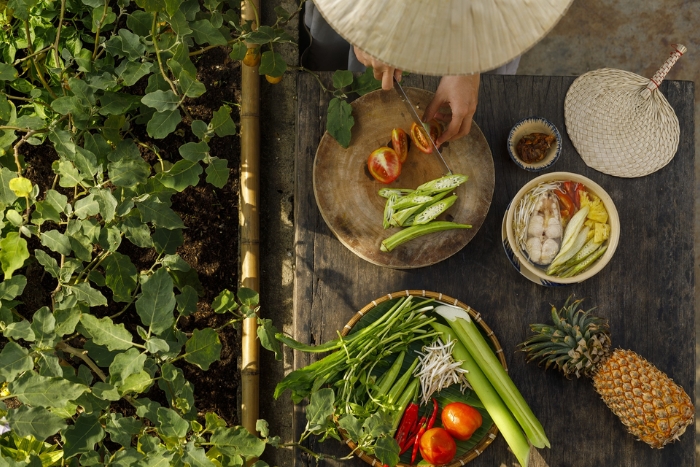
A 2-week Vietnam food tour is one of the best ways to discover the country through its diverse flavors, regional specialties and vibrant food culture. From pho and bun cha in Hanoi to bun bo Hue, cao lau in Hoi An, fresh seafood in Nha Trang and street food in Ho Chi Minh City, each destination offers a different taste of Vietnam. Beyond the dishes themselves, local markets, cooking classes, street food walks and floating markets make the journey even more memorable. With a well-planned itinerary, the right season and a little curiosity, two weeks are enough to explore Vietnam from north to south while enjoying an authentic and unforgettable gastronomic experience.
If you would like to personalize your 2-week food itinerary in Vietnam, Autour Asia, travel agency in Saigon, can help create a tailor-made journey based on your interests, travel style and culinary preferences.





 FR
FR ITA
ITA