When should you travel to a 14 days in Vietnam in April ? Vietnam has several climate zones, which explains why conditions can vary significantly between Hanoi, Hoi An, and Ho Chi Minh City during the same month. According to Vietnam Tourism, April marks the return of warm, sunny days in the North, while Central Vietnam still enjoys favorable conditions before the intense summer heat arrives. In the South, the dry season generally continues through April.
Region | Weather in April | Typical temperature | Experiences to prioritize |
North | Warm, gradually becoming more humid, with often bright days | Around 20 - 30°C depending on the area | Hanoi, Ninh Binh, Ha Long Bay, Mai Chau, Pu Luong |
Central Vietnam | Warm and generally sunny | Around 25 - 32°C depending on the destination | Hue, Hoi An, Da Nang, Phong Nha, beaches |
South | Hot, often dry, with periods of intense heat | Around 30°C, with occasional higher peaks | Ho Chi Minh City, Mekong Delta, Phu Quoc |
Central Highlands | Milder temperatures thanks to the higher elevation | Varies depending on altitude | Da Lat, nature, scenic landscapes and outdoor activities |
For a 2-week trip to Vietnam in April, these temperatures should be considered general guidelines rather than a day-by-day forecast. In the North, weather conditions change quickly as May approaches. In Hanoi, for example, April marks the beginning of a hot and often sunny period, with daytime temperatures occasionally exceeding 30°C.
In Central Vietnam, April is particularly appealing for travelers who want to combine cultural heritage with outdoor activities. Hoi An generally experiences hot and sunny weather from February to August, while Hue emerges from its wetter season. Phong Nha also tends to enjoy favorable conditions between April and June.

In the South, temperatures are more consistently hot. What to expect on a 2-week Vietnam trip in April? Ho Chi Minh City can experience periods of intense heat in April and May, while the rainy season generally begins from May onwards. The Mekong Delta and Phu Quoc therefore remain appealing in April for those looking for warm weather and outdoor experiences.
In short, 2 weeks in Vietnam in April offer plenty of opportunities to create a varied trip, but your choice of regions should take both the heat and your preferred travel pace into account.
This combination is particularly well suited to travelers who want to discover Vietnam through its landscapes, history and traditions without spending too much of their trip in transit. A 14-day trip to Vietnam in April can begin in Hanoi, with a few days devoted to exploring the capital and its historic neighborhoods. You can then travel to Ninh Binh, where karst landscapes, rivers and countryside provide a striking contrast to Hanoi’s urban atmosphere.
Depending on your interests, this part of the journey can be extended to Mai Chau or Pu Luong. Both destinations offer the chance to slow down, walk through rural landscapes and experience everyday life in local villages.

The next stage of your 2-week Vietnam trip in April can continue in Central Vietnam, for example with stops in Hue and Hoi An. The change of scenery is particularly appealing: after exploring the natural landscapes of the North, you can discover imperial heritage, the ancient town, local cuisine and the countryside around Hoi An. This option is particularly suitable if you are looking for:
It also helps reduce the number of domestic flights. One flight between Northern and Central Vietnam may be enough to avoid a long day of overland travel.
What to expect on a 2-week Vietnam trip in April? For travelers who want to make the most of the warm weather and include a few relaxing days during their 2 weeks in Vietnam in April, combining Central and Southern Vietnam can be an appealing alternative.
Starting in Hue allows you to explore Vietnam’s imperial history before continuing to Hoi An and the surrounding area. The region lends itself well to a varied trip: cultural visits in the morning, cycling through the countryside, discovering local cuisine or relaxing on the beach, depending on your preferences.
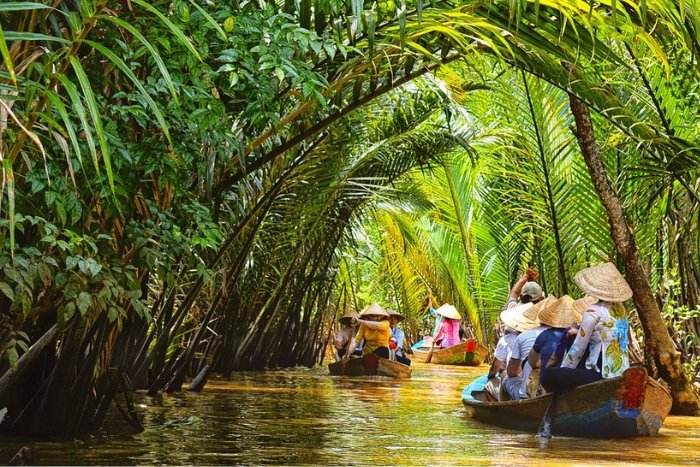
After a few days in Central Vietnam, a flight to Ho Chi Minh City provides a complete change of atmosphere. The city is more dynamic and contemporary, while the Mekong Delta offers a more rural perspective, with waterways, fruit orchards and traditional villages.
What to expect on a 2-week Vietnam trip in April? For travelers who would like to end their trip with a few days by the sea, Phu Quoc is worth considering. The island generally enjoys hot and sunny weather from October to June, before the wetter period from July to September in Vietnam.
This combination can therefore appeal particularly to those looking for more:
This is a particularly useful lesson when planning 2 weeks in Vietnam in April: when time is limited, a few carefully chosen stops often offer more than a long list of destinations.
Ninh Binh is often associated with the karst landscapes of Tam Coc and Trang An. Yet the appeal of the region goes far beyond a boat trip. A more rewarding way to explore it is to combine a boat ride with cycling and village visits. What to expect on a 2-week Vietnam trip in April? After gliding between limestone cliffs, getting on a bicycle and following the small country roads offers a completely different perspective. The scenery may be less spectacular in the conventional sense, but it feels much more alive: rice fields, homes, gardens, local farmers working in the fields and quiet paths become part of the landscape.

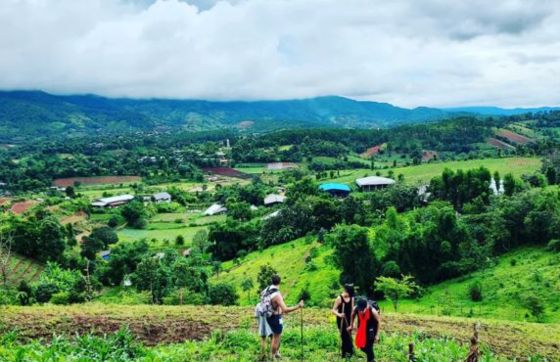
In the mountains of Northern Vietnam, the experience is quite different. Here, the appeal is not simply admiring the terraced rice fields from a viewpoint. It is about taking the time to experience life in a rural environment.
During a 14 days in Vietnam in April, a few hours of hiking can take you through valleys, rice fields and small villages. But the most memorable part of the experience may come after the walk: returning to a traditional home, sharing a meal with local residents and spending the night in surroundings that are far quieter than those of the major cities.

Travelers who have explored Pu Luong have particularly appreciated the feeling of "staying with locals rather than simply visiting a country". The guide’s welcome, shared dinner and conversations with local families left a stronger impression than simply admiring the scenery.
After several stops in the North, Hoi An can serve a different purpose during a Vietnam 2-week trip: a chance to pause.
The Hoi An Old Town is, of course, worth exploring, but there is no need to fill every hour with sightseeing. Part of the experience lies in simply wandering without a fixed destination, stopping at a small café, cycling through the surrounding countryside or waiting until the end of the day when the light changes and the streets begin to come alive.
For a 14-day Vietnam trip in April, one traveler who explored Central Vietnam said they particularly enjoyed Hoi An because of its gentler pace. They spent time wandering through the narrow streets, stopping at cafés and taking a boat ride on the Thu Bon River as the day came to an end. They also took part in a lantern-making workshop, a simple activity that allowed them to connect more closely with the local culture.
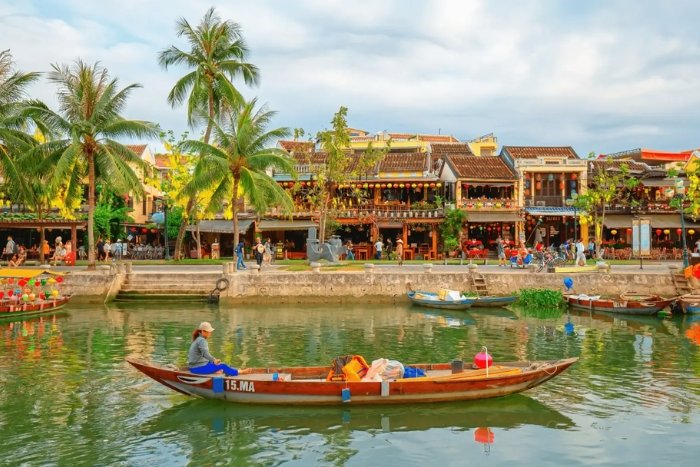
This feeling of slowing down is important during a authentic Vietnam 14-day trip. Hoi An does not necessarily need to be treated as a simple stop between Hue and the next flight. Instead, it can provide a chance to recharge after several busy days of exploring.
Another family who took a two-week trip to Vietnam also explained that they would have liked to spend an additional night in Hoi An. The countryside cycling tour and eco-tour through the coconut forest were particularly popular with the children, especially because they could actively participate and stay moving after several cultural visits. For 2 weeks in Vietnam in April, this balance is particularly appealing: after an active morning, you can leave the afternoon relatively free and enjoy Hoi An at your own pace.
Hue offers a different kind of experience. After the rural landscapes of the North and the lively atmosphere of Hoi An, the city invites you to slow down and gain a deeper understanding of Vietnam’s history. What to expect on a 2-week Vietnam trip in April? The Imperial City and royal tombs are, of course, key places to visit, but the experience goes beyond the monuments. A walk along the Perfume River, an introduction to local cuisine or a quiet moment in one of the city’s gardens can reveal a side of Hue that feels less focused on tourist activity.

One traveler who spent 2 weeks in Central Vietnam described Hue as a quieter and more reflective stop. They particularly appreciated the contrast with Hoi An and the North, as well as the journey from Hoi An to Hue via Hai Van Pass, which became one of the highlights of the trip. The value of Hue during a two-week journey therefore also lies in its change of pace. There is no need to fill the itinerary with endless visits. A day focused on cultural heritage, followed by a more contemplative moment, can be far more enjoyable than a completely packed schedule.
The Mekong Delta is another destination where the experience matters more than a checklist of attractions. An excursion can become much more meaningful when it helps you understand how local communities live around the canals, orchards and agricultural activities. A ride on a local boat, a visit to a market, an encounter with a local family or a meal prepared with regional ingredients can give this part of the journey much greater depth.
During a 2-week trip to Vietnam in April, the goal is therefore not simply to "see the Mekong" in a few hours, but to take the time to observe a way of life that is very different from that of Vietnam’s major cities.

This approach is particularly well suited to a two-week trip because it creates a strong contrast with Hanoi, Hue or Ho Chi Minh City without requiring you to add a long list of additional sightseeing stops. In April, alternate experiences to make the most of your trip. Instead of planning fourteen days entirely around sightseeing, it is better to create an itinerary with different rhythms:

Your itinerary has a direct impact on your overall spending. A route limited to Northern and Central Vietnam can reduce the number of flights, while a journey from North to South requires more transportation.
Likewise, a day of cycling or hiking in a rural area does not cost the same as a multi-day cruise or private activities with a guide. It is therefore better to plan your itinerary first and then build a budget around it, rather than looking for a single figure that applies to every two-week trip.
To make the most of your 2 weeks in Vietnam in April, there are a few simple mistakes to avoid so you can maintain a comfortable pace and better adapt to the travel conditions during this time of year.
The fact that you can travel from North to South during 14 days in Vietnam in April does not mean that you have to. Every additional region requires travel time and inevitably reduces the time available to experience it.
A Vietnam itinerary 2 weeks in April may look varied and exciting on paper but become exhausting in practice. Moving to a new city every night also means packing and unpacking, checking in, transfers and time spent on the road. Sometimes, it is better to remove one stop and keep an extra day that you can genuinely enjoy.

For a 2-week trip to Vietnam in April, there is no single ideal way to divide your time. However, a two-week journey can, for example, be structured around three or four main stages rather than a dozen different stops.
A North + Central Vietnam itinerary could include several days around Hanoi and Ninh Binh, several days in a rural or nature-focused area, followed by time in Hue and Hoi An.
A Central + South itinerary could begin at a relaxed pace in Da Nang and Hoi An, allow time to explore Hue, and then continue to Ho Chi Minh City and the Mekong Delta.
For a North - Central - South journey, however, you will need to accept more travel and use domestic flights to maintain a reasonable amount of sightseeing time.
The key is to consider arrival, departure and transfer days as part of the journey itself. Fourteen days on the calendar do not necessarily mean fourteen full days available for exploration.
A 2-week trip to Vietnam in April can take many different forms. Some travelers may choose to combine the North and Central regions to focus on landscapes, villages and cultural heritage, while others may prefer to head south and finish their journey between Ho Chi Minh City and the Mekong Delta. Traveling through all three major regions remains possible, but it requires a faster pace. For 14 days in Vietnam in April, beyond simply choosing where to go, the experience shows above all how important it is to leave room for the journey itself: a bicycle ride through Ninh Binh, an evening in Hoi An, a shared meal in a village or a few hours without a fixed schedule can sometimes create a more lasting memory than another sightseeing stop. Finding the right balance between discovery and simply enjoying the moment is what allows two weeks to provide a genuinely rich and personal first impression of Vietnam.











 FR
FR ITA
ITA