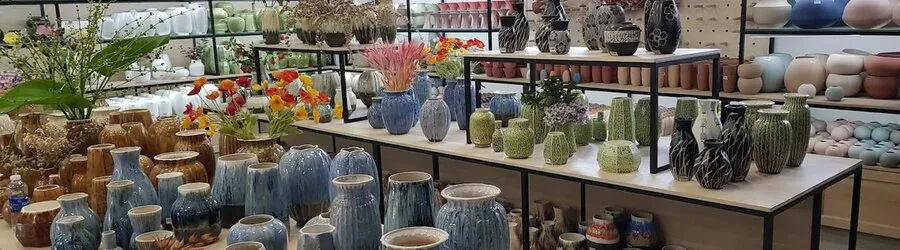
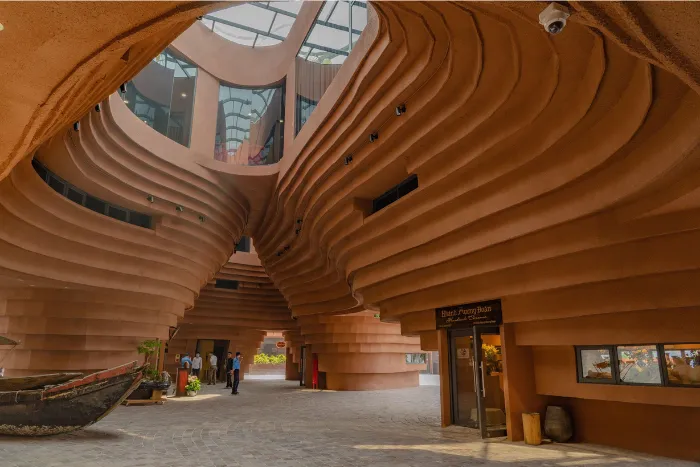
Hanoi is surrounded by traditional craft villages, and Bat Trang, a ceramic village on the Red River with roots in the 14th century, is the best known of them. In the heart of the village stands a building you cannot miss: the Bat Trang Pottery Museum, officially the Center of Vietnam Quintessential Handicraft. Opened in 2018, its curved brown towers are shaped like a potter's turntable, and its floors bring together the history of the village, contemporary ceramic art, a pottery studio, a restaurant and a tea house. In this guide, we explain the ticket options and opening hours, how to get there and what to see on each floor, with practical tips for your visit. Let's explore the Bat Trang Pottery Museum with Autour Asia.
Planning the whole day in the village? Our Bat Trang pottery village guide covers transport from Hanoi, the other sights, the pottery class and shopping.
The museum sells several tickets depending on which floors you visit and whether you want to try pottery. Prices below are in VND.
| Ticket | Floors | Adult (over 1.1 m) | Child (up to 1.1 m) | Elderly and visitors with disabilities |
| Entry and pottery craft space | G, 1, 2, 4 | 60,000 | Free | 30,000 |
| Full museum visit | G, 1, 2, 3, 4, 5 | 150,000 | Free | 75,000 |
| "I am an artisan": visit and pottery workshop | 1, 2, 4 and workshop on G | 130,000 | 50,000 | 100,000 |
| "Art stamp": full visit and pottery workshop | 1 to 5 and workshop on G | 198,000 | 50,000 | 145,000 |
| "Fire road diary": 2-hour electric cart tour of the old village with commentary | - | 100,000 | Free | 50,000 |
One adult ticket covers up to two accompanying children. Prices can change, so check the museum website before your visit.
The museum opens daily from 8:00 to 17:30 on weekdays and until 18:00 on weekends and public holidays. Weekday mornings are the quietest; weekends are busy with Hanoi families, especially in the pottery studio.

The museum stands in the centre of Bat Trang, around 14 km from Hanoi's Old Quarter. Bus 47A from Long Bien takes 40 to 45 minutes; a Grab or taxi takes about 30 minutes. From the bus terminus or the car park near the market, the museum is a short walk. Our Bat Trang village guide compares all the transport options in detail.
Bat Trang was founded by families who brought the pottery craft from their home regions, and 19 of these founding clans still live in the village today. The museum was the idea of Ms. Ha Thi Vinh, a 15th-generation descendant of the Ha Huu family and Vice President of the Vietnam Craft Villages Association. Inspired by Japan's "one village, one product" programme, she wanted a place that would honour the founders of the craft and help Vietnamese craft villages reach a wider public. The project took more than ten years and the main building was completed in 2018.

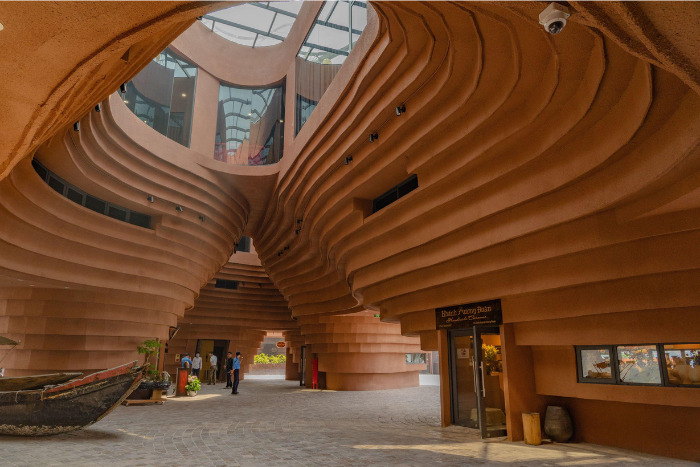
The building was designed by architect Hoang Thuc Hao. Seven curved towers link together like spinning clay, inspired by the turntables Bat Trang potters have used for centuries; some visitors also see in them the shape of the old gourd kilns. Each tower is narrow at the base and widens as it rises. The walls are covered with traditional Bat Trang tiles and ceramic fragments, and the earthy brown colour echoes the clay and silt of the Red River. One side of the museum faces the Bac Hung Hai canal, the other the old village.
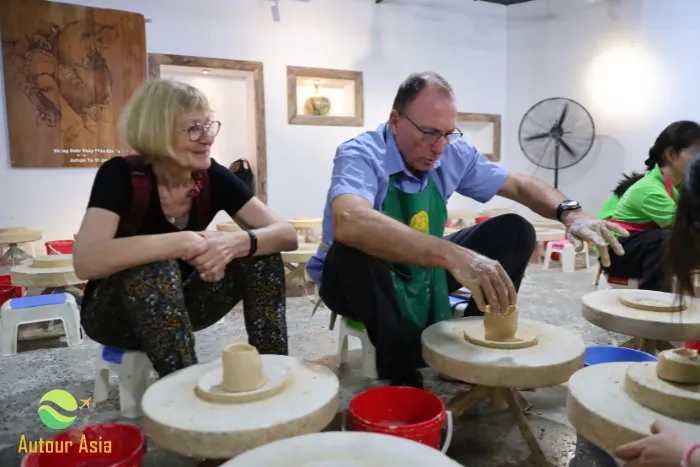
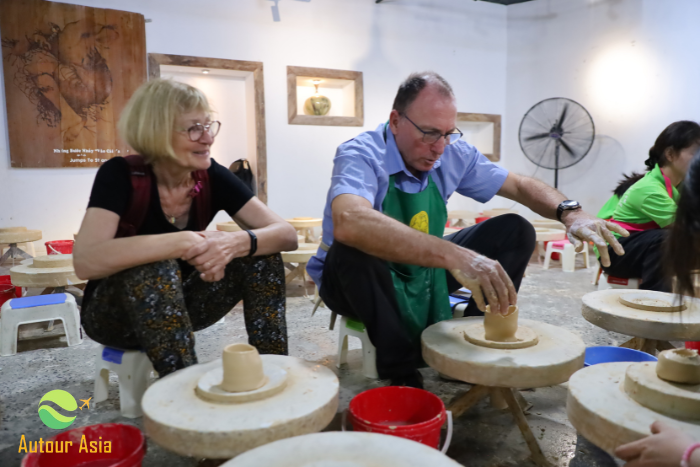
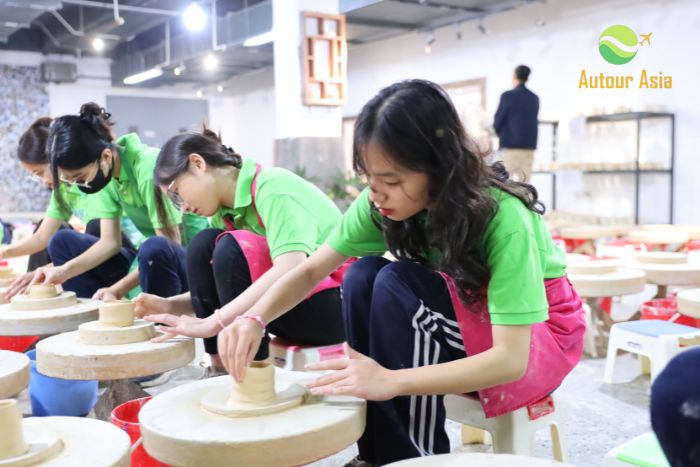
The ground floor houses the pottery studio, where visitors shape clay on the wheel or paint ceramic figures under the guidance of artisans. See section 6 below for details.
The first floor welcomes visitors with a large open space under the curved towers, a popular spot for photos. Nearly 50 stalls sell products from Vietnamese craft villages, most of them Bat Trang ceramics, many with the national OCOP quality label. The square also hosts craft fairs and festival events.
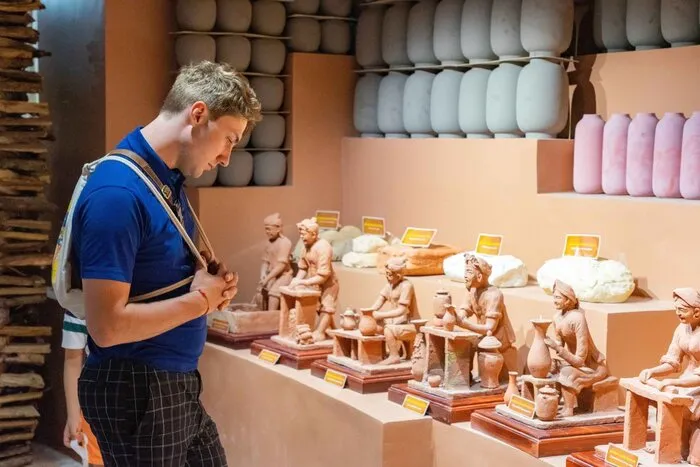
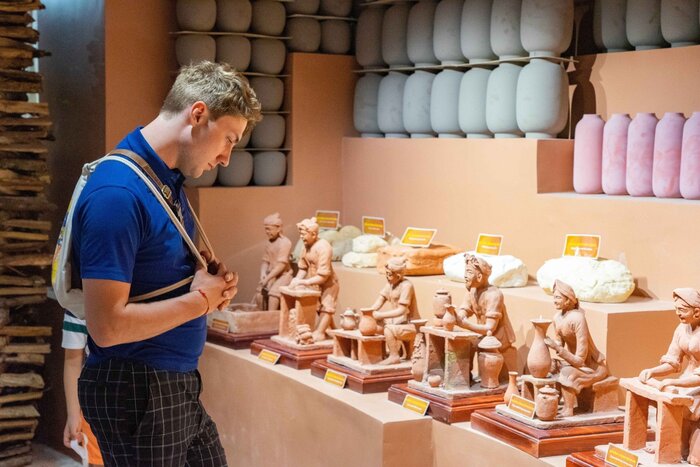
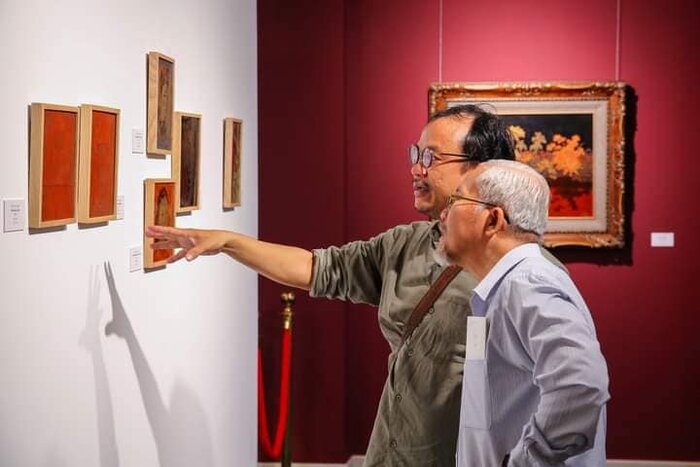
This is the heart of the museum: about 500 m² of exhibitions on the history of the village. Themes include the founding of Bat Trang, the steps of ceramic production, a recreated house of artisan Le Van Van and a space honouring the 19 clans that still make pottery in the village, with their genealogies and best works. Take your time here if you want to understand the craft.
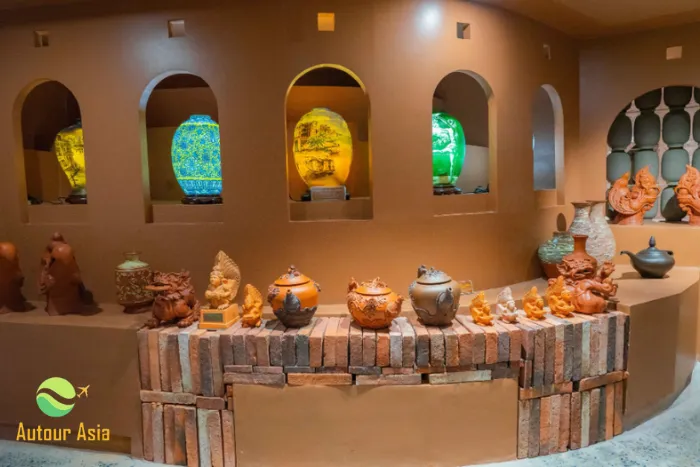
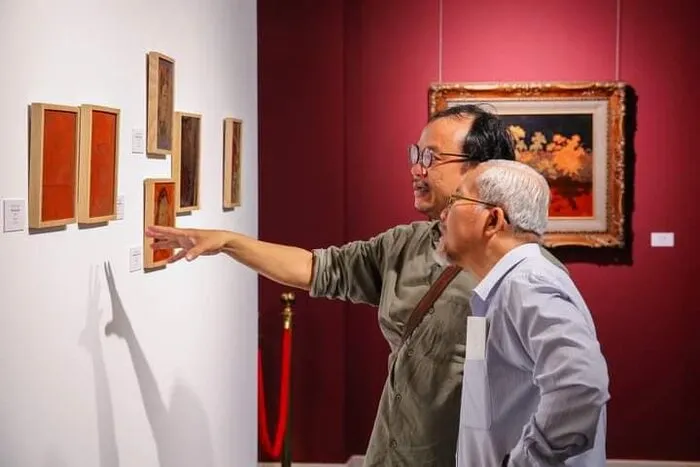
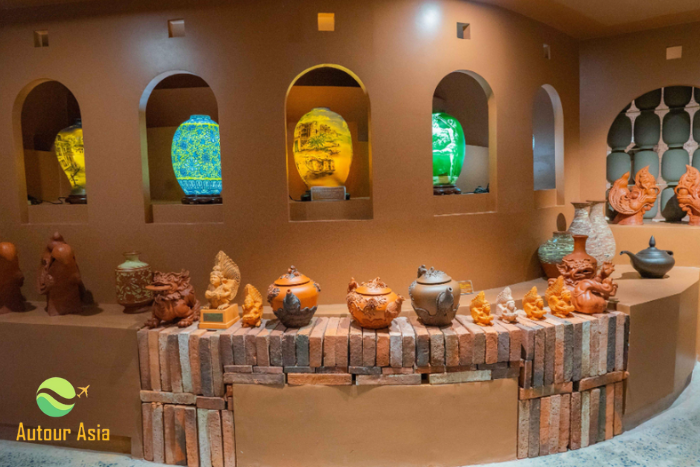
The third floor is dedicated to contemporary ceramic art. The CHON DE L'ART space shows how Bat Trang artisans reinterpret their craft today, and some works can be bought or auctioned. The same floor has Homestay Art, nine guest rooms decorated with products from different craft villages, such as bamboo and rattan, lacquer and mother-of-pearl inlay.
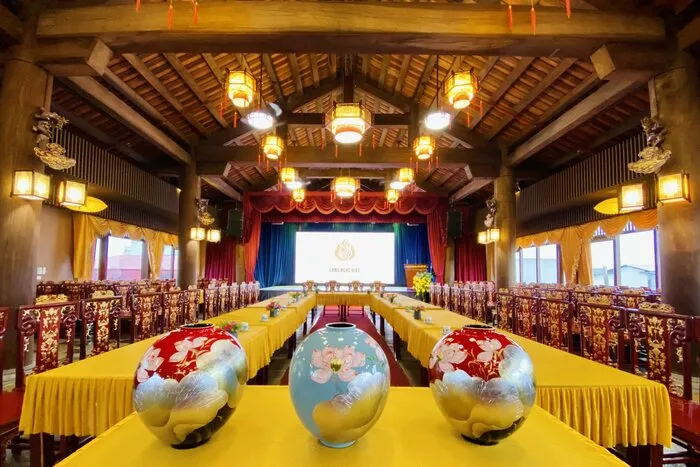
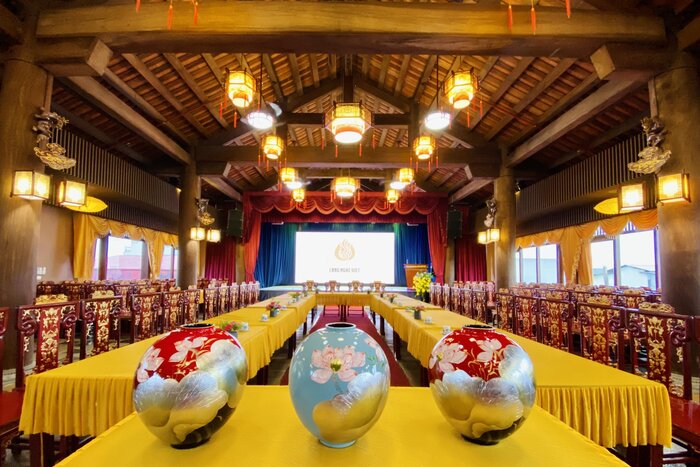
The Royal Hall is inspired by the court of the Tran dynasty, with 14 ironwood pillars, an old tiled roof and a floor of handmade tiles in Hoang Tho glaze. It hosts events for up to 200 people. Next door, Tinh Hoa restaurant serves traditional northern Vietnamese dishes, and Artisan Cafe has views over the canal and the village roofs.
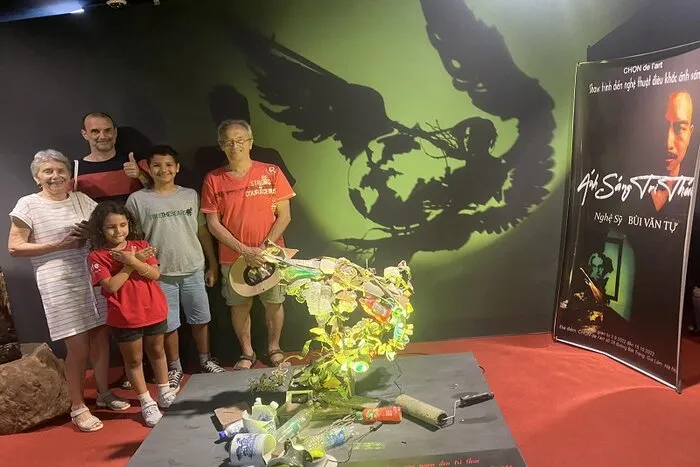
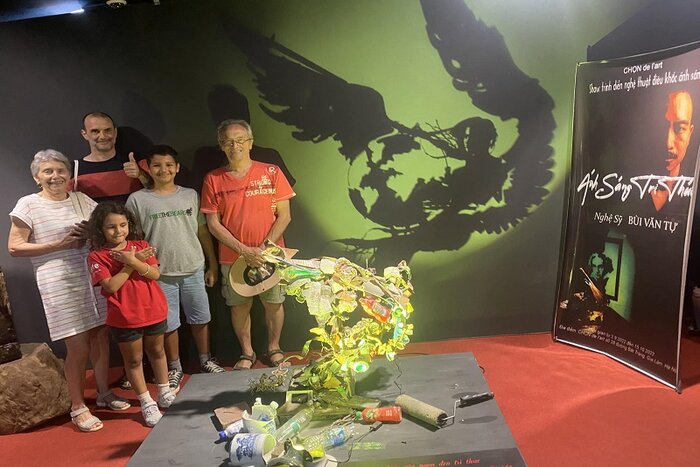
The top floor has two quiet spaces. Huong Sa Art House is a tea room serving around 20 Vietnamese teas, with traditional costumes available to rent for photos. The Light Sculpture Art space shows works by artist Bui Van Tu, born in 1992, who combines ceramic, wood, bronze and stone with light so that hidden images appear on the walls.
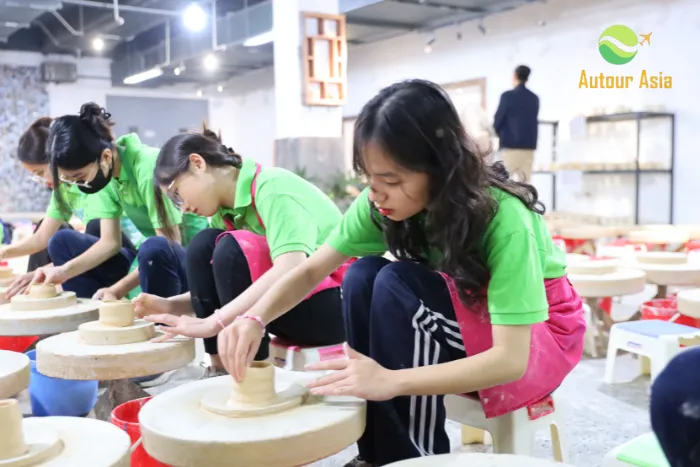
The pottery workshop on the ground floor is the most popular activity in the museum. Artisans show you how to centre the clay on the wheel and shape a small bowl or cup, or you can paint a ready-made figure, which is ideal for young children. The workshop is included in the "I am an artisan" ticket (130,000 VND per adult, 50,000 VND per child) and the "Art stamp" ticket. Plan about one hour. Your piece needs to dry and be fired before you can take it home, so ask the staff about collection or delivery when you finish.
The Bat Trang Pottery Museum is the best introduction to the village. In one or two hours you understand where Bat Trang ceramics come from, see how the craft lives on today and try it with your own hands. Combined with a walk through the old lanes and a stop at the ceramic market, it makes one of the most rewarding half-day trips from Hanoi.
Let us take care of the details. Our private Bat Trang pottery ceramic factory tour includes hotel pick-up, an English-speaking guide, entrance fees, a pottery class in a working factory and lunch. For a full day, our Bat Trang, Chuong and Quang Phu Cau craft village tour adds the conical hat and incense villages. You can also browse all our Vietnam day trips and short tours.
Planning your stay in Hanoi? Contact our team or request a free quote today. Tell us your dates and interests, and we will design a Bat Trang visit, or a complete Vietnam itinerary, around you.


The Bat Trang Pottery Museum offers several tickets:
Children up to 1.1 m enter free, and reduced prices apply to elderly visitors and visitors with disabilities. Prices can change, so check the museum website before you go.
The Bat Trang Pottery Museum is open every day:
Weekday mornings are the quietest time to visit.
Yes. The pottery workshop at Studio Turntable, on the ground floor, lets you shape clay on the wheel or paint a ceramic figure with the help of artisans. It is included in the "I am an artisan" ticket (130,000 VND per adult, 50,000 VND per child) and the "Art stamp" ticket. Plan about one hour.
Yes, especially if you want to understand Bat Trang before exploring the village. The second-floor exhibition explains the history of the village and its 19 founding clans, the pottery workshop is fun for all ages, and the building itself, shaped like a potter's turntable, is one of the most striking in the Hanoi area.
Plan your whole day with our Bat Trang village guide.
Yes. Children up to 1.1 m enter free, and one adult ticket covers up to two accompanying children. The pottery and figure-painting workshop on the ground floor is the highlight for families; the child price for the "I am an artisan" ticket is 50,000 VND.








 FR
 ITA