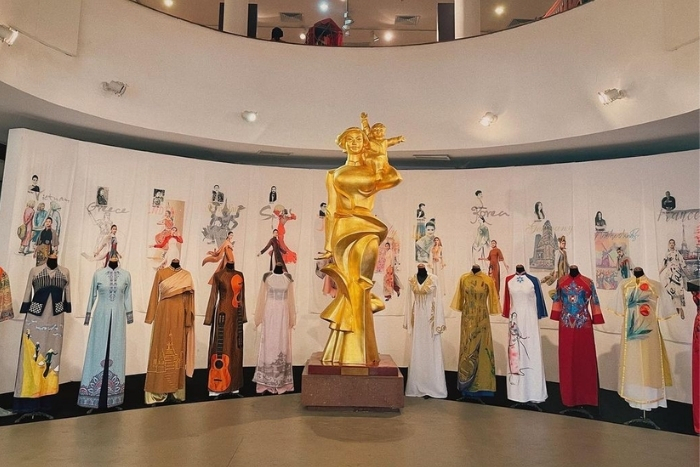
The Hanoi Vietnam Women's Museum was designed to enrich public knowledge and understanding of the historical depth as well as the cultural heritage of Vietnamese women, from the past to the contemporary era. Even more, this place plays an essential role as a dynamic conservation and cultural exchange center, directly contributing to gender equality goals and the advancement of women's status in modern society.
Considered one of the best things to do in Hanoi, the Vietnamese Women's Museum in Hanoi attracts hundreds of thousands of international visitors each year thanks to its impressive documentary collection.
The site currently preserves over 30,000 documents, photographs, and high-value artifacts related to Vietnamese women and the vicissitudes of the country's history. The scenography is very modern, scientific, and aesthetic, facilitating a seamless grasp of the information. Furthermore, thematic exhibitions are regularly organized here, offering constantly renewed and profound perspectives.
By visiting this space of the Vietnamese Women's Museum Hanoi, travelers discover authentic stories about the lives of women from all regions of the country. These are simple slices of daily life yet deeply moving, witnessing immense love, a spirit of sacrifice, and silent contributions.
These steadfast qualities have forged the temperament, grace, and fundamental role of Vietnamese women in the past, the present, and for the future. The collection, preservation, and enhancement of this heritage allow visitors to feel pride, respect, and admiration for women's essential place in the development of the nation.
The Vietnamese Women's Museum is ideally located in the city center, just over a 500-meter walk from Hoan Kiem Lake and the bustling Old Quarter. Ly Thuong Kiet Street is renowned as one of the most elegant, shaded, and architecturally colonial avenues in the capital. Thanks to this prime location, international travelers looking for where to visit in Hanoi can easily combine discovering this Hanoi Vietnam women's museum with the famous historical monuments located nearby.
The Vietnamese Women's Museum continuously welcomes visitors every day of the week, including Saturday and Sunday.
Note regarding special events: Depending on the period, certain cultural events or temporary exhibitions may alter the opening hours. Travelers are advised to actively check updated information on the official website, the official page, or contact the museum management directly prior to their visit.
The admission fee to the Vietnamese Women's Museum Hanoi is particularly affordable, making it one of the most accessible things to do in Hanoi for independent travelers as well as guided tours:
Ticket prices may be adjusted according to temporary art exhibitions, special events, or additional guided tour and audio guide services.
The Vietnamese Women's Museum Hanoi was officially founded in 1987, under the auspices of the Vietnam Women's Union. The figure who laid the first stone of this iconic building was Madame Nguyen Thi Dinh — former Vice President of the Council of State and former President of the Vietnam Women's Union.
The creation of this Hanoi museum was born from the deep desire to preserve intact historical documents, memories, and heroic testimonies in order to pass these traditions on to future generations. For the public, this institution is considered a promise of honor made by Madame Nguyen Thi Dinh to all women across every region of the country.
The history of the Vietnamese Women's Museum Hanoi reflects a remarkable architectural and museographic journey:
Beyond its collection of tens of thousands of precious artifacts, this Vietnamese Women's Museum in Hanoi continuously innovates with temporary exhibitions dedicated to women and children, faithfully reflecting contemporary realities. Thanks to this dynamism, the site stands out among the thinsgs to do in Hanoi:
The permanent exhibition space of the Vietnamese Women's Museum Hanoi constitutes the true soul of the institution. Spread over three floors (from the 2nd to the 4th level) with more than 1,000 documents, objects, and photographs, it offers a captivating cultural journey through three major themes. For travelers wondering what to do in Hanoi, touring these galleries represents the most enriching museum experience to grasp the identity of Vietnamese women.
This space of the Vietnamese Women's Museum authentically depicts the life cycle of women through their key roles: wife, mother, and keeper of the home. The tour guides the visitor from the first steps into married life to the sacred fulfillment of motherhood and the harmonious management of daily family life.
The floor highlights precious traditional rituals, customs, and knowledge related to marriage, weddings, childbirth, and home care. Visitors discover the portrait of a skillful and devoted woman, capable of preserving family ties while faithfully reflecting age-old traditions.
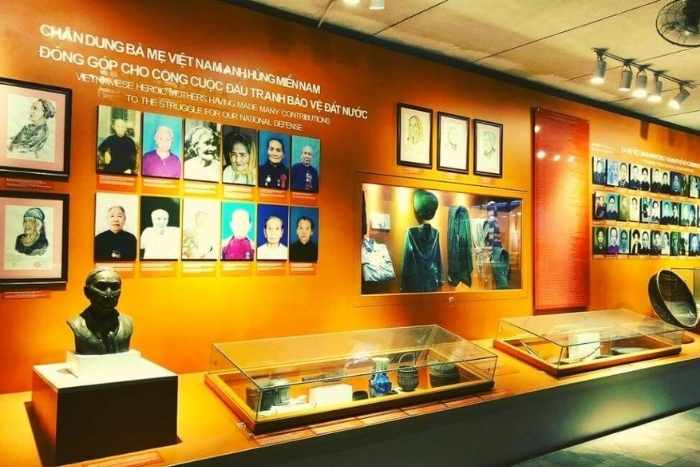
The third floor of the Vietnamese Women's Museum in Hanoi stands as a silent epic, honoring the heroic spirit and remarkable resilience of womankind through the nation's upheavals.
This section details the direct participation of generations of women in resistance wars, from the front lines to the home front. The historical objects on display do not solely celebrate acts of bravery; they also touch the public by revealing the daily lives of women under bombardment. Travelers contemplate a benevolent, unyielding, and courageous woman. The space also presents a luminous picture of women in peacetime, driven by passion, selflessness, and determination in the nation's reconstruction.
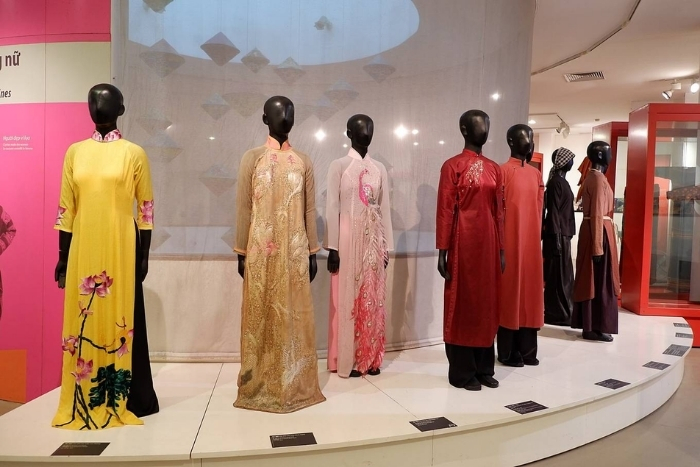
The fourth level opens a vibrant artistic space, bringing together the aesthetic treasures of the traditional costumes of the country's 54 ethnic groups. This gallery ranks among the best things to do in Hanoi for culture and craft enthusiasts.
The exhibition highlights fashion, weaving techniques, embroidery, and the art of motifs unique to each geographical area and spiritual belief. Visitors can admire refined ornaments and jewelry, illustrating the sharp aesthetic sense of local female artisans. It is also an opportunity to explore ancestral beauty customs, such as black teeth lacquering or betel chewing, which enhance the traditional charm and place this site among the must-sees in Hanoi.
The Hanoi Vietnam Women's Museum continuously conducts in-depth research and organizes temporary exhibitions with very rich themes. This space offers a multidimensional perspective on the status and role of women in the past, present, and future.
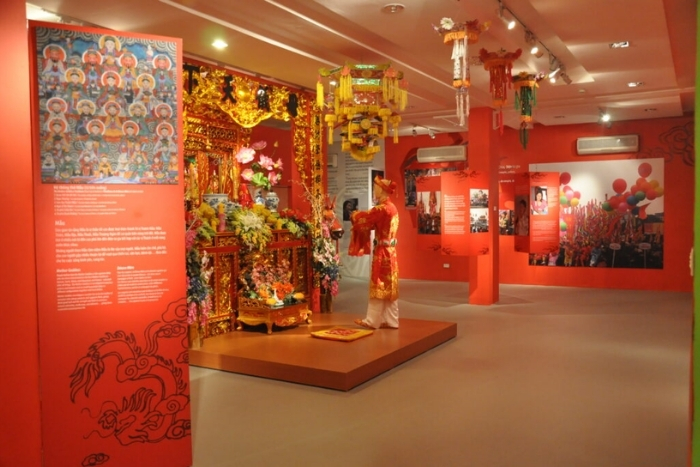
This thematic exhibition of the Vietnamese Women's Museum stages the spiritual life of the Vietnamese people closely linked to the mother figure, observed through the direct gaze of insiders. The route distills the unique beauty of the rituals of the Mother Goddess cult (Dao Mau) and mediumship trance ceremonies (Hau Dong), confirming the timeless vitality of this purely Vietnamese folk belief.
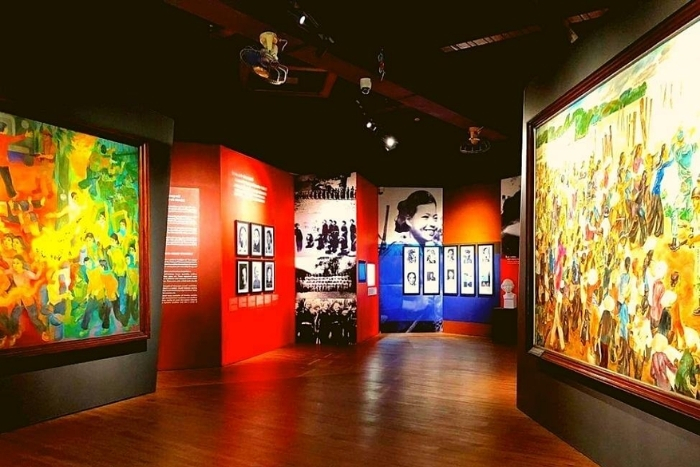
Upon ascending to the 5th floor, visitors have the opportunity to discover the contemporary art space of the Vietnamese Women's Museum in Hanoi. The highlight is the exhibition "Encounter of Yesterday and Today" (Cuoc gap go xua nay) by the painter Xuan Lam, presenting 20 modern works reinterpreting traditional folk prints.
The "Entrepreneurial Journey" exhibition pays tribute to 15 remarkable Vietnamese female figures. Driven by the will to rise, they overcame difficulties and prejudices to successfully create their businesses in diverse fields: early childhood education, community tourism, healthy food processing, vocational training, or healthcare for persons with disabilities.
Furthermore, the Vietnamese Women's Museum regularly organizes profound and humanistic thematic exhibitions on current social issues.
If you are looking for what to do in Hanoi or where to visit in Hanoi even for just a single day, do not miss this innovative cultural and artistic approach.
This section brings together archival documents and moving photographs on President Ho Chi Minh's role in female emancipation. The exhibition reaffirms his progressive thinking, which inextricably linked the liberation of women to the liberation of social classes and national independence.
This exhibition gathers direct testimonies of women who participated in the historic Dien Bien Phu campaign. It brings to life the heroic memory of the people, women, and armed forces who fought valiantly and braved all trials to forge victory, thus consolidating the renown of these galleries among the things to do in Hanoi.
Yes. In order to offer the best experience to international visitors looking for what to do in Hanoi, the Vietnamese Women's Museum provides audio guides in 5 common languages: Vietnamese, English, French, Japanese, and Korean.
To consult:
> When to visit Hanoi?
> How many days are enough in Hanoi?
Yes. The Vietnamese Women's Museum has a team of professional lecturer-guides dedicated to delegations and organized groups. In addition, the establishment designs special thematic tour programs for international tourists as well as enriching educational and extracurricular activities for children.
Yes. After exploring the Vietnamese Women's Museum Hanoi, you can visit the souvenir shop to purchase unique traditional handicraft items made by Vietnamese women, or relax with a drink at the café located on the site's premises. The establishment also provides equipped professional spaces for organizing meetings, conferences, and seminars.
Ranked among the Hanoi must-sees for its hospitality quality, the museum provides visitors with all its amenities free of charge:
Ideally located in the heart of the capital for travelers wondering what to do in Hanoi, the Vietnamese Women's Museum Hanoi offers a cultural and human immersion of rare depth. Between historical memory, exceptional crafts, and female empowerment, this stop stands out as one of the major Hanoi must-sees.
To seamlessly integrate the Vietnam Women's Museum into a tailor-made itinerary and explore the country off the beaten track, entrust your trip to AUTOUR ASIA, travel agency in Vietnam. Our team of expert guides designs authentic and customized tours according to your desires.


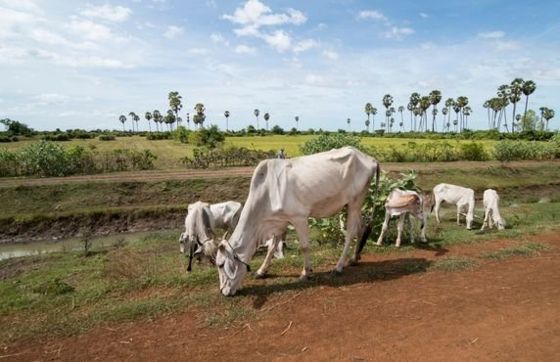
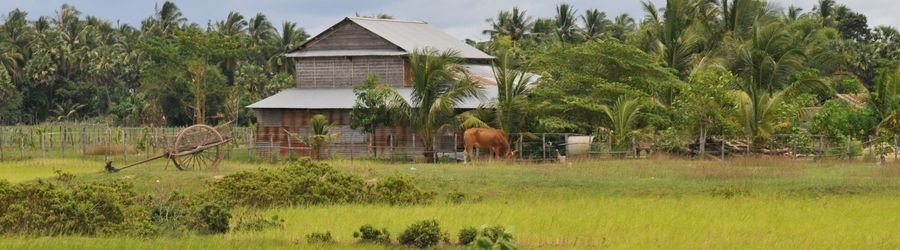
After exploring Angkor’s temples, bustling markets and the streets of Phnom Penh, Cambodia can also be discovered through its countryside. A weekend farm tour in Cambodia offers a chance to slow down and experience a rural way of life that remains closely connected to the land, the seasons and the harvest. Depending on the region, you may take part in farm activities, cook with a local family or follow rural paths between rice fields and orchards. This countryside escape is ideal for couples and families looking to experience Cambodia beyond the usual tourist routes. To make travel easier and choose an experience suited to your needs, a Cambodia travel company can also incorporate this rural immersion into a more comprehensive itinerary.
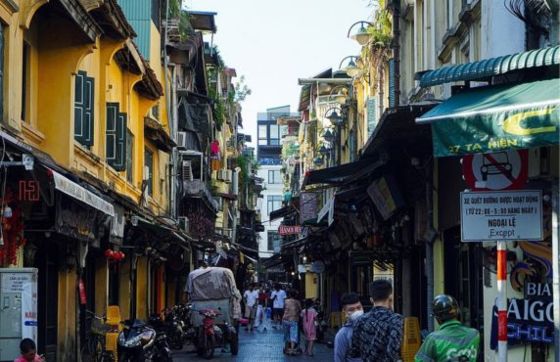
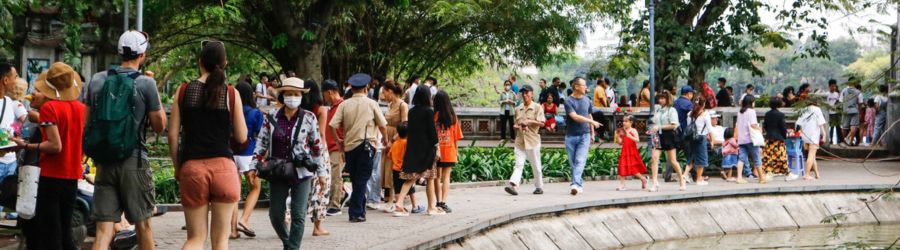
In Hanoi, walking is not just a way of getting around: it is one of the best ways to experience the rhythm of the capital. Between the bustling shopping streets of the Old Quarter, colonial-era façades, shady lakes and street food stalls, each area has its own atmosphere. But which Hanoi walking tour should you choose if you have half a day, a full day or just a few hours? This guide presents five ways to explore the city, from Hoan Kiem Lake to Long Bien Bridge, via Truc Bach and Hanoi’s food districts. Heritage, photography, gastronomy or local life: everyone can find a route that suits them. To plan a more comprehensive trip, the Local travel agency in Hanoi - Autour Asia can also help you incorporate Hanoi into the other stages of your itinerary.
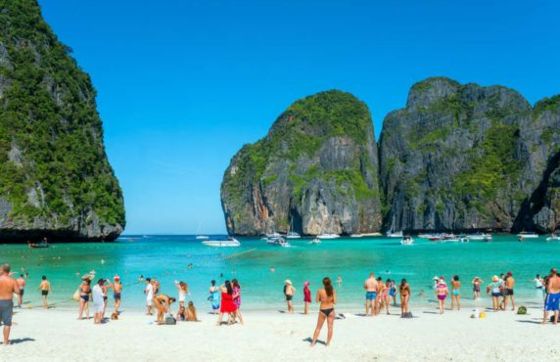

A 3 weeks in Vietnam with beach itinerary allows you to combine cultural discoveries, natural landscapes, and a few days of seaside relaxation, without turning the trip into a succession of transfers. In 21 days, it is possible to start in Hanoi, discover Ha Long Bay or Lan Ha Bay, continue to Hue and Hoi An, then head south before ending with a beach destination suited to the season. But where should you go to the beach in Vietnam? The answer depends mainly on the time of year: Phu Quoc is particularly suitable during the dry months in the South, while Da Nang, Hoi An, or Quy Nhon are good options during part of the year. To build a coherent itinerary, the Vietnam travel agency - Autour Asia can also adapt the stops to each traveler's pace and preferences.
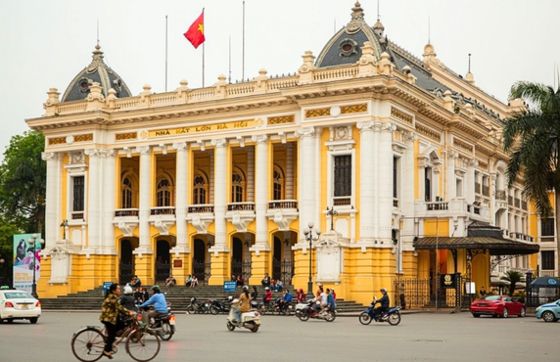
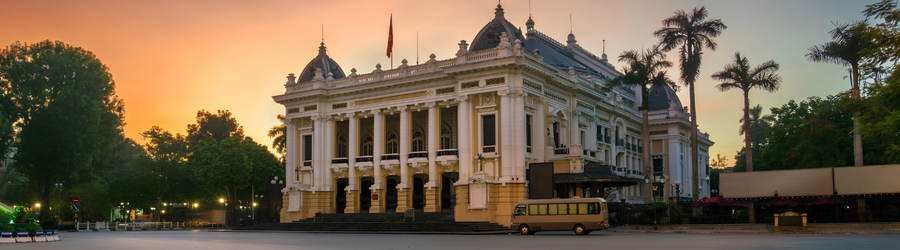
Located in the heart of Vietnam’s capital, the Hanoi Opera House is one of the city’s most iconic cultural and architectural landmarks. Built during the French colonial period, this elegant building has become an essential stop for travelers interested in Hanoi’s history and performing arts. But what can you actually see during a visit? Is visiting Hanoi Opera House possible without attending a show, and is a Hanoi Opera House tour worth adding to your itinerary? In this guide, discover the history, architecture, cultural significance and practical information you need to make the most of your visit to the Hanoi Opera House Vietnam.
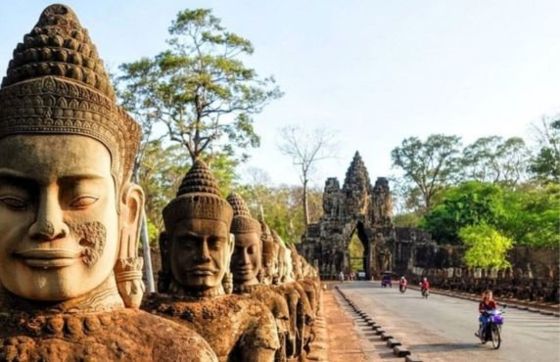



Traveling with children in southern Cambodia makes it easy to enjoy a variety of experiences: peaceful small towns, tropical landscapes, beaches, islands, local markets, and nature discoveries. To know where to visit Southern Cambodia with family, however, it is better not to include too many stops. Kampot, Kep, and the islands of Preah Sihanouk Province offer complementary atmospheres, with family-friendly activities and plenty of opportunities to relax. The choice mainly depends on the children’s age, your preferred pace, and the season. In this guide, we offer a balanced itinerary and practical ideas for organizing your stay, with advice from Cambodia travel company - Autour Asia to help you enjoy southern Cambodia without turning your holiday into a race against the clock.
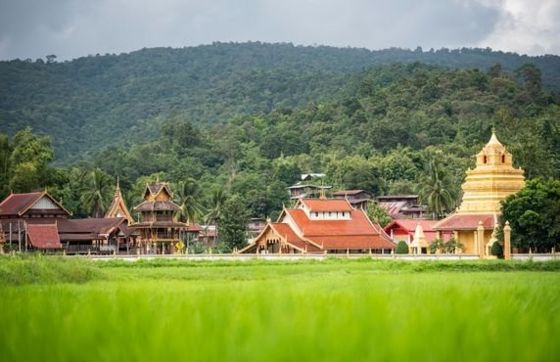

When we think of Thailand, the first images that often come to mind are temples, lively markets, tropical islands, or the beaches of the south. Yet, the country has another, more discreet side that is deeply connected to its identity: its countryside and agricultural heritage. Today, agritourism trends are attracting travelers looking for authentic experiences, closer to nature and local communities. To discover this different side of Thailand, a Thailand travel company can include rural stops in a classic itinerary. It is a great way to slow down, taste local products, and understand the daily life of local communities.


In the heart of Hanoi, some places tell the story and spirit of the Vietnamese capital better than others. Hoan Kiem lake is certainly one of them. Surrounded by trees, historic monuments and lively streets, it is a meeting point between heritage, traditions and daily life. A walk around the lake also allows visitors to experience the unique rhythm of Hanoi, from early-morning tai chi sessions to family walks and the lively atmosphere of the weekend. For travelers who want to discover the capital in a different way, this iconic site deserves a place in any itinerary planned by a Vietnam travel agency. But what is really hidden behind this famous lake?



 FR
FR EN
EN