

Customize this tour
FRFR ENEN
2 weeks in Vietnam 3 weeks in Vietnam 15 days in Vietnam
• 7,475 views Dang Thuc

Exploring Bat Trang Ceramic Village In Hanoi: A Signature Craft Of Vietnam.

1. Overview of Bat Trang's foundation.

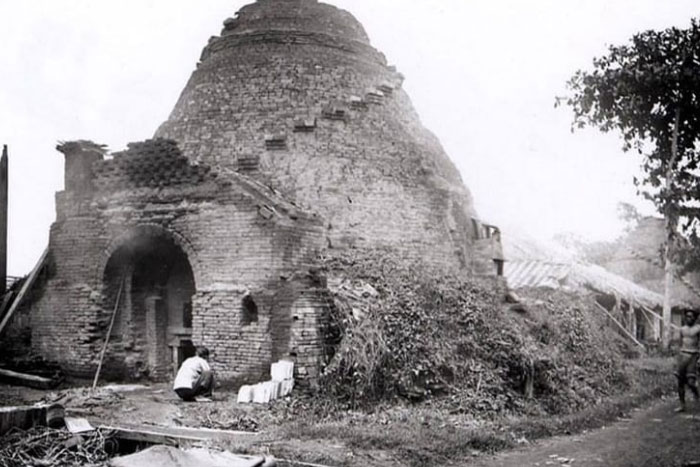
Old photo of Bat Trang village from before 2000.
Nestled on the banks of the Red River, Bat Trang is a charming village with a history dating back to the 14th century. Its strategic location along the river provided a convenient means of transporting goods and pottery to neighboring regions, shaping the village's identity as a cradle of Vietnamese ceramic artistry. The name "Bat Trang," where "Bat" signifies "bowl" and "Trang" denotes "workshop," offers a glimpse into its primary craft: pottery. The village's geographical setting, with picturesque riverside landscapes and lush rice fields, harmoniously blends nature and tradition. Bat Trang's foundation is rooted in the intricate artistry of pottery-making, with clay from the riverbanks serving as the lifeblood of this craft. Specializing in pristine white ceramics, Bat Trang continues to uphold a cultural legacy, keeping the ancient craft alive for generations to come. When you visit Bat Trang village, you step into the heart of a living museum, where the past, present, and future of Vietnamese pottery unite in harmony along the banks of the Red River.
 

2. Exploring Bat Trang ceramic village.

 
As one of the most popular tourist attractions, there are much to do once you reach this place. From its history to its craftsmanship, the village will surely satisfy your hunger for exploration and appreciation of local culture. So come along with us to see what you can do once you arrive.
 

a. Discover the ruins of this ancient village.

Ruins of Bat Trang old village.

When discussing Vietnam, the aspects that truly captivate tourists often derive from the diverse cultures of its 53 ethnic minorities rather than the more prevalent Viet or Kinh culture. Regrettably, many of the historical monuments belonging to the Kinh culture have been lost or severely damaged during the tumultuous wars that have scarred Vietnam's history. As a result, these once-majestic treasures now persist primarily in the recollections of the older generation, evoking a poignant sense of nostalgia. Luckily, Bat Trang is still very much a reality. The village stood the test of time, surviving through some of the roughest time in the country’s history, it had played a much important role as the birthplace of Vietnam Ceramic industry.
 
In the present day, this village has admirably retained its age-old charms, reminiscent of the quintessential Vietnamese rural landscape that has been immortalized in countless works of Vietnamese literature. Bat Trang Village proudly boasts narrow winding alleyways, picturesque antique houses, as well as gates and walls steeped in the echoes of a bygone era. Stepping into the village, you are transported back in time, where every nook and cranny reveals a history that weaves a tapestry of authentic and time-honored traditions.

b. Touring Van Van antique house.

 
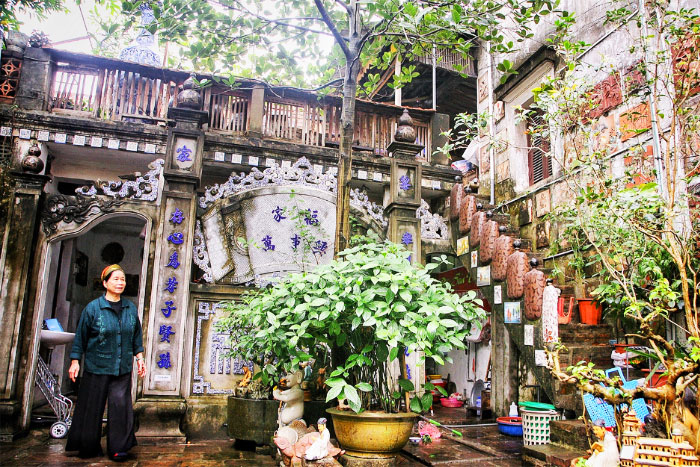
The entrance of Van Van acient house.
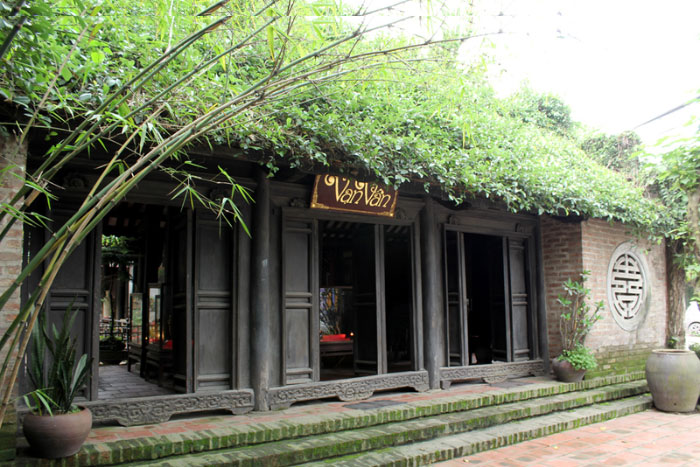
Erected in 2002 by Mr. Tran Ngoc Lam, "Vạn Vân," or "Ten Thousand Clouds," stands as a groundbreaking private museum in Vietnam. What sets "Van Van" apart is its distinctive composition, a patchwork of parts sourced from numerous ancient houses that the owner acquired and meticulously restored. The initial two sections of the house originate from two centuries-old Nam Dinh houses, meticulously preserved to reflect their original splendor from two centuries past. The third section remains an unaltered terracotta house.
The original acient house.
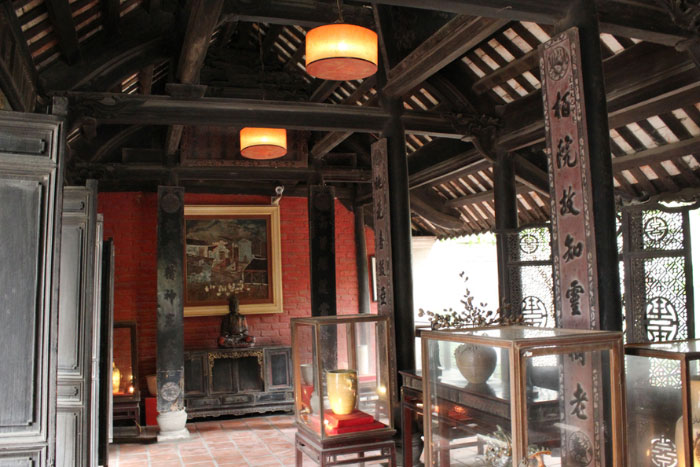
Fuelled by a resolute mission to restore Bat Trang's rich heritage, Mr. Lam dedicated over a decade to amass artifacts from across the nation, housing them within "Van Van." The collection includes more than 300 pieces, spanning from the 15th to the 19th century, with the most treasured being a pair of dragon-pattern vases. Generously bequeathed by a Nam Dinh family who entrusted Mr. Lam with their emblematic heirlooms. The museum not only boasts antique pottery but also contemporary creations, an array of wooden artifacts, and an impressive assortment of paintings. Here, the significance extends beyond the relics themselves; the museum's architectural marvel represents an almost flawless reimagining of ancient Vietnam.
 
The house has now become a place of tranquility, offering bamboo hammocks, chess, and tea for tourists who wish to take a rest here in the old Vietnam.
 

c. Take a walk through Tieu Dao Pagoda.


Mosaic piece at Tieu Dao pagoda.
Established during the Tran dynasty (1226-1400), in the village next to Bat Trang Hanoi, this pagoda has witnessed numerous transformations and renovations. However, it wasn't until 2011, following years of neglect and the scars of war, that a significant restoration took place, thanks to the dedicated efforts of artisans. This revitalization turned the pagoda into a sanctuary for the art of ceramic craftsmanship.
 
Before 1945, Tieu Dao pagoda served a secret role as the repository for books and documents of the Vietnamese party. It was also here that the song now recognized as Vietnam's national anthem, "Tiến Quân Ca," found its voice. After several expansions, the pagoda now spans more than 8000 square meters.
 
The overall structure, though unconventional, still embodies the essence of Buddhism in Vietnam, emphasizing harmony with nature. The pagoda now houses approximately 80 ceramic statues, as well as an array of paintings and decorations, all meticulously crafted from the renowned porcelain of Bat Trang, depicting the lives of monks and disciples.
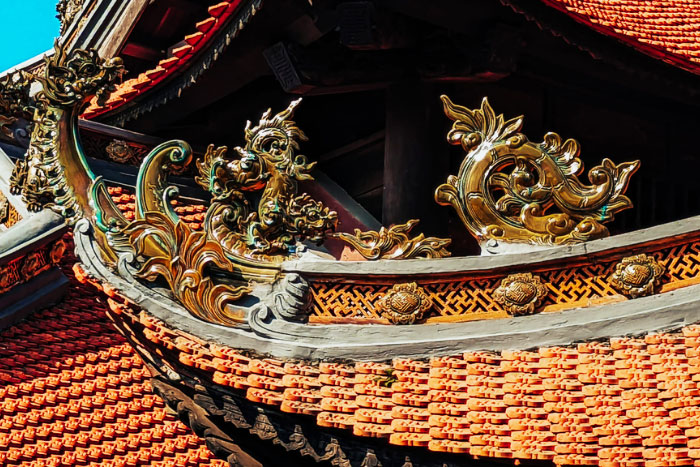
Decoration on Tieu Dao pagoda's roofs.
If you have a keen interest in Buddhism, a visit to this pagoda is bound to be a deeply satisfying experience. However, the pagoda doesn't seem to be open for visitors on Saturday and Monday, so choose your time wisely. 

d. Visit the pottery museum.

 
Bat Trang ceramic museum
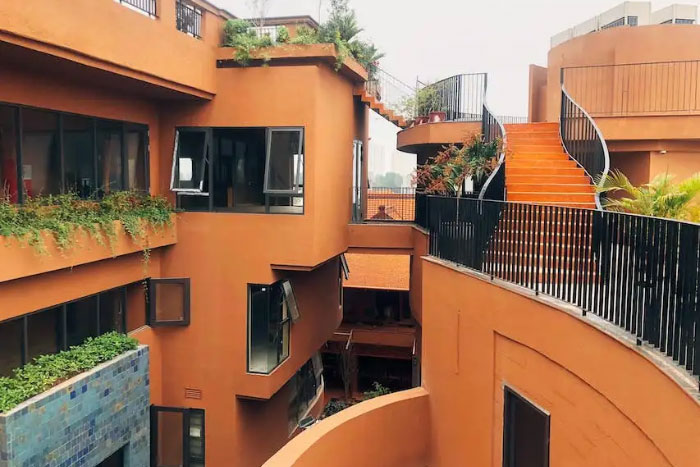
Resembling that of a clay turntable, Bat Trang pottery museum was opened in 2018 in hope to reignite the fire in the heart of the people to the craft of Vietnam ceramic, as more and more Vietnamese turn to cheap Chinese products. It also serves as a contribution to the ancestors and founder of the village and to honor all traditional values of the craft. 
 
The museum is a reflection of the rich cultural tapestry and heritage of pottery. As you step inside, you'll immediately notice the graceful curvature of its walls, adorned with colors reminiscent of clay and silt. This artistic architecture pays homage to the very essence of the village and the craft it celebrates. Remarkably, although the museum's design is distinctive and contemporary, it seamlessly blends with the village's timeless ambience, enhancing your cultural immersion.
 
The museum unfolds over five spacious floors, each brimming with a diverse range of activities to captivate your senses and curiosity. The 2nd floor showcases a breathtaking pottery exhibition, old and new, a testament to the skill and creativity of the local artisans. Adjacent to it, you'll find inviting restaurants, cozy cafes, and a tranquil tea house, a perfect spot for you to take a breath and relax.
 
Venturing to the third floor, you'll discover a unique offer – nine homestay rooms. If you wish to prolong your stay and savor the village's charm, these rooms provide a perfectly comfortable accommodation. Gazing out of your window, you can take in the picturesque views of the entire village and the meandering riverside, a truly serene experience.
Homestay inside Bat Trang ceramic museum.
Furthermore, the museum's strategic location, right in the heart of the village, ensures that all of Bat Trang's attractions are within easy reach. It is designed with your convenience in mind, making every destination, whether it's a workshop, a historic site, or a charming cafe, readily accessible.
 
For those seeking an immersive experience that transcends the boundaries of Bat Trang and a glimpse of Vietnamese long heritage, this museum is the perfect destination. It captures not only the essence of the village but also provides a brief yet enriching glimpse into the cultural mosaic of Vietnam.

e. Visit a workshop and make your own pottery.

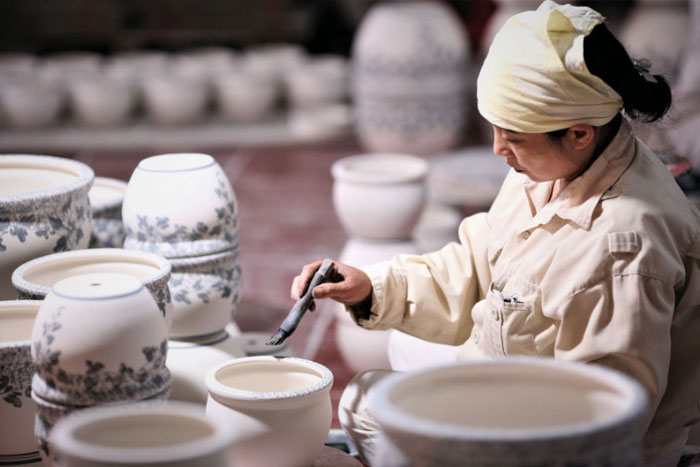
A ceramic workshop at Bat Trang.

When you step into the timeless embrace of Bat Trang Village, you'll be met with an invitation to create. And we're not talking about your run-of-the-mill souvenirs; we're talking about crafting your very own Bat Trang ceramic masterpiece. It is a hands-on experience that offers a glimpse into the heart and soul of this historic village.

At any workshop in the village, a meager 30 minutes and approximately 50,000 to 100,000 VND (which translates to a mere 2.04 to 4.07 USD) is all it takes to embark on your ceramic journey. You can delve into the world of craftsmanship at any workshop in the village, and even at the museum, like the Ban Xoay Studio, where the magic unfolds.

As you start crafting your very own ceramic masterpiece, the artisans of Bat Trang stand ready, eager to lend a helping hand to ensure your vision comes to life. It is a process that invites collaboration, where you'll receive guidance and support from those who have honed their skills over generations.
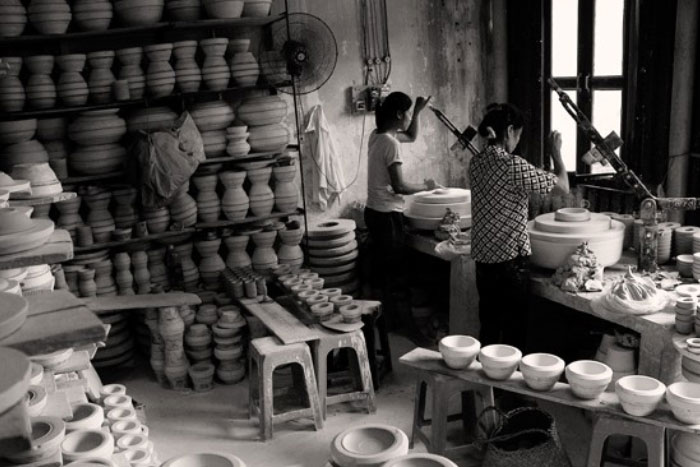
An old photo of a ceramic workshop.

But here's the exciting part: once your creation is complete, you get to choose your adventure. You can opt to stay alongside the artisans as they work their magic, expertly glazing and firing your creation. Or, if your inner artist is ready to shine, you can take on the role of the painter, adding the finishing touches to a tiny statue.

With your artistic endeavor complete, all that's left is to sit back, relax, and eagerly anticipate the moment your one-of-a-kind souvenir emerges from the kiln, transformed into a timeless piece of Bat Trang ceramic art. It is a creation that carries not just the marks of your hands but also the spirit of a village that has cherished its craft for centuries.

So, as you explore the narrow lanes and artisans' workshops of Bat Trang Village, consider this creative adventure, where your hands can mold the clay, and your heart can connect with a tradition that's as enduring as the village itself.
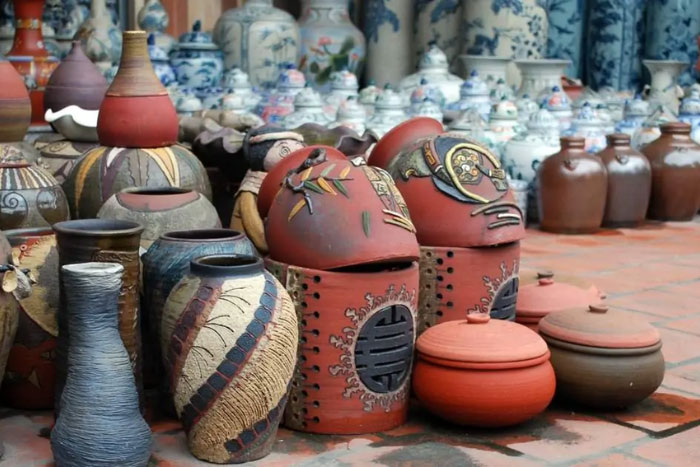
f. Get some souvenirs at the ceramic market.

 
The ceramic products in Bat Trang market.
If you want a souvenir to bring back to your friend and family but making clayware isn’t of your interest, then take a stroll down the ceramic market to find your prize. Authentic Bat Trang ceramic shop offer a wide variety of products, from tiny ceramic flutes to vases and many more, the market is a great place to go shopping for gifts. However, do pay attention to not buy the cheap Chinese goods as it is not as durable and much more harmful to the user. 
 
Tips on how to distinguish Bat Trang ceramic from Chinese version are:
  • Bat Trang potteries are handmade and hand drawn, while the chinese ones are simply inlay decals. So while Chinese patterns are all uniform, Bat Trang patterns are all unique.

  • Color is also a factor to identify the two. Bat Trang’s design only consists of 2 or 3 colors that are more elegant but simple like blue, green, or red while chinese design is much more vibrant but will fade after a few months. 

  • Bat Trang pottery is also heavier than that of Chinese, making it much more durable and long lasting.

So, venture through Bat Trang's ceramic market. Your souvenirs will not only bring joy to your loved ones but also carry the heart and soul of a village that has mastered the art of ceramics for centuries. It is a journey that transforms shopping into a celebration of culture and craftsmanship.

You might be interested in Van Phuc Silk Village!

3. How to go from Hanoi to Bat Trang.

 
Traveling from Hanoi to Bat Trang is relatively straightforward, as Bat Trang is located just a short distance from the capital city. Here are the typical transportation options:
  • By Bus: The most cost-effective way to reach Bat Trang from Hanoi is by taking a public bus. You can catch a bus from the Long Bien Bus Station, located on the outskirts of Hanoi. Bus route numbers 47A, 47B, and 52B are commonly used to reach Bat Trang. The bus ride should take around 40 minutes to an hour, and it is an economical way to get to the village.

    Bus number 47 to Bat Trang.
  • By Taxi: Another convenient option is to hire a taxi or a ride-sharing service (like Grab) for a more comfortable and direct journey. The ride from Hanoi to Bat Trang should take around 30 minutes, depending on traffic conditions.

  • By Motorbike or Scooter: If you're comfortable riding a motorbike or scooter, you can rent one in Hanoi and make your way to Bat Trang independently. The journey takes roughly 30 minutes, but be sure to have a local map or GPS to navigate the roads.


4. Suggested travel Itinerary to Bat Trang Village from Hanoi.

 
Here's a suggested travel itinerary from Hanoi to Bat Trang ceramic village. This itinerary is designed to make the most of your visit in just one day: 
 
  • Morning: Depart from Hanoi: Start your day early by departing from Hanoi, which is about 13 kilometers away from Bat Trang Village. You can use a taxi or a ridesharing service like Grab for a convenient and quick journey. Arrive in Bat Trang: Arrive in Bat Trang Village, a picturesque village famous for its pottery and ceramics.
  • Late Morning: Begin your exploration at Tieu Dao Pagoda, a serene and culturally significant site in the village. Take some time to admire the pagoda's architecture and learn about its history.
  • Lunch at a Local Restaurant: Enjoy a delicious Vietnamese meal at a local restaurant in Bat Trang. Savor traditional dishes and perhaps sample some local specialties.
  • Afternoon:
    • Hands-On Pottery Workshop: Participate in a hands-on pottery workshop. Many workshops in Bat Trang offer guided sessions where you can create your ceramic masterpiece under the guidance of local artisans. This is an excellent opportunity to experience the art of pottery making.
    • Visit Bat Trang pottery museum: Explore the Bat Trang pottery museum in the afternoon. The museum provides insights into the village's history and showcases a variety of ceramic pieces, both historical and contemporary.
  • Late Afternoon:
    • Explore the ancient Village: Take a leisurely stroll through the village streets, observing local artisans at work in their workshops. You can also visit some of the ancient communal houses and temples in the village to immerse yourself in its culture.
    • Rest at Van Van ancient house: After a day of exploration, take a well-deserved break at Van Van Ancient House. Relax and enjoy the ambiance of this historic house.
    • Shopping for Souvenirs: Shop for Souvenirs at the ceramic market: Before you leave, don't forget to pick up some ceramic souvenirs or gifts. You can purchase unique, handcrafted items as mementos of your visit to Bat Trang.
  • Evening: Return to Hanoi: In the evening, head back to Hanoi, bringing your memorable Bat Trang experience to a close.
This itinerary offers an immersive experience in Bat Trang ceramic village, allowing you to explore the village's highlights, shop for ceramics, create your own pottery, and learn about its rich history and culture. You can adjust the schedule based on your interests and the amount of time you have available for your trip.

Hopefully the information we provided above is helpful for your voyage to discover the authentic ceramic village of Bat Trang. We eagerly anticipate that your voyage to this breathtaking destination will unfold as a truly memorable and enchanting experience.

To ensure a satisfying experience far beyond your expectations, please CONTACT US now.

Discover more of Vietnam Traditional Craft Villages!
Take a look at our Hanoi Travel Guide!
0.0
No reviews yet
Share this article
Author:Dang Thuc

Leave a comment

Your email address will not be published.

Related articles

What To Do On A Weekend Farm Tour In Cambodia?
8 October 2026 434 views

What To Do On A Weekend Farm Tour In Cambodia?

Noah Places to visit & things to do
Leave the big cities behind and find peace among the rice fields

After exploring Angkor’s temples, bustling markets and the streets of Phnom Penh, Cambodia can also be discovered through its countryside. A weekend farm tour in Cambodia offers a chance to slow down and experience a rural way of life that remains closely connected to the land, the seasons and the harvest. Depending on the region, you may take part in farm activities, cook with a local family or follow rural paths between rice fields and orchards. This countryside escape is ideal for couples and families looking to experience Cambodia beyond the usual tourist routes. To make travel easier and choose an experience suited to your needs, a Cambodia travel company can also incorporate this rural immersion into a more comprehensive itinerary.


Which Hanoi Walking Tour Is The Best To Choose?
7 October 2026 860 views

Which Hanoi Walking Tour Is The Best To Choose?

Noah Places to visit & things to do

Discover which Hanoi walking tour to choose

In Hanoi, walking is not just a way of getting around: it is one of the best ways to experience the rhythm of the capital. Between the bustling shopping streets of the Old Quarter, colonial-era façades, shady lakes and street food stalls, each area has its own atmosphere. But which Hanoi walking tour should you choose if you have half a day, a full day or just a few hours? This guide presents five ways to explore the city, from Hoan Kiem Lake to Long Bien Bridge, via Truc Bach and Hanoi’s food districts. Heritage, photography, gastronomy or local life: everyone can find a route that suits them. To plan a more comprehensive trip, the Local travel agency in Hanoi - Autour Asia can also help you incorporate Hanoi into the other stages of your itinerary.


The Best 3 Weeks In Vietnam Itinerary With Beaches - Our Travel Guide
18 September 2026 1,368 views

The Best 3 Weeks In Vietnam Itinerary With Beaches - Our Travel Guide

Noah Places to visit & things to do

The best 3 weeks in Vietnam Itinerary with beaches - Our travel guide

A 3 weeks in Vietnam with beach itinerary allows you to combine cultural discoveries, natural landscapes, and a few days of seaside relaxation, without turning the trip into a succession of transfers. In 21 days, it is possible to start in Hanoi, discover Ha Long Bay or Lan Ha Bay, continue to Hue and Hoi An, then head south before ending with a beach destination suited to the season. But where should you go to the beach in Vietnam? The answer depends mainly on the time of year: Phu Quoc is particularly suitable during the dry months in the South, while Da Nang, Hoi An, or Quy Nhon are good options during part of the year. To build a coherent itinerary, the Vietnam travel agency - Autour Asia can also adapt the stops to each traveler's pace and preferences.


Visiting The Hanoi Opera House In Vietnam
15 September 2026 1,252 views

Visiting The Hanoi Opera House In Vietnam

Phuong Tran Places to visit & things to do

Visiting the Hanoi Opera House in Vietnam

Located in the heart of Vietnam’s capital, the Hanoi Opera House is one of the city’s most iconic cultural and architectural landmarks. Built during the French colonial period, this elegant building has become an essential stop for travelers interested in Hanoi’s history and performing arts. But what can you actually see during a visit? Is visiting Hanoi Opera House possible without attending a show, and is a Hanoi Opera House tour worth adding to your itinerary? In this guide, discover the history, architecture, cultural significance and practical information you need to make the most of your visit to the Hanoi Opera House Vietnam.

Vietnam Or Cambodia? Which Destination To Pick And Why?
12 September 2026 1,019 views

Vietnam Or Cambodia? Which Destination To Pick And Why?

Noah Places to visit & things to do

Vietnam and Cambodia offer two very different experiences

Choosing between Vietnam or Cambodia for a first trip to Southeast Asia can seem difficult, as both countries offer a rich culture, renowned cuisine and highly diverse landscapes. However, the travel experience is quite different. Vietnam is particularly suitable for travelers who want to combine major cities, heritage, nature, gastronomy and beaches during the same trip. Cambodia is more appealing to those interested in Khmer heritage, iconic temples and a more peaceful atmosphere in certain regions. To determine the best destination to travel to between Cambodia and Vietnam, you should therefore mainly consider the length of your stay, the type of travel experience you are looking for and the regions you wish to discover. With Vietnam travel agency - Autour Asia, you can also create an itinerary combining several experiences without unnecessarily multiplying your journeys.
Where To Visit Southern Cambodia With Family?
12 September 2026 1,167 views

Where To Visit Southern Cambodia With Family?

Noah Places to visit & things to do

A family discovers the southern coast of Cambodia

Traveling with children in southern Cambodia makes it easy to enjoy a variety of experiences: peaceful small towns, tropical landscapes, beaches, islands, local markets, and nature discoveries. To know where to visit Southern Cambodia with family, however, it is better not to include too many stops. Kampot, Kep, and the islands of Preah Sihanouk Province offer complementary atmospheres, with family-friendly activities and plenty of opportunities to relax. The choice mainly depends on the children’s age, your preferred pace, and the season. In this guide, we offer a balanced itinerary and practical ideas for organizing your stay, with advice from Cambodia travel company - Autour Asia to help you enjoy southern Cambodia without turning your holiday into a race against the clock. 
How Does Agritourism Impact Rural Thailand And Local Communities?
10 September 2026 884 views

How Does Agritourism Impact Rural Thailand And Local Communities?

Noah Places to visit & things to do
New agritourism trends in Thailand offer a different way to travel

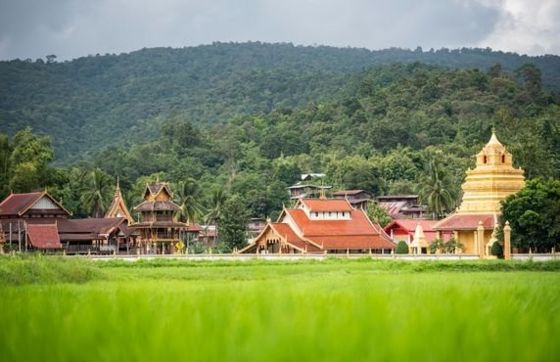
When we think of Thailand, the first images that often come to mind are temples, lively markets, tropical islands, or the beaches of the south. Yet, the country has another, more discreet side that is deeply connected to its identity: its countryside and agricultural heritage. Today, agritourism trends are attracting travelers looking for authentic experiences, closer to nature and local communities. To discover this different side of Thailand, a Thailand travel company can include rural stops in a classic itinerary. It is a great way to slow down, taste local products, and understand the daily life of local communities. 

Is Hoan Kiem Lake Worth Visiting In Hanoi?
3 September 2026 1,052 views

Is Hoan Kiem Lake Worth Visiting In Hanoi?

Noah Places to visit & things to do
Hoan Kiem lake, the peaceful heart of Hanoi

In the heart of Hanoi, some places tell the story and spirit of the Vietnamese capital better than others. Hoan Kiem lake is certainly one of them. Surrounded by trees, historic monuments and lively streets, it is a meeting point between heritage, traditions and daily life. A walk around the lake also allows visitors to experience the unique rhythm of Hanoi, from early-morning tai chi sessions to family walks and the lively atmosphere of the weekend. For travelers who want to discover the capital in a different way, this iconic site deserves a place in any itinerary planned by a Vietnam travel agency. But what is really hidden behind this famous lake? 

Hanoi, Vietnam
Satisfied more than expected
Phone & WhatsApp+84 971 33 77 08
Hanoi, Vietnam
Hanoi, Vietnam
MAY Place, 38/11 Hoang Cau, O Cho Dua Ward, Hanoi
Ho Chi Minh City, Vietnam
103/2 Tran Thai Tong, Tan Son Ward, Ho Chi Minh City
Siem Reap, Cambodia
007 Merry, Svay Dangkhum
Contact us WhatsApp Customize this tour