
Top 20 Handicraft Villages Around Hanoi Not To Be Missed
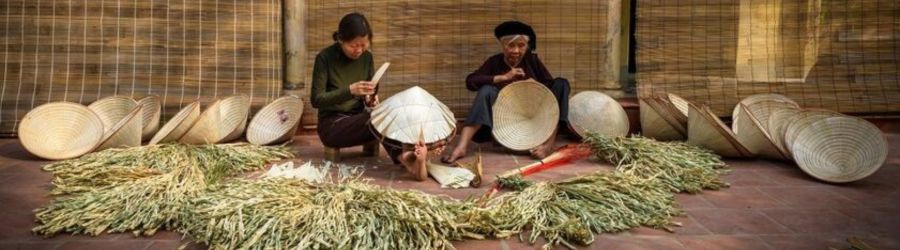
Northern Vietnam is not only about the breathtaking landscapes of Ha Long Bay or the bustling streets of Hanoi. Just a short distance from the capital, numerous handicraft villages around Hanoi have preserved centuries-old craftsmanship passed down from one generation to the next. Pottery, silk weaving, lacquerware, wood carving, incense making, and conical hat production, each village has its own identity, history, and specialties. These excursions offer an excellent opportunity to experience a more authentic side of Vietnam while meeting the artisans who keep this unique cultural heritage alive. To organize a trip tailored to your interests, Vietnam travel agency - Autour Asia can help create a personalized itinerary to explore the most beautiful handicraft villages in the Hanoi region.
👤 Author: Noah
English travel marketing expert at Autour Asia.
✔️ Find the author on: Facebook Noah, Linkedin Noah, Twitter Noah
✅ Content verified by: Tran Ba Duy
Founder of Autour Asia, with over 20 years of experience in inbound tourism for English-speaking, European, and North American travelers.
🌏 Why trust this travel guide?
✔️ Based on real tours organized by our local team across Vietnam, Cambodia, Thailand, Laos, Bali, and Myanmar.
✔️ Regularly updated to reflect the latest travel conditions, seasonal changes, prices, and local regulations.
✔️ More than 25,000 travelers served, 8,000 tailor-made tours successfully organized, and 1,500 five-star reviews from international travelers.
✔️ Written by a team of travel experts based in Vietnam, with in-depth local knowledge and first-hand expertise across Indochina's top destinations.
Table of Contents
I. Why visit the handicraft villages around Hanoi?
The handicraft villages around Hanoi represent an essential part of Vietnam's cultural heritage. For centuries—sometimes over a thousand years-these villages have specialized in a single craft, such as ceramics, silk weaving, wood carving, basket weaving, or incense making. Even today, local families continue to preserve these traditions while adapting their production to modern tastes.
Unlike museums, these villages allow visitors to watch artisans at work, join hands-on workshops, and interact directly with local residents. They also provide the opportunity to purchase locally made handicrafts that are often of higher quality than souvenirs sold in tourist areas. To discover these traditional skills under the best conditions, Vietnam travel agency - Autour Asia offers personalized excursions that allow travelers to meet local artisans and explore several villages in a single day.
Located between 15 and 70 kilometers from Hanoi, most of these villages can easily be visited on a day trip, offering an authentic immersion into Vietnam's living craft traditions.
II. Top 8 handicraft villages around Hanoi you should visit
1. Bat Trang Pottery Village
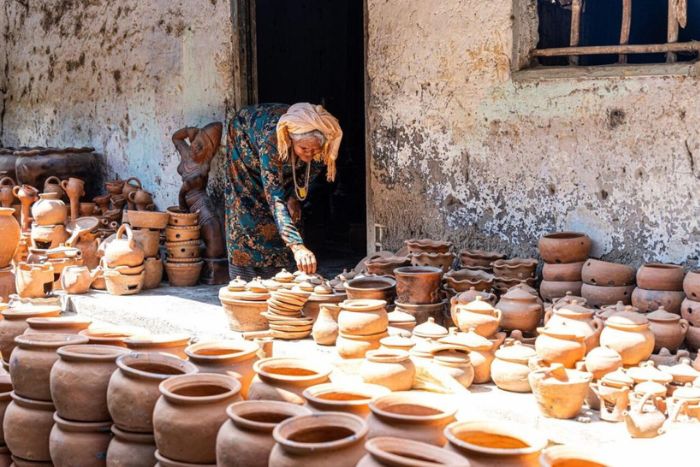
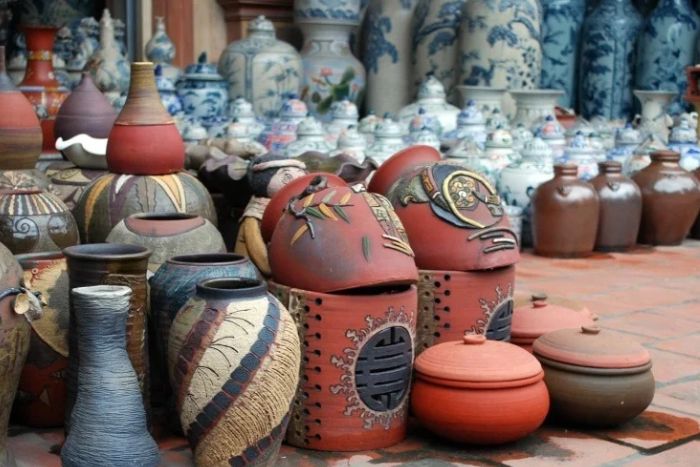
Located on the banks of the Red River, Bat Trang is undoubtedly the most famous of all the handicraft villages around Hanoi. With a history spanning more than 700 years, it has become one of Vietnam's leading ceramic production centers.
Visitors can stroll through the narrow streets lined with workshops, discover thousands of handcrafted ceramic products, and watch every stage of the manufacturing process, from shaping the clay to glazing and firing. Many workshops also offer pottery-making classes where visitors can create and decorate their own pieces.
The Bat Trang Ceramic Market is another must-see attraction, showcasing everything from tableware and decorative objects to contemporary art pieces. It is the perfect place to purchase authentic souvenirs while supporting local artisans.
> Address: Bat Trang Commune, Gia Lam District, Hanoi
> Distance from Hanoi: Approximately 15 km
> Opening hours: 08:00 AM - 05:30 PM
> Entrance fee: Free (pottery workshops: from $2 to $6 depending on the activity).
2. Van Phuc Silk Village
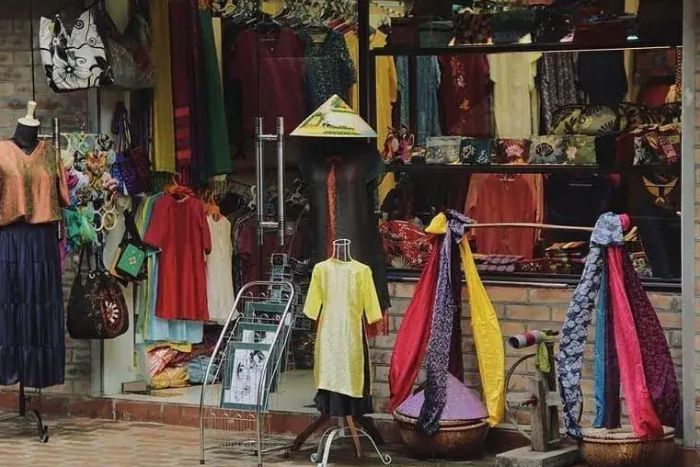
Among the most prestigious handicraft villages around Hanoi, Van Phuc has been renowned for producing high-quality silk for more than a thousand years. Once reserved for the imperial court, Van Phuc silk is now appreciated worldwide for its softness, durability, and elegant patterns.
Walking through the village, visitors can observe traditional wooden looms operating alongside modern weaving equipment. Many family-run workshops explain the different stages of silk production, from silkworm cocoons to the finished fabric.
The pedestrian streets are lined with boutiques selling scarves, áo dài, clothing, ties, and home décor made from natural silk. Seasonal cultural events also help preserve and promote the village's rich heritage.
> Address: Van Phuc Ward, Ha Dong District, Hanoi
> Distance from Hanoi: Approximately 10 km
> Opening hours: 08:00 AM - 06:00 PM
> Entrance fee: Free.
3. Quang Phu Cau Incense Village
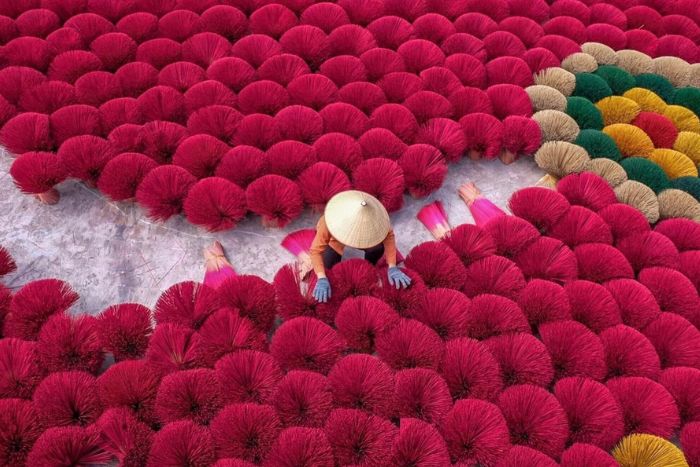
Quang Phu Cau has become one of the most photographed handicraft villages around Hanoi, thanks to the spectacular bundles of bright red incense sticks drying under the sun.
For generations, local families have specialized in producing bamboo incense sticks before coating them with fragrant powders made from cinnamon, sandalwood, star anise, and other natural ingredients. During the drying process, the incense bundles create stunning geometric patterns that attract photographers from around the world.
Beyond its visual appeal, the village offers visitors an opportunity to better understand the cultural and spiritual significance of incense in Vietnamese daily life and religious traditions.
> Address: Quang Phu Cau Commune, Ung Hoa District, Hanoi
> Distance from Hanoi: Approximately 35 km
> Opening hours: 07:30 AM - 05:30 PM
> Entrance fee: Free (some workshops may charge a small photography fee).
4. Ha Thai Lacquerware Village
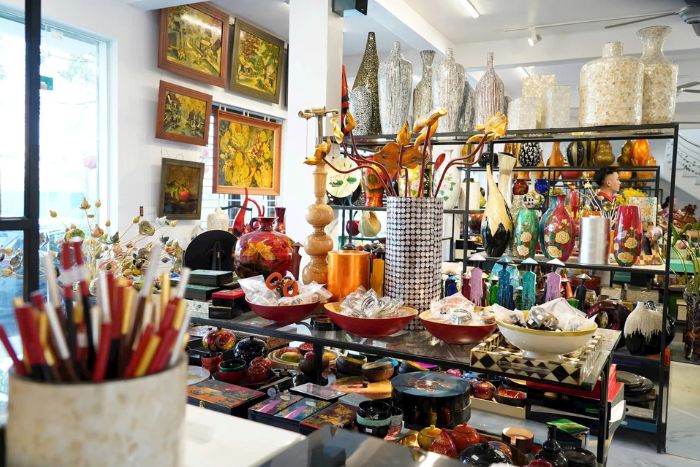
Ha Thai is considered one of Vietnam's leading centers of lacquer art. For more than 200 years, artisans have mastered sophisticated techniques combining natural lacquer, eggshell, mother-of-pearl, gold leaf, and wood to produce elegant decorative pieces.
Visitors can explore family workshops where each creation goes through numerous stages, including polishing, layering lacquer, decorating, and finishing. This meticulous craftsmanship requires remarkable patience and precision, with some masterpieces taking several months to complete.
Today, Ha Thai continues to innovate by combining traditional techniques with contemporary designs while preserving its artistic heritage.
> Address: Duyen Thai Commune, Thuong Tin District, Hanoi
> Distance from Hanoi: Approximately 20 km
> Opening hours: 08:00 AM - 05:00 PM
> Entrance fee: Free.
5. Chuong Conical Hat Village
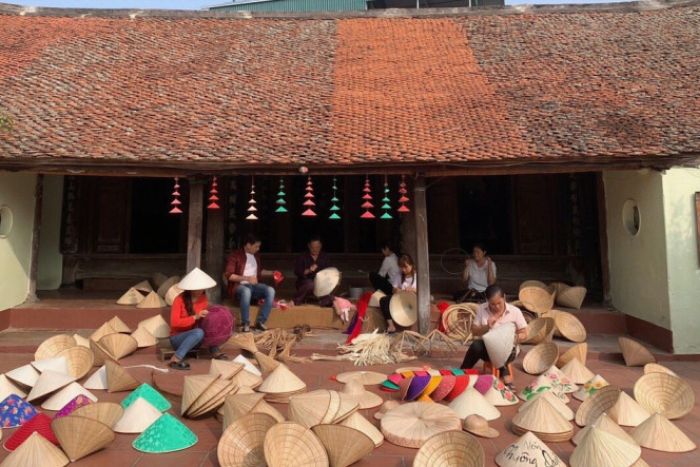
Among the most iconic handicraft villages around Hanoi, Chuong Village is famous for preserving the traditional craft of making Vietnam's conical hats (nón lá). This centuries-old village continues to supply handmade hats to many provinces across the country.
Visitors can observe every stage of production, from selecting palm leaves and bamboo strips to stitching each hat entirely by hand. Despite the simplicity of the materials, crafting a perfectly symmetrical conical hat requires remarkable skill and patience. Some workshops also allow visitors to decorate their own hats and take them home as personalized souvenirs.
Every month, the traditional Chuong Market brings together artisans from neighboring villages who sell hats, raw materials, and handcrafted products, creating a lively atmosphere that reflects the village's enduring traditions.
> Address: Phuong Trung Commune, Thanh Oai District, Hanoi
> Distance from Hanoi: Approximately 30 km
> Opening hours: 08:00 AM - 05:00 PM
> Entrance fee: Free.
6. Son Dong Wood Carving Village
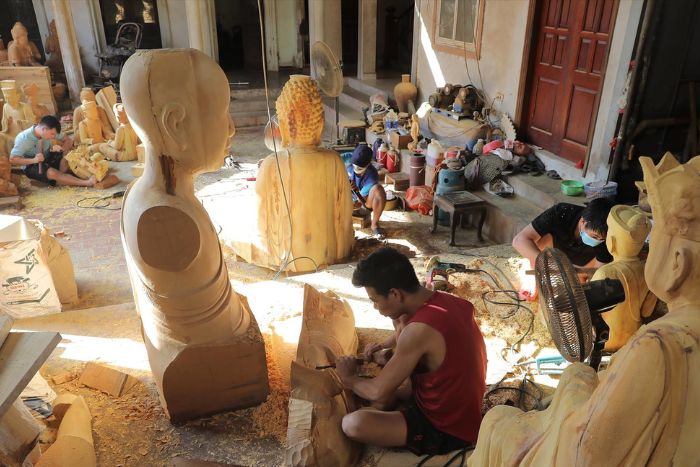
Located west of Hanoi, Son Dong has been renowned for wood carving and religious sculpture for more than 800 years. The village specializes in producing Buddhist statues, temple decorations, lacquered altars, and intricate wooden furnishings found throughout Vietnam.
Walking through the workshops, visitors can admire artisans carefully carving wood by hand using techniques passed down through generations. Massive wooden statues, ornate dragon motifs, and delicate gilded details showcase the exceptional craftsmanship that has made Son Dong famous nationwide.
Beyond religious sculptures, many workshops now create decorative furniture and contemporary wooden artwork, successfully blending traditional techniques with modern design.
> Address: Son Dong Commune, Hoai Duc District, Hanoi
> Distance from Hanoi: Approximately 25 km
> Opening hours: 08:00 AM - 05:00 PM
> Entrance fee: Free.
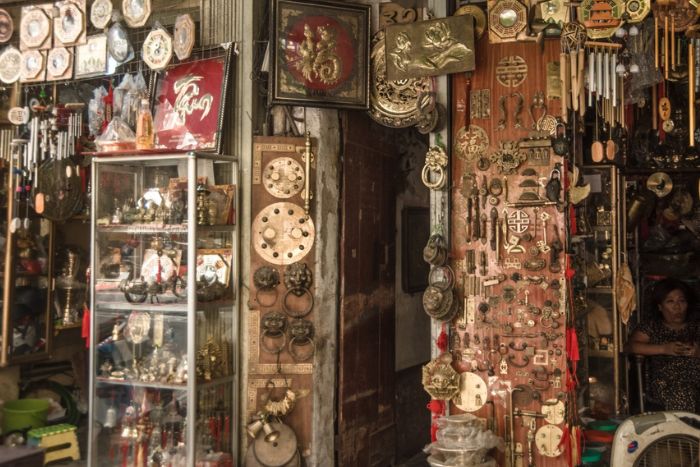
7. Ngu Xa Bronze Casting Village
Founded in the 15th century on the shores of Truc Bach Lake, Ngu Xa is one of Vietnam's oldest bronze-casting villages. Originally located outside Hanoi before becoming part of the expanding capital, the village gained its reputation through the creation of monumental statues, temple bells, incense burners, and ceremonial objects for pagodas and shrines across the country.
Today, several workshops continue to preserve this traditional craft. Visitors can witness the fascinating production process, from mold preparation to the spectacular pouring of molten bronze. Small family-run shops also display sculptures, decorative objects, and handcrafted souvenirs made on-site.
Thanks to its location close to Hanoi's Old Quarter, Ngu Xa is an excellent stop for travelers wishing to explore more handicraft villages around Hanoi without leaving the city.
> Address: Ngu Xa Street, Ba Dinh District, Hanoi
> Distance from Hanoi Old Quarter: Approximately 3 km
> Opening hours: 08:00 AM - 05:00 PM
> Entrance fee: Free.
8. Phu Vinh Bamboo and Rattan Village
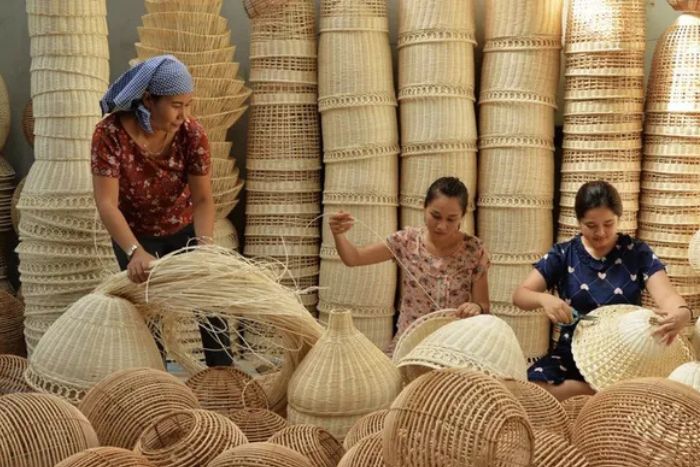
Located in Chuong My District, Phu Vinh has been famous for its bamboo and rattan weaving for more than 400 years. Local artisans produce an impressive range of handmade items, including baskets, lampshades, handbags, furniture, trays, and decorative pieces that are exported worldwide.
A visit to the village offers the opportunity to observe the meticulous weaving process. Every bamboo or rattan strip is carefully selected, dried, and woven entirely by hand to create elegant yet durable products. Some workshops also welcome visitors for demonstrations and short introductory classes.
For travelers interested in sustainable design and eco-friendly handicrafts, Phu Vinh is one of the most rewarding handicraft villages around Hanoi. Its creations beautifully combine Vietnamese tradition with contemporary aesthetics.
> Address: Phu Nghia Commune, Chuong My District, Hanoi
> Distance from Hanoi: Approximately 35 km
> Opening hours: 08:00 AM - 05:00 PM
> Entrance fee: Free.
III. 12 other handicraft villages around Hanoi worth visiting
In addition to these eight iconic destinations, many other handicraft villages around Hanoi deserve a place on your travel itinerary. Some are renowned for highly specialized crafts found nowhere else in Vietnam, while others stand out for their authenticity and centuries-old traditions. If you have several days to explore the Hanoi region, these villages can easily be added to your journey to gain a deeper understanding of Vietnam's remarkable artisanal heritage.
1. Around Hanoi (within 40 km)
Village | Specialty | Distance | Entrance fee |
Kim Lan | Traditional ceramics | 12 km | Free |
Kieu Ky | Gold leaf making | 20 km | Free |
Canh Hoach | Traditional fan making | 30 km | Free |
Xuan La | Traditional toys | 35 km | Free |
Huu Bang | Wooden furniture | 25 km | Free |
Phung Xa | Silk weaving | 25 km | Free |
2. More than 40 km from Hanoi
Village | Specialty | Distance | Entrance fee |
Dong Ho | Traditional folk paintings | 40 km | Free |
Dai Bai | Bronze casting | 45 km | Free |
Thu Sy | Bamboo basket weaving | 55 km | Free |
Yen Thai | Traditional dó paper making | 45 km | Free |
Nhi Khe | Wood carving | 30 km | Free |
Phu Tuc | Traditional mat weaving | 60 km | Free |
The handicraft villages around Hanoi offer a fascinating insight into Vietnam's living cultural heritage beyond the country's classic tourist attractions. From the ceramics of Bat Trang and the silk of Van Phuc to the colorful incense of Quang Phu Cau, the lacquerware of Ha Thai, and the bamboo weaving of Phu Vinh, each village preserves traditions that have been passed down for generations. These excursions provide meaningful encounters with local artisans while allowing travelers to discover authentic craftsmanship and support local communities. To plan a fully personalized itinerary and learn more about the Vietnam travel budget, Vietnam travel agency - Autour Asia can help you design a tailor-made journey suited to your interests, travel pace, and cultural curiosity.
> Lan Ha Bay Cruises
> Vietnam Travel Guide
> Central Vietnam tours
> 4-day Da Lat Nha Trang
The Ngoc Son Temple Hanoi is one of the capital's most iconic cultural and spiritual attractions, located on a small island in the middle of Hoan Kiem Lake and connected to the shore by the famous red Huc Bridge. Built in the 19th century, the temple is dedicated to General Tran Hung Dao, the scholar Van Xuong, and the physician La To, reflecting the Vietnamese values of patriotism, knowledge, and wisdom. Visitors can admire its traditional architecture, peaceful courtyards, ancient trees, and historical artifacts, including the preserved shell of a giant turtle associated with the legend of Hoan Kiem Lake. Thanks to its central location in Hanoi's Old Quarter, the Ngoc Son Temple Hanoi is an ideal stop for travelers wishing to combine history, local legends, photography, and a relaxing stroll around one of the city's most picturesque lakes.
The best luxury hotels in Hanoi combine refined accommodation, outstanding service, and excellent locations close to the city's main attractions. Iconic properties such as Sofitel Legend Metropole Hanoi are celebrated for their colonial architecture and rich history, while Capella Hanoi impresses guests with its elegant opera-inspired design. Peridot Grand Luxury Boutique Hotel features a rooftop infinity pool overlooking the Old Quarter, and Lotte Hotel Hanoi offers spectacular panoramic views from its upper floors. Travelers seeking a peaceful atmosphere often choose InterContinental Hanoi Westlake or Pan Pacific Hanoi, both known for their scenic waterfront settings. Most luxury hotels also offer premium spas, fine dining restaurants, personalized concierge services, and convenient access to Hanoi's cultural landmarks.
It is entirely possible to visit several handicraft villages around Hanoi in a single day by grouping together destinations located in the same area. For example, Bat Trang and Kieu Ky can easily be combined on an eastern route from Hanoi, while Van Phuc, Ha Thai, and Chuong Village make an excellent itinerary southwest of the capital. Leaving early in the morning allows visitors to watch artisans at work, enjoy cooler temperatures, and avoid traffic. Hiring a private car or joining a guided excursion also makes it easier to reach family-run workshops that are often overlooked by independent travelers. This approach offers a more immersive experience while providing valuable insight into Vietnam's traditional crafts and local way of life.
Related travel guide
Other similar articles


CUSTOMIZABLE BY LOCAL EXPERTS
Personalized trip at the original price!

REFUND GUARANTEE
We believe in our work and promise to give you money back.

GOOD PRICE / QUALITY
95% satisfied more than expected!

24/7 LOCAL SUPPORT
We are always available online to provide assistance at any time.

Most read articles


Autour Asia is highly recommended on
Embracing the mission of "Satisfied more than expected" and providing authentic experiences, we have received numerous recommendations on reputable travel forums: