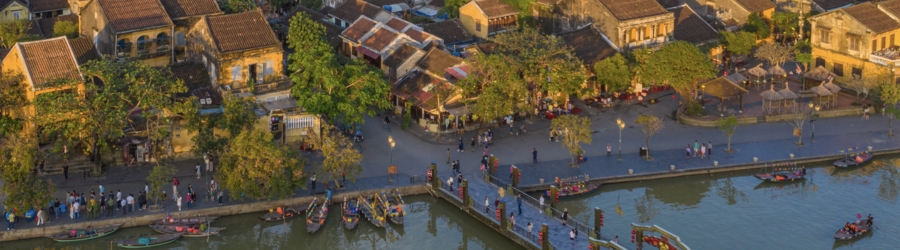
Vietnam had been on my travel list for years, but I didn't want to rush through it. When I finally had two weeks to spare, I planned an itinerary that combined the country's biggest highlights with one experience I had always dreamed of, the Ha Giang Loop. Looking back, it was the perfect balance of lively cities, remote mountain roads, peaceful bays, and historic towns. Here's exactly how our 2-week Vietnam itinerary with Ha Giang Loop unfolded, day by day, along with the travel tips we picked up along the way.
Timing is the trickiest part of planning a 2-week Vietnam itinerary with Ha Giang Loop, because the north and center of the country don't share the same weather calendar. We travelled in late October, and it turned out to be close to ideal: the Ha Giang rice terraces had just been harvested, the air in the mountains was crisp and clear, and the karst peaks weren't hiding behind cloud, which happens often between December and February.
When to visit Vietnam? If I were to plan it again, I'd choose either September to November, when the terraced fields are golden or freshly cut and the mountain roads are dry, or March to May, when buckwheat flowers aren't blooming yet but the skies are just as clear and temperatures are milder. Summer (June to August) brings heavy rain and landslide risk on the loop's cliffside roads, so I'd avoid it for that leg of the trip specifically.
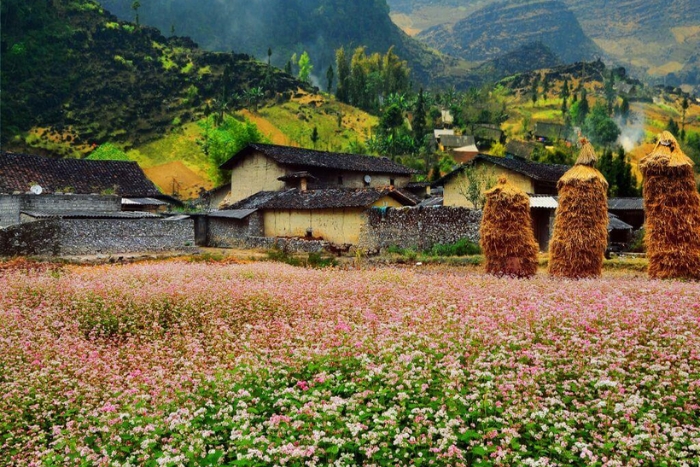
Central Vietnam added its own wrinkle: during our stretch in Hue and Hoi An, we had one sunny day and one rainy one, the rain wasn't heavy, but it settled in and lasted the entire day rather than passing quickly. It's worth building a flexible day or two into that leg, since October sits close to the region's rainier months.
Food was one of the highlights of our 2 weeks in Vietnam with Ha Giang Loop itinerary, especially in the capital of Vietnam. Hanoi is the kind of city where you can duck into almost any street stall and land on a genuinely good meal. The dishes not to miss are bún chả, phở, bánh cuốn, and bánh mì. If you'd rather sit down in a proper restaurant, a few worth trying are Pizza 4P's, Quan An Ngon, iVegan SuperShop, and Met Vietnamese Restaurant.
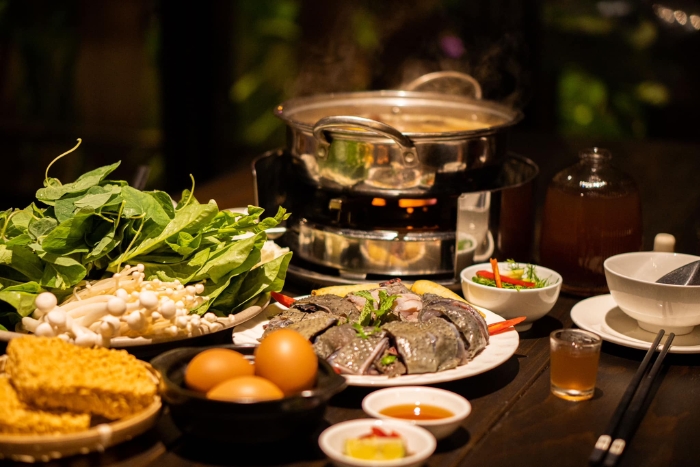
Ha Giang is where you get a real taste of Vietnam's moutain cuisine: cơm lam (bamboo-tube rice), black chicken, buckwheat cake, and five-color sticky rice, most of which you'll find at the night market in Dong Van's town. There's also corn wine and black chicken hotpot, your homestay will usually serve these for dinner, or you can find plenty of restaurants right in Dong Van's town.
In Bai Tu Long Bay, most meals are served on board your cruise, with seafood dinners featuring the day's fresh catch. Many cruises also offer squid fishing from the boat after dark. If you have time on land, Bai Chay in Ha Long City has an excellent seafood scene. Ngoc Phuong Nam, Hong Hanh 3, and Cua Vang Restaurant are all well known for their fresh crab, shrimp, and the local specialty, grilled squid cake.
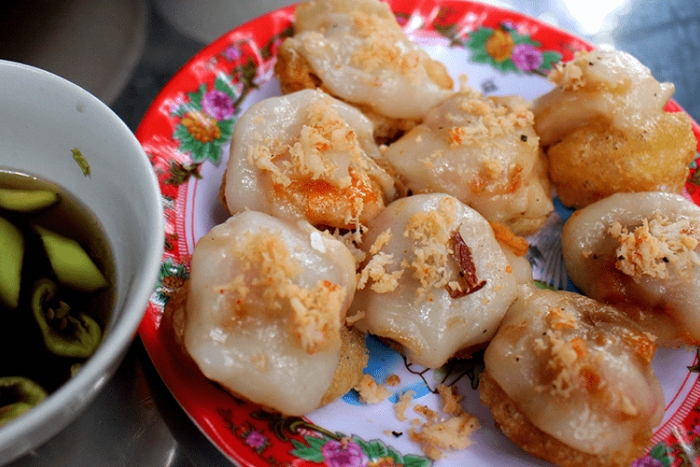
Hue, in my opinion, has some of the best food of my 2 weeks in Vietnam. Be sure to try bánh ram ít, bánh bèo, bún bò Huế, and bánh bột lọc. Quan Hanh Restaurant is one restaurant I visited three times and highly recommend. Don't miss salt coffee, a Hue specialty, I recommend trying it at Tan. Corner Coffee Shop.
Hoi An is best known for cao lầu, and taking a cooking class is a great way to learn how to make it, along with fresh spring rolls using ingredients from the morning market. For restaurants, MET Hoi An serves a wide variety of Hoi An specialties, Banh Mi Phuong is worth the wait, and The Son Bistro is the best place to try the town's famous delicate shrimp dumplings.
Here's where we stayed during our 2-week Vietnam itinerary with Ha Giang Loop, with accommodation chosen to match each destination and travel experience.
Hanoi : La Siesta Classic Ma May
Ha Giang : Du Gia Field View Homestay, Aurora Dong Van Boutique Hotel, Nam Dam Homestay
Bai Tu Long Bay : nuit à bord d'un bateau de croisière en cabine deluxe, réveil face aux îles karstiques ; vaut le coup pour une ou deux nuits
Hue : Hue Heritage Hotel, a 3-star hotel in the heart of Hue
Hoi An : Silkotel Hoi An
Here's how our 2-week Vietnam itinerary with Ha Giang Loop actually broke down, day by day along with some Vietnam travel tips we picked up along the way.
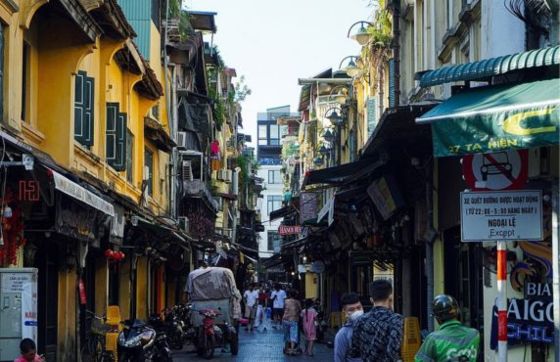
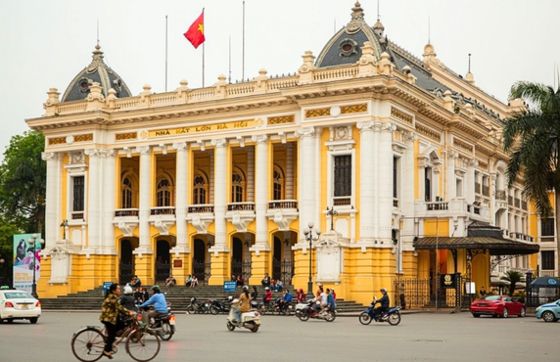
Our 2 weeks in Vietnam with Ha Giang Loop itinerary began in Hanoi, where we spent the first afternoon simply wandering, letting the jet lag wear off. Day two was all about exploring Hanoi at a slower pace. We wandered through the Old Quarter by cyclo, stopping to admire its narrow streets and lively atmosphere before heading to Tran Quoc Pagoda on the peaceful shores of West Lake. In the afternoon, we visited the Temple of Literature and the Vietnamese Women's Museum, then finished the day with another great dinner. Day three was deliberately relaxed: a slow morning, a few final walks around the city, and coffee before boarding the overnight bus and leaving Hanoi at around 10 p.m., arriving in Ha Giang the next morning ready for the loop to begin.
This was the heart of our 2-week Vietnam itinerary with Ha Giang Loop. A bus picked us up in Hanoi and dropped us in Ha Giang City the next early morning. From there, we set off with our Easy Riders, following the spectacular mountain roads of the Ha Giang Loop through winding passes, dramatic valleys, and small villages. After a full day of riding and scenic stops, we reached the peaceful village of Du Gia, where we relaxed and spent the night at a local homestay.
Day two in Ha Giang began at 8:30 a.m. as we continued deeper into the Ha Giang Loop, passing through Lung Ho, a small valley tucked away among towering limestone mountains. The road through this area is still largely untouched, making it a perfect stretch for travelers who enjoy off-the-beaten-path adventures. We then continued to the mountain Meo Vac town, where we took a boat trip along the emerald waters of the Nho Que River, surrounded by dramatic limestone cliffs. Back on our Easy Riders, we crossed the legendary Ma Pi Leng Pass, one of the most spectacular mountain roads in Vietnam, before descending into Dong Van Town, where we spent the night.
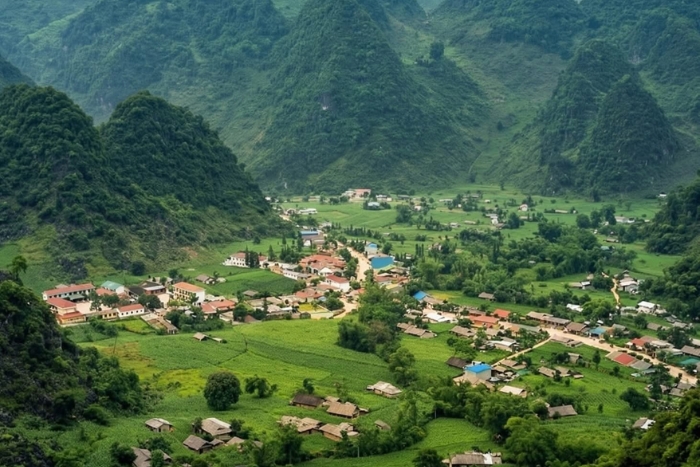
The next day took us to Lung Cu Flag Tower, marking the northernmost point in Vietnam, with sweeping views stretching into the Chinese border just beyond. From there we visited the old H'Mong King's Palace, then crossed Tham Ma Pass and rolled through Yen Minh Town before ending the day in Nam Dam, a Dao ethnic village known for its traditional herbal baths and quiet, close-knit atmosphere.
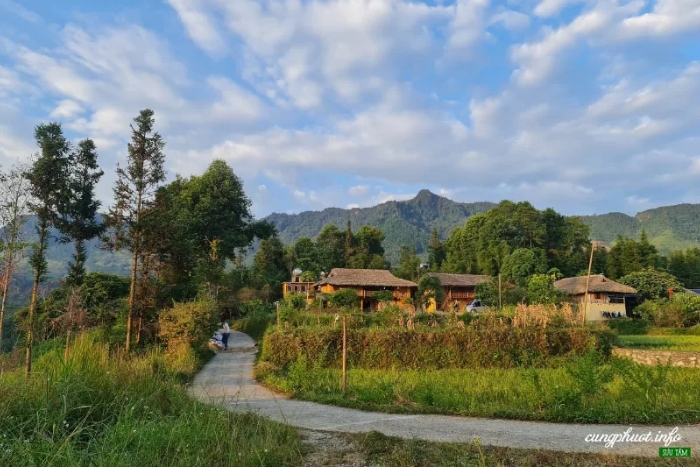
Our final day on the loop began with a short trek to Lung Khuy Cave, tucked into the karst plateau, followed by a stop at Quan Ba's Heaven's Gate for one last panoramic view over the valley. A second trek led us to Khau Lan Waterfall, before the road carried us over Bac Sum Pass and back into Ha Giang City by mid-afternoon. From there, the bus was waiting to take us smoothly back to Hanoi, closing out one of the most memorable stretches of the whole trip.
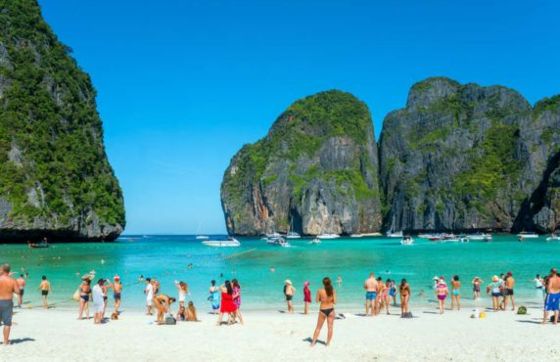
After the mountains, our 2 weeks in Vietnam with Ha Giang Loop itinerary shifted to a completely different landscape. We returned to Hanoi for one night before an 8:00 a.m. minibus took us to Ha Long, where we boarded our cruise through Bai Tu Long Bay. We chose Bai Tu Long over the main Bai Tu Long Bay because it was far less crowded. We barely saw any other boats, yet the scenery was just as spectacular, with towering limestone karsts and emerald waters. The peaceful atmosphere made it easy to slow down and simply enjoy the surroundings.

Lunch was served on board as we sailed among the bay's impressive limestone peaks. In the afternoon, we kayaked around Cap La Island, taking in the peaceful scenery before watching a spectacular sunset over the water. After dinner, we tried squid fishing from the boat before relaxing for the night.
The following morning began with a Tai Chi session on deck. After breakfast, we visited Thien Canh Son Cave before returning to the boat for one last lunch as we cruised back toward the harbor. We arrived in Hanoi around 3:00 p.m., giving us just enough time to freshen up before boarding the overnight train to Hue that evening.
We arrived in Hue by train early the next morning and, after breakfast, headed to the Imperial City around 9:30 a.m. After exploring the citadel, we enjoyed a local lunch at Quan Hanh Restaurant. In the afternoon, we drove into the countryside to visit the Tomb of Tu Duc, one of the most tranquil places we saw in Vietnam, with its gardens, lakes, and quiet pavilions. We then continued to the striking Khai Dinh Tomb, whose blend of Vietnamese and European architecture made it one of the most impressive sights of our entire 2-week Vietnam itinerary with Ha Giang Loop.
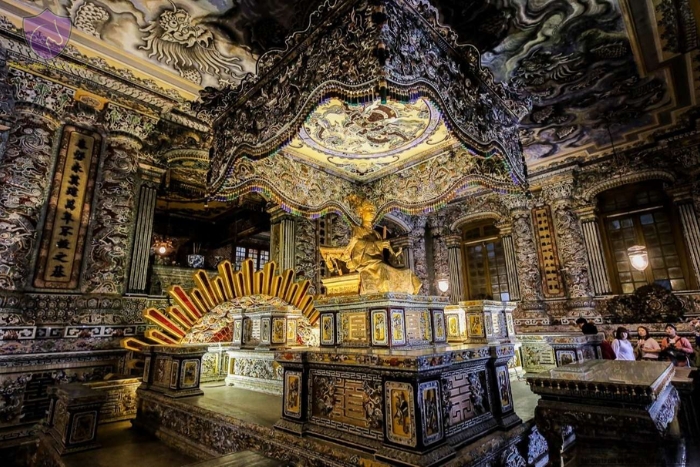
One tip: buy the combined ticket for the Imperial City, Tu Duc Tomb, and Khai Dinh Tomb, it works out noticeably cheaper than buying separate tickets. We ended the day with a delicious dinner in Hue. The following morning, we enjoyed a leisurely breakfast and tried Hue's famous salt coffee, taking time to soak up the city's peaceful atmosphere before leaving for Hoi An in the afternoon.
The drive from Hue to Hoi An is a highlight in its own right, crossing Hai Van Pass with the coastline stretched out below and pausing at Lang Co Lagoon for photos. Once in Hoi An, we spent a morning at a rural cooking class, market shopping by bicycle, then cooking four traditional dishes in a kitchen surrounded by rice paddies. We kept our last full day free to wander the Ancient Town's lantern-strung lanes at our own pace.
Day 15 brought our journey to an end with a daytime transfer to Da Nang Airport for our return flight home.
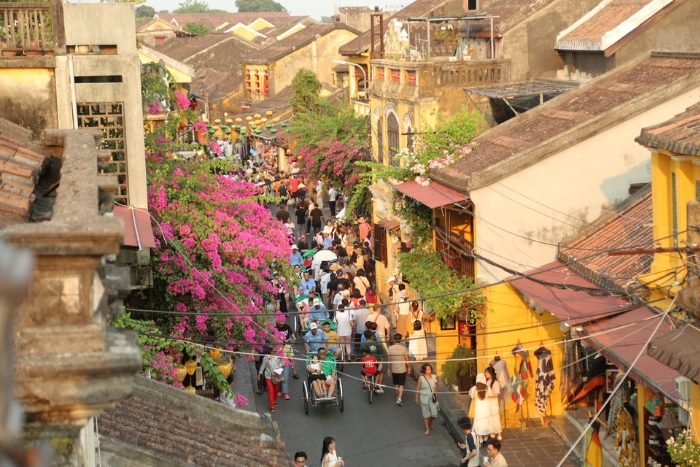
In short, two weeks was exactly the right amount of time to feel like we'd actually seen Vietnam rather than skimmed it. If you're mapping out your own 2-week Vietnam itinerary with Ha Giang Loop, my honest advice is to give the loop the days it deserves, it's slower travel than the rest of the trip, but it's where the country felt most unfiltered. Pair it with a night on Tu Long Bay and a few unhurried days between Hue and Hoi An, and you'll come home with a trip that covers mountains, sea, and history without ever feeling rushed.
Thanks to Autour Asia, travel agency in Saigon , we had a customized 2 weeks in Vietnam that perfectly matched our travel style.






 FR
FR ITA
ITA