
Is It Possible To Do The Ha Giang Loop By Bike?
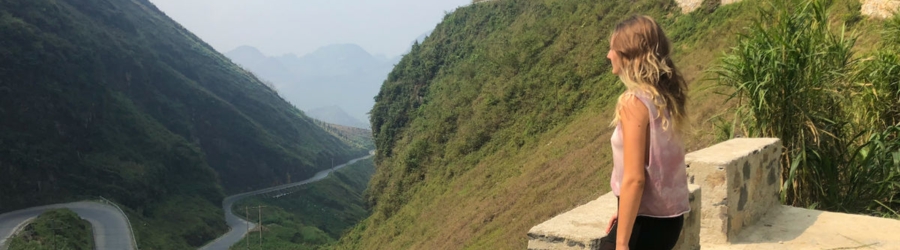
Doing the Ha Giang Loop by bike is not only possible, but also one of the most rewarding ways to experience this iconic route in northern Vietnam. Every year, more travelers choose the Ha Giang Loop by bike in search of authentic experiences, quiet mountain passes, and direct contact with the spectacular karst landscapes of Dong Van. This Ha Giang cycling tour is a real physical challenge, with significant elevation gains on winding roads connecting Meo Vac, Lung Cu, and Quan Ba. However, cyclists of different levels can find their own pace on the route with proper planning. This guide answers the most common questions before starting the journey.
Table of Contents
I. Is the Ha Giang Loop by bike difficult?
The Ha Giang Loop by bike is a physically demanding route that is clearly more challenging than most cycling trips in Southeast Asia. Steep terrain, winding mountain roads, and unpredictable weather conditions make it a serious challenge, although it remains achievable with good preparation.1. Terrain and distance to expect
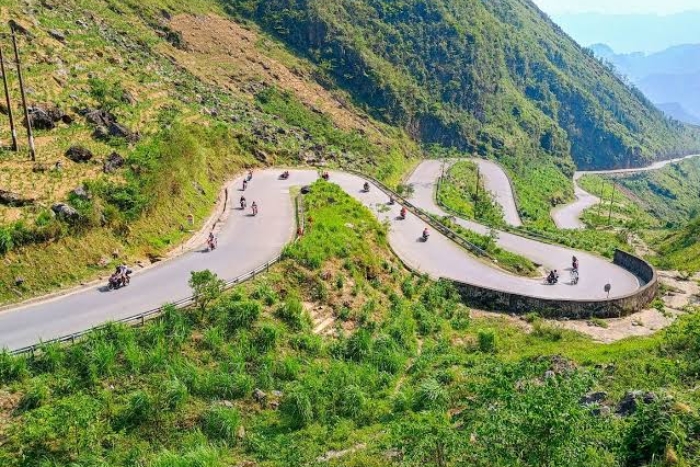
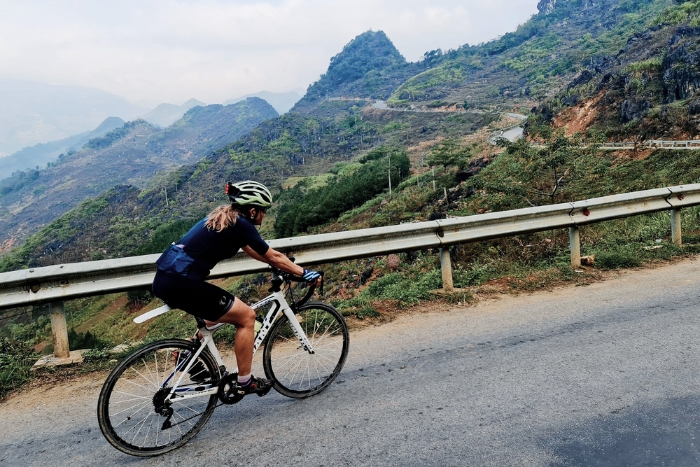
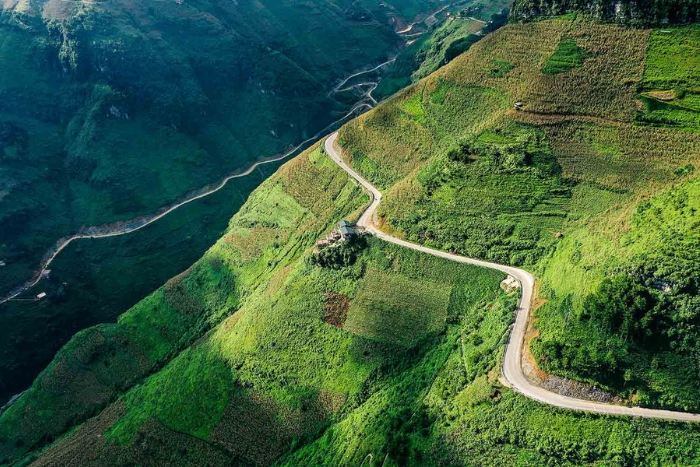
The terrain of this Ha Giang cycling tour offers very few flat sections. Climbs and descents follow one another throughout the route, with some particularly demanding stretches between Yen Minh, Dong Van, and Meo Vac. Ma Pi Leng Pass showcases some of the most impressive parts of the journey, featuring steep gradients over several kilometers, sharp hairpin turns, and a road hanging above the dramatic Nho Que River canyon.
In terms of distance, the full route covers around 350 km over 4 to 5 days of riding. Daily elevation gain ranges from 1,000 to 1,800 meters depending on the stage. Some days require 6 to 8 hours in the saddle, including breaks. These figures provide a clear picture of the effort involved in cycling the Ha Giang Loop.
2. What level of fitness is required?
The required fitness level depends largely on the cyclist's experience.
A complete beginner may struggle to finish the route comfortably. Without experience in long cycling days, the first major climbs can quickly tire the legs, put strain on the back, and reduce motivation as early as the second day.
An occasional cyclist who rides several times a month can complete the Ha Giang Loop by bike by managing their effort carefully, maintaining a comfortable pace, and taking regular breaks. Most riders in this category finish the route, although some stages can feel challenging.
An experienced cyclist who is familiar with long rides in mountainous terrain will usually adapt to the rhythm quickly. For this type of rider, cycling the Ha Giang Loop remains demanding but well within reach with normal preparation.
II. How many days are needed to complete the Ha Giang Loop by bike?
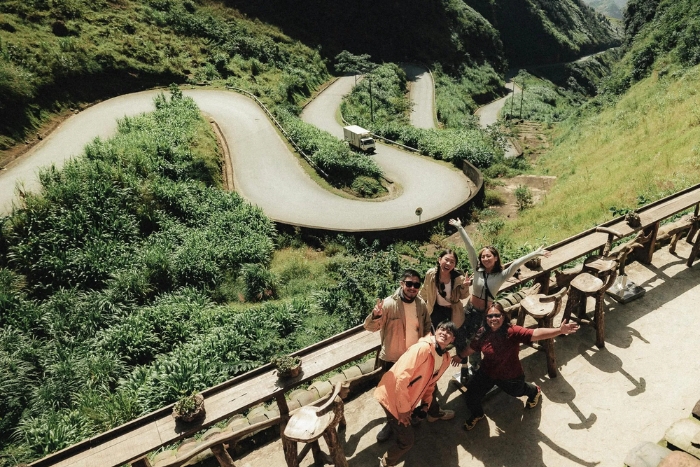
The ideal duration depends on the pace of each cyclist. The Ha Giang Loop by bike can be completed in as little as 4 days, but most travelers prefer to spread the journey over 6 to 8 days to enjoy the experience more fully. Beyond that, the trip takes on a completely different rhythm.For travelers wondering, "is the Ha Giang Loop possible by bike?", the answer is yes. The key factor is choosing a schedule that matches your fitness level and travel style.
1. A fast itinerary in 4 to 5 Days
This option is suitable for experienced cyclists who can handle long daily stages without too much difficulty. A typical route follows Ha Giang, Quan Ba, Yen Minh, Dong Van, and Meo Vac before returning to Ha Giang. Daily distances are longer, and the elevation gain can be significant.This pace leaves limited time to stop in Hmong villages, admire the rice terraces around Quan Ba, or explore the Dong Van Karst Plateau. It is a practical choice for travelers with limited time who still want to experience the Ha Giang Loop by bike.
2. A comfortable itinerary in 6 to 8 Days
This is the recommended format for cycling the Ha Giang Loop at a more relaxed pace. The route remains largely the same, but the stages are divided differently. An extra night in Yen Minh provides more time to discover the surrounding landscapes.A visit to Lung Cu, the northernmost point of Vietnam, fits easily into the itinerary. The dramatic canyons around Meo Vac are worth spending an entire morning exploring. This pace allows more recovery time between mountain stages and offers a more enjoyable Ha Giang cycling tour experience.
3. An adventure cycling trip of more than one week
Travelers with more than ten days can expand their Ha Giang cycling tour with detours to less visited areas. The route to Du Gia, the remote villages around Bao Lac, and the weekly markets of Meo Vac reveal a side of northern Vietnam that shorter itineraries often miss.
This format is ideal for cyclists who travel light, stay with local families, and move at their own pace. For those wondering, is the Ha Giang Loop possible by bike, a longer itinerary often provides the most rewarding and immersive experience.
III. What type of bike should you choose for the Ha Giang Loop by bike?
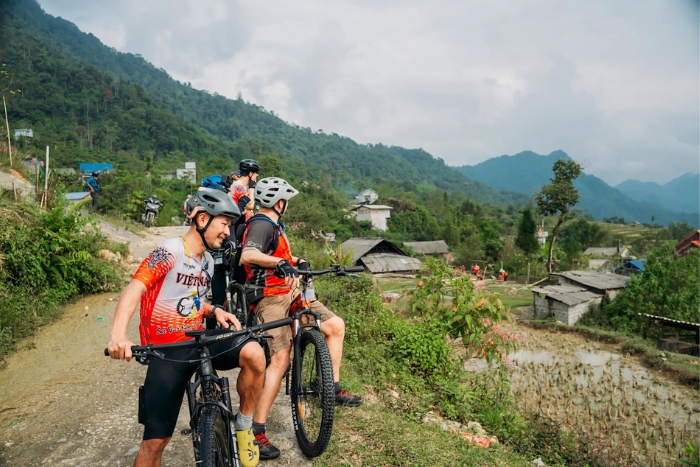
The choice of bike has a direct impact on comfort, safety, and overall enjoyment during a Ha Giang cycling tour. Mountain roads, occasional rough sections, and winding passes require equipment that matches the terrain.1. Mountain bike
A mountain bike remains the most reliable option for the Ha Giang Loop by bike. Its sturdy frame, wide tires, and suspension fork help absorb bumps and uneven road surfaces. On dirt tracks, rocky sections near Meo Vac, and fast descents after Dong Van, a mountain bike provides a level of stability that few other bikes can match. It is the most versatile choice and adapts well to the different types of terrain encountered while cycling the Ha Giang Loop.

2. Gravel bike
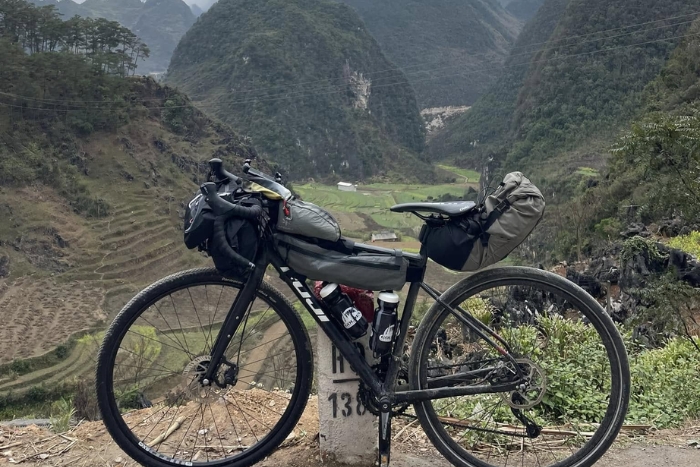
A gravel bike is a strong alternative for cyclists looking for a balance between lightweight performance, speed on paved roads, and durability on rougher surfaces. It performs well on most sections of a Ha Giang cycling tour, as the majority of roads on the route are paved. Its wider tires can handle occasional rough patches without difficulty. This type of bike is particularly suitable for experienced riders who are comfortable managing technical descents.
3. Why is a road bike not recommended?
A road bike is generally not suitable for this route. Its narrow tires, aggressive geometry, and lack of suspension make it vulnerable to the rough conditions often found on mountain roads in Ha Giang. Even a small pothole on a descent can become a serious challenge. The Ha Giang Loop by bike requires equipment designed for endurance and varied terrain rather than pure speed on smooth pavement.
IV. What is the best Ha Giang cycling tour route?
There is no single route for a Ha Giang cycling tour. Several itineraries are available depending on the time available, fitness level, and desire to explore beyond the most popular roads. Most travelers choose between two main route options when cycling the Ha Giang Loop.1. Ha Giang, Yen Minh, Dong Van, Meo Vac
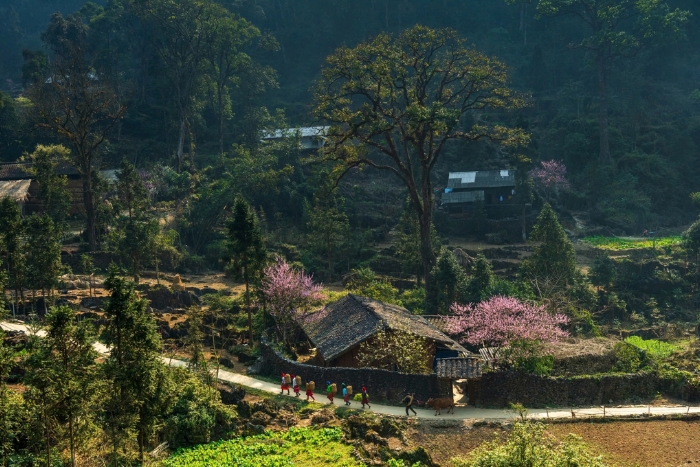
This is the classic route for the Ha Giang Loop by bike. The journey begins in Ha Giang and heads toward Quan Ba, where the Twin Mountains mark the entrance to the Dong Van Karst Plateau. The next stage continues to Yen Minh before reaching Dong Van through dramatic limestone landscapes. The descent to Meo Vac via Ma Pi Leng Pass is often considered the highlight of the route. The return journey to Ha Giang follows a valley road that is generally less demanding physically.
2. The Du Gia alternative
Cyclists with a few extra days can include Du Gia in their itinerary. This route passes through Bao Lac, follows the Gam River, and crosses remote villages inhabited by ethnic minority communities. The road toward Du Gia is more rugged and less paved, making it better suited to riders who are comfortable on mixed terrain. For travelers wondering if the Ha Giang Loop is possible by bike over a longer period, this extension offers a more immersive cycling experience.
3. The most spectacular stages
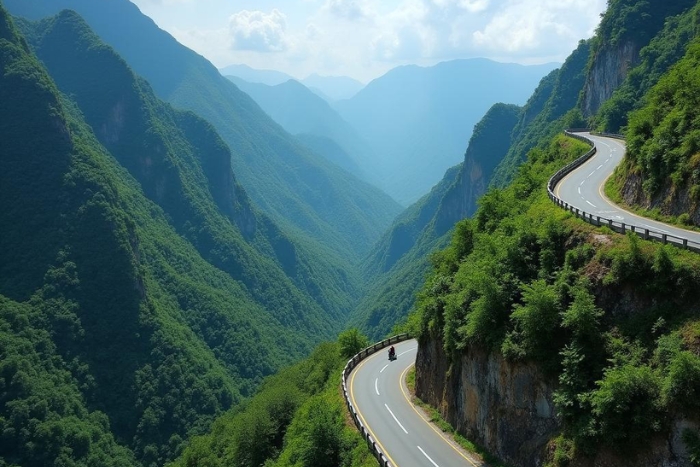
Three sections stand out across the entire Ha Giang cycling tour. The climb to Quan Ba provides the first impressive views of the mountains of northern Vietnam. The Dong Van Karst Plateau, recognized as a UNESCO Global Geopark, features unique rocky landscapes unlike anywhere else in the country. The crossing of Ma Pi Leng Pass above the Nho Que River canyon remains the most memorable part of cycling the Ha Giang Loop and is often the moment travelers remember long after returning home.
V. Tips for a successful cycling trip in Northern Vietnam
Doing the Ha Giang Loop by bike requires careful preparation. Several key points are worth considering before setting off on the route.The best time to go: September to November, followed by March to May, offer the most favorable conditions for cycling the Ha Giang Loop. Winter often brings fog to the mountain passes, while the rainy season can make some sections around Meo Vac more challenging.
Essential equipment
- A well maintained bike with brakes checked before departure from Ha Giang
- Spare inner tubes and a basic repair kit
- Warm clothing for the nights at higher elevations in Dong Van, where temperatures can drop significantly
- A lightweight waterproof jacket for sudden showers on the Dong Van Karst Plateau
- Knee protection for long technical descents
- Accommodation in Yen Minh, Dong Van, and Meo Vac fills up quickly during the high season. Booking in advance helps avoid unexpected issues.
- Some sections near Bao Lac have very limited access to food and drinks. Carrying enough water is important for the day.
- Mobile coverage is limited outside the main towns. Offline maps are useful before leaving Ha Giang.
- A buffer day can be helpful in case roads become inaccessible after heavy rainfall.
Many travelers wondering is the Ha Giang Loop possible by bike quickly discover that the answer is yes. The experience is physically demanding but highly rewarding. The Ha Giang Loop by bike requires proper preparation, suitable equipment, and a route adapted to individual fitness levels. Mountain passes, ethnic minority villages, the canyons of Meo Vac, and the landscapes of Dong Van create a setting that few cycling routes around the world can match. For travelers planning a Ha Giang cycling tour and looking to avoid unexpected difficulties, working with a local travel specialist can make a real difference. Autour Asia, Vietnam local travel agency, has supported this type of adventure for many years with extensive knowledge of the roads, daily stages, and actual conditions on the ground.
Read more:
Ha Giang Travel Guide
Ha Giang Loop by motorbike or by car
North Vietnam Tours
Hanoi Ha Giang Cao Bang Ban Gioc 6 days
Ha Giang loop tour itineraries often last four to five days, but travelers planning a Ha Giang Loop by bike usually allow between five and eight days. This timeframe provides enough flexibility to manage the steep climbs, enjoy the scenery, and explore ethnic minority villages along the way. The ideal duration depends on fitness level, cycling experience, and route choice. For most visitors, cycling the Ha Giang Loop at a comfortable pace creates a more enjoyable experience and allows deeper exploration beyond the main viewpoints.
2 nights Ha Giang Loop offers a great introduction to the region’s most famous landscapes, including Quan Ba, Yen Minh, Dong Van, and the spectacular Ma Pi Leng Pass. This short itinerary helps travelers understand the terrain, distances, and highlights before planning a longer Ha Giang Loop by bike adventure. While two nights may be too short for most cyclists, it provides valuable insight into the route. It is also a useful reference for anyone considering cycling the Ha Giang Loop or joining a guided Ha Giang cycling tour.
Yes, the answer to is the Ha Giang Loop possible by bike is absolutely yes. Many travelers choose the Ha Giang Loop by bike to experience Northern Vietnam at a slower pace and enjoy closer contact with local communities. However, the route includes steep mountain passes, long climbs, and challenging distances. Good physical fitness and proper preparation are important for a safe trip. With the right equipment and realistic daily stages, cycling the Ha Giang Loop can be one of the most rewarding adventures in Vietnam and an excellent alternative to motorbike travel.
Related travel guide
Other similar articles


CUSTOMIZABLE BY LOCAL EXPERTS
Personalized trip at the original price!

REFUND GUARANTEE
We believe in our work and promise to give you money back.

GOOD PRICE / QUALITY
95% satisfied more than expected!

24/7 LOCAL SUPPORT
We are always available online to provide assistance at any time.

Most read articles


Autour Asia is highly recommended on
Embracing the mission of "Satisfied more than expected" and providing authentic experiences, we have received numerous recommendations on reputable travel forums: