
What To Do In Vietnam ? A 2-Week Agricultural And Cultural Itinerary
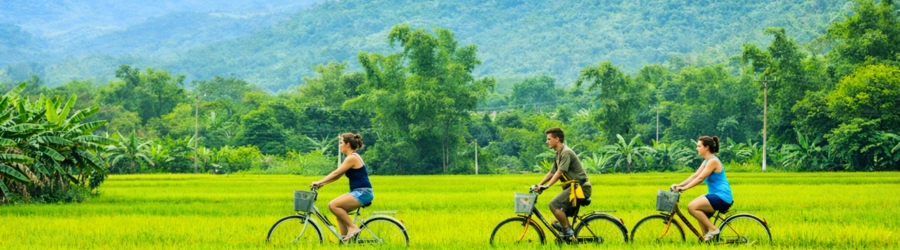
Discovering the 2-week agricultural and cultural itinerary in Vietnam was for me a particularly enriching experience. Before leaving, I wondered what to do in Vietnam to go beyond the classic visits. Very quickly, I understood that the journey takes on its full meaning when landscapes, culture and local life are combined. Between rice fields, craft villages and exchanges with the locals, each stage brings a different immersion. To organize a coherent route, relying on a local travel agency in Vietnam like Autour Asia can be a real advantage. If you are looking for an authentic and balanced trip, this itinerary will help you discover Vietnam differently.
Table of Contents
- I. Why choose an agricultural and cultural trip in Vietnam ?
- II. Detailed program of a 2-week agricultural and cultural itinerary in Vietnam
- 1. Days 1 - 2: Hanoi - Culture and agricultural immersion
- 2. Days 3 - 4: Mai Chau - Rural immersion and ethnic traditions
- 3. Days 5 - 6: Pu Luong - Nature and sustainable agriculture
- 4. Days 7 - 8: Ninh Binh - Landscapes and Vietnamese countryside
- 5. Days 9 - 10: Hue - Imperial heritage and culture
- 6. Days 11 - 12: Hoi An - Local agriculture and handicraft
- 7. Days 13 - 14: Mekong Delta - River life and agriculture
- III. Practical tips for a successful trip to Vietnam
I. Why choose an agricultural and cultural trip in Vietnam ?
Choosing a Vietnam agricultural and cultural tour means discovering the country differently, through concrete and human experiences. Throughout your 2-week agricultural and cultural trip in Vietnam, you do not just observe, you truly participate: transplanting rice, picking fresh herbs or cooking with the locals. This local immersion in Vietnam makes each moment more vivid and authentic, while allowing you to better understand daily life and the traditions of the country.
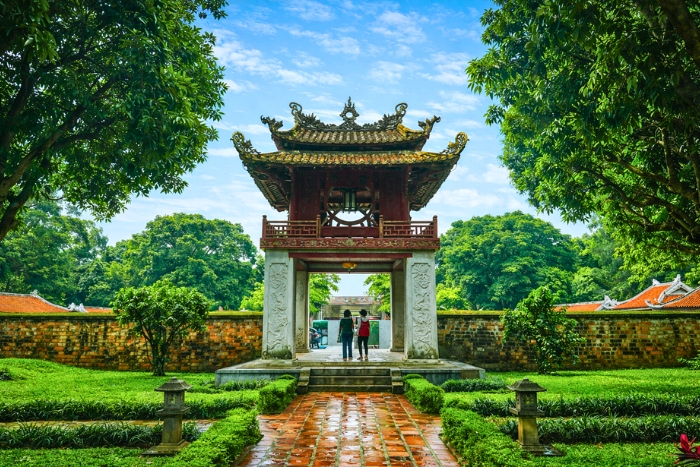
At the same time, this trip takes you through a great diversity of landscapes and cultures, from the mountainous north to the Mekong Delta. You naturally alternate between agricultural activities, cultural discoveries and local encounters. By adopting slow travel, you take the time to immerse yourself in each place, in an approach of sustainable tourism in Vietnam, for an experience that is both enriching, balanced and deeply memorable.
II. Detailed program of a 2-week agricultural and cultural itinerary in Vietnam
1. Days 1 - 2: Hanoi - Culture and agricultural immersion
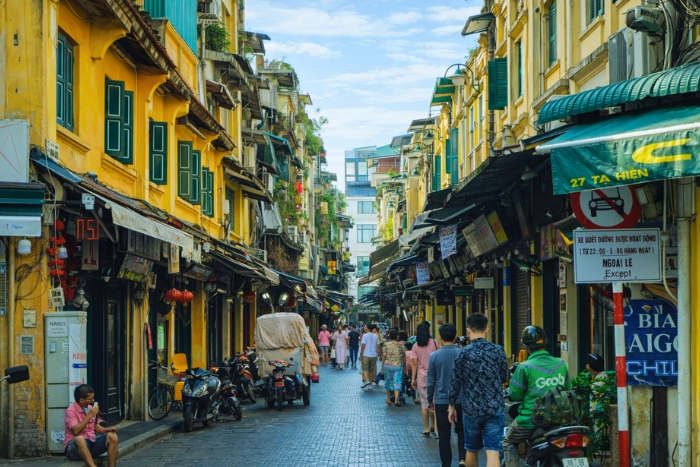
From my arrival in Hanoi, I was captivated by this atmosphere where traditions and modernity intertwine, an ideal first immersion for a Vietnam itinerary 2 weeks. By settling in the Old Quarter, I observed a lively local life between alleys and everyday scenes. The visit of the Temple of Literature allowed me to better understand the cultural roots of the country, before discovering the Ho Chi Minh Mausoleum, an emblematic place full of history. I then enjoyed the calm of Hoan Kiem Lake. In the evening, I discovered street food with a pho and a bun cha, a first gourmet experience revealing the link between cuisine and local agriculture.
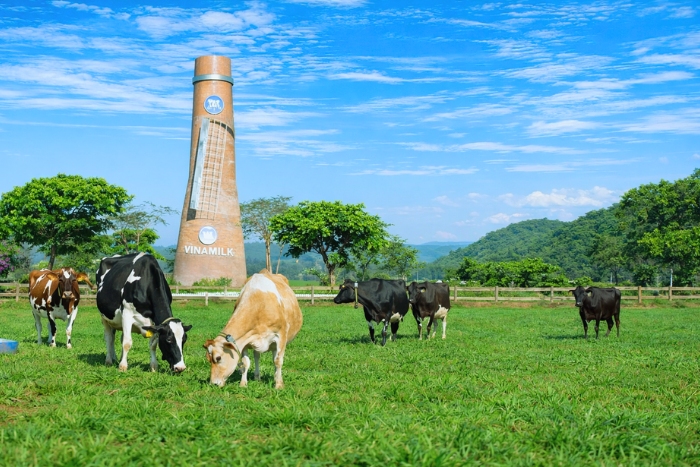
The next day, I felt a real contrast when leaving the city to reach Ba Vi, a much calmer and more authentic setting. There, I took part in farm life: I tried milking cows, fed the animals and discovered organic vegetable gardens. These simple moments really marked me, as they allowed me to better understand rural life. By spending the night on site, I experienced an even more complete agricultural immersion in Vietnam, at the heart of a 2-week agricultural and cultural tour.
Accommodation day 1: Silk Path Boutique Hanoi, one of the best 3-star hotels in Hanoi
Day 2: Ba Vi Homestead
2. Days 3 - 4: Mai Chau - Rural immersion and ethnic traditions
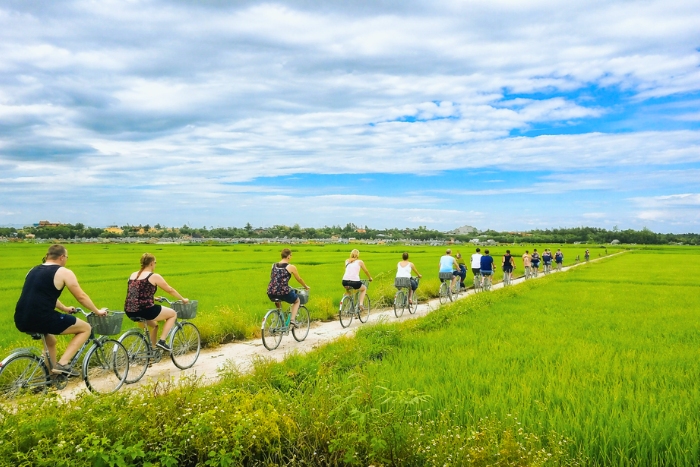
Continuing my 2-week agricultural and cultural itinerary in Vietnam, I had a real crush on Mai Chau. From my arrival, I felt a soothing atmosphere, almost out of time, very different from the previous stages. On day 3, I explored the valley by bicycle, crossing rice fields and stilt house villages. I also observed the locals in their daily activities, such as rice cultivation or corn harvesting. These simple moments, between exchanged smiles and authentic life scenes, allowed me to gradually feel immersed in this rural life.
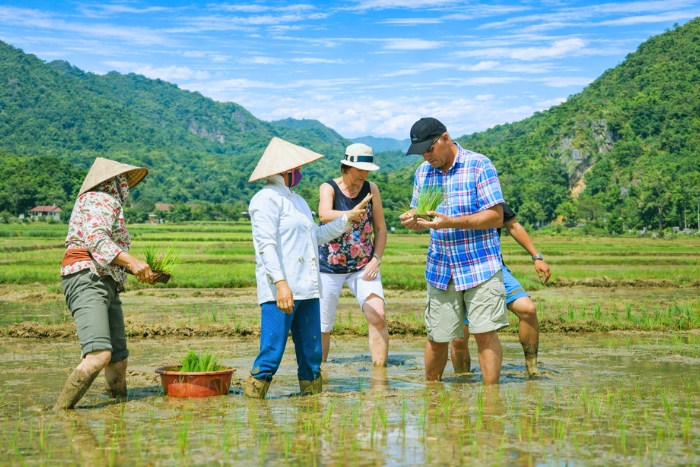
This first immersion naturally made me want to go further. By staying with a local family, I discovered a simple and warm way of life, punctuated by agricultural activities and home-cooked meals. On day 4, I took part in work in the fields, then I discovered traditional weaving in Ban Lac, where I was able to try it myself. This combination between agriculture and handicraft made the experience even more complete, offering a concrete and memorable insight into an authentic Vietnam trip.
Accommodation days 3, 4: Mai Chau Green Ecohouse
3. Days 5 - 6: Pu Luong - Nature and sustainable agriculture
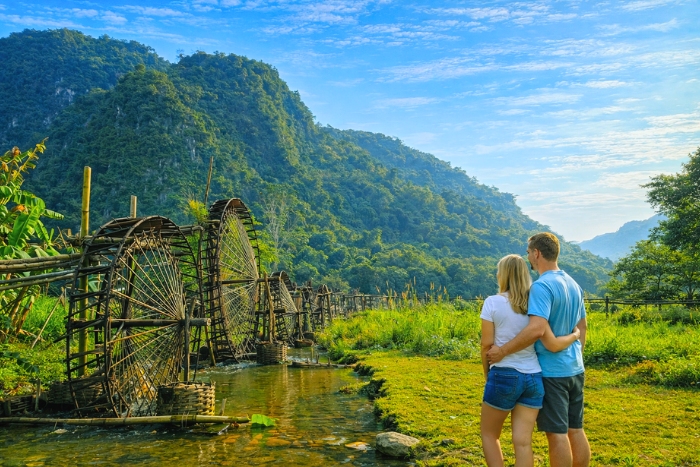
What marked me the most upon arriving in Pu Luong was this immediate feeling of disconnection. Far from tourist areas, I discovered a still raw landscape, between terraced rice fields and villages nestled in the mountains. On day 5, I walked along the trails around Don village and Hieu village, where each turn revealed a new life scene. The bamboo water wheels particularly impressed me: simple but ingenious, they perfectly illustrate the Vietnam agricultural tour. Moving forward slowly, I truly had the feeling of getting closer to nature and to the daily life of the locals.
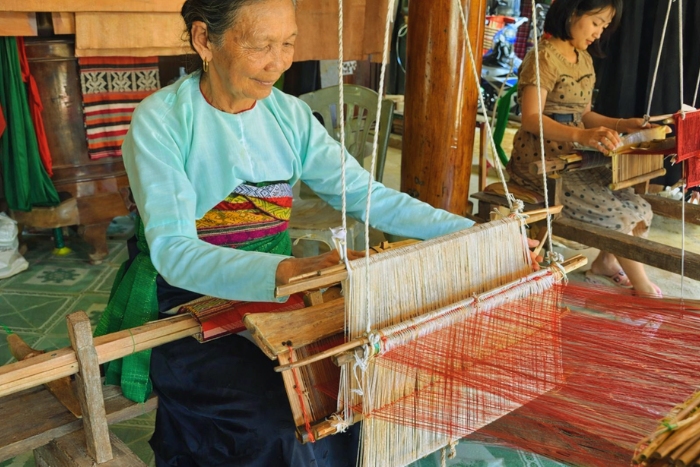
I then experienced an even more immersive and enriching experience. I took part in agricultural activities with the locals, observing their gestures and gradually understanding their close connection with the land. Then, in the afternoon, I discovered traditional know-how: weaving, production of rượu cần and local products such as Cổ Lũng duck. In continuity, I joined Ninh Binh by extending this rural immersion. This smooth transition reinforced the coherence of my 2-week agricultural and cultural itinerary in Vietnam.
Accommodation days 5, 6: Pu Luong Riverside Lodge
4. Days 7 - 8: Ninh Binh - Landscapes and Vietnamese countryside
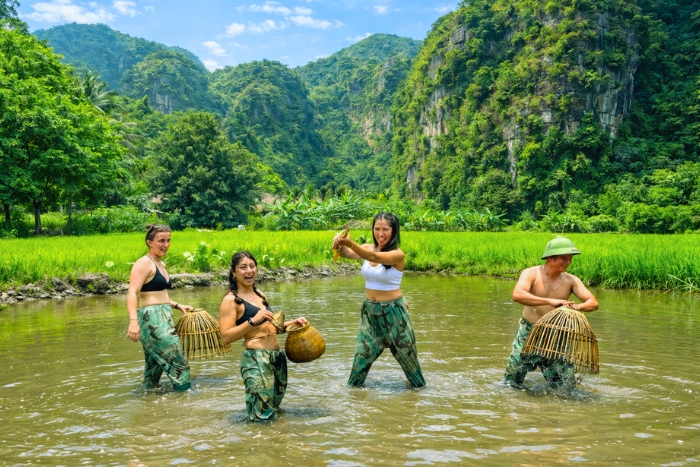
At the heart of my stay in Ninh Binh, I particularly appreciated the fluidity of the experiences offered, perfectly illustrating what to do in Vietnam in 2 weeks. On day 7, I first discovered Tam Coc by boat, letting myself be carried between rice fields and karst cliffs, while observing the locals working in the water. Afterwards, I shared simple moments with them, such as feeding buffaloes, discovering fishing techniques or observing family gardens. These concrete activities allowed me to better understand their daily life. At the end of the day, I cycled through the countryside, at the moment when the sunset light bathed the rice fields, offering a soft and unforgettable atmosphere.
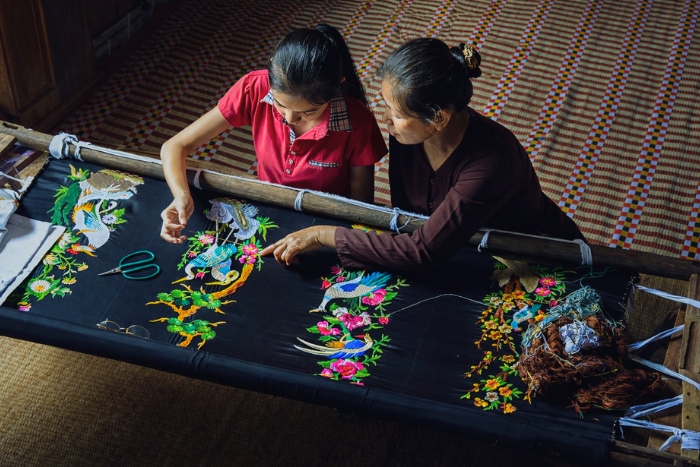
In continuation of this experience, I devoted day 8 to discovering the craft villages around Ninh Binh, a key stage of my 2-week agricultural and cultural itinerary in Vietnam. I visited the Van Lam embroidery village, where I observed artisans embroidering by hand with impressive precision, then Ninh Van, known for its stone sculptures used in temples. Seeing the artisans working, understanding their gestures and exchanging with them really helped me connect with the agricultural life discovered the day before. These exchanges allowed me to better understand the link between agriculture and culture. In the evening, I took a night train to Hue, ready to discover a new facet of Vietnam.
Accommodation day 7: Chez Hiep Tam Coc Homestay
Day 8: Night train to Hue
5. Days 9 - 10: Hue - Imperial heritage and culture
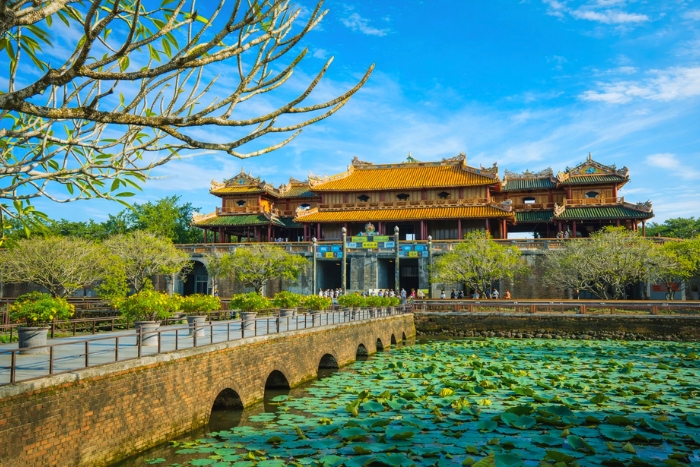
Arriving in Hue after several days in the heart of nature gave me a particular feeling, as if I was entering a more refined and history-filled world, an unmissable stage of a 2-week Vietnam trip. On day 9, I started by visiting the Imperial Citadel of Hue, walking between the palaces and temples, while imagining life during the time of the Nguyen emperors. I then discovered the garden houses of Kim Long, a moment I appreciated for its calm and harmony, between fruit trees and ponds. The boat trip on the Perfume River to the Thien Mu Pagoda, under a golden light, made the whole experience even more soothing.
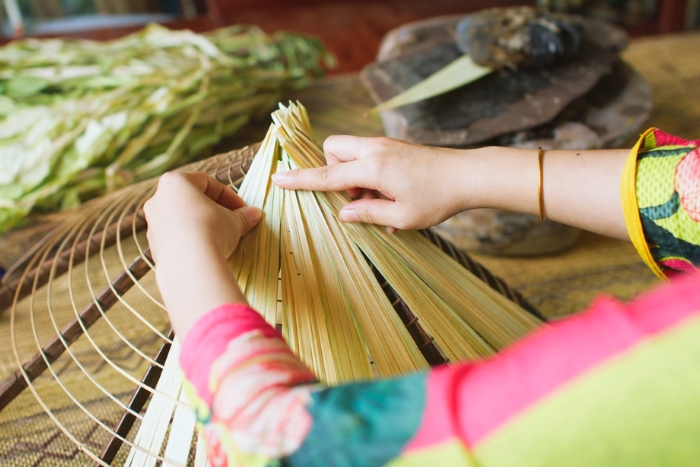
The next day, I explored Hue in a more concrete way. In the morning, I discovered Dong Ba Market, very lively, with its typical local products. Then, I took part in a cooking workshop at a local’s home, preparing specialties in a friendly atmosphere. In the afternoon, I discovered craft villages such as the Thuy Xuan incense village, known for the production of colorful incense, and the village of Phu Cam, specialized in traditional conical hats. I thus understood the link between agriculture, culture and know-how in this 2-week agricultural and cultural trip in Vietnam.
Accommodation days 9, 10: Hue Serene Palace Hotel
6. Days 11 - 12: Hoi An - Local agriculture and handicraft
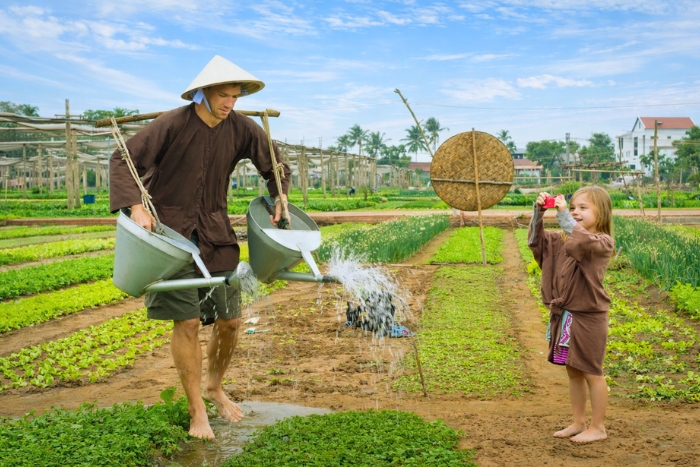
After the elegant atmosphere of Hue, I discovered in Hoi An a softer and more lively atmosphere, where agriculture and handicraft intertwine naturally, a good answer to the question what to do in Vietnam. On day 11, I went to the Tra Que vegetable village, known for its aromatic herbs grown without chemical products. I took part in agricultural activities alongside the locals: preparing the soil, watering with the shoulder pole and understanding the use of algae as natural fertilizer. This immersion continued with a cooking class, where I used the freshly picked herbs, a concrete experience linking agriculture and gastronomy.
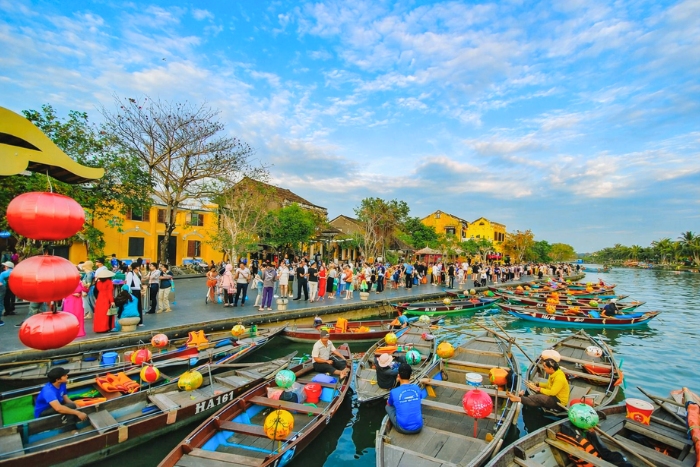
Day 12 offered me a more cultural and creative discovery of Hoi An. While walking in the old town, I admired its unique architecture and its peaceful atmosphere. I then took part in a lantern-making workshop, handling bamboo and silk with the artisans. This experience allowed me to better understand local know-how. In Hoi An, I truly felt a nice balance between agriculture, handicraft and culture, present in every moment of daily life. Before continuing my 2-week agricultural and cultural itinerary in Vietnam, I went to Da Nang airport to take a flight to Ho Chi Minh City, ready to discover a new facet of Vietnam the next day.
Accommodation day 11: River Suites Hoi An Hotel
Day 12: Sanouva Saigon Hotel
7. Days 13 - 14: Mekong Delta - River life and agriculture
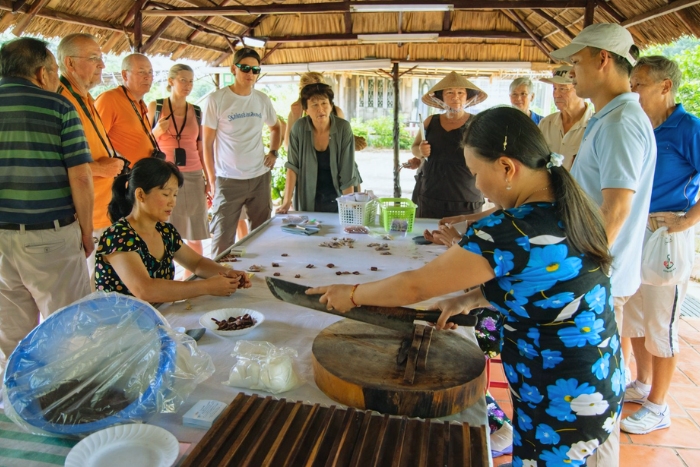
Moving from the urban rhythm of Ho Chi Minh City to the Mekong Delta gave me the impression of entering another world, typical of an authentic Vietnam trip. To start day 13, I went to Ben Tre to discover river life up close. Between coconut trees and canals lined with water palms in Nhon Thanh, I navigated in a peaceful setting where everything seems connected to nature. I then visited a coconut processing workshop and took part in the making of handmade candies, before walking in the orchards to pick and taste tropical fruits directly from the tree. This immersion allowed me to better understand the richness and diversity of local agriculture. For the night, I settled in Can Tho to rest.
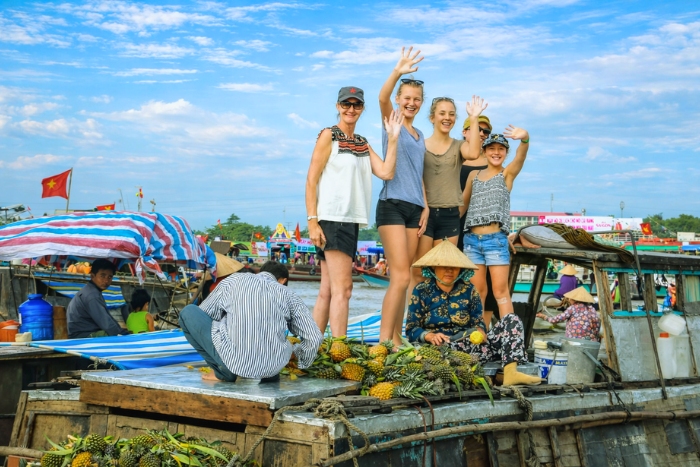
I continued to Can Tho for a more lively atmosphere typical of the delta, within the framework of an 2-week agricultural and cultural trip in Vietnam. On day 14, at dawn, I explored the Cai Rang floating market, where exchanges of fruits and vegetables take place directly on the water, in a unique atmosphere. After this highlight, I discovered the craft village of Thuan Hung, taking part in the first stages of making rice papers. Through these experiences, I truly perceived how agriculture, handicraft and river life intertwine naturally. At the end of the day, I returned to Ho Chi Minh City to take my return flight and thus conclude this trip.
Accommodation day 13: Bamboo Eco Village Homestay in Can Tho
Budget for 2 weeks agricultural and cultural tour in Vietnam:
Average budget: Plan between $1,000 and $1,800 per person (excluding international flights), a budget that allows you to fully enjoy a 2-week agricultural and cultural itinerary in Vietnam depending on the level of comfort chosen.
Budget breakdown: The budget is mainly divided between accommodation (homestay or ecolodge), transport (private driver, night train or domestic flights) and activities (agricultural workshops, handicraft, local guides and entrance fees).
Tips to save money: Travel in the low season (May - June or September) and favor homestays allows both to reduce costs, to live a more authentic experience and to directly support local families.
III. Practical tips for a successful trip to Vietnam
To fully enjoy your itinerary and experience a journey that is both smooth and enriching, in a logic of sustainable tourism in Vietnam, a few simple tips can make all the difference:
- Choose the right period: Favor spring (March - May) or autumn (September - November) for a more pleasant climate, especially if you combine North, Center and South.
- Adapt your travel pace: Avoid overloading the itinerary, especially for an agricultural and cultural itinerary in Vietnam; leave time to enjoy local experiences.
- Favor local exchanges: Choose homestays or local guides in order to better understand the culture and experience an authentic immersion.
- Anticipate transportation: Distances can be long; combine private car, night train and domestic flights to optimize your time.
- Plan for cash: Cash payment remains very common, especially in rural areas or during agricultural activities.
- Prepare for the climate: Bring sunscreen, a hat and light clothing, as well as a raincoat depending on the season.
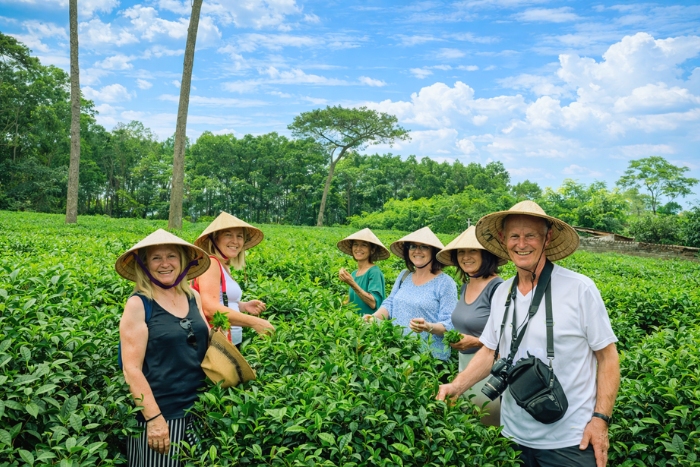
Throughout this 2-week agricultural and cultural itinerary in Vietnam, I understood that traveling in Vietnam is not only about chaining visits, but about finding a balance between discoveries, encounters and local experiences. Each stage allowed me to better grasp the richness of the country, between nature, culture and daily life. If you are wondering what to do in Vietnam in 2 weeks to experience something authentic, this itinerary is an excellent base. By adapting it to your desires and your pace, you can fully enjoy your stay. To go further, relying on a specialized agency in local travel in Vietnam, Autour Asia, can help you build a smooth and personalized trip.
If you are planning to carry out a 2-week agricultural and cultural itinerary in Vietnam in the best conditions, you can call on AUTOUR ASIA, an agency specialized in authentic travel in Vietnam, in order to benefit from tailor-made support and advice adapted to your project.
Read more:
- Weekend at a farm in Vietnam
- 3-day agricultural travel in Vietnam
- How much does a 2 week trip to Vietnam cost
- Vietnam itinerary 2 weeks with Con Dao extension
- Vietnam Travel Guide
- 2 weeks in Vietnam
- Vietnam Tours
The must-see highlights during 2 weeks in Vietnam offer a perfect balance between culture, nature and local life. You can start in Hanoi, a vibrant capital rich in history and cultural heritage, before cruising through the breathtaking Halong Bay, a UNESCO World Heritage site. Continue to Ninh Binh - Tam Coc to enjoy peaceful rural landscapes, then head to Mai Chau for a gentle hiking experience and an authentic encounter with ethnic minority communities. The journey then takes you to Hue, where the Imperial Citadel reflects Vietnam’s royal past, and to Hoi An, a charming town known for its lantern-lit streets and timeless atmosphere. Finally, explore the Mekong Delta, where river life, lush scenery and local experiences provide a memorable and immersive end to your trip.
Budget for 2 weeks in Vietnam usually costs between $1,100 and $1,400 per person (excluding international flights), offering a comfortable and well-balanced experience. This budget covers accommodation, meals, transportation and main activities. Depending on your travel style, costs can be lower for budget travel or reach $2,000 - $2,750 for a more luxurious experience. Overall, Vietnam remains an affordable destination where you can enjoy diverse landscapes, rich culture and authentic experiences without overspending.
Yes, this type of itinerary is perfectly suitable for a family trip, especially within the framework of a 2-week agricultural and cultural trip in Vietnam. The activities offered, such as agricultural experiences, cycling or handicraft workshops, are playful and accessible, which particularly appeals to children. The pace can be easily adjusted to avoid fatigue, with rest time and comfortable transportation. In addition, homestay accommodations offer a friendly and warm setting, ideal for sharing simple moments with family. It is an excellent way to discover Vietnam while enjoying an authentic and enriching experience together.
Related travel guide
Other similar articles


CUSTOMIZABLE BY LOCAL EXPERTS
Personalized trip at the original price!

REFUND GUARANTEE
We believe in our work and promise to give you money back.

GOOD PRICE / QUALITY
95% satisfied more than expected!

24/7 LOCAL SUPPORT
We are always available online to provide assistance at any time.

Most read articles


Autour Asia is highly recommended on
Embracing the mission of "Satisfied more than expected" and providing authentic experiences, we have received numerous recommendations on reputable travel forums: