Top 10 Vietnamese Snacks - A Guide To Vietnam's Favorite Treats
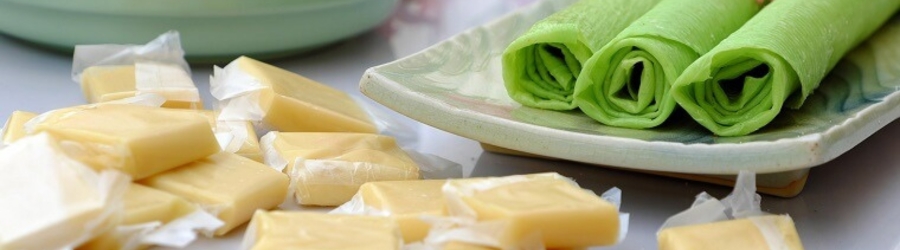
Already familiar with iconic Vietnamese dishes such as phở, bún chả, and bánh mì? If you are wondering what to eat in Vietnam to enjoy between meals, then Vietnamese snacks are definitely worth exploring. More than just treats to nibble on throughout the day, these popular snacks in Vietnam reflect the country's culinary richness while also opening a window into the everyday lives of local people. From fruit-based sweets to traditional candies made from rice or peanuts, we hope the list of the best snacks in Vietnam below will inspire your food adventure and help you find the perfect souvenirs to bring home from your upcoming trip.
What Vietnamese snack to try during your trip?
- 1. Salted dried fruit (Ô mai) - One of the most traditional Vietnamese snacks
- 2. Coconut candy (Kẹo dừa) - A Vietnamese snack for sweet lovers
- 3. Peanut and rice paper brittle (Kẹo cu đơ) - A specialty of Central Vietnam
- 4. Keo lac (Peanut candy) - A childhood Vietnamese snack
- 5. Traditional candied fruits (Mứt hoa quả)
- 6. Vietnamese dried fruit (Hoa quả sấy) - One of the best snacks to buy from Vietnam
- 7. Mung bean cube (Bánh đậu xanh)
- 8. Shrimp chips (Bánh phồng tôm) - One of the best snacks in Vietnam for all ages
- 9. Rice crust (Cơm cháy)
- 10. Puffed rice (Bỏng gạo) - A simple yet beloved snack in Vietnam
1. Salted dried fruit (Ô mai) - One of the most traditional Vietnamese snacks
When it comes to Vietnamese snacks, ô mai is undoubtedly one of the most famous treats that visitors should not miss. Essentially, it consists of fruits such as apricot, plum, kumquat, lemon, or peach that are dried and seasoned with sugar, salt, ginger, or licorice to create a balanced combination of sour, sweet, and salty flavors.
Not only is it a popular snack in Vietnam associated with the childhood memories of many generations, but ô mai is also considered a traditional delicacy often enjoyed during festivals and Lunar New Year celebrations. Like many Vietnamese foods, ô mai showcases the diversity of the country's cuisine. There are hundreds of different varieties, each with its own flavor profile, level of sweetness or sourness, texture, and appearance. Even locals may not have tried them all.
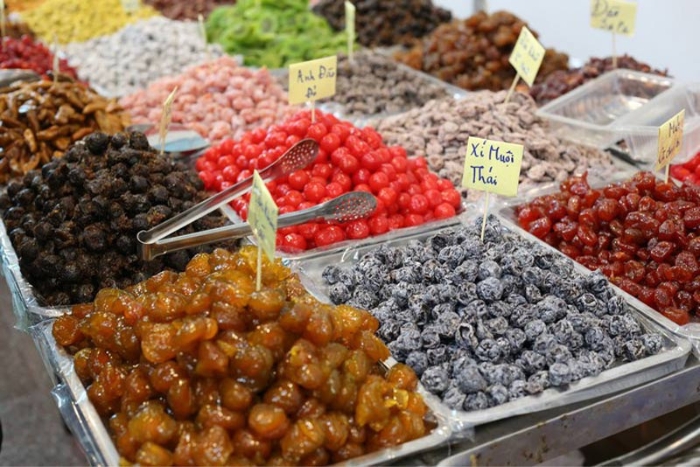
Every piece of ô mai offers a surprisingly complex tasting experience. You may first notice a sharp sourness, followed by lingering sweetness, while some varieties hit you with an intense spicy kick before gradually revealing milder sour or sweet notes.
You can easily find this snack in supermarkets, local shops, and traditional markets. Don't worry if you're unsure which variety to choose, as most vendors offer free samples. With its unique taste, long shelf life, and easy portability, ô mai is undoubtedly one of the best snacks to buy from Vietnam.
2. Coconut candy (Kẹo dừa) - A Vietnamese snack for sweet lovers
Coconut candy is a famous Vietnamese snack originating from Ben Tre Province, often referred to as the coconut capital of Vietnam. This candy is made from fresh coconut milk combined with malt syrup and sugar, resulting in a chewy texture and a rich coconut aroma.
Today, kẹo dừa comes in a variety of flavors, including durian, cocoa, peanut, and pandan, to suit different tastes. If you have the opportunity to visit the Mekong Delta during your Vietnam trip, don't miss the chance to stop by a traditional kẹo dừa workshop, where you can watch the production process firsthand or even try making your own coconut candies.
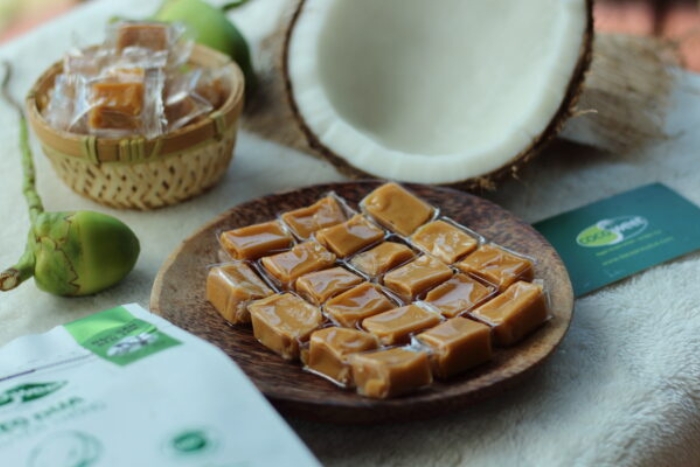
Vietnamese people often joke that eating kẹo dừa is a good workout for the jaw because of its characteristic chewiness. At the same time, the fragrant coconut flavor and rich sweetness of coconut milk and malt syrup make it especially appealing to those with a sweet tooth. If you are looking for a Vietnamese snack to bring home for children, kẹo dừa is also a great choice.
You may also want to try during your trip:
>>> Top Vietnamese drinks
>>> Best Vietnamese cakes
>>> Top desserts in Vietnam
3. Peanut and rice paper brittle (Kẹo cu đơ) - A specialty of Central Vietnam
Kẹo cu đơ is one of the popular snacks in Vietnam, closely associated with Ha Tinh province and the culinary culture of Central Vietnam. It is made from sugarcane molasses, roasted peanuts, and thin rice paper, creating a unique combination of gentle sweetness, nutty flavors, and satisfying crunch.
Its crispy texture makes it an enjoyable snack to slowly nibble on during the afternoon. Traditionally, kẹo cu đơ is enjoyed with hot tea, which helps balance its sweetness while enhancing the aroma of the roasted peanuts.
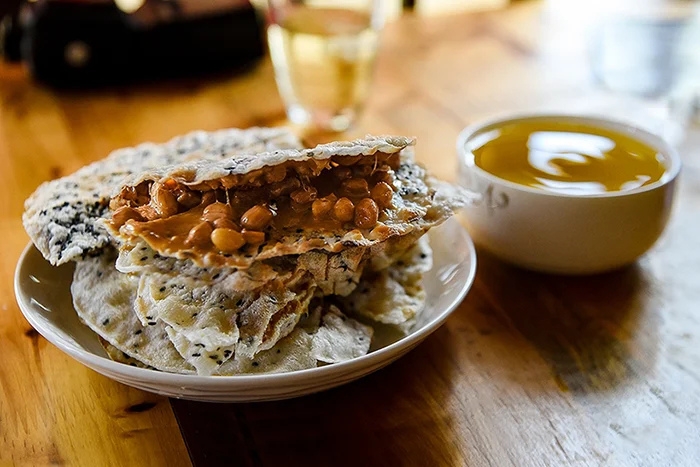
Unlike many modern candies and sweets, kẹo cu đơ has preserved its traditional production methods, giving it a rustic yet unforgettable flavor. For travelers wondering what to eat in Vietnam, this specialty is an excellent way to discover local culinary traditions, especially if you are exploring Central Vietnam.
4. Keo lac (Peanut candy) - A childhood Vietnamese snack
Kẹo lạc is a simple yet beloved Vietnamese snack that can be found throughout the country and remains a cherished part of many Vietnamese childhood memories. This traditional treat is made from roasted peanuts tightly bound together with sugar or molasses, sometimes with the addition of roasted sesame seeds for extra flavor. Peanut candy is known for its satisfying crunch, moderate sweetness, and the rich, nutty aroma of roasted peanuts. It is often enjoyed with a cup of Vietnamese green tea.
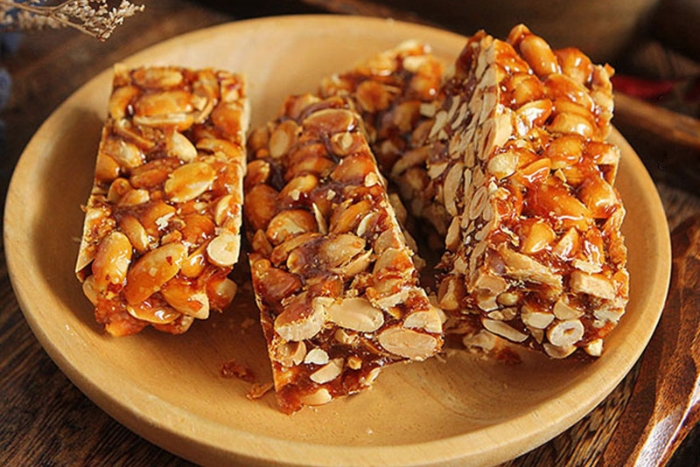
Although many modern sweets and snacks have become popular over the years, kẹo lạc continues to hold a special place in Vietnamese culture thanks to its nostalgic flavor and simplicity. Easy to store and transport, it is also a great snack from Vietnam to bring home as a souvenir after your trip.
Find out more about:
>>> Saigon Street Food Tour
>>> Food tour Hanoi
5. Traditional candied fruits (Mứt hoa quả)
Traditional candied fruits are among the most enduring Vietnamese snacks, especially during the Lunar New Year (Tet). A wide variety of local fruits and agricultural products are used to make these colorful treats, including coconut, ginger, tamarind, carrot, winter melon, mango, orange peel, and pomelo peel. The fruits are slowly cooked with sugar, creating their characteristic sweetness while preserving much of their natural aroma.
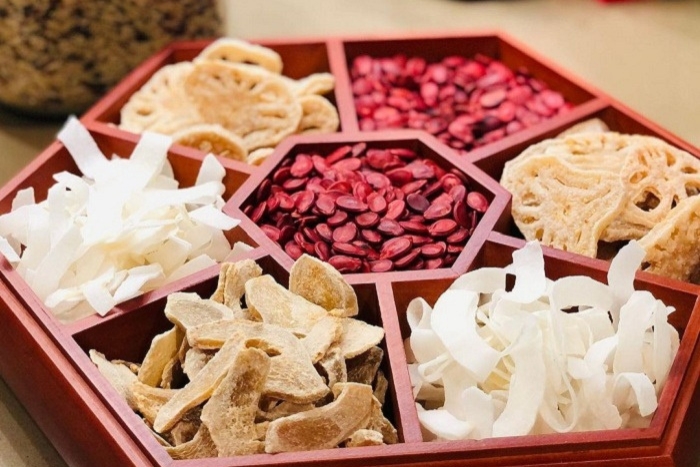
This is a traditional snack in Vietnam commonly served during Tet celebrations, family gatherings, and when welcoming guests. For international travelers wondering what to eat in Vietnam, mứt hoa quả (candied fruits) offer a wonderful introduction not only to the country’s rich agricultural resources but also to Vietnamese culture, lifestyle, and culinary creativity. These treats can easily be found in local markets, specialty shops, and supermarkets across Vietnam.
6. Vietnamese dried fruit (Hoa quả sấy) - One of the best snacks to buy from Vietnam
As you may have noticed, many Vietnamese snacks are made from fruits and local agricultural products, and dried fruit is one of the most delicious and nutritious examples. Compared to traditional candied fruits, dried fruit is a more modern snack and is commonly enjoyed throughout the year rather than only during festive occasions. While candied fruits are cooked with sugar and undergo more extensive processing, dried fruits are usually dehydrated in crispy or chewy forms, with minimal added ingredients, allowing them to retain their natural flavor and nutritional value.
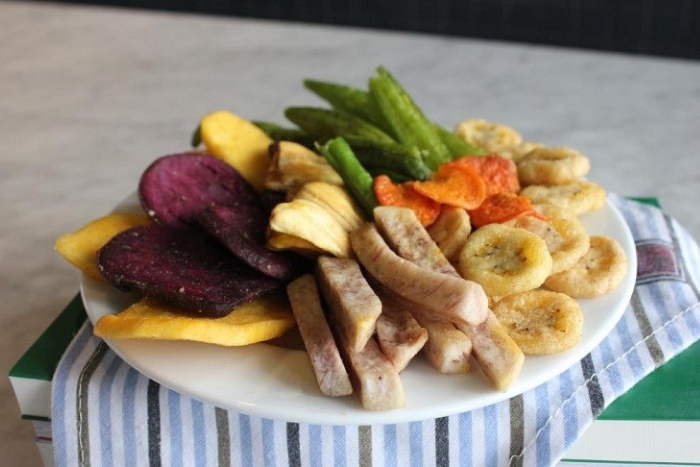
Vietnam is home to a wide variety of tropical fruits such as mangoes, jackfruit, bananas, dragon fruit, pineapples, and durians, providing ideal conditions for producing high-quality dried fruit products. Among the most popular varieties are dried mango, dried jackfruit, and dried coconut. This is a popular snack in Vietnam enjoyed by both children and adults, particularly those looking for healthier snack options. Thanks to their light weight, long shelf life, and convenient packaging, dried fruits are also among the best snacks to buy from Vietnam.
7. Mung bean cube (Bánh đậu xanh)
Bánh đậu xanh is a famous Vietnamese snack closely associated with Hai Duong Province (now part of Hai Phong City), which is considered the birthplace of this traditional delicacy. The cake is made from peeled mung beans that are finely ground and mixed with sugar and a small amount of vegetable oil, creating its signature soft texture that melts in your mouth.
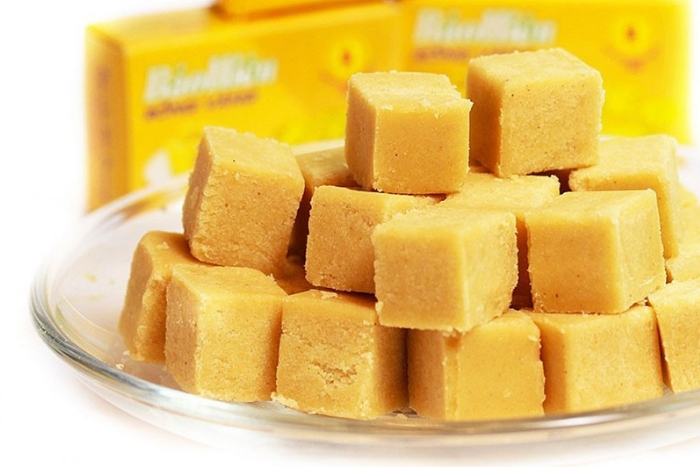
Its delicate sweetness and distinctive mung bean aroma have made it a favorite among generations of Vietnamese people. Bánh đậu xanh is traditionally enjoyed with hot tea, which helps balance its sweetness while enhancing its fragrance. Today, this classic treat has also evolved to suit younger tastes, with modern variations such as matcha-flavored mung bean cake and chocolate mung bean cake becoming increasingly popular.
You might be interested in:
>>> 3 weeks in Vietnam in small group
>>> 15 days in Vietnam and Phu Quoc
8. Shrimp chips (Bánh phồng tôm) - One of the best snacks in Vietnam for all ages
Phồng tôm, or bánh phồng tôm, are a familiar snack that can be found at many family meals and festive occasions throughout Vietnam. This Vietnamese snack is made from tapioca starch mixed with ground shrimp and traditional seasonings, then dried before being deep-fried until it puffs up. Once cooked, shrimp chips have a light, airy, and crispy texture that makes them highly addictive.
There are several ways to enjoy shrimp chips in Vietnam. You can easily find packaged shrimp-chip snacks in convenience stores across the country. These ready-to-eat versions are usually more heavily seasoned and offer a richer flavor. Traditional shrimp chips, on the other hand, are generally larger, lighter, and crispier. They can be enjoyed on their own or served alongside Vietnamese salads such as green papaya salad, mango shrimp salad, or jellyfish salad. Because they are designed to complement the sweet-and-sour flavors of these dishes, traditional shrimp chips are usually less salty than packaged versions.
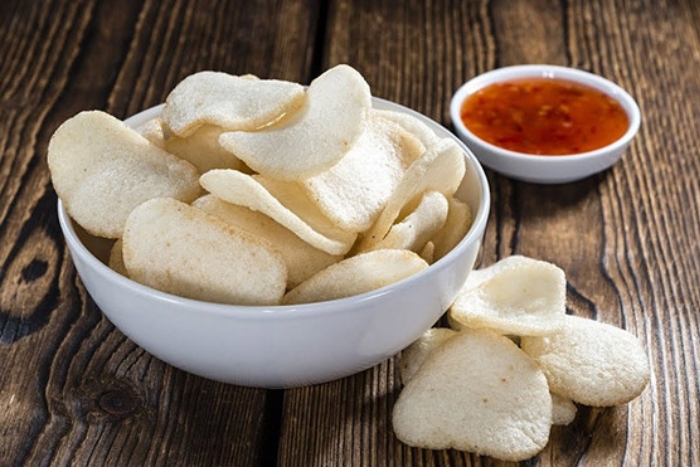
As a popular snack in Vietnam, shrimp chips are loved for their savory taste and versatility. They are also incredibly easy to prepare, just a few seconds in hot oil is enough to create a batch of crispy snacks to enjoy throughout the afternoon. For this reason, shrimp chips definitely deserve a place on any list of snacks to buy from Vietnam, whether as a souvenir or to enjoy at home after your trip.
9. Rice crust (Cơm cháy)
As a country with a long tradition of rice cultivation, Vietnam naturally has a wide variety of rice-based snacks. Among them, cơm cháy is one of the most famous Vietnamese snacks, especially associated with Ninh Binh Province in Northern Vietnam.
This snack is made from either sticky rice or regular rice that is pressed into thin layers, dried, and then deep-fried until golden and crispy. Since the rice itself has a rather mild flavor, different regions often add a variety of toppings such as shredded pork floss, fried shallots, tiny dried shrimp, or mushrooms, combined with rich sauces and local seasonings. The balance between the savory toppings and the crunchy texture of the rice showcases the delicacy and creativity of Vietnamese culinary traditions.
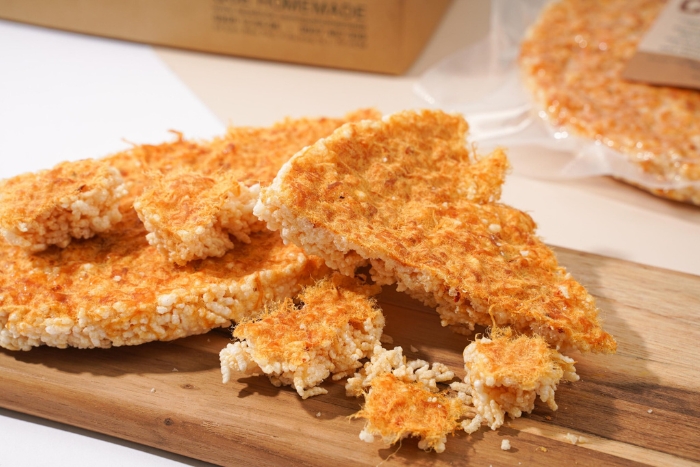
Its irresistible crunch and harmonious sweet-and-savory flavor have helped cơm cháy earn its place among the best snacks in Vietnam, enjoyed by locals of all ages. Today, packaged rice crust can easily be found in convenience stores, supermarkets, and souvenir shops across the country. If you plan to take it home as one of the snacks to buy from Vietnam, make sure to pack it carefully in your luggage, as the crispy pieces can break easily during transport.
10. Puffed rice (Bỏng gạo) - A simple yet beloved snack in Vietnam
Another rice-based Vietnamese snack is bỏng gạo, or puffed rice, a traditional treat that has been enjoyed in Vietnam for generations. There are many varieties with different shapes, flavors, and textures, but they all share one characteristic: rice grains expanded by high heat.
Among the most popular types is bỏng gậy, a traditional cylindrical puffed rice snack that is hollow in the middle, light, airy, and crispy. Because it contains very few additional ingredients, its flavor remains quite mild. Another common variety is bỏng hạt, made from puffed rice grains pressed into round clusters or rectangular blocks. Bound together with malt syrup or molasses, it offers a firmer crunch and a noticeably sweeter taste. Today, many modern versions are available, including brown rice puffed snacks, sticky rice varieties, and recipes combined with sesame seeds, peanuts, sugar, cane syrup, chili, and other ingredients.
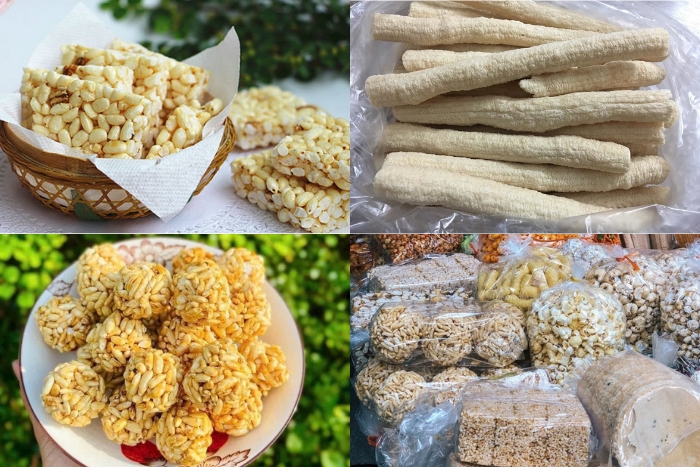
This is one of those popular snacks in Vietnam that evokes childhood memories for many Vietnamese people, especially in rural areas. It is still possible to come across street vendors randomly selling bags of puffed rice along the roadside. More than just a snack, puffed rice is a vivid example of Vietnamese ingenuity. From a simple grain of rice, generations of Vietnamese have created countless foods that not only satisfy hunger but also delight the palate, from rice dishes and rice cakes to puffed rice and many other specialties.
The Vietnamese snacks featured above are wonderful examples of the creativity and craftsmanship found in Vietnamese cuisine. They also help answer the question of what to eat in Vietnam for travelers planning their journey. Using simple ingredients such as fruits, rice, and peanuts, previous generations have passed down not only delicious and nutritious treats but also a rich culinary heritage that continues to impress visitors from around the world. Beyond being enjoyable snacks during your trip, this list of the best snacks in Vietnam can also inspire you when choosing meaningful gifts for family and friends.
If you would like to discover even more authentic flavors and stories behind Vietnam's vibrant food culture, don't hesitate to contact Autour Asia, a local travel agency in Vietnam specializing in off-the-beaten-path experiences throughout the country.
You might want to take a look at:
>>> Vietnam Cambodia Luxury tour 15 days
>>> Vietnam Travel Guide
>>> Vietnam Trip 2 weeks
>>> Vietnam Packages Tours
You can buy Vietnamese snacks in most supermarkets, convenience stores, local markets, and specialty food shops throughout Vietnam. If you are looking for packaged products to take home as souvenirs, large supermarkets and specialty stores in popular tourist destinations are usually the best options. If you would rather try them on the spot, local markets and small shops are great places to visit. In many cases, vendors will even let you sample the products before purchasing.
Most Vietnamese snacks are suitable for children, as many of them are made from natural ingredients such as fruits, rice, peanuts, and other agricultural products. They are often lower in fat and contain fewer artificial additives than many industrial snacks. However, if your child has any food allergies, it is important to check the ingredient list carefully before consumption. In addition, some Vietnamese snacks can be quite spicy, so parents should pay attention if their children are not used to spicy food.
If you are wondering what to eat in the Mekong Delta, don't miss famous local specialties such as hủ tiếu noodle soup, bánh xèo (Vietnamese savory pancakes), fresh spring rolls, and dishes made from freshwater fish. The region is also known as Vietnam's "fruit basket", producing mangoes, durians, rambutans, mangosteens, and longans. Besides enjoying fresh tropical fruits, visitors can also try a variety of Vietnamese snacks made from locally grown fruits.
Related travel guide
Other similar articles


CUSTOMIZABLE BY LOCAL EXPERTS
Personalized trip at the original price!

REFUND GUARANTEE
We believe in our work and promise to give you money back.

GOOD PRICE / QUALITY
95% satisfied more than expected!

24/7 LOCAL SUPPORT
We are always available online to provide assistance at any time.

Most read articles


Autour Asia is highly recommended on
Embracing the mission of "Satisfied more than expected" and providing authentic experiences, we have received numerous recommendations on reputable travel forums: