
Itinerary Of 3 Weeks In Vietnam In Small Group - Review By Leona
Hello, my name is Leona. We had the opportunity to spend 3 weeks in Vietnam in a small group, following an itinerary designed as a progressive and well-balanced discovery of the country. From North to South, this journey allowed us to explore the diversity of landscapes and cultures while benefiting from the attentive support of Autour Asia, a local travel agency based in Vietnam. The small group size encouraged exchanges, local encounters and a more authentic immersion. Through this review, I share our experience, our impressions, and practical advice for successfully undertaking a long trip to Vietnam under good conditions.
Table of Contents
I. Week 1: Northern Vietnam - Traditions, craftsmanship and mountains
1. Days 1 - 3: Hanoi and its craft villages

Upon our arrival in Hanoi, everything was designed for a smooth transition within the framework of this small-group trip to Vietnam. Welcomed at the airport by the guide and the driver, we headed to the city center. Rather than chaining visits, the program prioritized recovery with a traditional oil massage, ideal after the flight. This moment of calm whetted the appetite and we enjoyed a bún chả - an emblematic specialty of the capital, at a local address. After checking in at the hotel, we ended the day with a free walk in the Old Quarter, observing the animation of the streets and gradually taking the pulse of the city.

On the second day, we left the bustle of Hanoi to explore the surrounding countryside, in the spirit of these 3 weeks in Vietnam in small group. The morning began in the village of Bat Trang, renowned for its pottery. Between the museum, family workshops and a modeling session, we discovered a living craft, proudly passed down through generations. The road then led to Quang Phu Cau village, famous for its rosettes of incense sticks. The exchanges with the artisans, facilitated by the small size of the group, gave real depth to the visit. At the end of the day, we returned to Hanoi, still imbued with this traditional know-how.
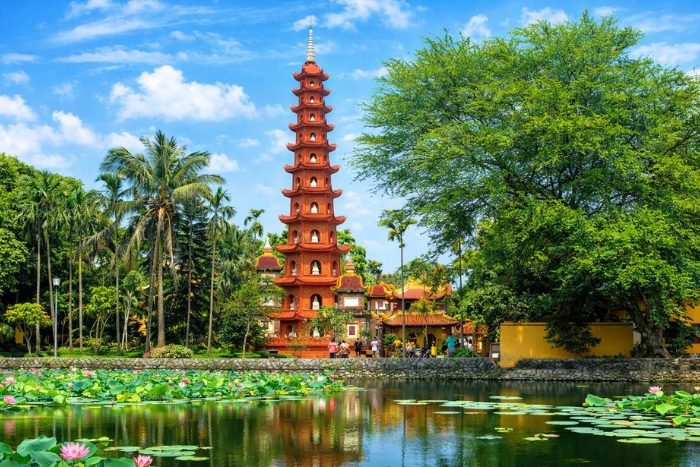
This final day in Hanoi allowed us to broaden our understanding of the country before departing for the North. The morning was devoted to the Vietnam Museum of Ethnography, essential for grasping the diversity of the 54 Vietnamese ethnic groups. In the afternoon, we discovered Tran Quoc Pagoda peacefully set on the edge of West Lake, offering a soothing contrast to the urban bustle. One last collective stroll in the Old Quarter between memories and Vietnamese coffee, preceded the transfer to the railway station. In the evening, the overnight train to Lao Cai gently marked the transition from the capital to the mountains of the North.
Accommodation (Days 1 - 2): Hotel de Rond, Hanoi
Day 3: Overnight train to Lao Cai
2. Days 4 - 6: Bac Ha and Sapa
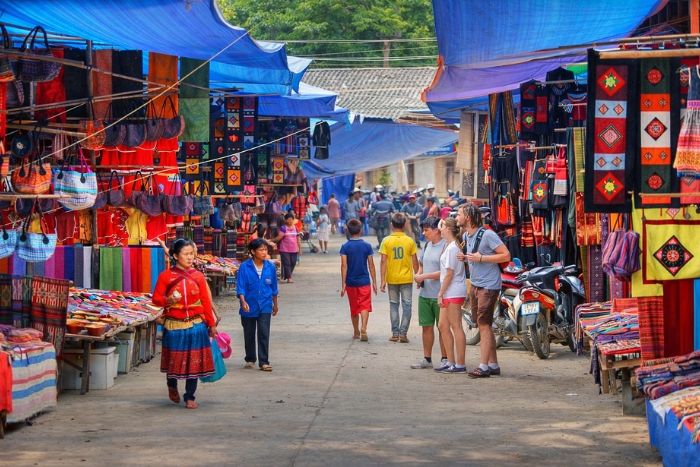
After a night lulled by the train, we woke up in Lao Cai, surrounded by mountains shrouded in mist, a first immersion of this 3-week itinerary in Vietnam. The road to Bac Ha marked a clear break with urban Vietnam. At the weekend, Bac Ha market brought the valley to life, and we were lucky to attend it: a whirl of colors where Flower H’mong and other minorities exchanged goods and news. This immersion continued with a walk through the surrounding villages, meeting the Phu La. In the late afternoon, we arrived in Na Lo for a night with a host family, a first sincere contact with mountain life.

Leaving Bac Ha for Sapa set the tone for an active day, entirely paced by walking. The hike crossed terraced rice fields and open landscapes of the Northwest, concretely illustrating what to do in Vietnam in 3 weeks in small group, where each step revealed a new perspective. We encountered H’mong and Zay villagers absorbed in agricultural work, simple scenes that gave full meaning to the effort. After lunch, the path continued toward Lao Chai and then Ta Van in the heart of the Muong Hoa valley. The day ended with a Zay family, around a shared meal in a warm and deeply human atmosphere.
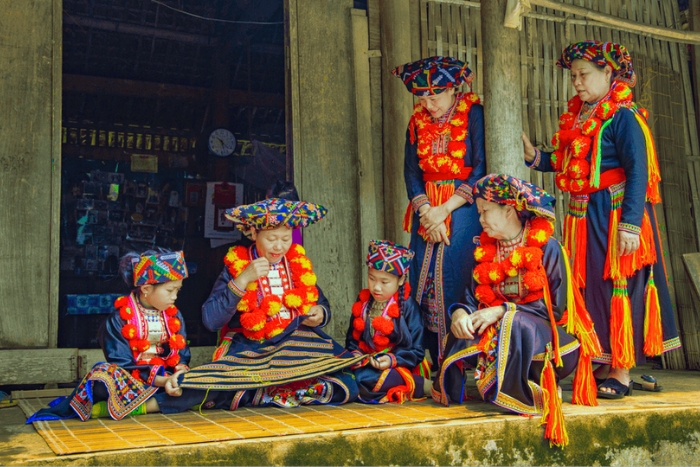
The following day began gently with breakfast at our hosts’ home, before a short hike toward Giang Ta Chai - a village of the Red Dao. We observed their hand-embroidered costumes, the emblematic red headdress and ancient know-how such as plant-based dyeing. The walk, punctuated by suspension bridges and rice fields, invited calm and contemplation. In the early afternoon, we returned to Sapa and then took the road to Hanoi. The return to the city heightened the contrast and naturally prepared the continuation of the journey, in the spirit of these 3 weeks in Vietnam in small group.
Accommodation: La Beauté Bac Ha, Lao Cai (Day 4)
Comlam Eco House in Ta Van (Day 5)
The Silk Path Boutique Hanoi (Day 6)
II. Week 2: Rural valleys, karst landscapes and the imperial Center
1. Days 7 - 8: Mai Chau and Pu Luong
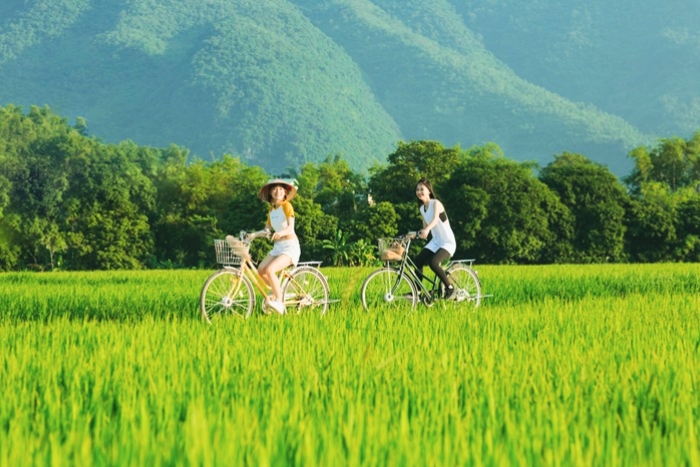
Leaving the capital immediately marked a change in atmosphere. Taking the road westward, we felt the bustle of Hanoi gradually fade away, over the course of this trip to Vietnam from North to South. As we approached Mai Chau, a stop at Thung Khe Pass was essential to admire the valley and its checkerboard rice fields. In the afternoon, we explored the village Mai Hich by bicycle, among stilt houses and rice fields. Exchanges with the White Thai, around brocade weaving, gave real human depth to this stage. The day ended with a homestay, between a shared dinner and traditional dances.
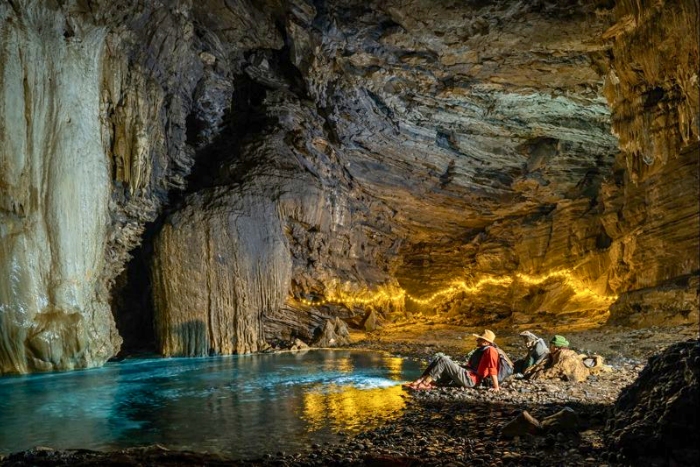
Changing valleys, the atmosphere evolved as we entered the Pu Luong Nature Reserve, wilder and more silent, a key stage of this 3-week Vietnam small group tour. The morning began with a peaceful walk along the Cham River, where bamboo water wheels illustrated an ancestral irrigation system. The path continued toward Kho Muong Cave, nestled in the heart of an impressive karst amphitheater. In the late afternoon, a walk in Ban Don accompanied the golden light over the terraced rice fields. The evening in a homestay extended this immersion before the continuation of the journey.
Accommodation: Mai Chau Valley Retreat (Day 7)
Pu Luong Glamping (Day 8)
2. Days 9 - 11: Ninh Binh and Lan Ha Bay
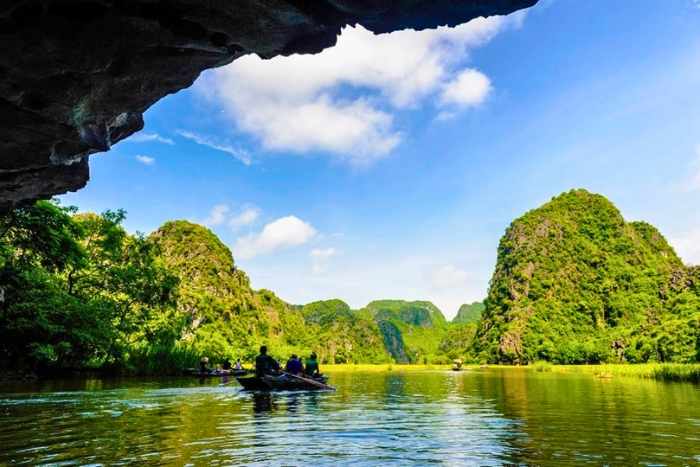
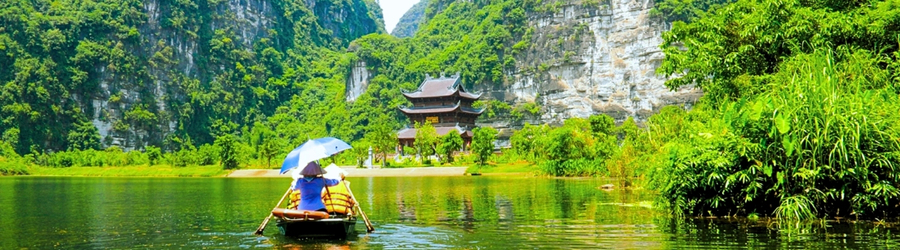
After the mountain immersion of Pu Luong, entering Ninh Binh meant changing one’s breathing, in the continuity of these 3 weeks in Vietnam in small group. The pace naturally slowed. In the Van Long Nature Reserve, we boarded a bamboo boat that glided silently between marshes and limestone cliffs. This peaceful discovery continued in Tam Coc, before a bicycle ride between rice fields and rocky pinnacles leading to Bich Dong Pagoda. The evening ended in a calm and restful atmosphere, faithful to the spirit of the place.

The following day, the scenery gradually changed as we left the inland areas to reach the coast. Boarding in Lan Ha Bay marked a more maritime transition, characteristic of a small-group trip to Vietnam. On board, time seemed to stretch as the junk glided between limestone islets during lunch served on the deck. The afternoon continued with a kayaking session to explore the Bright and Dark Cave, before a refreshing swim. At the end of the day, a cooking demonstration preceded a seafood dinner. The night on board invited complete letting go.
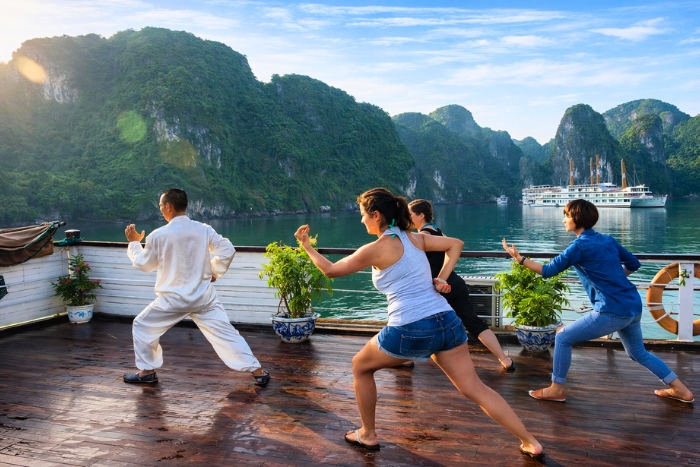
Waking up in the bay remained one of the most striking moments of the journey. At dawn, we took part in a tai chi session on the deck, facing karst formations still wrapped in mist, a fine illustration of what to do in Vietnam in 3 weeks. After breakfast, the junk continued its navigation into more remote areas, offering a final timeless interlude and fine photo opportunities. A brunch was served before disembarkation. We then headed to the airport for a flight to Hue, leaving behind the natural North and opening the continuation of the journey.
Accommodation: Tam Coc Friendly Homestay, Ninh Binh
Day 10: Night on board
Day 11: LaLa Citadel Homestay in Hue
3. Days 12 - 15: Hue - Hoi An, heritage and gentle way of life
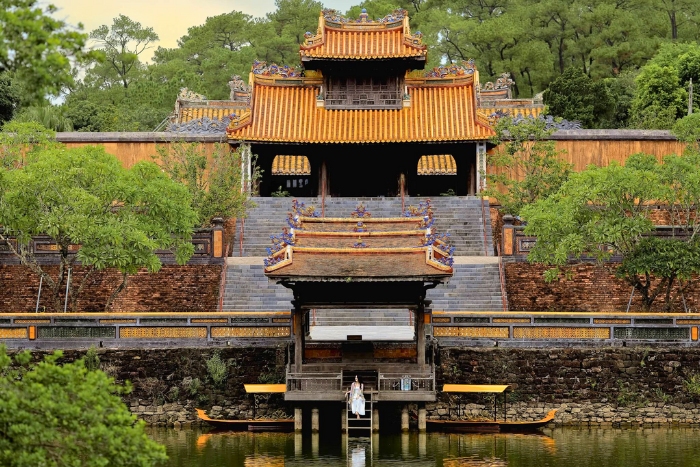
After the maritime interlude, Hue welcomed us in a more introspective, almost solemn atmosphere. The morning opened in the heart of the Imperial Citadel of Hue, where we passed through the Ngo Mon Gate before walking across ceremonial courtyards and official pavilions. This visit naturally fit within the spirit of a small-group tour in Vietnam, attentive to history and places. In the afternoon, the tomb of Tu Duc, nestled among pine trees and ponds, enveloped us in a melancholic poetry. The day ended with a peaceful walk along the Perfume River, extending this timeless immersion.
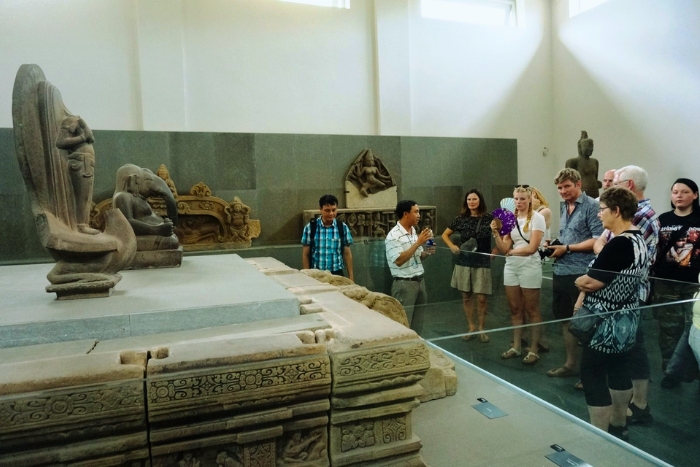
Leaving Hue to reach Hoi An happened naturally, like a gentle transition after the previous day in the Center. The road followed the coast and then rose to the Hai Van Pass, where sea and mountains answered each other in a spectacular landscape. Descending toward Da Nang, a stop at the Museum of Cham Sculpture reconnected us with the ancient history of the region. Arrival in Hoi An in the early afternoon was smooth, in the heart of the old town: ancient houses, the Japanese bridge, quiet alleyways. As night fell, the lanterns lit up concluding these 3 weeks in Vietnam in small group.
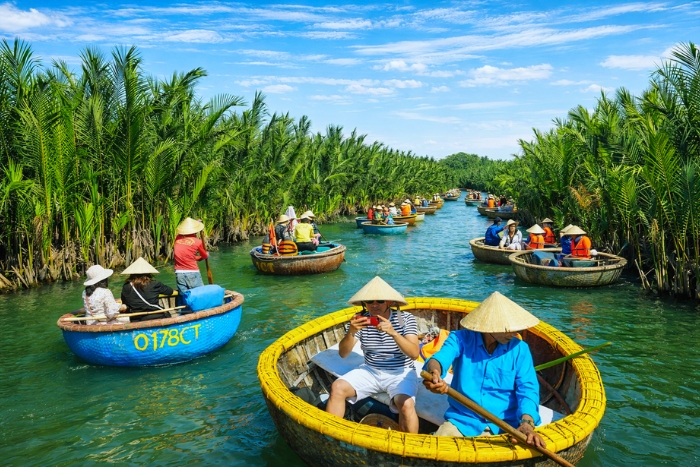
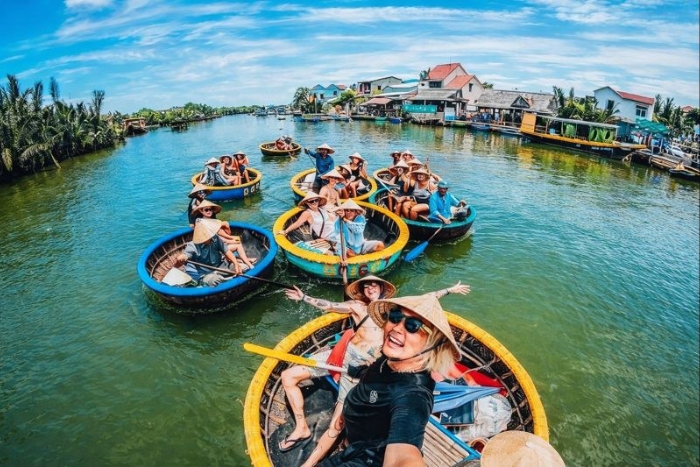
At daybreak, we felt the need to leave the lively alleyways of Hoi An to explore a more rural side of the region. By bicycle, we moved away from the historic center and crossed rice fields, peaceful canals and rows of coconut trees until reaching the Bay Mau coconut forest, a stage that clearly illustrated this Vietnam itinerary in 3 weeks, rich in contrasts. On site, we boarded basket boats to observe the lives of the fishermen. The morning continued at a host family’s home, around a traditional cooking workshop before a herbal foot bath which brought this authentic interlude to a close.
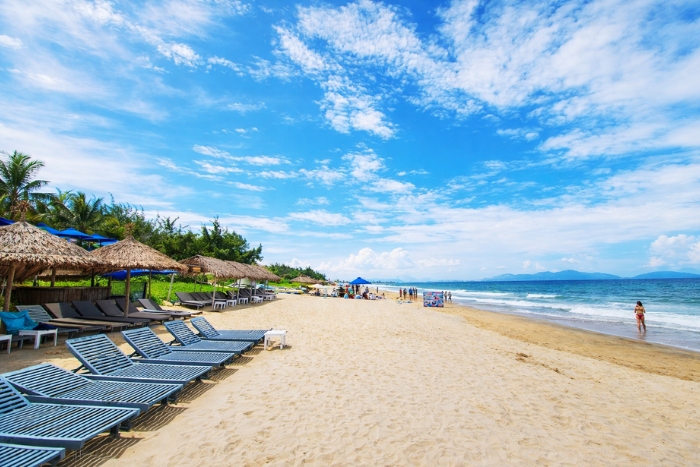
For this final day in the Center, we chose to slow down. The morning began on An Bang Beach - one of the most beautiful beaches of Hoi An, ideal for enjoying the sea in a peaceful atmosphere. This seaside pause contrasted pleasantly with the more active days. In the afternoon, we returned to the old town of Hoi An without a specific itinerary. We strolled through the alleyways, took a break in a café and observed the light on the old façades. This deliberate slowness offered a final breath before leaving the Center and continuing the journey toward the South.
Accommodation: LaLa Citadel Homestay, Hue (Day 12)
Days 13, 14, 15: The View Homestay Hoi An
III. Week 3: The energy of Saigon and the gentleness of the Mekong
1. Days 16 - 17: Ho Chi Minh City
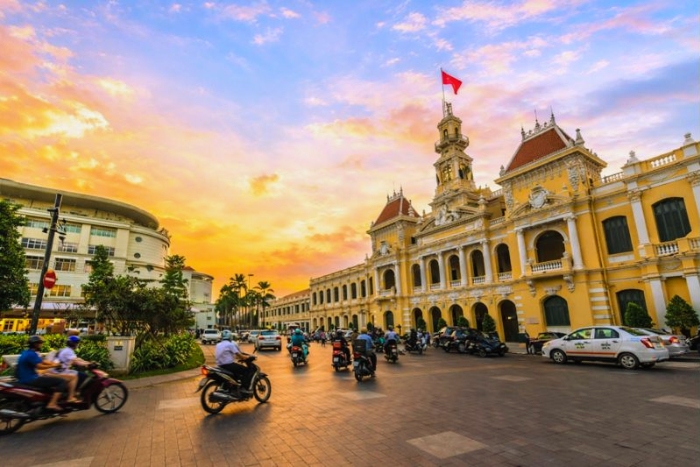
At the moment of leaving Hoi An, we savored its gentleness one last time before radically changing scenery. The transfer to Da Nang Airport marked a smooth transition toward the South then the flight took us to Ho Chi Minh City, a significant stage of these 3 weeks in Vietnam in small group. From the moment of landing, the city’s energy made itself felt: uninterrupted traffic, architectural contrasts, sustained rhythm. After settling into the hotel, we set out on foot for a first exploration between lively cafés and spontaneous street scenes. As night fell, Saigon lit up and revealed a vibrant, almost magnetic atmosphere.
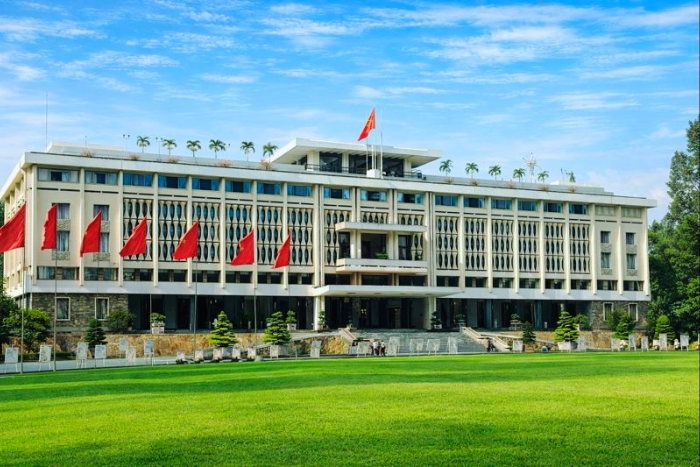
To better understand Ho Chi Minh City, we began the day on foot, retracing the thread of its history. The morning was devoted to the major colonial landmarks: Notre-Dame Cathedral, the Central Post Office, the Opera House and the Independence Palace, whose elegant architecture contrasted with contemporary bustle. In the afternoon, we changed atmosphere by heading to Chợ Lớn, the historic heart of the Chinese community. Between lively commercial streets, traditional shops and abundant local life, we felt a different urban rhythm. The visit to Thien Hau Pagoda, enveloped in incense, brought a spiritual pause. This progression revealed a multiple Saigon, where heritage, commerce and beliefs coexisted harmoniously.
Accommodation: Sanouva Saigon Hotel (Days 16 - 17)
2. Days 18 - 20: Mekong Delta - River life and encounters
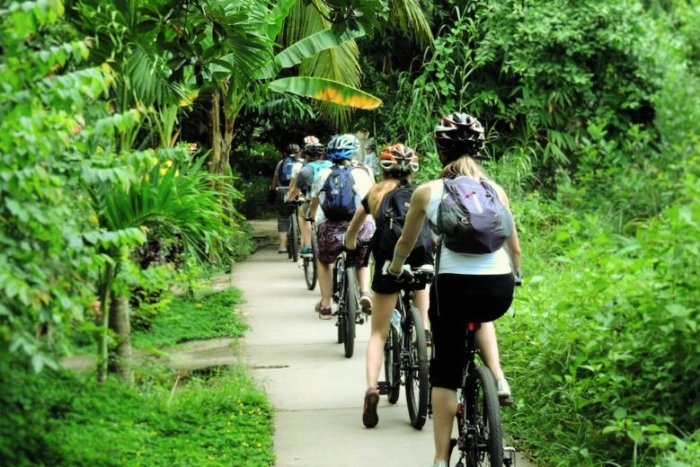
The contrast with the previous urban days was immediate. Leaving Saigon, the scenery changed and invited us to slow down in continuity with this well-planned 3-week itinerary in Vietnam. In Cai Be, peaceful canals, stilt houses and tropical orchards set the tone. We then explored Tan Phong Island by bicycle, among durians, ramboutans and mango trees. Stops in small family workshops, notably for hammock making, encouraged sincere exchanges. The afternoon unfolded calmly between resting by the water and a shared cooking workshop, before a peaceful night with a host family.
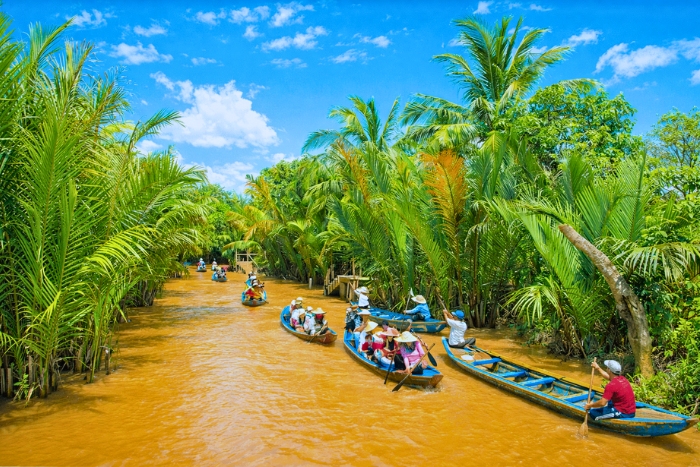
Here, everything began on the water. Early in the morning, we boarded a traditional sampan and let ourselves be carried through the narrow canals of the Mekong, an emblematic experience of these 3 weeks in Vietnam in a small group. The river set the rhythm for every movement: slow navigation, discreet exchanges, scenes of daily life observed along the water. Stops at family workshops revealed local know-how, from rice cakes to coconut confections. Upon reaching Can Tho, the atmosphere became more lively and the visit to the Binh Thuy ancient house added an elegant and historical touch to the day.
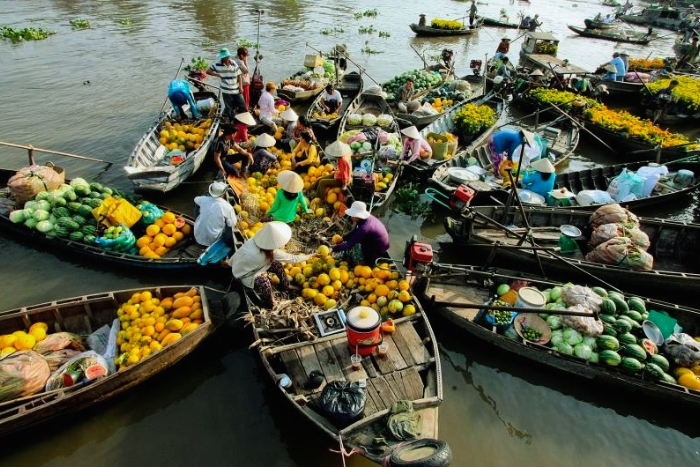
One had to rise very early to grasp the soul of the delta. Before dawn, we set out to observe the Cai Rang floating market, when the river truly came alive, a strong moment of this Vietnam small group tour. In the soft morning light, boats laden with fruit crossed paths and lived to the rhythm of the water. The morning continued in a local orchard, with the tasting of freshly picked fruit. On the road back to Saigon, a stop at a Khmer pagoda provided a final spiritual pause. This river interlude slowly came to a close, leaving a lasting impression of simplicity and humanity.
Accommodation: Mekong Ecolodge in Tan Phong, Cai Be (Day 19)
Day 20: Grandma House, Ninh Kieu, Can Tho
Day 21: Acnos Hotel Saigon
3. Day 21: Departure

For this final day in Ho Chi Minh City, we took the time to savor one last urban interlude. The morning began around a cà phê sữa đá, observing the city come alive one last time, a scene that summed up well what to do in Vietnam in 3 weeks between discoveries and simple moments. We then headed to Ben Thanh Market - an emblematic place to buy souvenirs and gifts. In the afternoon, the driver took us to the airport. Leaving Saigon, we understood that this journey went beyond the places visited: it was made of encounters, contrasts and deeply human moments.
If this journey inspires you, AUTOUR ASIA, a trusted travel agency in Vietnam, can help you design a tailor-made and carefully designed 3-week Vietnam small-group tour, true to the spirit of discovery and authentic encounters.
At the end of these 3 weeks in Vietnam in small group, we left with the feeling of having experienced a rich and well-balanced journey. Each region was approached with the necessary time, without haste, offering a true immersion in landscapes, cultures and daily life. From the mountains of the North to the banks of the Mekong, via the Center and the major cities, the itinerary concretely answered the question of what to do in Vietnam to travel differently. The organization of Autour Asia, a leading local tour operator in Vietnam, largely contributed to this smoothness. More than a simple itinerary, this journey was a human and deeply inspiring experience.
You can refer to:
- 2 weeks in Central Vietnam
- 2-week itinerary Vietnam extension to Phu Quoc
- Hanoi travel itinerary 2 weeks
- Vietnam Travel Guide
- Vietnam itinerary 3 weeks
- Vietnam Tours
The best route for 3 weeks in Vietnam from North to South follows a logical and well-paced progression that reflects the country’s geography and cultural diversity. It typically begins in Hanoi, where travelers explore Vietnam’s historical and cultural foundations, before continuing to Halong Bay for a scenic cruise among limestone karsts. The journey then moves inland to Ninh Binh, known for its karst landscapes and sampan rides. From there, the route heads to central Vietnam, stopping in Hue to discover imperial heritage, followed by Hoi An and nearby Ba Na Hills for history, atmosphere and gentle coastal living. The itinerary then continues south to Nha Trang and Da Lat, offering a contrast between seaside relaxation and highland nature. It concludes in Ho Chi Minh City, followed by an immersion in the Mekong Delta and finally a beach extension on Phu Quoc. This north-to-south route ensures a smooth transition between regions while balancing culture, nature, cities and relaxation over three weeks.
In a 2-week itinerary in Vietnam extension to Phu Quoc, the stages are organized in a progressive and logical way, from the Center toward the South. The journey generally begins in the Central region (Da Nang, Hoi An, Hue) to discover heritage, historic cities and cultural landscapes, with short and coherent travel distances. It then continues southward to Ho Chi Minh City and the Mekong Delta, allowing travelers to explore urban life and river-based lifestyles. Finally, the extension to Phu Quoc takes place at the end of the itinerary, offering several days of seaside relaxation. This distribution balances sightseeing, travel time and rest, without an excessive pace.
Yes, the itinerary can be fully adapted depending on the season and weather conditions. For 3 weeks in Vietnam in small group, this flexibility is essential to ensure a pleasant and well-paced experience throughout the journey. Depending on the time of year, the order of the regions (North, Center, South) can be adjusted, certain stages can be reinforced or lightened, and activities modified, particularly hikes, cruises or beach days. This adaptation helps avoid areas most exposed to heavy rainfall, take advantage of the best possible climate conditions, and maintain a good level of comfort without compromising the richness of cultural and human discoveries.
Related travel guide
Other similar articles


CUSTOMIZABLE BY LOCAL EXPERTS
Personalized trip at the original price!

REFUND GUARANTEE
We believe in our work and promise to give you money back.

GOOD PRICE / QUALITY
95% satisfied more than expected!

24/7 LOCAL SUPPORT
We are always available online to provide assistance at any time.

Most read articles


Autour Asia is highly recommended on
Embracing the mission of "Satisfied more than expected" and providing authentic experiences, we have received numerous recommendations on reputable travel forums: