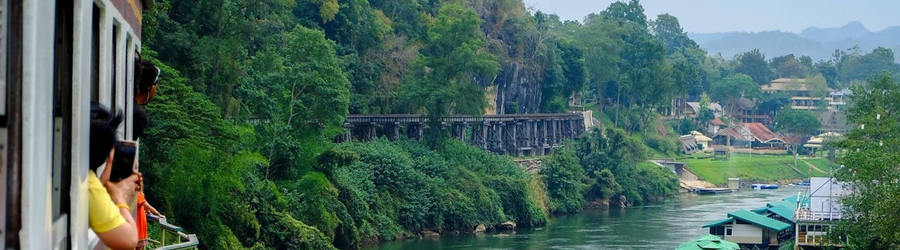
The Bridge on the River Kwai, located in River Kwai Thailand, is one of the most iconic historical sites in the country. Built during World War II as part of the famous Death Railway, this bridge crossing the River Kwai attracts visitors from all over the world today. Between memory, history, and peaceful landscapes, Kanchanaburi Thailand offers an experience that is both cultural and moving. To visit Bridge on the River Kwai allows for a better understanding of a significant episode in Asian history while discovering an authentic destination close to Bangkok.
The Bridge on the River Kwai is located in Kanchanaburi, a historic town in western Thailand, approximately 130 kilometers west of Bangkok. The bridge crosses the Khwai Yai River, a major tributary of the Mae Klong River, and is situated just a few minutes from Kanchanaburi’s city center, making it easily accessible for visitors. Kanchanaburi lies near the border with Myanmar and is surrounded by mountains, rivers, and lush countryside. This strategic location played a crucial role during World War II, when the area became a key point in the construction of the Thailand-Burma Railway, also known as the Death Railway. Today, the Bridge on the River Kwai stands as both a historical monument and one of the most visited attractions in western Thailand.
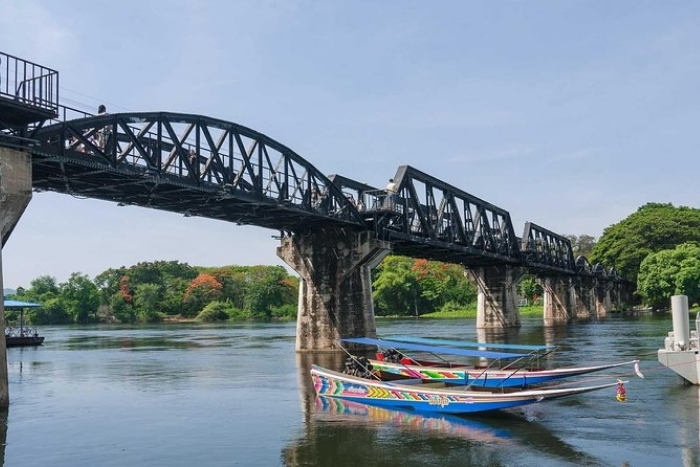
Thanks to its proximity to Bangkok, the Kanchanaburi Bridge on the River Kwai is an ideal destination for a day trip or a two-day stay. The site is well connected by road and rail. Once in town, the bridge is within walking distance of many hotels, restaurants, local markets, and museums, making it convenient to include in a day trip or a longer stay exploring the River Kwai region. Thanks to its historical importance and scenic riverside setting, the Bridge on the River Kwai remains a central highlight of Kanchanaburi and a meaningful destination for those interested in Thailand’s wartime history and cultural heritage.
The history of the Bridge on the River Kwai is closely linked to the construction of the Thailand-Burma Railway, often called the Death Railway, during World War II. In 1942, the Japanese Imperial Army began building a 415-kilometer railway line connecting Thailand and Burma (now Myanmar) to support military operations in Southeast Asia. The project required crossing the Khwai Yai River in Kanchanaburi, where the bridge was constructed using Allied prisoners of war and thousands of Asian laborers. Harsh working conditions, tropical diseases, malnutrition, and extreme exhaustion led to the deaths of tens of thousands of workers, giving the railway its tragic nickname.
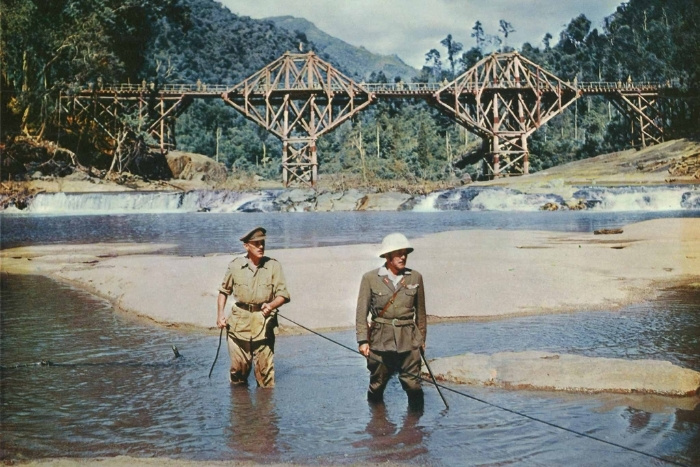
The original bridge was made of wood before being replaced by a more durable steel structure brought from Java. In 1945, the bridge was heavily damaged by Allied bombing raids, but it was later rebuilt after the war. Today, parts of the current structure are original, while others were restored. The site gained world fame thanks to the film The Bridge on the River Kwai, directed by David Lean. Although the work popularized the story, it contains certain differences from historical facts. Today, the River Kwai and its bridge represent an important memorial site in Thailand.
The Bridge on the River Kwai is easily accessible from Bangkok, making it a very popular excursion. Several transport options are available to travelers:
The bridge is just the starting point for a deep immersion into the region's soul. Beyond the iconic steel structure, there are numerous things to do in Kanchanaburi that allow you to connect with both history and nature. Here are the must-see Kanchanaburi attractions:
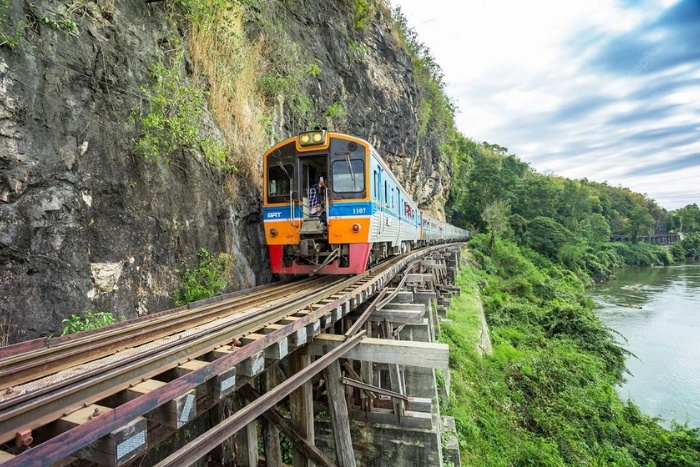
The Death Railway remains the star attraction for any traveler who chooses to visit bridge on the River Kwai. While the original 415-kilometer line once stretched all the way into Myanmar, today only a scenic portion remains in service, running from Kanchanaburi to Nam Tok. Taking this train is not just a commute, it is a journey through time.
The JEATH War Museum is one of the most significant and moving Kanchanaburi attractions for travelers seeking to understand the profound historical context of the region. Located on the banks of the Mae Klong River (near the junction with the River Kwai Thailand), this museum offers a raw and intimate look at the reality of the Second World War. The name "JEATH" is a powerful acronym representing the primary nations involved in the construction of the local railway: Japan, England, America, Australia, Thailand, and Holland. Things to do in Kanchanaburi ? A visit to this museum is essential for a deeper perspective, JEATH is partially housed in authentic-style bamboo huts, exact replicas of the cramped, thatch-roofed barracks where prisoners of war were forced to live. Inside these long, dimly lit structures, visitors can discover a haunting collection of period photographs, original maps, and secret drawings sketched by the prisoners themselves at great personal risk.
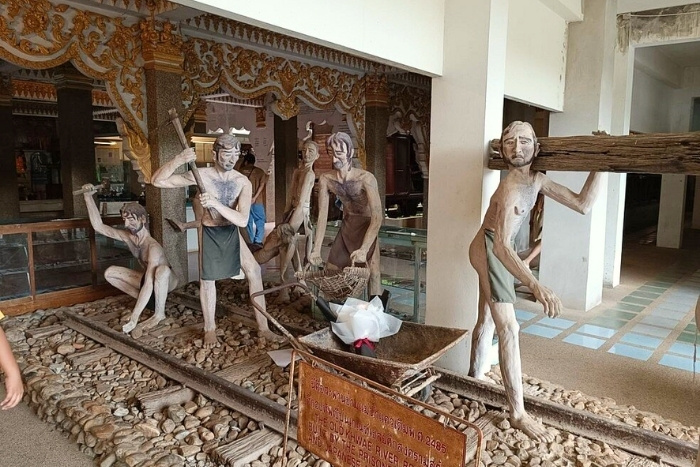
These artifacts and testimonies provide a concrete and heartbreaking glimpse into the extremely difficult conditions endured during the construction of the bridge on the River Kwai. From displays of crude surgical tools used to treat tropical diseases to the "Death Railway" tools and personal letters, the museum captures the resilience of the human spirit. Exploring these exhibits enriches the cultural experience in Kanchanaburi Thailand, transforming the bridge from a simple tourist photo-op into a monumental symbol of sacrifice. It is a quiet, contemplative site that serves as a necessary bridge between the past and the present for anyone who chooses to visit Bridge on the River Kwai.
Kanchanaburi Thailand is home to two major war cemeteries maintained by the Commonwealth War Graves Commission. These sites are islands of absolute serenity and meticulous beauty, offering a stark, silent contrast to the violent history of the Death Railway. For many who visit bridge on the River Kwai, these cemeteries are the most emotional part of the journey.
Located in the heart of the city, directly opposite the main train station, Don-Rak is the largest and most visited of the Kanchanaburi attractions. As you walk through the rows of impeccably maintained bronze plaques set into the green turf, you will notice the tragically young ages, many soldiers were only in their early twenties. This site is a powerful reminder of the human cost involved in building the Bridge on the River Kwai. The flowers are kept in bloom year-round, creating a peaceful atmosphere for reflection.
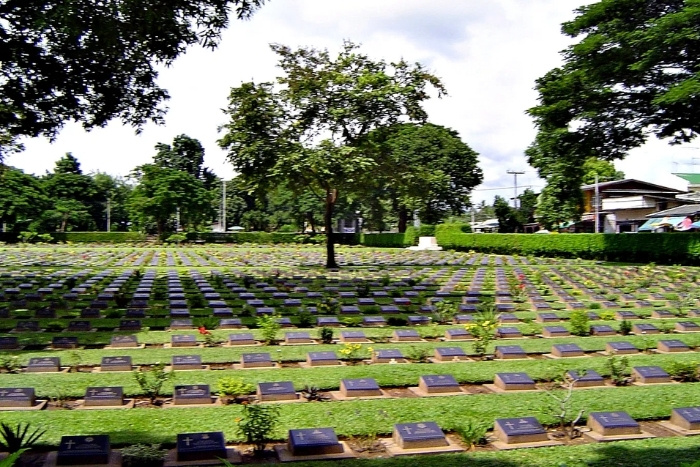
For those looking for more quiet things to do in Kanchanaburi, Chungkai offers a smaller and more intimate experience. Located about 2 kilometers south of the main bridge on the banks of the River Kwai Noi, it sits on the actual site of what was once one of the largest POW base camps. Because it is slightly further from the main tourist trail, it remains a hidden gem of peace. It houses about 1,750 graves and is surrounded by lush tropical trees, making it an ideal spot for those who wish to pay their respects away from the crowds of the main River Kwai Thailand sites.
Admission to both cemeteries is free of charge. They are open daily from 8:00 AM to 5:00 PM. Visitors are kindly requested to maintain a respectful silence and dress modestly (covering shoulders and knees) to honor those who rest here.
While history brought fame to the region, the stunning natural beauty of Kanchanaburi Thailand is what often captures the hearts of travelers. The province is a paradise of limestone crags, hidden caves, and some of the most spectacular water features in Southeast Asia.
Located about an hour's drive from the Bridge on the River Kwai, this is arguably the most beautiful park in Thailand. Its main draw is the seven-tiered Erawan Falls, which stretch over 1.5 kilometers through the jungle. The water is a brilliant, milky turquoise due to the calcium carbonate in the rocks. You can hike to the top level or swim in the natural pools at each tier. It is also famous for the "fish spa" experience, wild Garra Rufa fish in the pools will gently nibble at your skin as you cool off. For those looking for active things to do in Kanchanaburi, the hike to the seventh tier is a rewarding challenge.

For a more rugged experience, Sai Yok offers dense forest scenery where waterfalls drop directly into the River Kwai Thailand. This area is the birthplace of the famous floating hotels (rafts). Spending a night on a floating raft, tucked into a bend of the river with no sounds but the rushing water and tropical birds, is a magical experience. You can also explore the Lawa Cave, which features impressive stalactites and is home to the world’s smallest bat.
Perched on a hill overlooking the Mae Klong valley, this temple is one of the most visually stunning Kanchanaburi attractions. After climbing 157 steps (or taking the cable car), you are greeted by a massive, 18-meter-tall golden Buddha covered in sparkling mosaics. The real highlight, however, is the 360-degree panoramic view from the top, offering a sea of vibrant green rice paddies and the winding curves of the river, the most beautiful natural vista in the province.

Located just above Erawan, this massive reservoir looks like a vast inland sea surrounded by emerald hills. It is a premier spot for water-based things to do in Kanchanaburi, such as kayaking, fishing, or taking a private cruise on a large wooden houseboat. The contrast between the deep blue water and the lush mountain backdrop is simply breathtaking.
Visiting the Bridge on the River Kwai and the Kanchanaburi Thailand region requires some preparation to fully enjoy the experience. Here are the essential points to keep in mind:
The Bridge on the River Kwai in Kanchanaburi Thailand is far more than just a historical landmark; it is a profound bridge between a tragic past and a breathtakingly beautiful present. As a powerful symbol of the Death Railway, it invites travelers to reflect on history while enjoying the serene landscapes of River Kwai Thailand. Whether you are exploring moving museums or the turquoise waters of Erawan, this destination offers an unforgettable blend of culture and nature. For an authentic and perfectly organized journey, trust Autour Asia - Thailand travel agent to create your tailor-made experience in the heart of Kanchanaburi.







 FR
FR ITA
ITA