
3-week Luxury Vietnam Trip - Private Tailor-Made Tour

A 3-week luxury Vietnam trip allows you to discover the North, Central, and South of the country without packing too many destinations into your itinerary. This pace gives you more time to enjoy the scenery, upscale accommodations, and private experiences while travelling in comfort. Luxury is not limited to 5-star hotels; it is also about comfort, privacy, high-quality service, and personalized experiences. From the itinerary and transportation to accommodation, activities, and budget, here are the key things to consider when planning a successful Vietnam luxury travel.
👤 Author: Nhi Nguyen
English travel marketing expert at Autour Asia.
✔️ Find the author on: Facebook Nhi Nguyen, Linkedin Nhi Nguyen, Twitter Nhi Nguyen
✅ Content verified by: Tran Ba Duy
Founder of Autour Asia, with over 20 years of experience in inbound tourism for English-speaking, European, and North American travelers.
🌏 Why trust this travel guide?
✔️ Based on organized trekking routes across Vietnam
✔️ Regularly updated to reflect the latest travel conditions, seasonal changes, prices, and local regulations.
✔️ More than 25,000 travelers served, 8,000 tailor-made tours successfully organized, and 1,500 five-star reviews from international travelers.
✔️ Written by a team of travel experts based in Vietnam, with in-depth local knowledge and first-hand expertise across Indochina's top destinations.
3-week luxury Vietnam trip
- I. Why choose a 3-week luxury trip to Vietnam?
- II. Luxury experiences in Vietnam?
- III. Which itinerary should you choose for 3 weeks of luxury in Vietnam?
- IV. How to travel comfortably for 3 weeks in Vietnam?
- V. Where to stay for a luxury trip to Vietnam?
- VI. What budget should you plan for a 3-week luxury trip to Vietnam?
- VII. How to personalize a 3-week luxury Vietnam trip?
- VIII. What mistakes should you avoid on a 3-week luxury trip to Vietnam?
I. Why choose a 3-week luxury trip to Vietnam?
1. Luxury accommodations in unspoiled landscapes
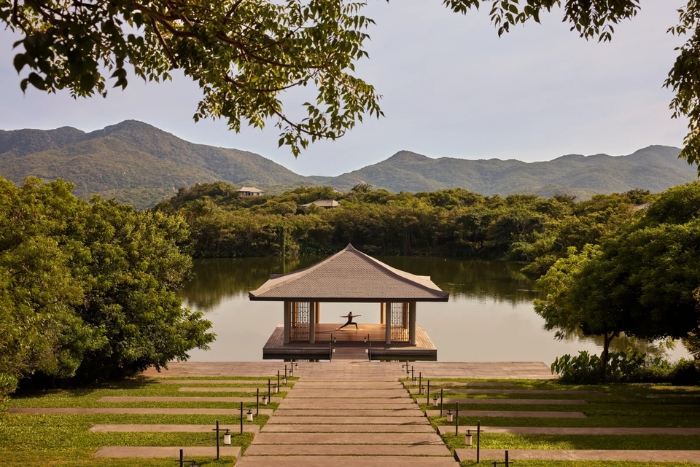
Vietnam has numerous high-end hotels and resorts set in remarkable natural surroundings: secluded beaches, tropical islands, mountain valleys, and karst landscapes. In Ninh Thuan, Sapa, Phu Quoc, or Nha Trang, some properties favor architecture that blends into its surroundings, along with more responsible practices. Luxury travel lets you enjoy an exceptional setting while placing greater weight on protecting nature, supporting local communities, and respecting local ways of life.
2. Exceptional experiences
A 3-week luxury Vietnam trip also opens the door to particularly spectacular experiences. In Ha Long Bay, you can admire one of the country's most famous landscapes from a private yacht, or even from a seaplane. Further south in the Center, exploring Son Doong Cave, considered the largest natural cave in the world, offers an extraordinary adventure. These experiences give the trip a memorable dimension that goes well beyond simply staying in a 5-star hotel.

3. Luxury goes beyond material value
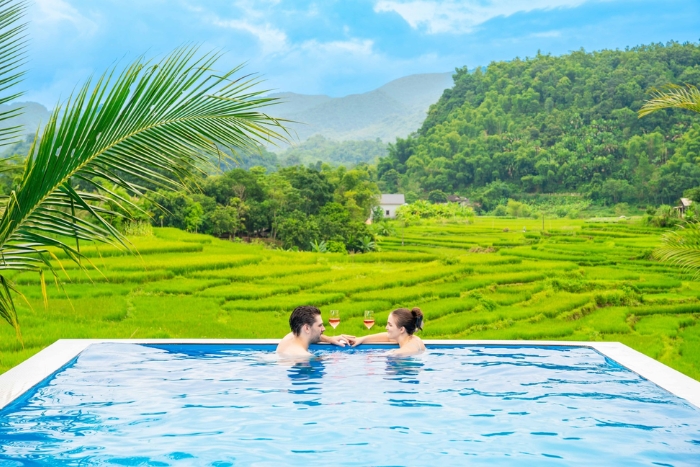
In Vietnam, luxury is no longer just about material value. It increasingly rests on the quality of the experience, privacy, personalization, and lifestyle. A private dinner overlooking the rice paddies, a peaceful morning at a resort surrounded by nature, an exclusive cruise, or a special meeting with a local artisan can hold as much value as a prestigious hotel stay. True luxury, then, means experiencing Vietnam differently, with more freedom, comfort, and meaning.
II. Luxury experiences in Vietnam?
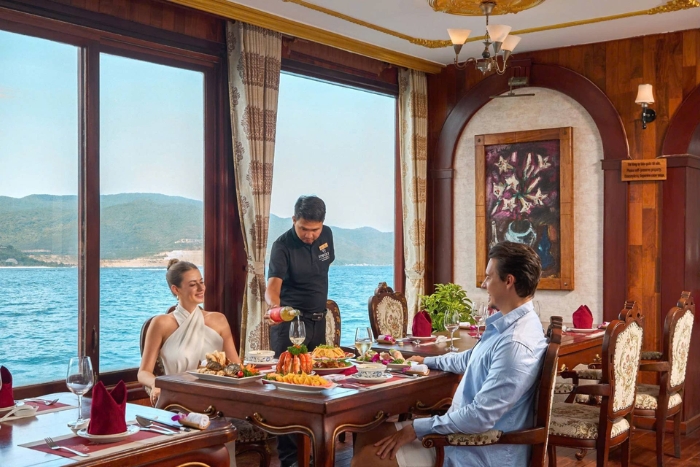
Luxury in Vietnam isn't limited to 5-star hotels or fine-dining restaurants. It can also take the form of more intimate experiences, personalized service, and privileged access to certain places. The key is choosing activities that match your pace and interests.
1. Private cruise in Ha Long Bay and Lan Ha Bay
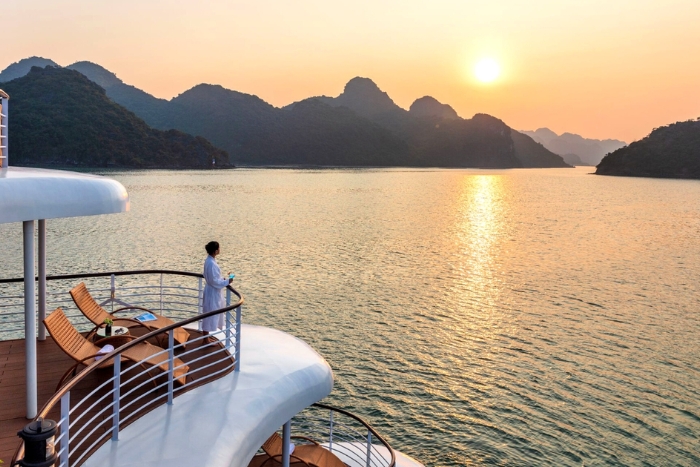
A high-end cruise is one of the signature experiences of a 3-week luxury Vietnam trip. In Ha Long Bay, or more peacefully in Lan Ha Bay, travelers can choose boats with spacious suites, private balconies, fine-dining restaurants, and spa services. A two-day, one-night cruise lets you take in the limestone karst scenery, with small-group or private excursions.
2. High-end retreat in Ninh Binh
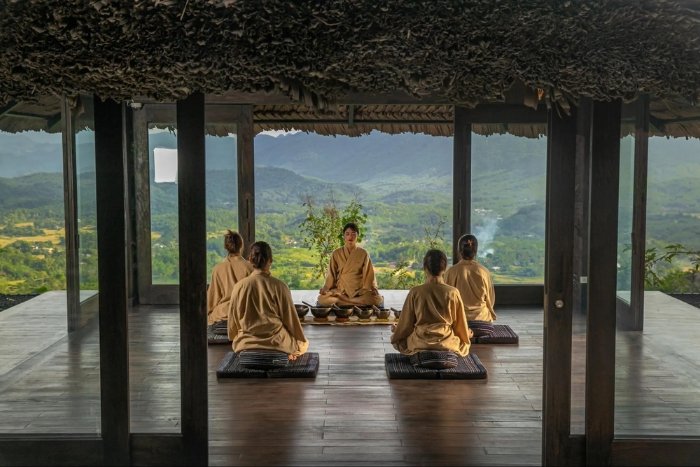
In Ninh Binh, luxury takes a quieter, more nature-focused form. A private rowboat ride through Trang An, a bike ride among the rice paddies, or a guided tour of the temples can be paired with an eco-lodge or a charming resort. The region also suits travelers seeking wellness, with yoga and meditation sessions, spa treatments, and local cuisine made from fresh ingredients.
3. Mountain experiences in Sapa
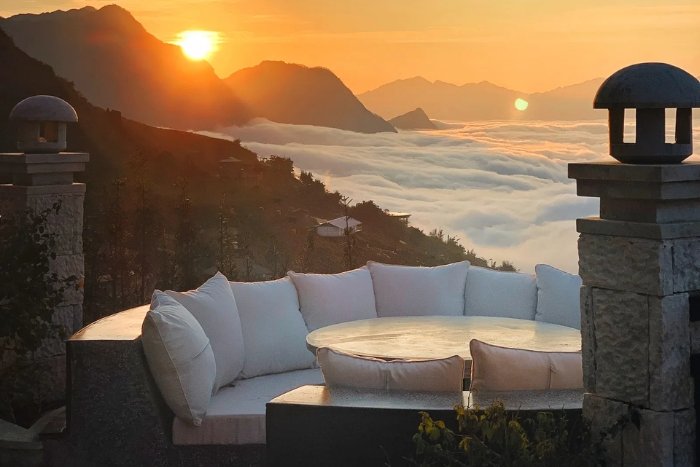
Sapa suits travelers who want to combine adventure with comfort. A private hike with a local guide reveals the terraced rice fields and ethnic minority villages, with the length and difficulty adjusted to suit you. After the hike, a mountain lodge or hotel with valley views offers a comfortable place to rest. Weaving workshops, meetings with locals, and culinary experiences can round out the stay.
4. Elegant stay and private experiences in Hoi An
Hoi An is especially well suited to a luxury stay, thanks to its boutique hotels, private villas, and seafront resorts. Travelers can join a private lantern-making workshop, take a cooking class with a chef, explore the market with a guide, or cycle through the countryside. A private sunset boat trip on the river, or a fine-dining dinner, can round out the experience.
5. Relaxation and beach stay in Phu Quoc
To close out a 3-week luxury Vietnam trip, Phu Quoc is ideal for a few days of rest. Seafront resorts offer villas with private pools, spas, fine-dining restaurants, and personalized service. You can also arrange a private yacht outing, an excursion to the small islands in the south, or a snorkeling session. Phu Quoc is especially well suited to couples and to travelers who want to end their trip on a beach note.
6. Playing golf in exceptional settings
Golf fits naturally into a 3-week luxury Vietnam trip. The country has several high-end courses set in privileged locations. In Hanoi, golfers can combine a city stay with a round at one of the well-regarded courses nearby. In Da Nang, courses set between sea and mountains offer spectacular views. Phu Quoc also lets you pair golf, beach time, and a stay at a luxury resort. This activity can be worked into the itinerary for a sporty, relaxing moment in an exceptional setting.
7. Food and wellness: experiences to weave into the itinerary
Food and wellness can be woven into several stops along the way. In Hanoi, a private food tour or a fine-dining dinner offers a more exclusive way to sample Northern specialties. In Hue, imperial cuisine offers a distinctive cultural and culinary experience. In the Mekong Delta, a private boat excursion can be followed by a meal built around local produce.
For wellness, Ninh Binh, Hoi An, Da Nang, Cam Ranh, and Phu Quoc have plenty of spas and resorts geared toward guests seeking relaxation and personalized service. Ideally, alternate these relaxing moments with sightseeing to keep an enjoyable pace across three weeks.
III. Which itinerary should you choose for 3 weeks of luxury in Vietnam?
For a 3-week luxury Vietnam trip, a north-to-south itinerary lets you take in the country's main landscapes and heritage sites while still building in some rest. Here's an example of a well-balanced route, to be adjusted for the season, your interests, and your preferred pace.
General itinerary for a 3-week trip to Vietnam:
| Days | Destination | Featured experiences |
| 1–3 | Hanoi | 5-star hotel, private tours, fine dining |
| 4–5 | Ninh Binh | High-end lodge, nature, boat ride |
| 6–7 | Lan Ha Bay | High-end cruise |
| 8–9 | Hue | Charming hotel, heritage, private dinner |
| 10–13 | Hoi An | Boutique hotel or resort, private experiences |
| 14–16 | Ho Chi Minh City | 5-star hotel, fine dining, private tours |
| 17–19 | Mekong Delta | Charming lodge, private discovery |
| 20–21 | Phu Quoc | Seafront resort and relaxation |
1. An alternative without Phu Quoc
If priority goes to culture and nature over a beach stay, the last two days can be devoted to the Mekong Delta instead. The itinerary then follows a simple logic: Hanoi – Ninh Binh – Lan Ha Bay – Hue – Hoi An – Ho Chi Minh City – Mekong Delta. This option cuts down on regional changes and leaves more time for local discovery.
2. Is it worth trying to see all of Vietnam in 3 weeks?
Yes, it's possible, as long as the stops and travel are well balanced. For a luxury trip, though, it's best not to try to see everything. A few extra nights in one place, or a free half-day, can add more comfort than an additional stop. The itinerary should be shaped around what you want: culture, food, nature, beach, or relaxation.
IV. How to travel comfortably for 3 weeks in Vietnam?
Comfort depends as much on the mode of transport as on the overall pace of the trip. For a 3-week luxury Vietnam trip, combining domestic flights, a private car, and a cruise generally keeps fatigue down while preserving flexibility.
1. Domestic flights for long distances
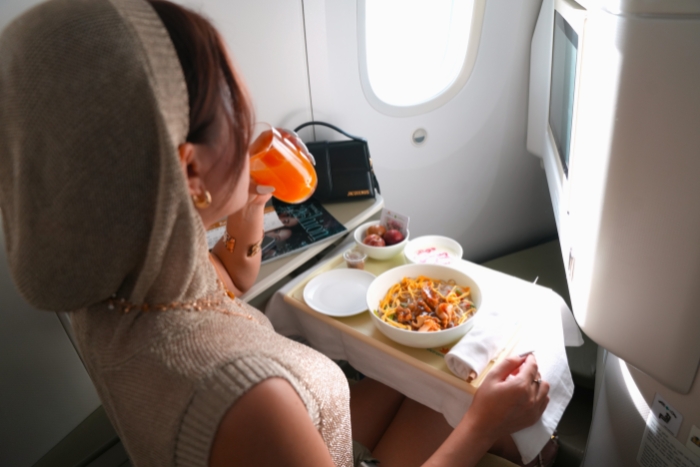
To connect major regions, domestic flights are often more practical than long road trips. They're especially useful between Hanoi and Hue, between Da Nang and Ho Chi Minh City, or between Ho Chi Minh City and Phu Quoc. The right choice, though, depends on the itinerary and available schedules.
2. Private car with driver
For regional trips, a private car with a driver offers more freedom and comfort. It's especially handy for airport transfers, getting around Ninh Binh, exploring around Hoi An, or moving through the Mekong Delta. It also allows for stops along the way without depending on public transport schedules.
3. A high-end cruise in the bay
To explore Lan Ha Bay or Ha Long Bay, the choice of boat matters a great deal. It's worth comparing vessel size, passenger numbers, cabin category, service quality, itinerary, and available activities. For more privacy, some cruises also offer private services or excursions.
4. Traveling at a reasonable pace
Even with high-end services, an overly packed schedule can make a trip tiring. It's best to avoid switching hotels every day, to build in a few free half-days, and to alternate between sightseeing, discovery, and rest. The comfort of a luxury trip also comes down to being able to take your time.
V. Where to stay for a luxury trip to Vietnam?
For a 3-week luxury Vietnam trip, accommodation should be chosen around each stop rather than star rating alone. Location, service, setting, and atmosphere can matter just as much as amenities.
1. Which types of accommodation should you choose?
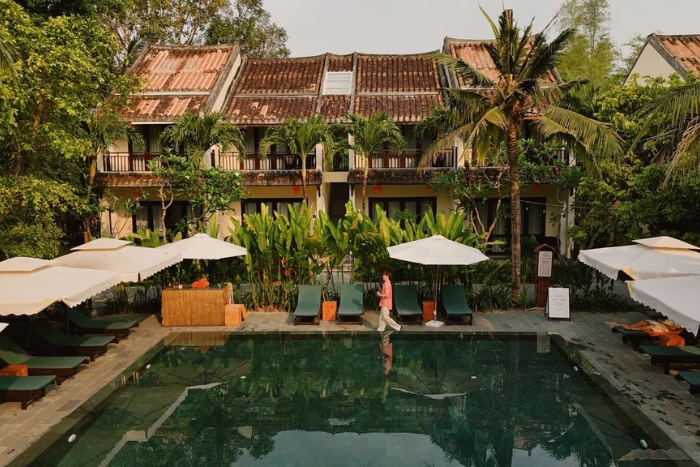
Depending on the destination, several options can work well: 5-star hotels, boutique hotels, resorts, charming lodges, or private villas. A boutique hotel can be especially appealing in historic towns, while a resort is better suited to a few days of relaxation by the sea.
Learn more:
>>> Top 8 luxury resorts in Vietnam
>>> 5-star hotels in Hanoi
2. Choosing accommodation by destination
In Hanoi, a high-end hotel in the city center makes sightseeing easier. In Ninh Binh, a lodge surrounded by nature offers a different kind of experience. In Lan Ha Bay or Ha Long Bay, cabin quality and onboard service are essential. In Hue and Hoi An, charming hotels and resorts let you combine heritage with comfort. In the South, you can alternate between a 5-star city hotel and a lodge in the Mekong Delta. For a beach stay, Phu Quoc offers plenty of seafront resorts.
3. Should you always choose a 5-star hotel?
Not necessarily. A well-located, characterful 4-star boutique hotel with excellent service can be more enjoyable than a large, impersonal 5-star property. For a luxury trip, it's better to look for overall quality of experience rather than to collect prestigious properties.
VI. What budget should you plan for a 3-week luxury trip to Vietnam?
The 3-week Vietnam travel budget can vary a great deal depending on the season, level of accommodation, and services chosen. It's best to think in terms of ranges rather than a single price.
For a 3-week luxury Vietnam trip, plan on roughly €120 to €150 per person per day, or around €2,500 to €3,200 for 21 days, not including international flights. This budget can shift depending on the season, hotel category, and number of private experiences chosen.
Main expenses include:
Accommodation: roughly €60 to €100 per night for a high-end hotel or a quality boutique hotel.
Private transfers with a driver: generally pricier than standard transport, but especially convenient for regional travel.
Guides and private tours: price depends on length and number of participants.
Luxury cruises in Ha Long Bay: budget extra for a comfortable cabin and included services.
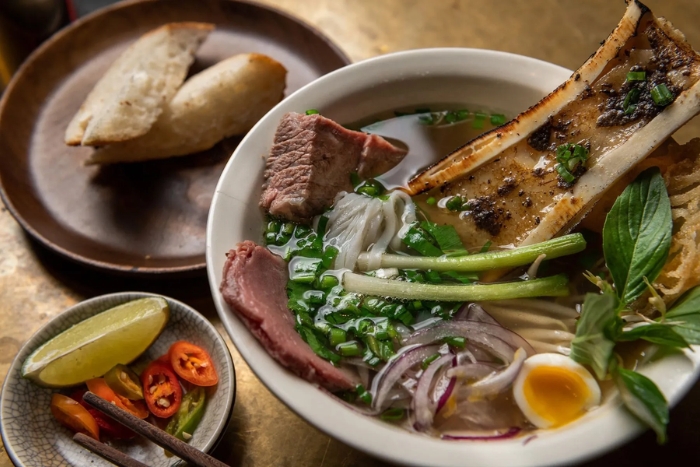
Meals and food experiences: cost varies with the type of restaurant and activities chosen.
VII. How to personalize a 3-week luxury Vietnam trip?
A luxury trip is best when tailored to the traveler's profile. The same itinerary can look very different depending on whether it's for a couple, a honeymoon, a family, or senior travelers.
1. For a couple
A couple might favor a flexible pace, intimate hotels, private dinners, and activities for two. A few nights at a resort or villa can also create moments of relaxation between stops.
2. For a honeymoon
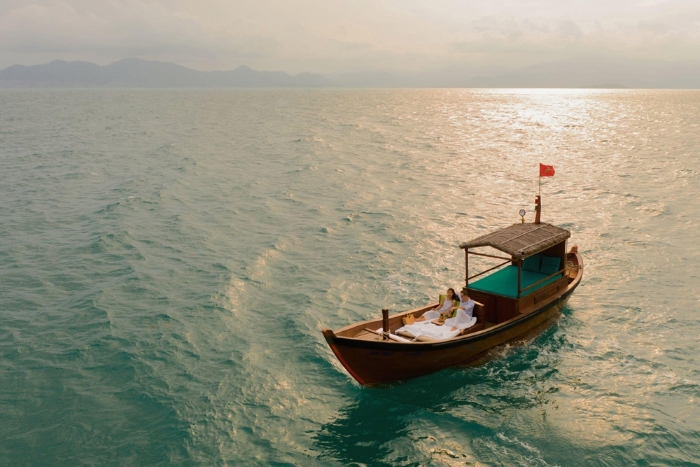
For a honeymoon, the itinerary can give more room to romantic accommodations, rooms with a view, cruises, spa treatments, and private experiences. It's best to limit hotel changes to keep an enjoyable pace.
3. For a family
For a family, practical comfort becomes the priority: connecting rooms or villas, activities suited to children, private transfers, and stops long enough to avoid too much moving around. A 3-week Vietnam family trip can alternate between cultural discovery, nature, and free time.

4. For senior travelers
A high-end trip for seniors can favor private cars, easily accessible hotels, elevators, and reasonable travel times. Long hikes and frequent hotel changes can be kept to a minimum in favor of gentler sightseeing and rest
5. By interest
The same route can also be oriented around food, culture, or nature. Food lovers can add more private cooking classes and tastings; culture enthusiasts can focus on guided tours and meetings with locals; those drawn to nature can spend more time in Ninh Binh, the Mekong Delta, or the mountain regions.
VIII. What mistakes should you avoid on a 3-week luxury trip to Vietnam?
Even with a comfortable budget, certain mistakes can make a 3-week luxury trip to Vietnam less enjoyable. To get the most out of the trip, it's best to avoid:
Confusing luxury with piling on services: on a 3-week luxury Vietnam trip, packing in premium activities every day doesn't guarantee a better experience. A few well-chosen services are enough to keep an enjoyable pace.
Trying to visit too many destinations: three weeks is enough to cross Vietnam, but too many hotel changes and long journeys cut into time for sightseeing and relaxation.
Underestimating travel time: distances between regions can be significant. Mountain roads, transfers, and airport journeys all need to be factored into the itinerary.
Choosing a hotel based on star rating alone: location, service, setting, and room quality matter just as much as the property's category.
Overlooking the season: Vietnam's climate varies significantly between the North, Center, and South.
Keeping the same level of service everywhere: alternating between high-end hotels, boutique hotels, lodges, and resorts adds variety to the experience and lets you put the budget toward the services that add real value.
A 3-week luxury Vietnam trip gives you time to discover the country's many different sides while enjoying a comfortable pace and moments of relaxation. Success mostly comes down to a well-balanced itinerary, shaped around your interests, the season, and your preferred pace. Rather than piling on stops and premium services, it's better to choose a handful of carefully selected experiences. To take it further, Autour Asia, a Vietnam travel agency, can design a private, personalized itinerary based on what you want, your pace, and your budget.
>>> Solo female traveler for 3 weeks in Vietnam October
>>> 3-week north Vietnam
>>> Vietnam Travel Guide
>>> Vietnam holiday tour packages
>>> Vietnam Tours
On a 3-week luxury Vietnam trip, certain regions really stand out. The North, with Hanoi and the spectacular Ha Long Bay, offers a perfect blend of culture and karst scenery, ideal for cruises or hikes. Further north, Sapa and Ha Giang are a treat for trekking lovers and anyone chasing authenticity, with their ethnic villages and sweeping views. In the Center, Hue appeals to fans of imperial history, while Hoi An, charming and intimate, invites you to wander its old streets. Finally, the South, between the Mekong Delta and Phu Quoc island, offers tropical relaxation, floating markets, and local immersion, an ideal way to close out an unforgettable Vietnam itinerary.
Related travel guide
Other similar articles


CUSTOMIZABLE BY LOCAL EXPERTS
Personalized trip at the original price!

REFUND GUARANTEE
We believe in our work and promise to give you money back.

GOOD PRICE / QUALITY
95% satisfied more than expected!

24/7 LOCAL SUPPORT
We are always available online to provide assistance at any time.

Most read articles


Autour Asia is highly recommended on
Embracing the mission of "Satisfied more than expected" and providing authentic experiences, we have received numerous recommendations on reputable travel forums: