3 weeks in Vietnam is a particularly interesting length of stay for a first family trip. The country stretches a long distance from north to south and features very different landscapes from one region to another. With 21 days, families can therefore build a coherent itinerary without having to change cities every one or two days. To organize a trip adapted to the children's age and each family's pace, the Vietnam travel agency - Autour Asia can also help design a personalized itinerary.
The main advantage of a 21-day Vietnam family trip lies precisely in the opportunity to slow down. After a few days exploring Hanoi, for example, it is possible to plan a more relaxing stop in Ninh Binh. Likewise, a cruise in Ha Long Bay or Lan Ha Bay can provide a genuine break between two land-based stages.
Three weeks also allow you to discover several sides of the country: culture and gastronomy in Hanoi, the karst landscapes of Ninh Binh, the imperial heritage of Hue, the atmosphere of Hoi An, the energy of Ho Chi Minh City, rural life in the Mekong Delta, and, if time allows, the beaches of Phu Quoc.
This length of stay also offers an important advantage for families: it leaves more room in case of fatigue, unfavorable weather, or changes to the schedule. You can remove an activity without feeling that you have lost an entire day of your trip.
Three weeks does not mean that you necessarily have to travel across the whole of Vietnam. The itinerary should be adapted to the children's age and energy levels.
With young children, it is often preferable to reduce the number of stops and stay several consecutive nights in the same destination. A trip focused on the North and Centre, or on the Centre and South, can be more enjoyable than a major nationwide itinerary.
For children aged 8 to 12, a more comprehensive route generally becomes possible. They can make greater use of cycling tours, boat excursions, cooking classes, and outdoor activities.
With teenagers, the possibilities become even broader: hiking, kayaking, snorkeling, cycling, adventure activities, or discovering Vietnam by motorbike with a driver can be incorporated according to their interests.
The goal of a Vietnam 3 weeks family trip is therefore not to check off the greatest possible number of destinations, but to create a balance between discovery and recovery.
Key takeaway: with young children, it is better to remove one stop than to multiply journeys. A successful family trip depends more on the pace than on the number of sites visited.

The following itinerary is a suggestion rather than a universal program. It covers the main stages of a three-week trip while favoring a pace that is better suited to families. To compare it with a broader route, you can also consult this Vietnam itinerary 21 days, which offers another way of organizing the different stages.
Starting in Hanoi allows children to gradually discover the country. The capital combines historical monuments, lively little streets, markets, and places where it is possible to take breaks.
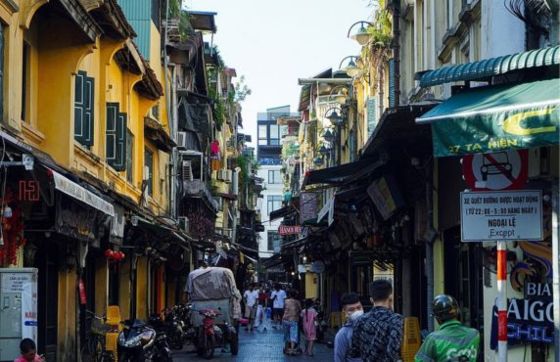
A walk around Hoan Kiem Lake is particularly easy to include in the program. Families can also explore the Old Quarter, taste some local specialties, and attend a water puppet show.
For children, the appeal of Hanoi lies not only in its monuments. Simply observing the traffic, street vendors, small shops, and everyday life is already a cultural experience.
Three days are enough to visit the main sites without filling every day from morning to evening.

After the hustle and bustle of Hanoi, Ninh Binh offers a welcome change of atmosphere. Families can discover the landscapes of Tam Coc or Trang An on a boat trip.
The limestone mountains, rivers, and rice fields create a spectacular setting while allowing you to slow down. A cycling trip around the area can also be arranged for families whose children are old enough.
Ninh Binh is a particularly interesting stop on a 21-day Vietnam family trip, as it combines nature and activities without requiring an overly busy schedule.
A two-day, one-night cruise allows you to discover the northern Vietnamese seascapes while enjoying an experience that is different from land-based sightseeing.
On board, children can take part in certain activities offered depending on the boat: kayaking, swimming, cooking demonstrations, or simply enjoying the scenery from the deck.
For a family, it is worth choosing a cruise whose program leaves enough free time. The goal is not to accumulate activities, but to enjoy the natural surroundings.
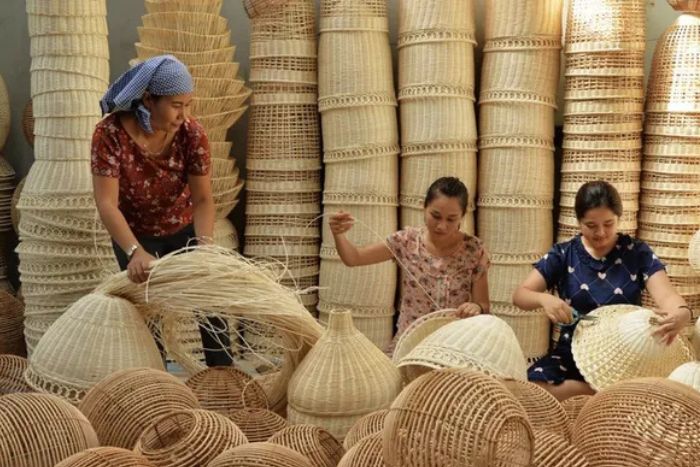
After the North, Hue offers an opportunity to discover another period of Vietnamese history. The former imperial capital features architecture that is very different from Hanoi's.
The Imperial City, royal tombs, and Thien Mu Pagoda can be included in the program. For children, it is preferable to alternate historical visits with walks or breaks along the Perfume River.
Two days are generally enough to discover the main sites without turning this cultural stop into a succession of visits.

Hoi An is one of the easiest destinations to adapt to a family trip. Its historic centre can be explored on foot, and its atmosphere is generally more peaceful than that of major cities.
Children can take part in a lantern-making workshop, attend a cooking class, cycle through the countryside, or discover the Cam Thanh area. A more relaxing day can also be spent at the beach.
Three days provide enough freedom to combine culture and relaxation.
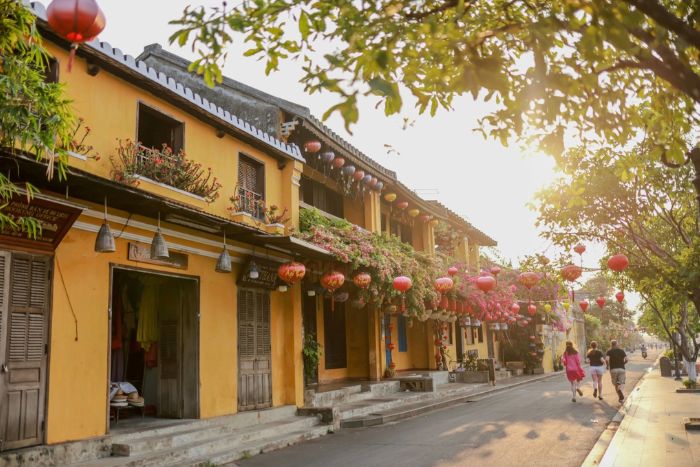
The South offers a completely different setting. In Ho Chi Minh City, families can explore the main districts, taste local cuisine, and visit several historical sites.
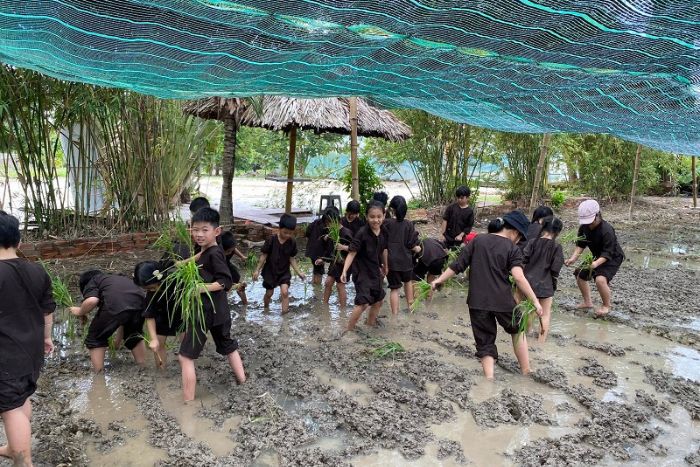
The trip can then continue to the Mekong Delta. Boat excursions, small canals, orchards, and villages allow children to observe a different way of life in Vietnam.
It is preferable not to turn this part of the trip into an intensive schedule. Spending several nights in the same area allows you to better appreciate the local pace of life.

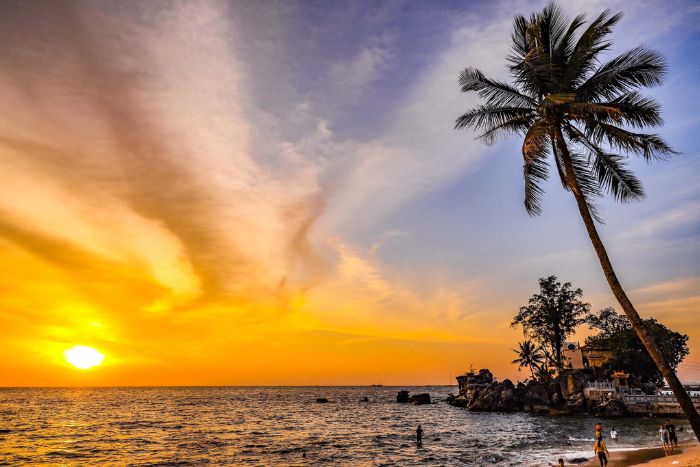
Ending the trip in Phu Quoc allows you to slow down before heading home. After several cultural and nature-focused stages, a few days at the beach give both children and parents time to recover.
Depending on the season and weather conditions, the family can enjoy the beach, swimming, or water activities suitable for the children's age.
This final stop is not essential, however. If your family prefers to spend more time in the North, Centre, or Mekong Delta, these three days can be reassigned to another region.
The success of a Vietnam 3 weeks family trip depends much more on the activities you choose than on the number of monuments you visit. Children do not have the same interests as adults: an entire day devoted to museums can quickly become tiring, while a cycling trip, boat excursion, or hands-on workshop can leave them with lasting memories.
In Hanoi, prioritize short and varied experiences. A cyclo ride allows you to discover the city without too much walking. A water puppet show is a particularly suitable activity for children.
A walk around Hoan Kiem Lake can also be combined with a tasting of local specialties. For older children, discovering street food with a guide can become a genuine cultural activity.
Ninh Binh is ideal for children who enjoy natural spaces. A boat trip in Trang An allows them to pass through impressive karst landscapes without requiring significant physical effort.
Cycling then offers a fun way to explore the rural roads. Families can adapt the distance according to the children's age.
A cruise is often one of the most memorable experiences of a 21-day Vietnam family trip. Children generally enjoy sleeping on a boat, observing the islets, and taking part in water-based activities.
Kayaking can be considered for children who are old enough and comfortable in the water, always depending on the conditions and the safety instructions provided by the operator.
Hoi An allows you to vary the experiences. A lantern-making workshop or cooking class gives children the opportunity to participate rather than simply observe.
For active families, cycling through the countryside or taking a trip to the beach can complement visits to the historic centre.
Children can discover the small canals, orchards, and craft villages. A boat trip also allows them to observe everyday activities connected to the river.
The main appeal of this region lies in the experience itself: children discover an environment that is very different from their everyday lives.
What pace should you adopt for a 3-week family trip to Vietnam?
With young children: prioritize two or three nights per stop, limit early-morning departures, and schedule some unplanned free time every day.
With older children: you can add light trekking, cycling, kayaking, cooking classes, and more boat excursions.
With teenagers: the program can include more outdoor activities, trekking, snorkeling, or a motorbike excursion with a driver. Adventure activities should obviously be chosen according to their age, ability, and local conditions.
The budget for a Vietnam 3 weeks family trip varies considerably depending on the number of travelers, hotel category, chosen means of transport, and included activities. For a more detailed estimate, you can consult our guide dedicated to the Vietnam 3 weeks trip cost.
As a general indication, it is more relevant to think in terms of comfort level rather than giving a single price:
Type of trip | Indicative budget for 21 days | Accommodation | Transport | Activities |
Budget family trip | From approximately $1,400 | Simple hotels, homestays | Local transport, trains and buses | Essential activities, self-guided visits |
Comfortable family trip | Approximately $1,900 to $2,300 | 3-4-star hotels, family rooms | Private driver + occasional domestic flights | Varied excursions, cruise, family activities |
High-end family trip | Approximately $2,850 and above | 4-5-star hotels, resorts | Private transfers + domestic flights | Personalized activities, private guides, exclusive experiences |
International flights are generally not included in this type of estimate. The final price also depends on the season and the composition of the family.
The distances between Vietnam's major regions make choosing transportation particularly important. When traveling with children, the goal is to reduce fatigue rather than systematically seek the cheapest means of transport.
For long distances between the North, Centre, and South, domestic flights generally save a great deal of time. They are particularly useful when children do not cope well with long road journeys.
The train can nevertheless be an interesting experience on certain routes. It allows you to admire the scenery while avoiding spending several hours in a car.
For local excursions, a private vehicle with a driver offers greater flexibility. The family can request an additional break, slightly modify the schedule, or adapt the pace to the children.
Road transfers should always be incorporated into the actual itinerary. A distance that looks short on a map can take several hours depending on the roads and traffic.

The choice of accommodation can make a significant difference during a 21-day Vietnam family trip. Price should not be the only criterion.
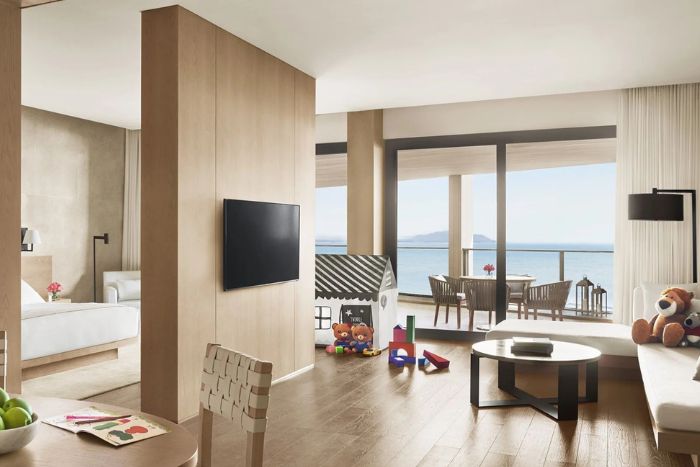
Before booking, check first whether family rooms or connecting rooms are available. For families with a baby, the availability of a baby cot or crib may also be important.
A swimming pool is a real advantage after a day of sightseeing. It allows children to relax while parents enjoy a quieter moment.
Breakfast is also convenient when traveling with children. It may be useful to check the variety of dishes available in advance.
Finally, choose a hotel that is well located but quiet enough. The presence of an elevator can be essential for families with a stroller or young children.
There is no single ideal period for the whole of Vietnam, as the climate varies considerably between the North, Centre, and South. To prepare your itinerary, consult our detailed guide on weather Vietnam by month.
For a family, choosing the right travel period directly affects the itinerary, as weather conditions can be very different between northern, central, and southern Vietnam.
For summer holidays, particularly in June, July, and August, we recommend prioritizing Central Vietnam, with destinations such as Hue, Da Nang, and Hoi An. This region is particularly suitable for outdoor activities, cultural visits, and beach holidays. It is also possible to add Hanoi and Ninh Binh, provided that you maintain a flexible pace and take into account the heat and sometimes heavy showers in the North.
At the end of the year, particularly from November to December, it is generally more relevant to focus the itinerary on the North and South. Hanoi, Ninh Binh, and Ha Long Bay can then be included to enjoy the landscapes and heritage, while Ho Chi Minh City, the Mekong Delta, and Phu Quoc offer more opportunities for warmer weather and favorable conditions for outdoor activities.
For a 21-day Vietnam family trip, we therefore recommend building your itinerary according to the season rather than trying to keep exactly the same route all year round. This also makes it easier to adapt activities to the children's age and keep a few flexible days in case of changes in the weather.

Before departure, prepare a small first-aid kit containing the family's usual medicines and any prescribed treatments, if applicable. It is preferable to keep medicines in their original packaging.
For young children, also remember sun protection, hydration, and mosquito protection when necessary.
If a health problem occurs during the trip, consult a healthcare professional rather than self-medicating for an unusual symptom.
Cash remains useful for small shops, markets, and certain local activities. It is therefore preferable to carry small denominations while using a bank card whenever possible.
Avoid keeping all your money in one place and prepare a backup payment method.
Vietnamese cuisine offers many options suitable for children. Pho, rice, noodles, certain chicken or fish dishes, and fresh fruit can easily be included in family meals.
For younger children, ask for less spicy dishes if necessary. In major cities and tourist areas, it is generally easy to find more familiar cuisine.
The idea is also to gradually encourage children to try new flavors without turning every meal into a challenge.

Even with 21 days available, certain mistakes can make the trip unnecessarily tiring.
Trying to visit too many destinations. Three weeks may seem long, but Vietnam's distances require time.
Changing hotels every day. Each change involves packing, transfers, settling in, and adapting.
Underestimating transfer times. Always check the actual travel time and allow some extra margin.
Scheduling too many activities every day. Children need free time.
Forgetting rest periods. An afternoon by the pool can be just as valuable as another sightseeing visit.
Choosing a hotel based solely on price. A well-located family room can significantly improve the trip.
Ignoring regional weather conditions. The climate in the North, Centre, and South is not the same.
The best strategy is therefore to keep some time slots flexible. A family traveling with a slightly less packed schedule will be better able to enjoy unexpected moments and encounters.
To make the most of a 21-day Vietnam family trip, start by considering the children's age rather than trying to multiply destinations. This criterion should guide the pace of the trip, the length of each stop, and the choice of activities. Even if you want to discover several Vietnam must-see destinations, it is preferable to select stops adapted to your family's abilities, pace, and interests. To get inspiration from a real experience, you can also consult this review 3-week Vietnam itinerary.
With young children, prioritize short stops, comfortable hotels, and easily accessible activities. With older children, gradually add cycling, boating, cooking, or light hiking. With teenagers, you can create a more dynamic program by incorporating more outdoor activities.
It is also important not to consider rest days as wasted days. On the contrary, they allow you to enjoy the following stops even more.
Before booking, you can also read reviews from travelers who have completed a three-week trip to Vietnam to draw inspiration from real experiences.

A Vietnam 3 weeks family trip allows you to discover the country at a pleasant pace, without turning the journey into a succession of long transfers. From Hanoi to Phu Quoc, via Ninh Binh, Ha Long Bay or Lan Ha Bay, Hue, Hoi An, Ho Chi Minh City, and the Mekong Delta, each stop offers a different experience while still leaving enough time to rest and enjoy family moments. The key, however, is to adapt the itinerary to the children's age rather than trying to visit as many destinations as possible. To prepare your trip, you can also consult our advice on the Vietnam travel budget to better anticipate the main expenses. With flexible planning and carefully selected stops, 21 days in Vietnam with family becomes a genuine experience of discovery, sharing, and relaxation. To design a trip suited to your family, the Vietnam travel agency - Autour Asia can help you create a tailor-made itinerary.










 FR
FR ITA
ITA