What Should You Know Before Visiting Cambodia?
Cambodia is becoming an increasingly popular destination among international travelers thanks to the mystical temples of Angkor Wat, its rich Khmer culture and especially its very affordable travel costs. In this article, you will find the most essential Cambodia information for a first trip, from geography, climate, history and religion to local cuisine, visa requirements and practical travel tips. Whether you are planning a cultural journey, a beach holiday or a backpacking adventure across Southeast Asia, this Cambodia travel guide will help you prepare your trip more easily and make the most of your experience.
What to know about Cambodia?
I. Origin of the name and historical development of Cambodia
1. Origin and meaning of the country’s name
Before reading the Cambodia travel guide to prepare for your trip, why not dive into the history of this beautiful country to find out the origin of its name first. “Cambodia” is believed to come from the ancient Sanskrit word “Kambuja” or “Kambujadesa”, meaning “the land of Kamboja”. According to Khmer legends, the name is linked to Kambu Svayambhuva, a mythical sage considered one of the founders of the Khmer civilization.
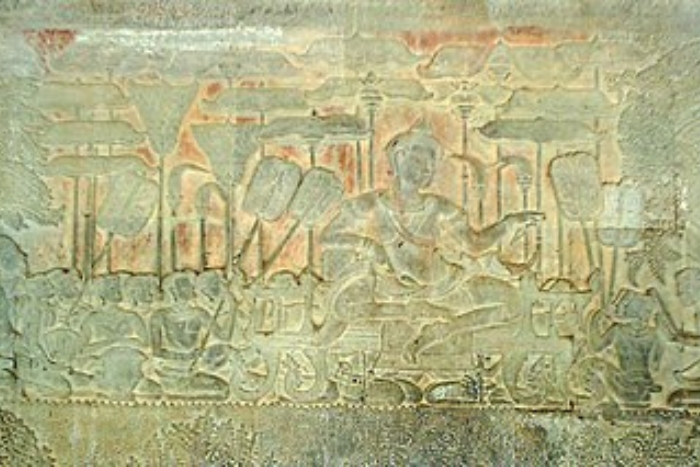
Locally, the country is called “Kampuchea”, a name closely connected to the Khmer people, who make up most of the population and have shaped the cultural identity of the nation for centuries. Over time, European explorers and French colonizers adapted the original Khmer pronunciation, leading to the modern names “Cambodge” in French and “Cambodia” as the anglicized version of that French name.
Today, the country is known worldwide for the majestic Angkor temples, its Buddhist heritage, and the fascinating history of one of Southeast Asia’s oldest civilizations.
2. History of Cambodia
The history of Cambodia is one of the most fascinating parts of Cambodia information. From ancient kingdoms and the glory of Angkor to colonial rule and modern reconstruction, each period has shaped the country’s culture, architecture and identity that travelers discover today.
- The Kingdom of Funan (1st–6th centuries)
The earliest known civilization in the region was the Kingdom of Funan, a powerful trading empire located around the Mekong Delta. Although little remains today, Chinese historical records describe Funan as an important commercial center connected to India, China and even the Mediterranean world through maritime trade routes.
- Chenla and the rise of the Khmer people (6th–9th centuries)
As Funan declined, a new proto-Khmer state known as Chenla emerged inland near present-day Phnom Penh. The people of Chenla spoke Mon-Khmer languages and gradually expanded their territory northwest toward the future Angkor region, opening a new chapter in Cambodia country information and history.
By the 8th century, Chenla had become a more centralized kingdom relying on irrigation systems and rice agriculture. This period laid the foundations for the future Khmer Empire, one of the greatest civilizations in Southeast Asia.
- The Khmer Empire and Angkor period (802–1431)
The Angkor era represents the golden age of Cambodian history. Beginning in 802 AD, the Khmer Empire expanded across much of mainland Southeast Asia and became a major political and cultural power. This is one of the most important historical periods to understand when exploring Cambodia general information, as it is closely linked to the Angkor Wat complex, a must-visit destination when traveling in Cambodia.
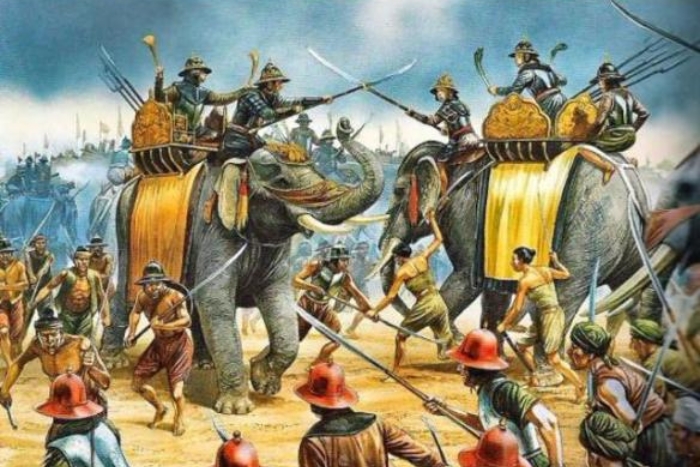
During these six centuries, extraordinary temples and cities were built around the Angkor region, including the famous Angkor Wat, now one of the most visited landmarks in Asia. Khmer architecture, engineering and art reached their peak during this period.
The empire’s success was largely based on sophisticated hydraulic systems and intensive rice cultivation. However, from the 14th century onward, internal conflicts, environmental challenges and repeated invasions from Siam gradually weakened Angkor.
- The post-Angkor period and foreign influence (15th–19th centuries)
After the decline of Angkor, Cambodia’s political center moved south toward Lovek, Udong and eventually Phnom Penh. At the same time, the kingdom faced growing pressure from neighboring Siam and Vietnam. By the mid-19th century, Cambodia had become a weakened state caught between the influence of both regional powers.
- French colonial rule (1863–1953)
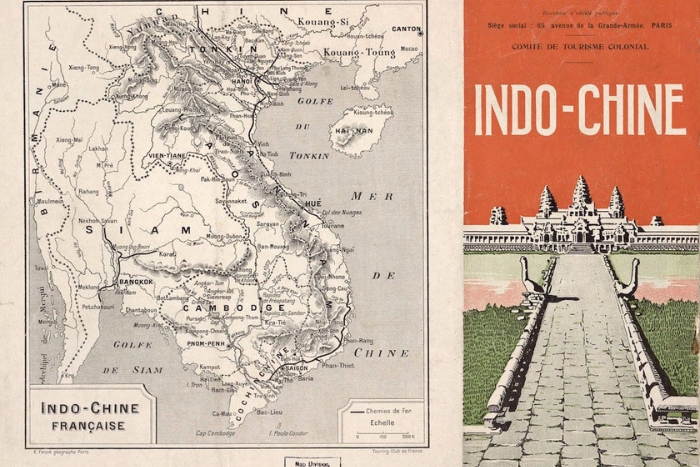
In 1863, King Norodom accepted French protection, and Cambodia became part of French Indochina. Under colonial rule, modern infrastructure, roads and administrative systems were introduced, although the country remained economically underdeveloped compared to neighboring colonies.
- Independence, war and the Khmer Rouge (1953–1979)
Cambodia gained independence from France in 1953 under King Norodom Sihanouk. However, regional instability during the Cold War and the Vietnam War soon affected the country.
In 1975, the Khmer Rouge seized Phnom Penh and established Democratic Kampuchea. The regime attempted to transform Cambodia into an agrarian society by emptying cities and forcing millions into labor camps. This was one of the darkest and most painful periods in Cambodian history. This Cambodia information helps visitors better understand the country’s historical development as well as some of its important historical sites.
- Recovery and modern Cambodia (1990s–today)
Following years of conflict and political instability, Cambodia officially became a constitutional monarchy again in 1993 after UN-organized elections.
Since the 1990s, the country has gradually rebuilt its economy, tourism industry and infrastructure. Today, Cambodia is known not only for its difficult past, but also for its vibrant culture, Buddhist traditions and rapidly developing cities.
II. Geography, Climate and Population
1. Geographic location and time zone
In every Cambodia travel guide, geography is one of the first things international travelers look at before planning their trip. Located in the heart of Southeast Asia, Cambodia shares borders with Thailand to the west and northwest, Vietnam to the east and southeast, and Laos to the north. To the southwest, the country opens onto the Gulf of Thailand.
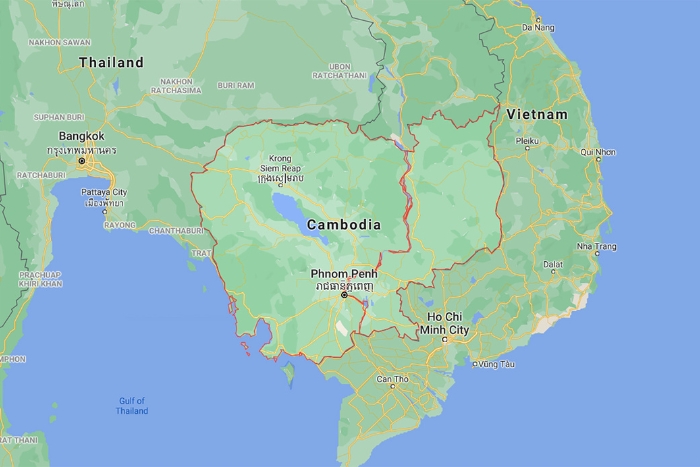
Cambodia is also part of the Indochina region, alongside Vietnam and Laos. Thanks to this strategic location, the country has become a popular stop on multi-country journeys across Southeast Asia. Many travelers often plan a Vietnam Cambodia tour or combine it with Thailand, Laos in the same itinerary.
You can find out more about:
>>> 16-day Thailand Laos Cambodia itinerary
>>> Trips to Vietnam Cambodia and Laos
>>> Thailand and Cambodia tour 15 days
The country follows the GMT+7 time zone, the same as Vietnam, Thailand and Laos. Compared with other Asian countries, Cambodia is one hour behind China and two hours behind South Korea and Japan. For European travelers, Cambodia is usually five to six hours ahead of France depending on the season, and six to seven hours ahead of the United Kingdom. Compared with the United States, the time difference generally ranges from around 11 to 14 hours depending on the state and daylight saving time.
2. Surface area and landscapes
According to general Cambodia information, the country covers around 181,000 km², making it a medium-sized nation within Southeast Asia. Much of the territory consists of a large central plain surrounded by mountain ranges and highlands in the north, west and southwest.
At the heart of the country lies Tonlé Sap Lake and the Mekong River system, which create one of the most fertile agricultural regions in the area. These waterways play a crucial role in rice farming and local livelihoods, with fertile plains covering nearly half of Cambodia’s territory.
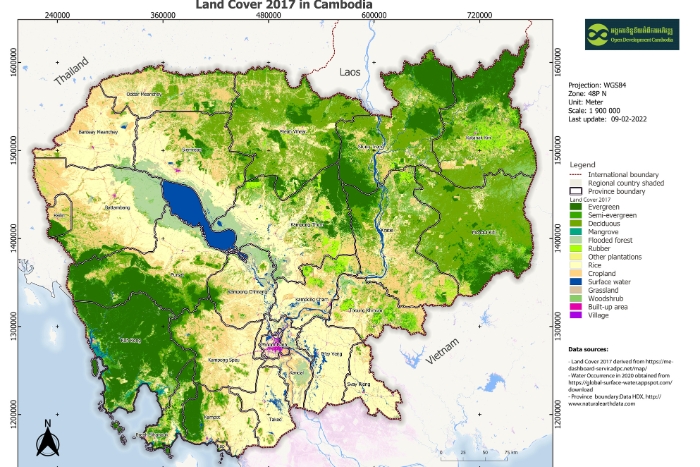
Cambodia’s geography can generally be divided into three main regions. The central plains, located mainly in the south and southeast, are flat and fertile and form the country’s main rice-producing area. The mountainous and plateau regions in the north and southwest are known for forests, waterfalls and national parks, while the southern coastline along the Gulf of Thailand offers beaches and tropical islands.
So, if you are wondering what to see in Cambodia, understanding Cambodia country information, especially its geography, helps you choose destinations that match your interests. Those looking for beaches and island life often head to Sihanoukville or nearby islands, while nature lovers may prefer the Cardamom Mountains or eco-tourism areas. Travelers interested in Khmer culture and history usually focus on Phnom Penh, Battambang and Siem Reap.
You may also like:
>>> 7 days tour Phnom Penh Siem Reap
>>> 5-day trip in Sihanoukville
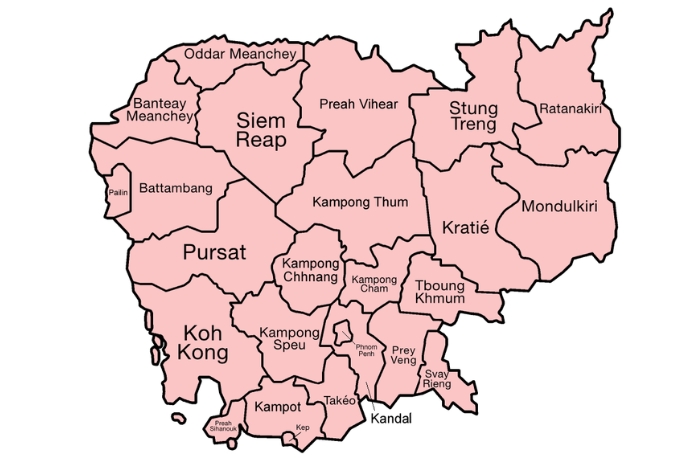
Today, Cambodia is divided into 25 administrative provinces including the capital Phnom Penh, the country’s political and economic center. Siem Reap is internationally known as the gateway to Angkor Wat, one of the best places to visit in Cambodia, while Battambang is appreciated for its traditional Khmer atmosphere and colonial heritage. In southern Cambodia, Kampot attracts visitors with its peaceful riverside setting, local cuisine and surrounding countryside.
With its mix of historical heritage, natural landscapes and rich Khmer culture, Cambodia continues to grow as one of the most attractive destinations in Southeast Asia.
3. Climate in Cambodia
Located in Southeast Asia, Cambodia has a typical tropical monsoon climate with warm temperatures, high humidity and plenty of sunshine throughout the year. For travelers searching for Cambodia information before their first trip, understanding the weather is essential when planning the ideal itinerary.
Cambodia generally has two main seasons. The dry season lasts from November to April and is considered the best time to visit Cambodia. During these months, the weather is sunnier, rainfall is limited and humidity is lower, making it ideal for exploring temples, beaches and local culture. The rainy season usually runs from May to October. Rain often falls in the late afternoon or evening rather than all day long. Although travel conditions can be less predictable, landscapes become greener and more beautiful, while tourist crowds are smaller.
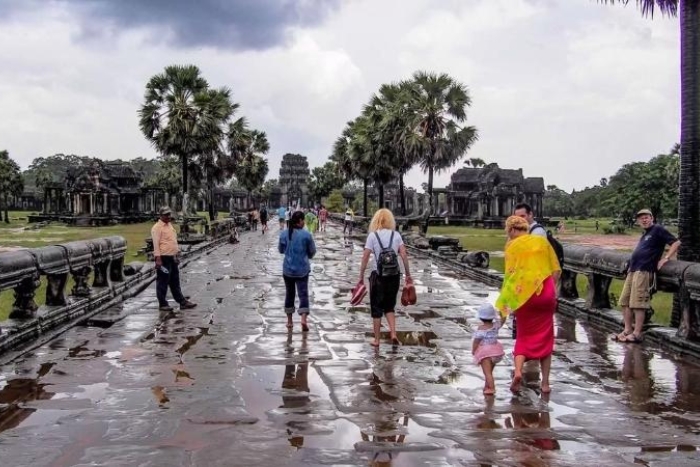
Average temperatures in Cambodia range between 25°C and 35°C throughout the year. March and April are usually the hottest months, especially in inland cities such as Phnom Penh where temperatures may exceed 37°C. Coastal destinations like Sihanoukville or Koh Rong are generally cooler thanks to sea breezes.
4. Population of Cambodia
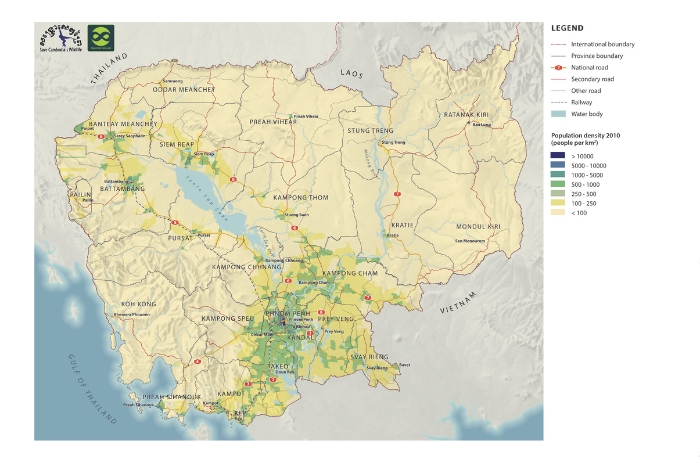
Cambodia currently has a population of around 17 million people, mainly concentrated in the central plains and major cities such as Phnom Penh, Siem Reap and Battambang. Phnom Penh is the country’s largest economic and political center and also the most densely populated city.
A large part of the population still lives in rural areas and works in agriculture. Regions near the Mekong River and Tonlé Sap Lake are particularly populated because of their fertile lands and fishing resources.
When exploring Cambodia information, many travelers become interested in the country’s ethnic diversity, especially those looking for cultural or community-based tourism experiences. While Khmer people represent the majority of the population, Cambodia is also home to several minority communities including the Cham, Chinese, Vietnamese and various indigenous mountain groups in the northeast. This diversity contributes to the country’s rich cultural heritage and unique traditions.
5. Languages in Cambodia
Language and communication are important topics in any Cambodia travel guide. The official language of Cambodia is Khmer, which is used in education, administration and everyday life throughout the country. The Khmer alphabet has its own writing system and is considered one of the oldest scripts in Southeast Asia. Although it may look complex to foreign visitors, learning a few simple words can make interactions with locals more enjoyable.
For example:
“Hello” in Khmer: Choum Reap Sour
“Thank you”: Aw Kun
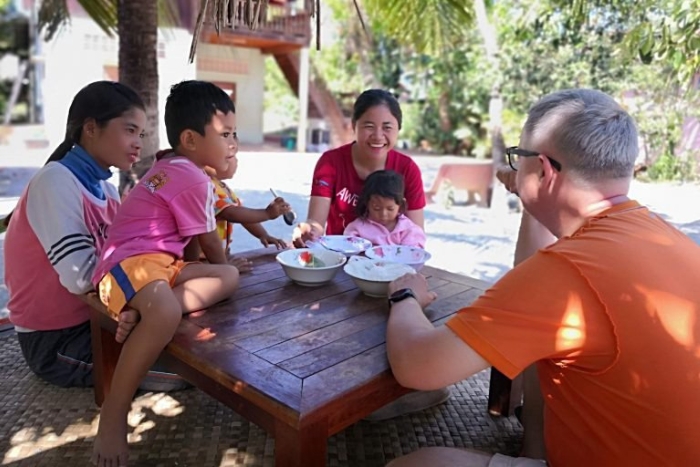
Travelers who do not speak Khmer usually have no major difficulties, especially in tourist areas. Many people working in hotels, restaurants or tourism services can communicate in basic English.
III. Religion, culture and cuisine
1. Religion in Cambodia
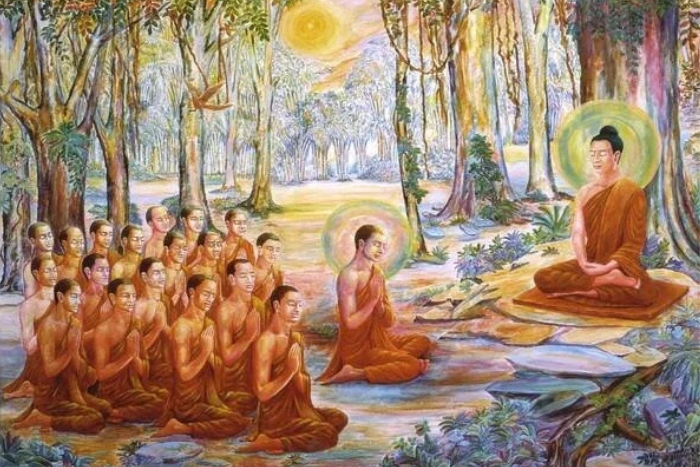
Understanding religion is very important when learning about Cambodia information, as it helps travelers avoid unnecessary misunderstandings and cultural issues. Religion plays an essential role in Cambodian society and strongly influences local culture, architecture and traditions. Theravāda Buddhism is the main religion in Cambodia, followed by the vast majority of the population.
Temples and pagodas can be found throughout the country, from large cities to small rural villages, serving not only as religious centers but also as important places for community life and cultural activities. Besides Buddhism, Cambodia is also home to smaller Muslim, Christian and traditional folk communities, reflecting the country’s cultural diversity and long history.
When visiting religious sites in Cambodia such as Angkor Wat or the Silver Pagoda in Phnom Penh, travelers are encouraged to dress respectfully and behave appropriately inside sacred spaces. Covering shoulders and knees is generally recommended, especially when entering temples or active places of worship.
2. Main festivals and public holidays in Cambodia
Before planning a trip to Cambodia, it is useful to learn about Cambodia’s major festivals and public holidays, as they can affect transportation, accommodation prices and tourist crowds.
One of the most important celebrations is Khmer New Year, or Chaul Chnam Thmey, which takes place in April. It is the country’s biggest traditional festival and is celebrated with family gatherings, games, music and water festivities across Cambodia.
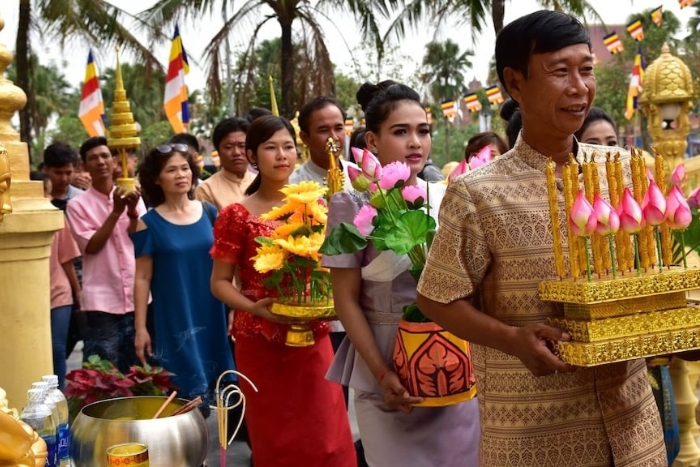
Others famous festivals and public holidays in Cambodia:
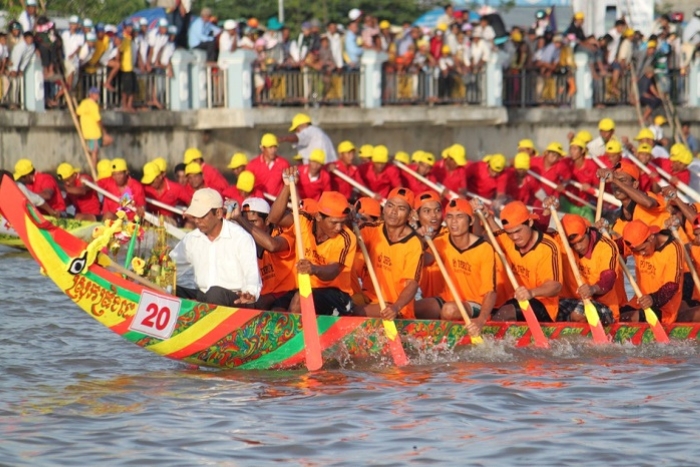
Bon Om Touk - Water Festival: Usually held in November, this festival is famous for its traditional boat races on the Mekong River and Tonlé Sap.
Cambodia Independence Day, November 9th, marks independence from France
Pchum Ben, an important religious festival dedicated to honoring ancestors
Traveling during festival periods can be a wonderful cultural experience. Visitors have the opportunity to discover local traditions, enjoy festive atmospheres and interact more closely with Cambodian people. However, public holidays also mean busier transportation, higher hotel prices and crowded tourist sites. Booking accommodation and transport in advance is strongly recommended, especially during peak travel periods. Travelers can also contact a travel agency in Cambodia to find the best deals, even during the high season.
3. Cambodian cuisine, top local dishes you should not miss
Cambodian cuisine is known for its balanced and delicate flavors, many of their dishes are often prepared with fresh herbs, coconut milk, fish sauce and local spices. Khmer cuisine has its own identity while also showing influences from Vietnamese, Thai and Chinese culinary traditions. And to help you enjoy an unforgettable culinary experience, in this Cambodia travel guide, Autour Asia introduces some must-try dishes when visiting the country.
- Amok, Cambodia’s signature dishes
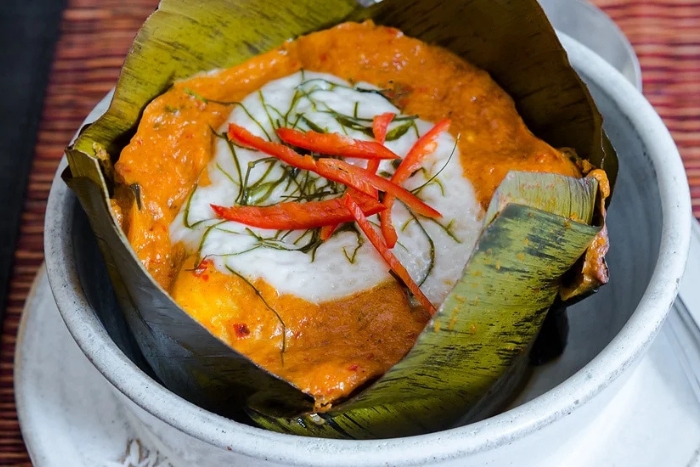
This dish is basically a traditional fish curry steamed in banana leaves with coconut milk, lemongrass, turmeric and kroeung, a Khmer spice paste. Creamy, fragrant and mild in flavor, Amok can easily be found in restaurants in Phnom Penh or Siem Reap.
- Nom Banh Chok, Khmer noodles
A popular breakfast dish made with fresh rice noodles, light fish curry and fresh herbs. Its refreshing flavor makes it especially enjoyable during hot weather.
- What to eat in Cambodia? Lok Lak
A stir-fried beef dish served with onions, tomatoes and a distinctive lime and pepper sauce. It is usually accompanied by rice or fries and remains a favorite among both locals and travelers.
You may be interested in:
>>> Phnom Penh Food Tour
>>> Restaurants in Siem Reap
- Freshwater fish and insects
Thanks to the Mekong River and Tonlé Sap Lake, freshwater fish is an important part of Cambodian cuisine. Grilled fish, fish soups and steamed fish dishes are especially common around lakeside regions.
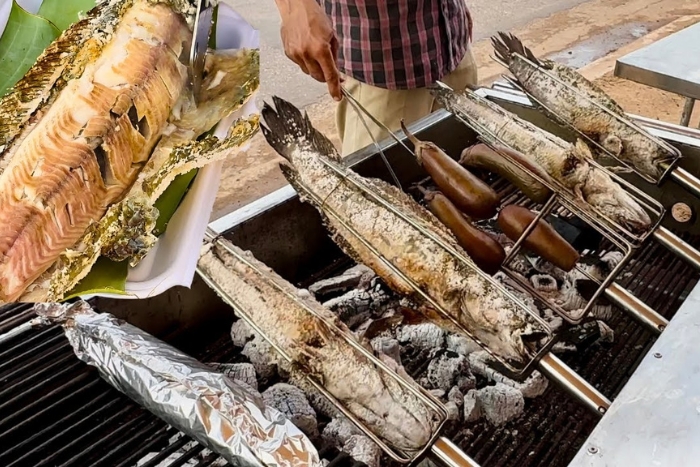
Cambodia is also known for unusual street food such as fried crickets, spiders or insects. Although these dishes may seem adventurous to some travelers, they are part of the local food culture and attract visitors looking for unique culinary experiences.
IV. Travel tips for visiting Cambodia
1. Cambodia visa
One of the most useful parts of any Cambodia travel guide is understanding visa requirements and entry procedures before departure. Fortunately, obtaining a Cambodia visa is relatively simple for most international travelers.
Cambodia currently offers visa exemptions for citizens of several Southeast Asian countries including Vietnam, Thailand, Laos, Malaysia, Singapore and Indonesia for short stays.
For most visitors, there are two common ways to obtain a tourist visa:
E-visa (electronic visa)
Visa on arrival at international airports or border checkpoints
In general, travelers only need a passport valid for at least six months, a passport photo, a return ticket or basic accommodation information. Tourist visa fees usually range from around 30 to 40 USD depending on the visa type and application method.
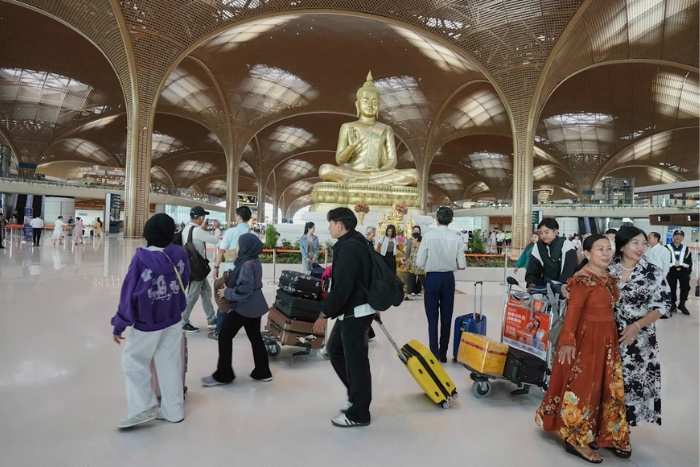
For travelers who want to save time upon arrival, the e-visa is often the most convenient option. However, visa on arrival procedures in Cambodia are also considered relatively quick and straightforward compared to many other destinations.
2. Currency in Cambodia
Currency and payment methods are among Cambodia general information travelers often search for before visiting the country. The official currency of the country is the Cambodian Riel (KHR).
To give a general idea:
1 USD is worth several thousand KHR
1 euro is also exchanged into a high amount of KHR depending on the current rate
You can refer to the exchange rate in Cambodia
Cash remains the most common payment method, particularly in local markets or outside major cities. Travelers are therefore advised to carry enough cash for daily expenses. Bank cards and electronic payments are becoming more common in Phnom Penh and other large cities, although many smaller businesses still only accept cash.
3. Transportation in Cambodia
Another important Cambodia info, how to move around in Cambodia? Cambodia’s transportation system is still developing, but it remains relatively easy for travelers to use.
For those wondering how to travel around Cambodia, there are several options connecting major destinations such as Phnom Penh, Siem Reap, Sihanoukville and Battambang. Long-distance buses are among the most affordable choices and are especially popular with backpackers. Minivans and limousine services offer faster and more comfortable journeys, making them ideal for families or groups. Domestic flights are also available between certain cities for travelers wanting to save time.
Within cities, tuk-tuks are the most iconic and widely used form of transportation. They are convenient for short trips and sightseeing during the day. In addition to tuk-tuks, travelers can also use taxis, ride-hailing applications or rent bicycles and motorbikes to explore independently.
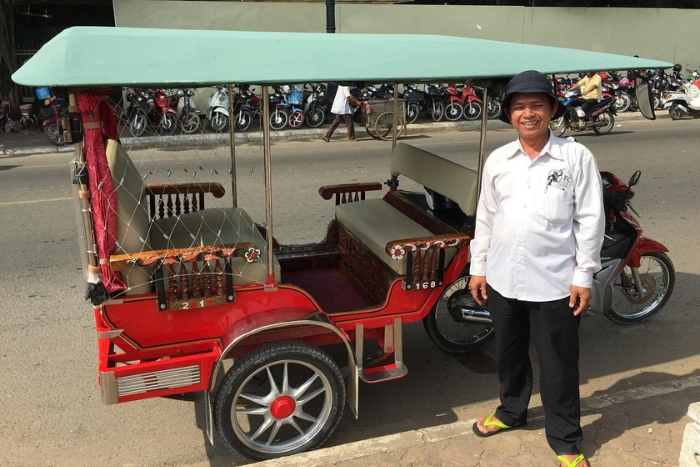
Because traffic conditions can sometimes be chaotic, especially in Phnom Penh, it is recommended to agree on prices in advance or use transport apps whenever possible.
Between thousand-year-old temples, peaceful Khmer villages, tropical beaches and flavorful Southeast Asian cuisine, Cambodia offers a truly unique experience for international travelers. Beyond the famous Angkor Wat, the country also charms visitors with the kindness of its people, its rich cultural heritage and its long history. We hope the Cambodia general information shared in this article helps you better understand the country and plan your upcoming journey more easily. Autour Asia is ready to accompany you through every corner of Cambodia and help you enjoy the most memorable travel experience possible.
Take a quick look at:
>>> Cambodia family travel itinerary
>>> Cambodia Travel Guide
>>> Cambodia itinerary tour 15 days
>>> Cambodia Packages Tours
Cambodia travel budget is one of the Cambodia information topics travelers are most interested in. Compared with many other Southeast Asian countries, Cambodia is considered a relatively affordable destination. Hotels, street food and transportation are generally budget-friendly, especially for backpackers. Even with a moderate or low budget, travelers can still enjoy a long and comfortable trip around Cambodia.
Regarding Cambodia information, knowing how to dress in Cambodia is really necessary. Cambodia has a hot and humid climate throughout the year, so travelers should prioritize light, breathable clothing that absorbs sweat easily. However, when visiting temples or sacred places, it is recommended to wear respectful clothing that covers the shoulders and knees in order to respect local culture. Don’t forget to bring a hat, sunglasses and sunscreen when spending time outdoors.
You should spend at least 10 days in Cambodia to fully explore the country’s main attractions at a comfortable pace while still having enough time to experience the local culture and daily life. If you only want to visit famous destinations such as Phnom Penh and Angkor Wat in Siem Reap, around 5 to 6 days may be enough. However, if you would like to enjoy nature activities or relax on Cambodia’s islands and beaches, staying at least two weeks in Cambodia is highly recommended.
Related travel guide
Other similar articles


CUSTOMIZABLE BY LOCAL EXPERTS
Personalized trip at the original price!

REFUND GUARANTEE
We believe in our work and promise to give you money back.

GOOD PRICE / QUALITY
95% satisfied more than expected!

24/7 LOCAL SUPPORT
We are always available online to provide assistance at any time.

Most read articles


Autour Asia is highly recommended on
Embracing the mission of "Satisfied more than expected" and providing authentic experiences, we have received numerous recommendations on reputable travel forums: