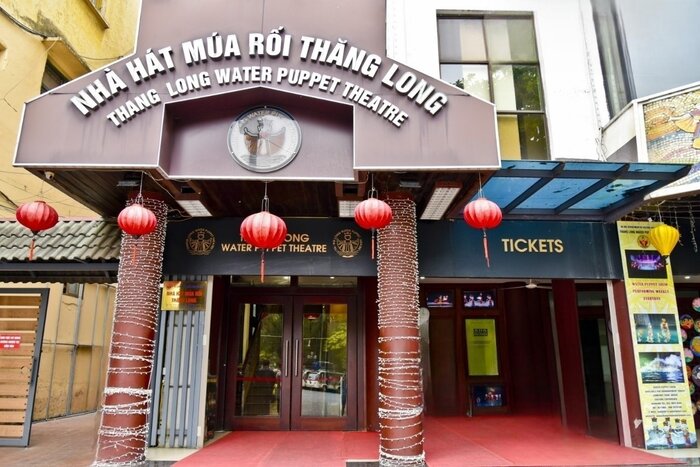
By walking: If you are staying in the Old Quarter, you can easily walk to the theatre.
By taxi or motorcycle taxi: You can catch a taxi or motorcycle taxi on the street, or book them on ride-hailing platforms such as Grab or Gojek.
By bus: You can take buses number 04, 146, 18, or 43 and get off at the Hoan Kiem Lake bus stop, which is about a 5-minute walk away from the theatre.
The rich history of theatre in Vietnam can be traced back to the 11th century, specifically during the Ly Dynasty when the captivating art of water puppetry made its debut in the picturesque Red River Delta region. This traditional form of entertainment was profoundly influenced by the agrarian culture of rice cultivation, finding its initial stage in the idyllic rice paddies and tranquil ponds of rural villages during various festive and special occasions. The art was eventually brought to the imperial court in Hanoi and became a popular form of entertainment because the theatre brings performances that are both entertaining and educational.
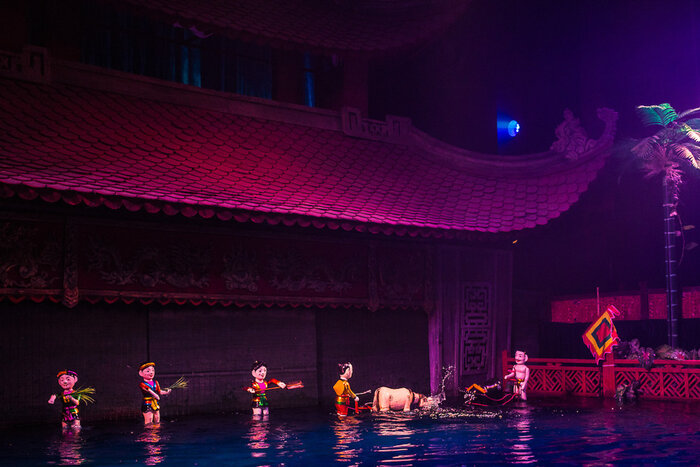
The dawn of modern water puppetry marked a significant turning point in 1990 when the inaugural water puppet shows took place at the Thang Long Theatre. It’s reported that about 500 shows are performed in front of approximately 150,000 people each year. This theatre has also brought Hanoi water puppetry to more than 40 foreign countries through performance tours, international cultural exchange programs, and puppetry festivals. This is a great chance to bring a signature Vietnamese culture to the world. This traditional art has become a significant cultural symbol of Vietnam. In recognition of its cultural significance, the Thang Long Water Puppet Theatre Show was bestowed with the prestigious title of UNESCO Intangible Cultural Heritage in 2009.
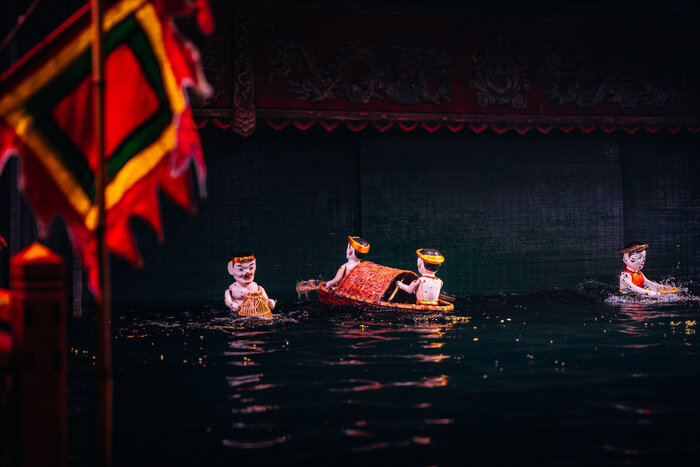
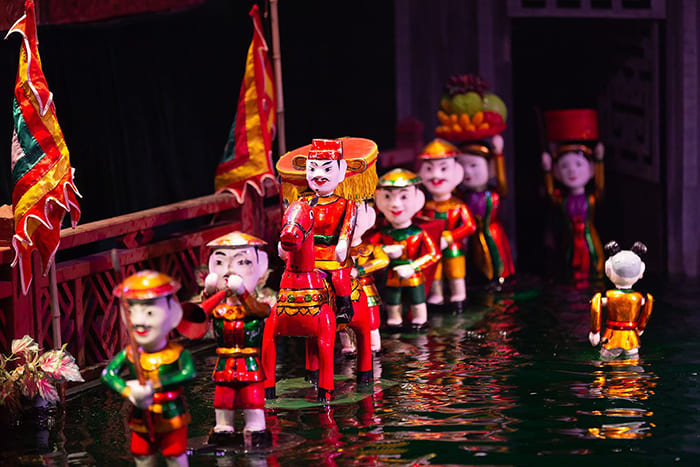
Water puppetry, a one-of-a-kind art form, is an exclusive cultural treasure that can be found nowhere else but in Vietnam, originating from the green rice fields of the Red River Delta in Vietnam. Performances will take place in the lake instead of the usual stages, where puppeteers control intricately carved wooden puppets that appear to dance on the water. The main material used to make these puppets is wood or lacquer and the magic happens when the skilled puppeteers take their positions discreetly behind bamboo blinds, obscuring the audience's view. The stage is waist-deep in water, the puppets are moved by sticks attached to their heads and limbs, and the show is accompanied by traditional Vietnamese music and singing, while the puppets narrate stories and famous folk legends. Each puppet is delicately controlled by sticks meticulously attached to its head and limbs, allowing it to move gracefully and convey the story with astonishing precision.
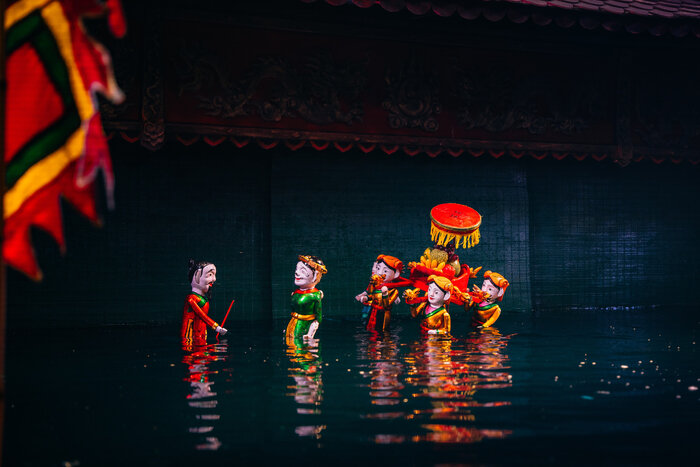
Every water puppet show opens with an introduction by Tễu, the beloved comedy host, and iconic character, a strange storyteller who will lead you through different scenes and stories as they unfold on stage. A typical water puppet show usually lasts about 50 minutes and offers an exciting journey through a variety of scenes drawn from the rich tapestry of Vietnamese folklore and mythology. Performances often depict scenes from Vietnamese folklore, the history of daily life,… Some of the most loved scenes include the legend of King Le Loi and Hoan Kiem Lake, the story of rice cultivation, buffalos, and dragons,…The Hanoi Water Puppet Show is indispensable for any visitor to Vietnam. It is a unique and unforgettable experience that showcases the country's rich culture and heritage.
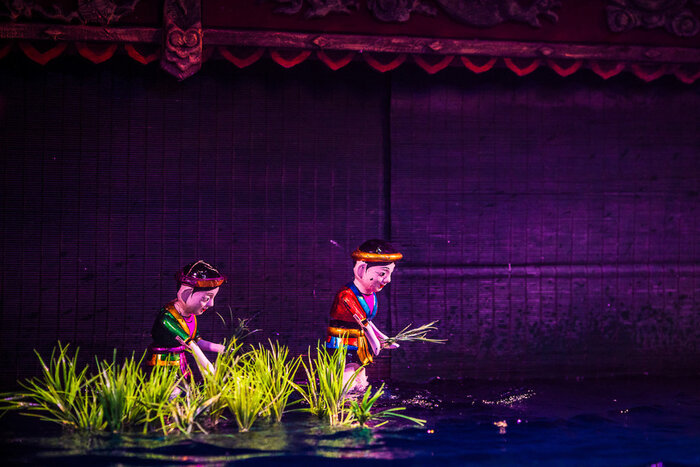
Standard tickets: from 100,000 VND to 200,000 VND ( from 5 to 9 USD)
VIP tickets: from 200,000 VND to 400,000 VND (from 9 to 18 USD)
Book your tickets in advance, especially if you are visiting during peak season. Due to the rules of the Thang Long Theatre, one must have their ticket at least 30 minutes before the show starts.
Arrive early to get a good seat. The theatre is quite popular, and it can fill up quickly. The front seats which are near the stage will give you a better chance to watch the puppets, however, due to the stage being covered in water, audiences that sit nearby may get splashed on from time to time. If you don’t think this will be an inconvenience, don’t hesitate to choose the front seats.
Be respectful of the performers and the other audience members.
After the show, you can purchase souvenirs from the theatre's gift shop. There are a variety of items available, including water puppets, puppets on sticks, and DVDs of the show.


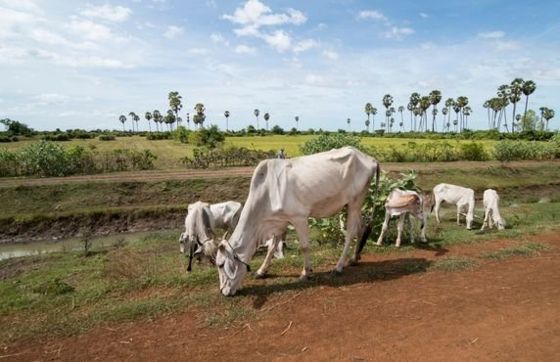
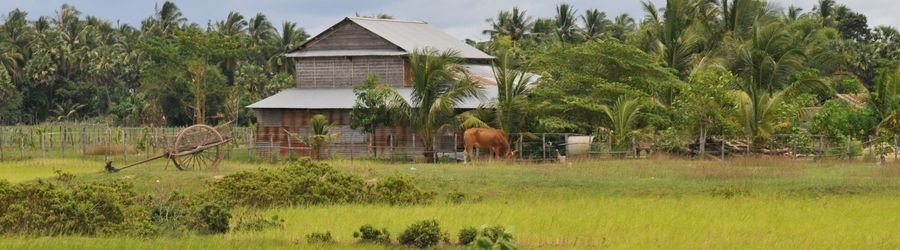
After exploring Angkor’s temples, bustling markets and the streets of Phnom Penh, Cambodia can also be discovered through its countryside. A weekend farm tour in Cambodia offers a chance to slow down and experience a rural way of life that remains closely connected to the land, the seasons and the harvest. Depending on the region, you may take part in farm activities, cook with a local family or follow rural paths between rice fields and orchards. This countryside escape is ideal for couples and families looking to experience Cambodia beyond the usual tourist routes. To make travel easier and choose an experience suited to your needs, a Cambodia travel company can also incorporate this rural immersion into a more comprehensive itinerary.
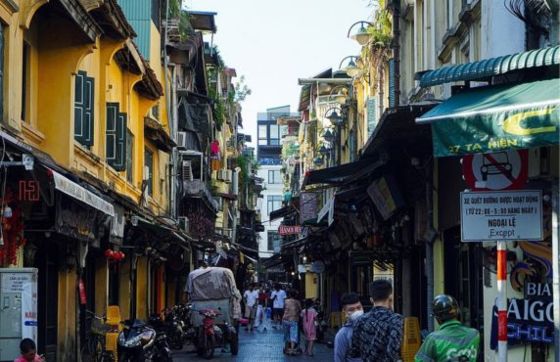
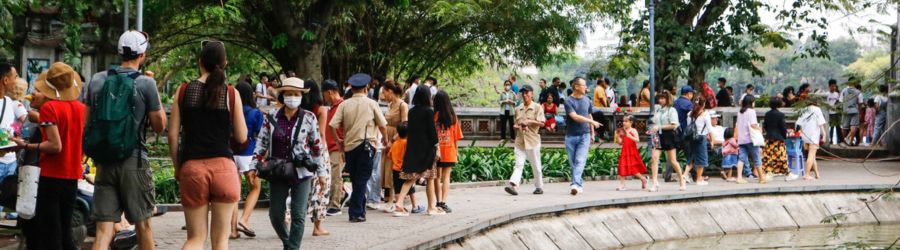
In Hanoi, walking is not just a way of getting around: it is one of the best ways to experience the rhythm of the capital. Between the bustling shopping streets of the Old Quarter, colonial-era façades, shady lakes and street food stalls, each area has its own atmosphere. But which Hanoi walking tour should you choose if you have half a day, a full day or just a few hours? This guide presents five ways to explore the city, from Hoan Kiem Lake to Long Bien Bridge, via Truc Bach and Hanoi’s food districts. Heritage, photography, gastronomy or local life: everyone can find a route that suits them. To plan a more comprehensive trip, the Local travel agency in Hanoi - Autour Asia can also help you incorporate Hanoi into the other stages of your itinerary.
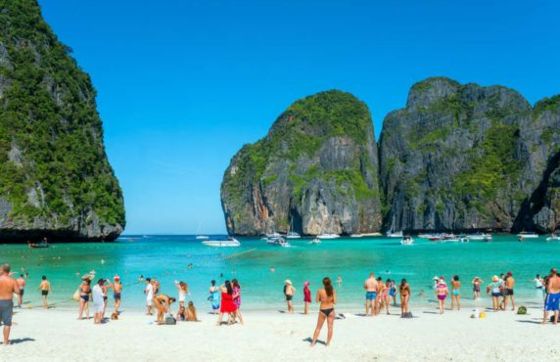
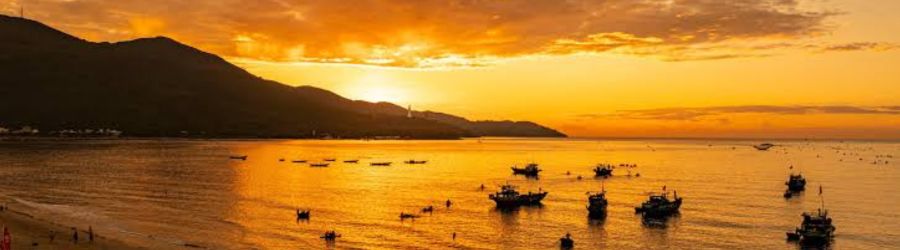
A 3 weeks in Vietnam with beach itinerary allows you to combine cultural discoveries, natural landscapes, and a few days of seaside relaxation, without turning the trip into a succession of transfers. In 21 days, it is possible to start in Hanoi, discover Ha Long Bay or Lan Ha Bay, continue to Hue and Hoi An, then head south before ending with a beach destination suited to the season. But where should you go to the beach in Vietnam? The answer depends mainly on the time of year: Phu Quoc is particularly suitable during the dry months in the South, while Da Nang, Hoi An, or Quy Nhon are good options during part of the year. To build a coherent itinerary, the Vietnam travel agency - Autour Asia can also adapt the stops to each traveler's pace and preferences.
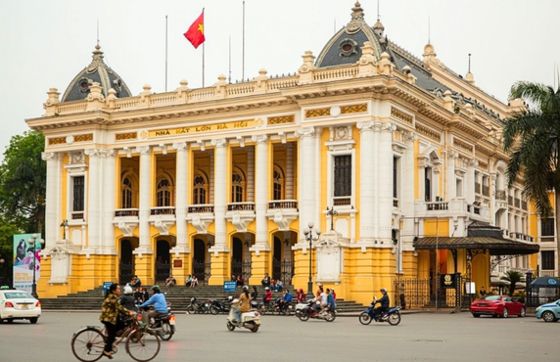
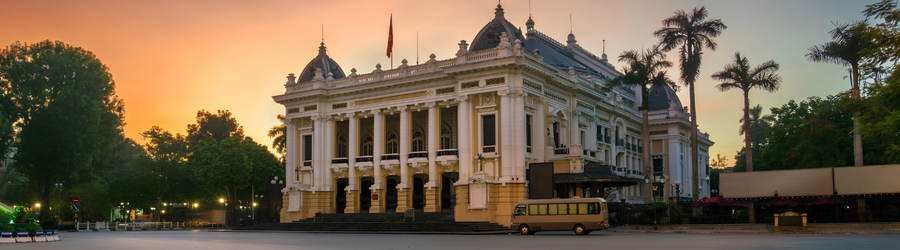
Located in the heart of Vietnam’s capital, the Hanoi Opera House is one of the city’s most iconic cultural and architectural landmarks. Built during the French colonial period, this elegant building has become an essential stop for travelers interested in Hanoi’s history and performing arts. But what can you actually see during a visit? Is visiting Hanoi Opera House possible without attending a show, and is a Hanoi Opera House tour worth adding to your itinerary? In this guide, discover the history, architecture, cultural significance and practical information you need to make the most of your visit to the Hanoi Opera House Vietnam.
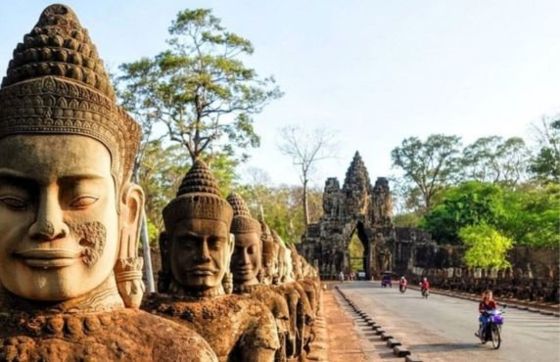

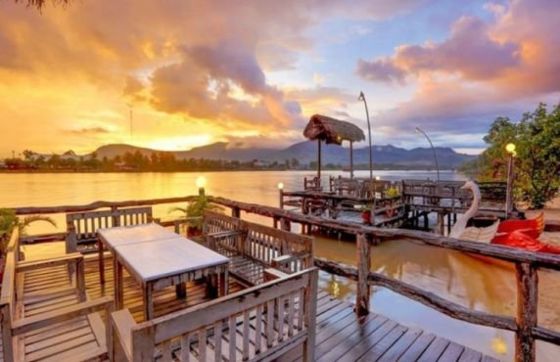

Traveling with children in southern Cambodia makes it easy to enjoy a variety of experiences: peaceful small towns, tropical landscapes, beaches, islands, local markets, and nature discoveries. To know where to visit Southern Cambodia with family, however, it is better not to include too many stops. Kampot, Kep, and the islands of Preah Sihanouk Province offer complementary atmospheres, with family-friendly activities and plenty of opportunities to relax. The choice mainly depends on the children’s age, your preferred pace, and the season. In this guide, we offer a balanced itinerary and practical ideas for organizing your stay, with advice from Cambodia travel company - Autour Asia to help you enjoy southern Cambodia without turning your holiday into a race against the clock.
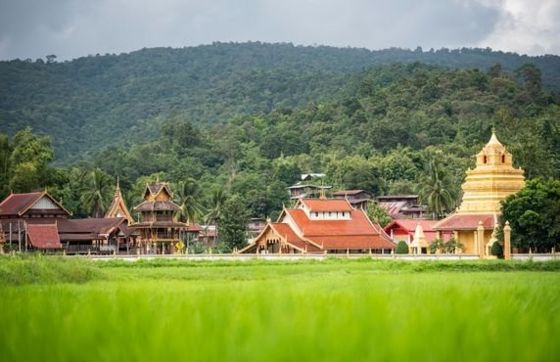
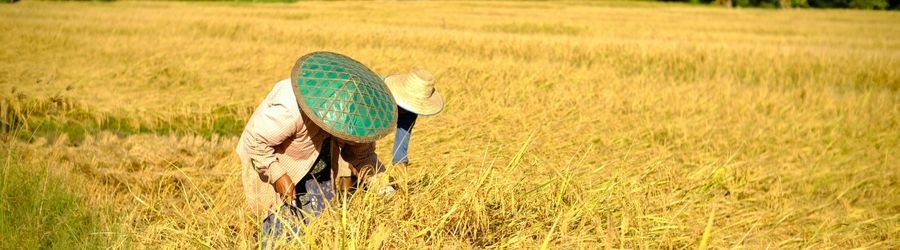
When we think of Thailand, the first images that often come to mind are temples, lively markets, tropical islands, or the beaches of the south. Yet, the country has another, more discreet side that is deeply connected to its identity: its countryside and agricultural heritage. Today, agritourism trends are attracting travelers looking for authentic experiences, closer to nature and local communities. To discover this different side of Thailand, a Thailand travel company can include rural stops in a classic itinerary. It is a great way to slow down, taste local products, and understand the daily life of local communities.


In the heart of Hanoi, some places tell the story and spirit of the Vietnamese capital better than others. Hoan Kiem lake is certainly one of them. Surrounded by trees, historic monuments and lively streets, it is a meeting point between heritage, traditions and daily life. A walk around the lake also allows visitors to experience the unique rhythm of Hanoi, from early-morning tai chi sessions to family walks and the lively atmosphere of the weekend. For travelers who want to discover the capital in a different way, this iconic site deserves a place in any itinerary planned by a Vietnam travel agency. But what is really hidden behind this famous lake?



 FR
FR EN
EN