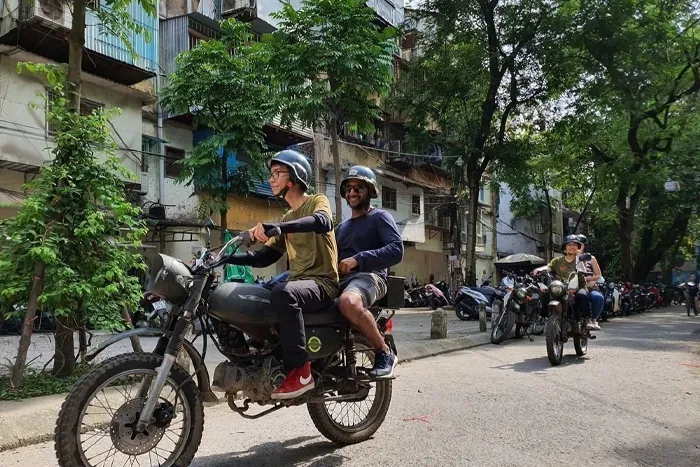
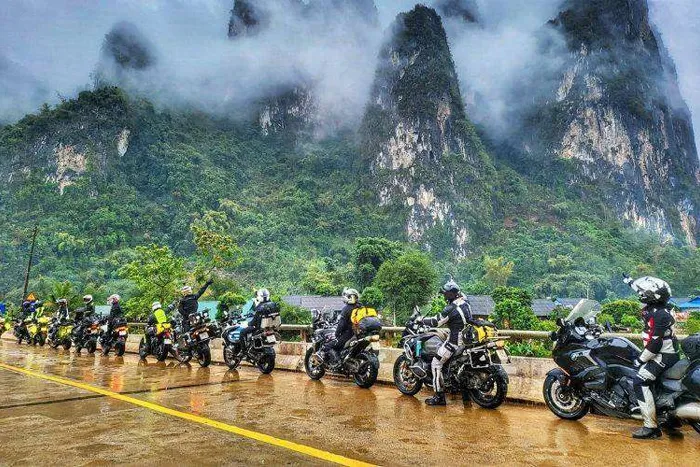
✔️ In the north, you’ll find towering limestone peaks, dramatic mountain passes, and UNESCO-recognized rice terraces in Ha Giang and Sapa.
✔️ Central Vietnam brings a different charm with smooth coastal highways, white-sand beaches, and lush national parks, with the Hai Van Pass standing out as one of the country’s most iconic rides.
✔️ Meanwhile, southern Vietnam showcases a slower pace of life, with peaceful riverside routes through the Mekong Delta, where you can visit floating markets and coconut plantations.
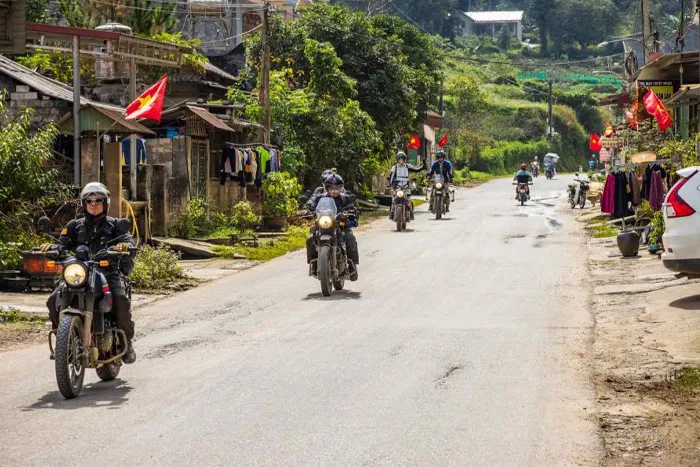
✔️ Choosing a guided motorbike tour with experienced local drivers, or
✔️ Joining a full packaged tour that includes transport, accommodation, and activities.
Yes, some foreign visitors can legally ride in Vietnam, but only if their driving documents are recognized and authorize them to operate the specific motorcycle. This is the most important point to establish before renting a bike or booking a self-drive tour.
International driving permits: What is actually accepted? Vietnam recognizes International Driving Permits (IDPs) issued under the 1968 Vienna Convention on Road Traffic, when accompanied by a valid national driving license authorizing the relevant vehicle category. Certain driving licenses may also be recognized under applicable international treaties or reciprocal agreements.
Driving in Vietnam, an IDP is not a standalone driving license. For a typical visitor relying on a 1968 Convention IDP, the essential requirements are:
✔️ A valid national driving license.
✔️ An officially issued 1968 Convention IDP.
✔️ A motorcycle entitlement appropriate for the bike being ridden.
✔️ Valid documents carried together while riding.
Not every country's IDP is recognized in Vietnam.
-> For UK travellers: UK government guidance confirms that riders need the 1968 Convention IDP and their UK driving license. The underlying license must also authorize the relevant motorcycle category.
-> For Australian travellers: The Australian government's Smartraveller guidance states that Australian-issued IDPs are not valid for riding in Vietnam. Australian citizens need to meet the relevant Vietnamese licensing requirements, including obtaining an appropriate Vietnamese license where required.
Travellers from other countries should check their issuing country's treaty status and current Vietnamese recognition rules before travelling.
A car-only license does not automatically authorize motorcycle riding, even if accompanied by an IDP.
What motorcycle engine size can you ride? (Vietnam introduced new motorcycle license categories on January 1, 2025)
Motorcycle category Vietnamese license category Motorcycle up to 125cc A1 Motorcycle above 125cc A Qualifying mopeds with engines up to 50cc No motorcycle driving license required under the applicable moped rules
What happens if you ride without a valid license?
Vietnam's traffic penalty rules include substantial fines for operating motorcycles without the appropriate license.
Under Decree 168/2024/ND-CP, the stated penalties for relevant no-license violations include:
VND 2-4 million for motorcycles up to 125cc.
VND 6-8 million for motorcycles above 125cc.
The consequences can extend beyond fines. Following an accident, the absence of a valid, recognized license may affect insurance claims and expose the rider to additional legal or financial liability.
These penalty figures reflect the provisions reviewed for this article; travellers should check the current consolidated rules before departure.
✔️ Suggested duration: 3 - 5 days
✔️ Difficulty: Challenging for independent riders
✔️ Best period to consider: March - April and September - November, subject to actual weather
✔️ Suitable for: Experienced, legally licensed riders or Easy Rider passengers
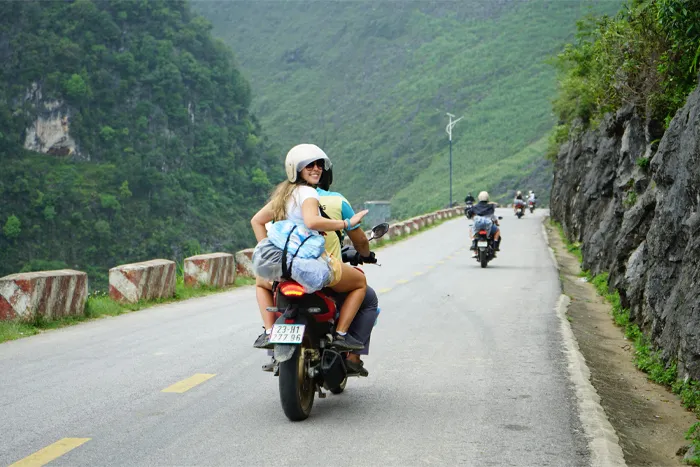
The Ha Giang Loop is one of Vietnam's most recognizable motorbike journeys, celebrated for steep mountain roads, dramatic valleys and the Dong Van Karst Plateau UNESCO Global Geopark.
Popular highlights include:
Ma Pi Leng Pass: A spectacular mountain road overlooking the Nho Que River valley.
Dong Van: A highland town and a base for exploring the surrounding karst landscape.
Meo Vac: A destination associated with mountain scenery and local cultural traditions.
Ethnic minority communities: Opportunities to learn about regional customs through respectful, locally supported visits.
Most itineraries travel through the former Ha Giang area, including Quan Ba, Yen Minh, Dong Van and Meo Vac.
Following Vietnam's 2025 provincial administrative reorganization, the former Ha Giang province became part of Tuyen Quang province. The name "Ha Giang Loop" remains widely used by travellers.
Safety note: Narrow roads, sharp bends, mountain fog, steep gradients and possible landslides make this route unsuitable for inexperienced self-drive riders.
Some locations lie close to the international border. Visitors should verify current access restrictions and any relevant permit requirements for their particular itinerary rather than assuming every border-area road is open to tourists. For travellers unfamiliar with Vietnamese mountain riding, a well-organized Easy Rider tour is worth considering.
Further reading:
✔️ Suggested duration: 2 - 4 days, depending on stops and route
✔️ Difficulty: Moderate to challenging
✔️ Best period to consider: September - October for the harvest scenery
✔️ Suitable for: Experienced riders and guided mountain excursions
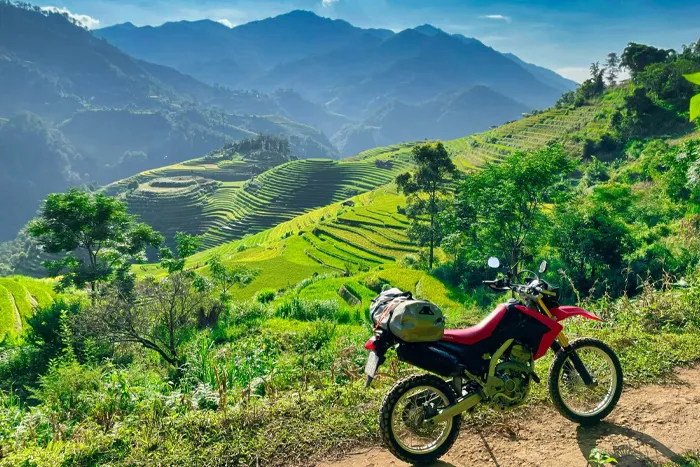
O Quy Ho Pass - One of Vietnam’s “Four Great Passes,” with panoramic views of misty mountains.
Mu Cang Chai terraces - UNESCO-recognized fields that turn golden during harvest.
Local homestays - Experience authentic Hmong and Thai culture with home-cooked meals.
✔️ Distance: ~450 km
✔️ Suggested duration: 4 - 6 days for a more comfortable multi-stop journey
✔️ Difficulty: Moderate
✔️ Best time to visit: March - May or September - October
✔️ Suitable for: Experienced touring riders and travellers seeking nature-focused journeys for riders seeking a quieter, less touristy experience, this loop offers a mix of pristine lakes, lush forests, and turquoise waterfalls.
Ba Be Lake: Boat trips, lake scenery and nearby villages.
Ban Gioc Waterfall: A striking waterfall on the Vietnam–China border.
Local communities: Opportunities to discover Tay and Nung cultural traditions.
The route can cover substantial distances on winding roads. The driving schedule should allow time for rest, unpredictable weather and sightseeing. Because Ban Gioc is near the international border, travellers should check local access requirements and follow instructions at restricted areas.
Hai Van Pass is one of the most famous scenic roads in Central Vietnam, crossing the coastal mountains between Da Nang and the Hue region.
✔️ Distance: ~21 km
✔️ Duration: 1–2 hours with sightseeing
✔️ Difficulty: Easy
✔️ Best time to visit: March - May and other settled-weather days
✔️ Suitable for: Licensed riders with prior experience or easy rider passengers
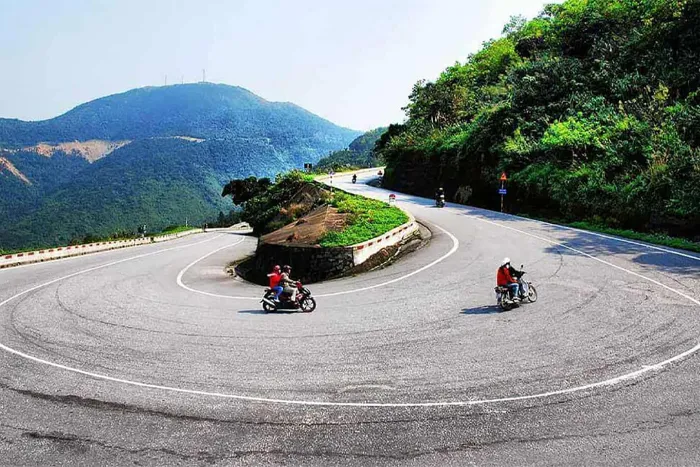
The pass itself is approximately 20 km long, but the full journey between cities is considerably longer. Highlights include:
Ocean and mountain viewpoints.
Lang Co Bay.
Scenic stops overlooking the Central Vietnam coastline.
Optional visits to Hue or Da Nang.
The road gained international attention following its appearance in Top Gear's Vietnam Special.
Although it is shorter than northern mountain routes, Hai Van Pass should not be described as an easy ride for beginners. Sharp curves, fog, rain and mixed traffic require attention.
Travellers without suitable riding experience can enjoy the scenery with an experienced local driver.
✔️ Distance: ~1,200 km
✔️ Suggested duration: Approximately 7–14 days for a selected extended section
✔️ Difficulty: Moderate to challenging, depending on itinerary
✔️ Best season: Varies significantly by region
✔️ Suitable for: Experienced long-distance riders
✔️ Distance: ~220 km
✔️ Duration: 1-2 days
✔️ Difficulty: Easy
✔️ Best period to consider: March - May and other dry-weather windows
✔️ Suitable for: Riders with road experience and guided travellers
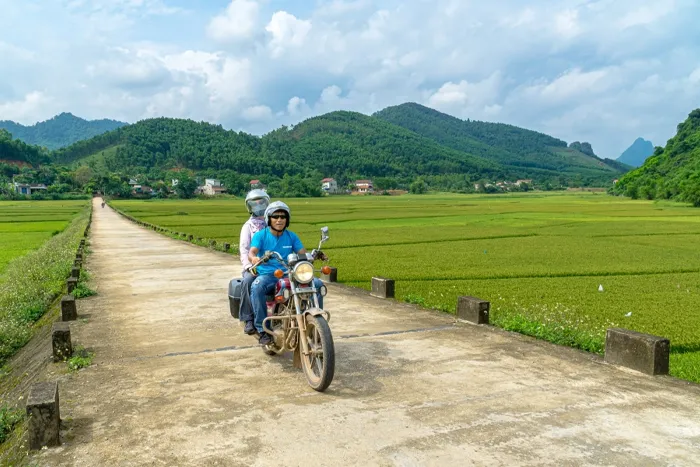
This Central Vietnam journey combines limestone landscapes around Phong Nha with countryside scenery and the cultural heritage of Hue. Depending on the itinerary, travellers can explore:
Phong Nha-Ke Bang National Park.
Historical sites along selected routes.
Rural communities and viewpoints.
The Imperial City of Hue.
Road distance and riding time vary according to the route. Avoid planning a full cave visit and a long motorcycle transfer on the same day without allowing adequate time.
✔️ Distance: 200 - 400 km
✔️ Suggested duration: 2 - 4 days
✔️ Difficulty: Physically less mountainous, but traffic awareness is essential
✔️ Best period to consider: December–April for generally drier conditions
✔️ Suitable for: Travellers seeking a slower-paced cultural journey
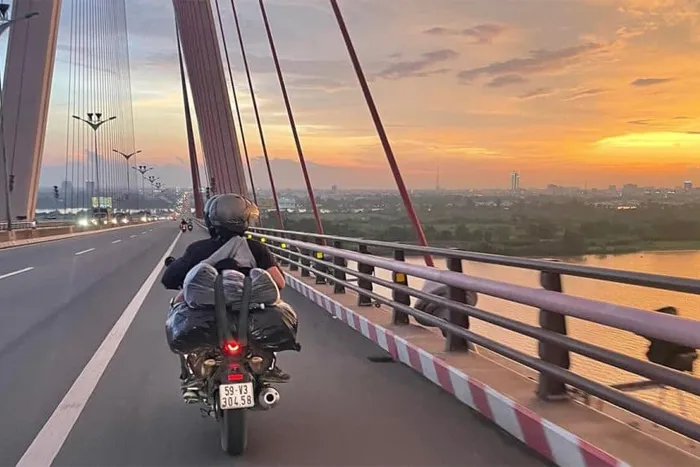
The Mekong Delta offers a different kind of motorbike experience, featuring canals, agricultural landscapes, small towns and riverside communities.
Potential highlights include:
Cai Rang Floating Market near Can Tho.
Coconut-growing areas around Ben Tre.
Local food markets and orchards.
Family-run accommodation and countryside excursions.
The terrain is relatively flat, but that does not automatically make the route safe for novice riders. Narrow bridges, local traffic, wet roads and intersections can create challenges. A guided tour may combine road travel with boats and other local transport, providing a broader experience of the region.
✔️ Distance: ~80 km
✔️ Suggested duration: Half-day or full-day excursions
✔️ Difficulty: Varies by road and traffic conditions
✔️ Best period to consider: November - March
✔️ Suitable for: Licensed riders seeking short trips or travellers using organized transport
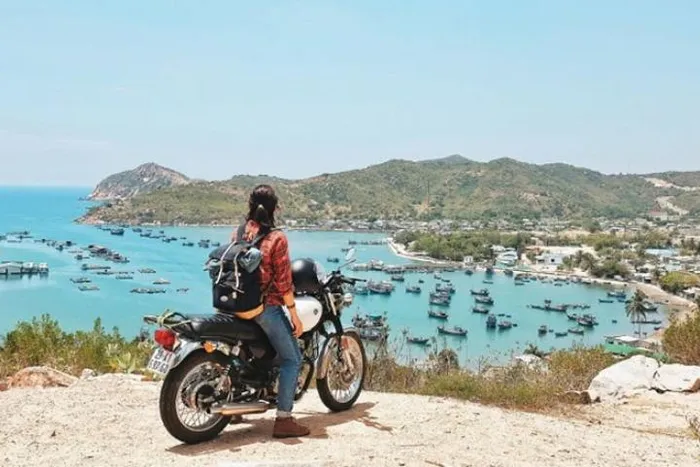
Phu Quoc offers coastal scenery, beaches, fishing communities and forested landscapes. Instead of attempting an undefined island-wide loop, choose a realistic itinerary based on your accommodation location and the roads you plan to use.
Some roads may be busy, slippery after rain or affected by construction. Visitors without recognized motorcycle qualifications should choose a suitable guided transport option rather than renting a scooter illegally.
|
Type of bike |
Engine size |
Daily rental |
Best for |
|
Automatic scooter |
50 - 125cc |
5 - 8 USD |
Beginners, city rides |
|
Semi-automatic |
110 - 125cc |
4 - 12 USD |
Budget travelers |
|
Touring bike |
150 - 250cc |
15 - 35 USD |
Long-distance routes |
|
Off-road / Adventure |
250cc+ |
20 - 60 USD |
Experienced riders |
📍 Hanoi: Motogo, Style Motorbikes, Happy Zip, Gia Hung
📍 Da Nang & Hoi An: Motorvina, Binh Minh, Song Han
📍 Ho Chi Minh City: Flamingo Travel, Style Motorbikes, Saigon Motorbike
Passport - Identification & Security Deposit
International Driving Permit (IDP) - A Must for Legal Riding
What to check before renting?
✔️ Inspect the motorcycle carefully before accepting it.
✔️ Check brakes, tyres, lights, mirrors, horn and visible mechanical condition. Test the motorcycle in a safe location to confirm that you can control it confidently.
✔️ Photograph or record existing damage and verify the vehicle registration, compulsory liability insurance and rental terms.
✔️ Ask for a properly fitting helmet and confirm that suitable protective equipment is available.
✔️ Avoid handing over your original passport as a rental deposit. The UK government explicitly warns travellers not to give their passports to motorcycle rental shops as security.
Instead, discuss acceptable identification and deposit arrangements before booking. A rental company's willingness to hand over a motorcycle does not establish that you are legally entitled to ride it.
Required documents (passport, IDP, permits)
Bike types and safety equipment provided
Whether insurance and border permits are included
Tour difficulty level, especially for Ha Giang Loop or Ho Chi Minh Trail
Vietnam's climate varies greatly between regions. There is no single month that guarantees ideal riding conditions across the entire country.
| Region |
Generally favourable periods |
Main weather considerations |
|
Northern mountains |
March-April; September - October | Fog, winter cold, summer rain and landslides |
|
Central Vietnam |
March - May | Heavy rain, flooding and storms later in the year |
|
Southern Vietnam and Mekong Delta |
December - April | Rain, heat, wet roads and possible seasonal flooding |
|
Phu Quoc |
November - March | Tropical rain and changing coastal conditions |
Northern routes may be beautiful during the autumn rice harvest, while Central Vietnam can experience heavy rain and flooding during parts of September - November. Mountain conditions deserve particular attention. Heavy rainfall can trigger landslides, and fog can make exposed passes dangerous. Check local weather warnings shortly before departure and remain willing to postpone or modify the route.
If this is your first time visiting Vietnam, riding a motorbike can be exciting but also challenging due to busy traffic, unfamiliar road rules, and varied terrain. To ensure a safe and enjoyable trip, keep these essential tips in mind:
✔️ Choose a route that matches your actual experience: A rider comfortable with short city journeys may not be prepared for mountain hairpins, steep descents or extended days on unfamiliar roads. If you are inexperienced, consider an Easy Rider tour instead of attempting to learn motorcycle handling during the trip.
✔️ Wear suitable protective equipment: Both motorcycle riders and passengers must wear helmets in accordance with Vietnamese law. For touring, prioritize a properly fitted, quality helmet, sturdy footwear, gloves, long trousers and suitable protective clothing. A lightweight rental helmet may meet a basic requirement but may offer less protection than higher-quality touring equipment.
✔️ Avoid riding at night: Unlit roads, unexpected obstacles, animals, heavy vehicles and reduced visibility can make night riding especially hazardous.Plan daily distances conservatively and allow enough time to reach accommodation before dark.
✔️ Never ride after drinking alcohol: Vietnam applies strict rules to alcohol use by vehicle operators. Avoid alcohol completely before riding
✔️ Respect road restrictions: Motorcycles are not permitted on Vietnamese expressways. Follow signs, local traffic rules and route restrictions. Do not assume a navigation app has selected a motorcycle-legal route.
✔️ Prepare for remote travel: Download offline maps, carry a charged phone and power bank, and make sure someone knows your intended route. In remote areas, mobile reception and medical facilities may be limited.
✔️ Know when to stop: If heavy rain, dense fog, road damage or fatigue makes riding unsafe, stop at a suitable place and reassess. A well-planned tour should allow for itinerary changes rather than encouraging guests to continue at any cost.
A responsible operator should do more than offer an attractive itinerary.
Before booking, assess how clearly the company explains safety, licensing, insurance, equipment and emergency procedures.
✔️ License and insurance checks
- For guided self-drive tours, an operator should ask about the rider's driving qualifications and the motorcycles they are legally entitled to operate.
- Be cautious if a provider dismisses licensing concerns or suggests that an international visitor can ride simply because rental shops rarely check documents.
- For Easy Rider tours, ask about driver qualifications, motorcycle suitability and passenger insurance.
✔️ Motorcycles and safety equipment:
- Request information about vehicle maintenance, helmet quality and protective equipment.
- For mountainous routes, discuss the vehicle's suitability for the terrain and the weight of passengers and luggage.
✔️ Route planning and daily pace: A reliable itinerary should explain expected riding hours, accommodation stops and opportunities for breaks. Be wary of schedules requiring excessive daily distances or leaving insufficient flexibility during poor weather.
✔️ Emergency and logistical support
- Ask what happens if the motorcycle breaks down, a passenger becomes ill or a mountain road closes unexpectedly.
- Clarify whether the operator has procedures for contacting emergency services, arranging alternative transport and supporting insurance documentation.
✔️ Transparent pricing
- The operator should provide a clear written quotation showing what is included, what is excluded and what happens when the itinerary changes.
At Autour Asia, a Vietnam-based travel agency, travellers can request assistance when planning an itinerary that combines scenic routes, regional highlights and cultural experiences.
For a motorbike-focused holiday, the first decision should be whether a self-drive or passenger-based experience is appropriate for your qualifications, comfort level and travel goals.
A useful planning consultation should cover your preferred region, travel dates, riding experience, group size, accommodation expectations and transport preferences.
For travellers who do not meet the legal requirements to ride independently, an Easy Rider-style itinerary or another guided transport arrangement may be more appropriate.
Before confirming any booking, request written confirmation of the operating provider, driver arrangements, available equipment, actual insurance coverage, inclusions and emergency procedures.
Whether you want to discover the Ha Giang Loop, experience Hai Van Pass or explore the Mekong Delta, Autour Asia can be contacted to discuss a Vietnam itinerary tailored to your interests.
Contact Autour Asia to request itinerary advice and a quotation.
A Vietnam motorbike tour offers memorable landscapes and opportunities to discover places beyond the usual tourist itinerary. But the best journey is not simply the one with the most dramatic mountain passes or the lowest advertised price. It is the one that matches your riding experience, meets legal requirements, provides appropriate insurance arrangements and allows enough flexibility for the realities of travelling in Vietnam. If you are qualified and experienced, self-driving can provide rewarding independence. If you are new to motorcycle travel, cannot legally ride or simply prefer to enjoy the scenery, an easy rider tour may be the better choice. Check your license, confirm your insurance and choose your route carefully before booking. With the right preparation and a responsible travel partner, Vietnam's mountains, coastlines and countryside can become the setting for an unforgettable adventure.






 FR
 ITA


