

Content []

Thailand Pet Travel Rules - Thailand Travel Guide For Pet Owners

Traveling with a pet to Thailand

Traveling with a pet to Thailand requires careful planning and a clear understanding of Thailand pet travel regulations. Whether you plan to travel with a dog or a cat, it is essential to follow all pet import requirements, including required vaccinations, essential health documents, and a valid import permit. From microchip identification to international health certificate requirements and possible pet quarantine in Thailand, each step must be prepared in advance. This guide covers everything you need to know about traveling with a pet to Thailand, helping you ensure a smooth entry and a stress-free journey for you and your companion.

I. Thailand pet travel regulations

Understanding Thailand pet travel regulations is the first step to ensuring a smooth journey with your companion. The country enforces strict pet import requirements to protect animal health and prevent the spread of diseases. Whether you are traveling with a dog or a cat, it is essential to comply with all entry rules before departure.

1. Age requirements and allowed pet species

  • Minimum age and allowed species

Thailand allows the entry of common household pets such as dogs and cats. For other animals (exotic pets, birds, etc.), the conditions are much stricter and usually require a special import permit in advance.

Your pet must be at least 4 months old (16 weeks) at the time of arrival in Thailand. This requirement is mandatory, as it aligns with the timeline for the rabies vaccination (typically administered at around 12 weeks) and ensures the required immunization period is completed before travel.

  • Prohibited or restricted dog breeds

Thailand enforces strict regulations on certain dog breeds for public safety reasons.

  • Prohibited breeds: Pit Bull Terriers and American Staffordshire Terriers are officially banned from entering Thailand.
  • Brachycephalic breeds (flat-faced dogs): While not prohibited by Thai authorities, many airlines (such as Thai Airways or Air France) refuse to transport them in the cargo hold due to health risks, including breathing difficulties caused by heat and altitude.

Always check your airline’s pet policy before booking if you own breeds like Bulldogs, Pugs, or Boxers

Age requirements and allowed pet species

2. Mandatory microchip identification for pets

Microchip identification is a mandatory requirement for traveling with a pet to Thailand. All dogs and cats must be fitted with an electronic microchip that complies with international standards ISO 11784 or ISO 11785. This allows authorities to verify your pet’s identity upon arrival and match it with all official documents. The microchip must be implanted before the rabies vaccination. If your pet was vaccinated against rabies prior to being microchipped, the vaccination may be considered invalid by Thai authorities. In this case, the vaccine must be administered again after the microchip is implanted.

II. Required vaccinations and documents for bringing a dog to Thailand

Preparing the correct vaccinations and documents is one of the most important steps when traveling with a dog to Thailand. Thai authorities have strict pet import requirements to ensure animal health and prevent the spread of diseases. To avoid delays or quarantine, all documents must be complete, accurate, and up to date before departure.

1. Essential health documents for pet travel to Thailand

To travel with a dog to Thailand, you must prepare several mandatory health documents:

  • Pet passport: This document contains your dog’s identification details, microchip number, and full vaccination history. It must be clearly completed and up to date.
  • International health certificate: Issued by a licensed veterinarian, this certificate confirms that your dog is healthy, free from contagious diseases, and fit for travel. It must usually be issued within 7-10 days before departure and may need official endorsement from veterinary authorities in your country.
  • Vaccination record: All vaccinations must be properly documented, including dates, vaccine types, and validity periods. This record is essential for meeting Thailand pet import requirements.

2. Vaccination requirements for Thailand pet travel

Vaccinations are strictly regulated when bringing a dog to Thailand, as they are a key part of the country’s pet import requirements. All vaccines must be administered at least 21 days before travel to ensure proper immunization and compliance with entry rules. In addition, vaccinations must be valid at the time of arrival and clearly recorded in your dog’s vaccination booklet or pet passport.

Vaccination requirements for Thailand travel

Required vaccines for animals:

  • Rabies (mandatory) the most critical requirement for entry; without a valid rabies vaccine, your dog will not be allowed into Thailand
  • Distemper (canine distemper virus)
  • Parvovirus
  • Hepatitis (adenovirus)

Make sure all vaccination dates, vaccine types, and validity periods are clearly documented and match your dog’s microchip information. Ensuring your dog meets all vaccination requirements for Thailand travel is essential to avoid refusal of entry, delays at customs, or possible quarantine upon arrival.

III. Pet travel requirements and entry formalities for Thailand

Understanding the administrative process is essential when traveling with a pet to Thailand. In addition to vaccinations and health documents, you must comply with official pet import requirements and complete all entry formalities before arrival. One of the most important steps is obtaining an import permit.

1. How to apply for a Thailand pet import permit

The Import Permit is the official "green light" for your pet to enter the country. Without this document, your airline may deny boarding, and customs authorities will not release your pet upon arrival.

  • The Procedure: You must apply via email to the Animal Quarantine Station (AQS) at your specific airport of entry (e.g., qsap_bkk@dld.go.th for Bangkok Suvarnabhumi).
  • Submission Timeline: You should submit your request 15 to 30 days before your departure. This window allows the AQS staff enough time to process your file and request any necessary corrections.
  • The Required Dossier: When emailing the AQS, ensure you include: A copy of the owner's passport (the identification page), your flight details (airline, flight number, date, and arrival time), a scanned copy of your pet’s vaccination record, the specific address where the pet will be staying in Thailand.
  • The Approval: Once approved, the AQS will send you an official "Import Permit" via email. Print multiple hard copies of this document; you will need to present one at check-in at your departure airport and another to the customs officers upon landing in Thailand.

2. International health certificate requirements

The international health certificate is a mandatory document for traveling with a pet to Thailand. It confirms that your dog or cat is healthy, free from contagious diseases, and fit to travel in compliance with Thailand pet import requirements.

  • Issuance and validity: This certificate must be issued by a licensed veterinarian within 7 to 10 days before departure. It must clearly state your pet’s identification details, including the microchip number, and confirm that all vaccinations are up to date.
  • Official endorsement: In most cases, the health certificate must be endorsed by an official veterinary authority in your country (for example, a government veterinary service). This step validates the document and ensures it is recognized by Thai authorities upon arrival.

3. Arrival procedures and customs clearance in Thailand

Many travelers mistakenly believe the process ends once they land. In reality, you must perform a mandatory check-in at the airport:

  • The AQS Inspection: Upon collecting your pet from the baggage or oversized luggage area, do not exit the terminal. Proceed directly to the Animal Quarantine Station office located within the customs area.
  • The Inspection Process: A DLD veterinarian will perform a visual inspection of your pet and cross-verify your Import Permit and Health Certificate with the pet’s microchip.
  • Entry Fees: Be prepared to pay an entry fee, which usually ranges between 500 and 1000 THB per animal. It is highly recommended to carry this amount in Thai Baht cash, as payment terminals at the AQS office are sometimes unavailable.

IV. How to transport a pet by plane to Thailand

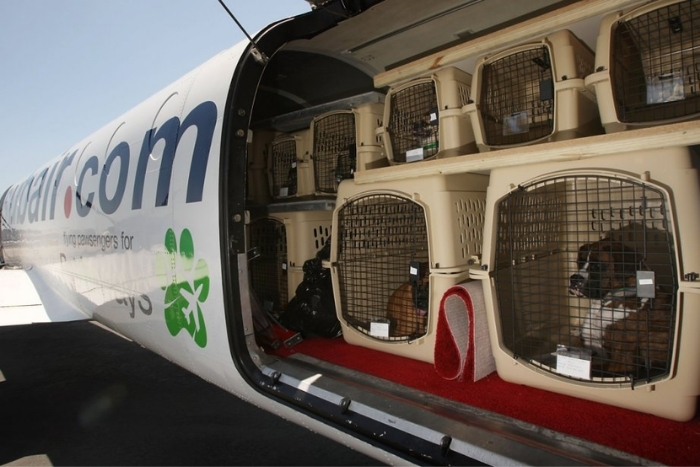
Transporting a pet by plane to Thailand requires careful preparation to ensure your companion’s safety and to comply with airline and Thailand pet import requirements. When traveling with a pet to Thailand, airlines generally offer two main options depending on your pet’s size and weight: in-cabin travel or transport in the cargo hold. Small pets (usually under 7-8 kg including the carrier) may travel in the cabin, where they must remain in an airline-approved soft carrier placed under the seat. Larger pets must travel in the cargo hold (AVIH), which is pressurized, ventilated, and temperature-controlled to ensure safe conditions throughout the flight.

How to transport a pet by plane to Thailand

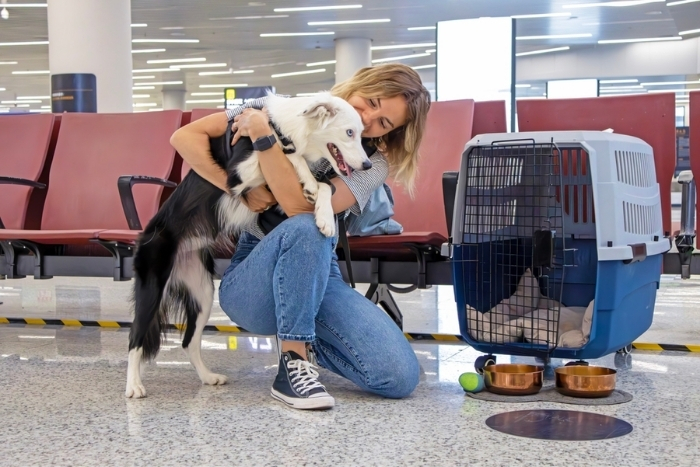
A compliant pet carrier is essential. It must meet IATA standards, meaning it should be sturdy, well-ventilated, escape-proof, and large enough for your pet to stand, turn, and lie down comfortably. The carrier must also include clear identification and absorbent materials. Airline policies vary, so it is important to check specific rules before booking. Some airlines restrict brachycephalic breeds due to breathing risks, and there may be limits on the number of pets per flight or seasonal temperature restrictions. To reduce stress, get your pet used to the carrier several days before departure and avoid feeding immediately before the flight. Proper planning ensures a smooth and safe journey when transporting a pet by plane to Thailand.

V. Pet quarantine in Thailand - Rules, duration and requirements

Pet quarantine in Thailand is often the most anxiety-inducing concern for travelers planning to bring a dog or cat into the country. The mention of “quarantine” in official Thailand pet travel rules can seem intimidating, but in reality, this measure is rarely applied when all requirements are properly met. In theory, the Department of Livestock Development (DLD) has the authority to impose a quarantine period of up to 30 days on any animal entering Thailand. However, in practice, quarantine is exceptional. If you have carefully followed all pet import requirements: valid vaccinations, complete documents, and correct identification, your pet will usually be released immediately after a quick inspection at the Animal Quarantine Station (AQS).

Pet quarantine in Thailand

To ensure a smooth entry, attention to detail is essential:

  • Document compliance: Make sure your import permit is valid, your vaccination schedule meets all deadlines (especially the 21-day rule), and your pet’s microchip matches all documents.
  • Clear presentation at arrival: Present all paperwork in an organized manner during inspection. This helps veterinary officers verify your file quickly and efficiently.
  • Health condition of your pet: Your animal must show no signs of infectious disease during the arrival check.

VI. Tips for traveling with a dog or cat in Thailand

To ensure your holiday with your dog or cat remains a pleasure and not a stressful experience, here are 6 essential tips for a successful trip with your pet in Thailand:

  • Adapt your schedule to the heat: Avoid outdoor activities between 11 a.m. and 4 p.m. Thailand’s tropical climate can be intense, so plan walks early in the morning or late in the evening to protect your pet from heatstroke.
  • Strengthen health precautions: Before departure, consult your veterinarian about preventive treatments against tropical risks such as heartworm, ticks, and fleas to travel with a pet in Thailand.
  • Use pet-friendly transport options: For easy travel within cities, choose services like Grab Pet. It’s one of the most convenient ways to get around while complying with Thailand pet travel regulations.
  • Check pet-friendly accommodation policies: Always confirm directly with your hotel, as “pet-friendly” rules can vary widely. Some places may have size limits, extra fees, or restrictions.
  • Stay cautious around stray animals: Keep your pet on a leash, especially in urban areas, to avoid unexpected encounters with stray dogs or cats.
  • Respect local rules and public spaces: Some beaches, parks, and temples do not allow animals. Check in advance to ensure a smooth and respectful experience.

Traveling with a pet to Thailand is entirely possible with the right preparation and attention to detail. By understanding Thailand pet travel regulations, securing the necessary documents, and ensuring your dog or cat meets all vaccination requirements, you can avoid complications such as delays or quarantine. From obtaining an import permit to organizing safe air transport, every step plays a key role in a smooth journey. With proper planning, you and your pet can enjoy a stress-free trip and discover Thailand together. For more tips and inspiration, explore the Autour Asia - Thailand Travel Guide to plan your next adventure.

5/5 - (1001 Vote)
Harper
5.0 Excellent
What documents are required to travel with a pet to Thailand?

To travel with a pet to Thailand, several documents are mandatory. First, you must obtain an import permit issued by the Department of Livestock Development (DLD). An international health certificate, issued by a licensed veterinarian and endorsed by the relevant authorities, is also required. Your pet must have an up-to-date pet passport, including all mandatory vaccinations, especially rabies. In addition, your animal must be identified with a microchip that complies with international standards. Preparing these documents in advance helps avoid entry refusal or quarantine upon arrival.

John
5.0 Excellent
What can you see around the Bridge over the River Kwai in Thailand?

Around the Bridge over the River Kwai, located in Kanchanaburi, visitors can explore several important historical and natural attractions. The famous Death Railway offers insight into a significant chapter of World War II. The JEATH War Museum provides a moving perspective on the lives of prisoners of war. Allied war cemeteries are also key sites for remembrance. In addition, nearby natural areas such as Erawan National Park and Sai Yok offer beautiful waterfalls and scenic landscapes.

Olivia
5.0 Excellent
What itinerary should you follow to explore Thailand in 15 days?

A 15-day itinerary in Thailand allows you to discover the country’s highlights while exploring more unique destinations. The journey often begins in Bangkok, followed by Kanchanaburi and floating markets for a cultural experience. Then, head south to beach destinations such as Hua Hin, Koh Tao, Koh Phangan, or Koh Samui, ideal for relaxation and water activities. The trip may also include nature exploration in Khao Sok National Park before ending in Krabi and Koh Phi Phi, known for their stunning landscapes.

CUSTOMIZABLE BY LOCAL EXPERTS

CUSTOMIZABLE BY LOCAL EXPERTS

Personalized trip at the original price!

REFUND GUARANTEE

REFUND GUARANTEE

We believe in our work and promise to give you money back.

GOOD PRICE / QUALITY

GOOD PRICE / QUALITY

95% satisfied more than expected!

24/7 LOCAL SUPPORT

24/7 LOCAL SUPPORT

We are always available online to provide assistance at any time.

Most read articles

Quick Tour Inquiry

Answer: 5 + 9 =