
Ngoc Son Temple Hanoi Travel Guide
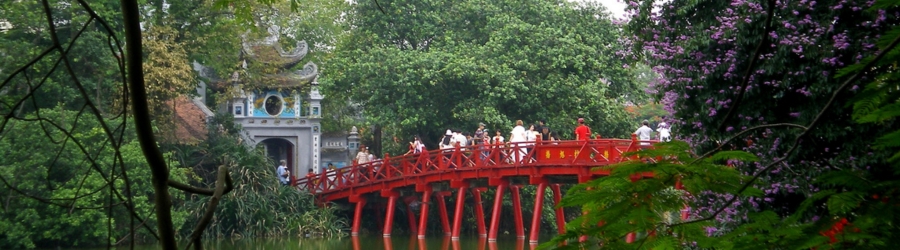
Nestled on a small islet at the heart of Hoan Kiem Lake, Ngoc Son Temple Hanoi is far more than a simple sanctuary: it is a living symbol of Vietnamese philosophy. Founded in the 19th century, the temple today hosts a remarkable diversity of religious cults, reflecting the singular fusion of Buddhism, Taoism, and Confucianism that defines Vietnamese spirituality. Whether you are a history enthusiast, a photography lover, or simply a curious traveller, this deeply meaningful site deserves a prime spot on your Hanoi itinerary.
Ngoc Son Temple Hanoi
1. What is Ngoc Son Temple?
Ngoc Son Temple (in Vietnamese: Đền Ngọc Sơn, literally "Temple of the Jade Mountain") is a Buddhist, Taoist and Confucian sanctuary founded in the 19th century, perched on a small islet in Hoan Kiem Lake in the very centre of Hanoi. Its name evokes the purity of jade, a precious stone deeply revered in Asian culture.
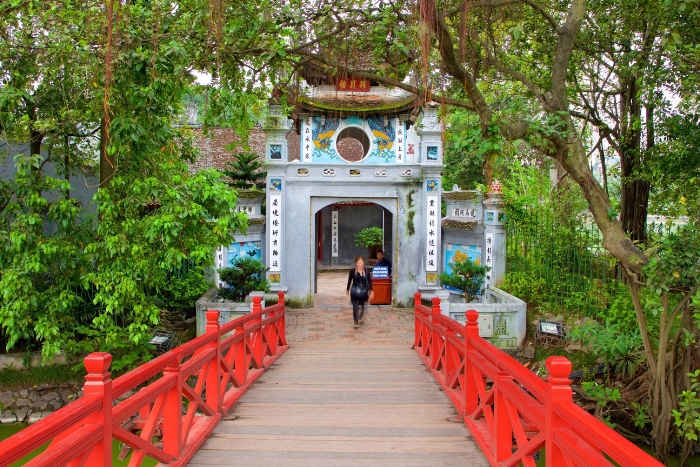
The temple is primarily dedicated to Tran Hung Dao, the military hero who repelled the Mongol invasions in the 13th century, and to Van Xuong, the divine patron of literature and learning. These two figures together make Ngoc Son a place of pilgrimage for students, intellectuals, and worshippers seeking a blessing before an exam or important undertaking.
2. How to get to Ngoc Son Temple Hanoi?
Location
Ngoc Son Temple Hanoi stands on the northern shore of Hoan Kiem Lake, just a few minutes' walk from the Old Quarter (the 36 Streets). It is one of the most accessible sites in the Vietnamese capital.
Getting there
On foot: from the Old Quarter, allow 5 to 10 minutes of walking – by far the best option for soaking up the neighbourhood's atmosphere.
By taxi or Grab: from anywhere in Hanoi, ask for Hồ Hoàn Kiếm (Hoan Kiem Lake). Fares are very affordable.
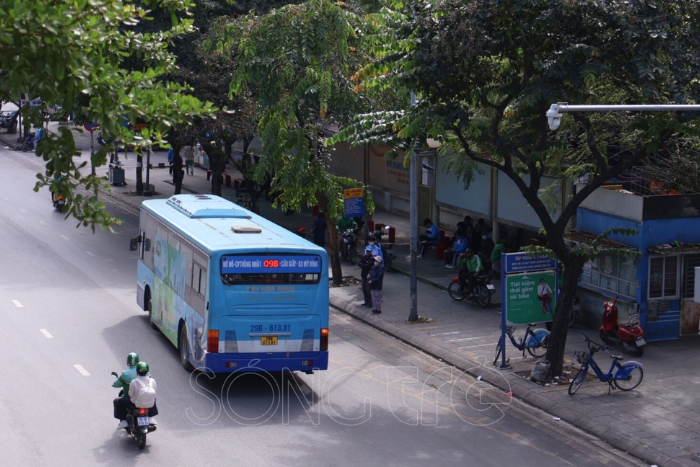
By bus: lines 09, 14, and 36 stop at Hoan Kiem.
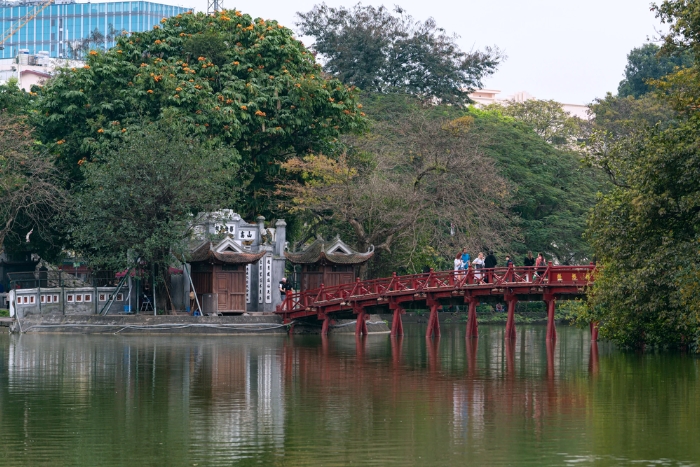
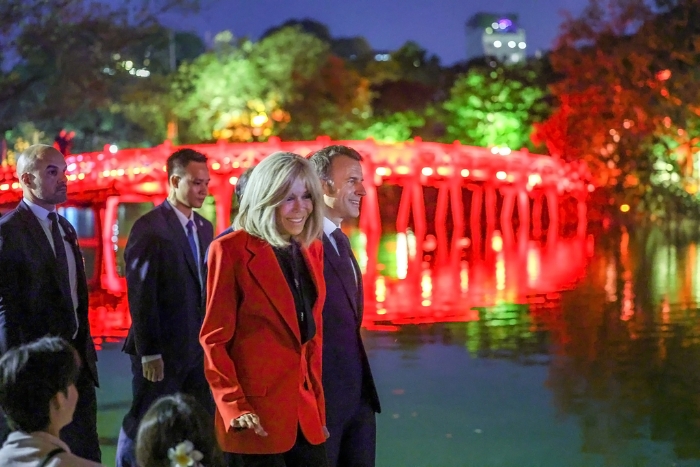
The main entrance to Ngoc Son Temple is via the The Huc Bridge, located on the eastern shore of the lake – you cannot miss it, lacquered in a vivid bright red.
3. Opening hours and admission fees
- Opening hours: every day, 7:00 AM to 6:00 PM
- Adult admission: ~50,000 VND (approx. €2)
- Child admission: reduced fare available
- Where to buy: at the entrance to The Huc Bridge
The temple is open year-round, including public holidays – but expect large crowds during Tết (Vietnamese New Year) and traditional festivals.
4. Must-see highlights
The Huc Bridge
Even before entering the temple grounds, The Huc Bridge (Bridge of the Rising Sun) immerses you in the atmosphere of the place. Its wooden arches, painted a vivid vermilion red, gracefully span the lake. It is one of the most photographed images in all of Vietnam. Cross it early in the morning for golden light and a peaceful ambiance.
The Brush Tower (Thap But)
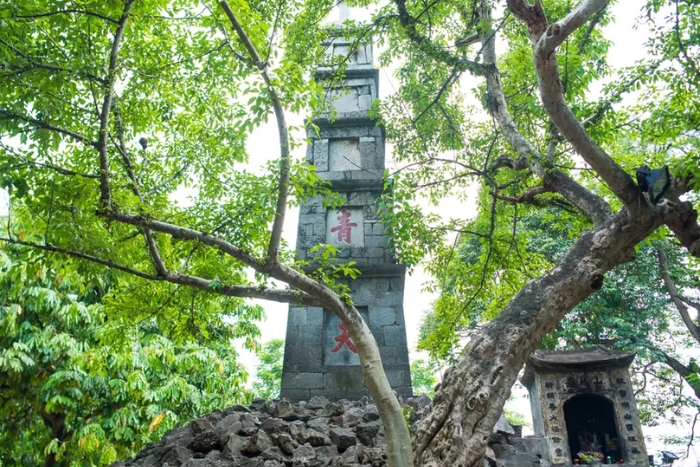
At the entrance to the islet stands a stone tower shaped like an obelisk, engraved with three Chinese characters: Tả Thanh Thiên, meaning "Write on the blue sky". This powerful symbol honours the culture of writing and knowledge – cardinal values in Vietnamese civilisation.
The Ink Stone Pedestal (Dai Nghien)
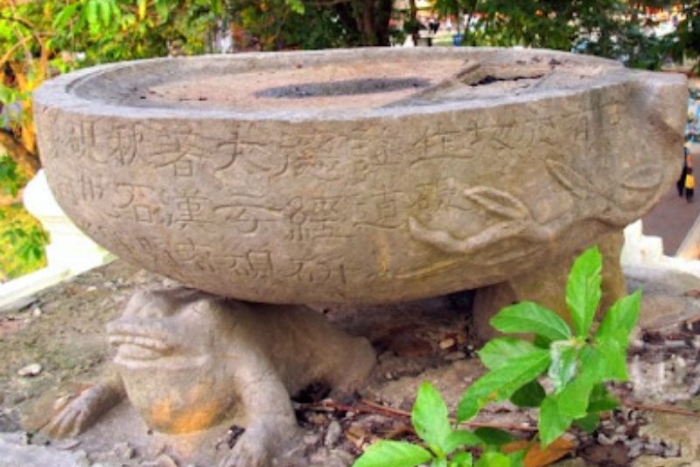
Placed right at the foot of the Brush Tower, the Dai Nghien – a pedestal shaped like an inkstone – naturally completes this symbol of writing. Carved from a single block of blue stone, it reproduces the shape of a hollowed half-peach to hold ink. Three three-legged toads (thiềm thừ), figures from Asian mythology, support it at its base, evoking the solidity and permanence of knowledge. The Brush Tower and the Ink Stone Pedestal form an inseparable duo: one embodies the soaring of the mind, the other the patience and perseverance required in any intellectual pursuit.
The Dac Nguyet Gate (Dac Nguyet Lau)
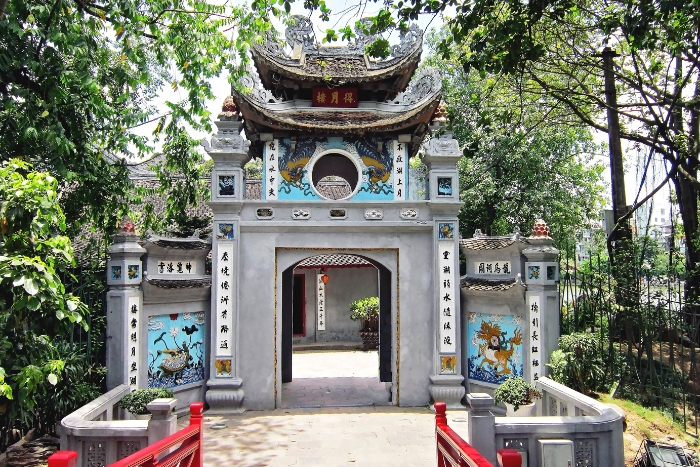
Just beyond the tower, the Dac Nguyet Gate (Gate of the Moon) marks the spiritual entrance to Ngoc Son Temple Hanoi. Its sculpted details and symbolic ornamentation are worth pausing over before stepping into the sacred enclosure. The three characters inscribed on its lintel read Dac Nguyet Lau – "the pavilion that receives the moonlight."
The Main Sanctuary
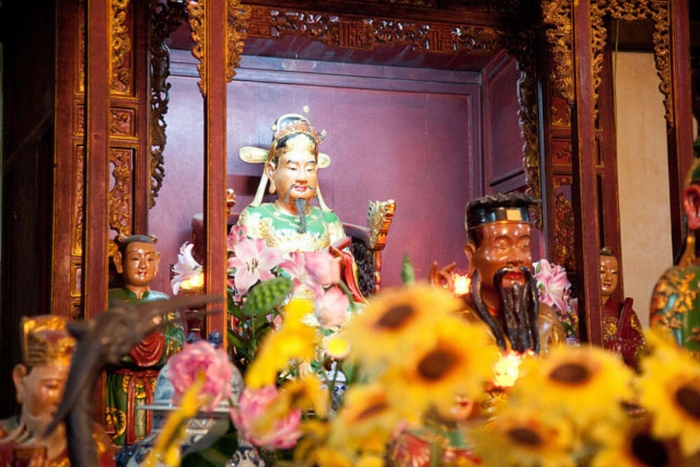
At the heart of the temple stand the altars dedicated to Tran Hung Dao and Van Xuong. The atmosphere is steeped in incense, flower offerings, and silent prayers. Even for non-believers, the serenity of the place is palpable and invites quiet contemplation.
The Giant Preserved Tortoise
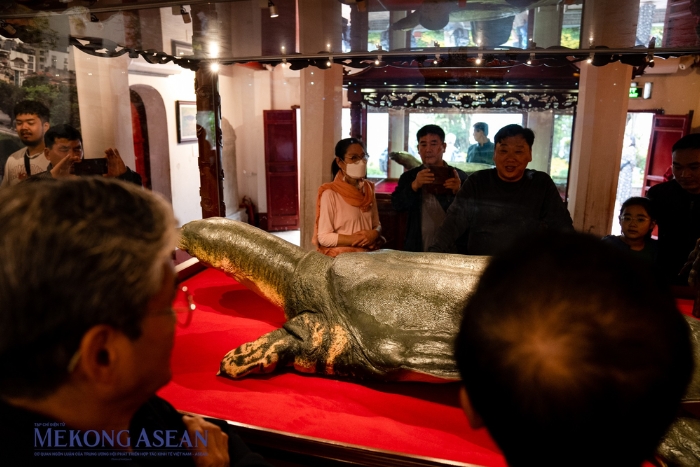
One of the most fascinating curiosities of the temple: a preserved specimen of a giant tortoise from Hoan Kiem Lake, kept under a glass case. These tortoises (Rafetus swinhoei) are quasi-mythical creatures in Vietnam – legend has it that a sacred tortoise once reclaimed a magical sword from a king at the bottom of the lake, giving the lake its name: Hồ Hoàn Kiếm, the "Lake of the Restored Sword." Seeing this specimen is a truly extraordinary experience.
5. Practical tips for a successful visit
The best time to visit
Early morning (7:00–9:00 AM): ideal for photographers and those wishing to avoid crowds. The low morning light illuminates the red bridge in a spectacular way.
Late afternoon: the golden light of sunset bathes the lake in a romantic atmosphere.
Weekdays: far less crowded than weekends – particularly quiet on Tuesday and Wednesday mornings.
The best season
The most pleasant period runs from October to April: dry weather, mild temperatures (18°C to 25°C), and excellent visibility across the lake. Avoid July–August if possible: stifling heat and frequent rain.
Dress code and behaviour
There is no strict dress code at the entrance, but it is recommended to cover shoulders and knees out of respect for the sacred nature of the site. Speak softly, avoid abrupt movements during ceremonies, and always ask permission before photographing worshippers in prayer.
Duration of visit
Allow 35 to 45 minutes to visit the entire site at a leisurely pace. Explanatory panels in English and French are available throughout, making a self-guided visit very accessible.
6. What to do around the temple?
What to do in Hanoi? Hoan Kiem Lake and its surroundings offer a wealth of other activities:
Walk around the lake: the full loop is approximately 1.8 km. On weekends, the lakeside paths are pedestrianised and come alive with street artists, dancers, and families.
Hanoi Old Quarter: the famous 36 guild streets are just a 5-minute walk away – perfect for handicrafts, street food, and an authentic atmosphere.
Night market: every Friday, Saturday, and Sunday evening, the streets around the lake transform into a festive market with clothing, souvenirs, and local specialities.
Night stroll around the lake: evening walks are available on certain nights, featuring light installations and cultural performances.
Ngoc Son Temple Hanoi is far more than a tourist attraction: it is a window into the soul of Hanoi – its beliefs, its history, and its poetry. Between the blazing red of The Huc Bridge, the murmur of prayers, and the reflection of the lake on ancient walls, this site offers an authentic and unforgettable experience. Whether you are in Hanoi for a day or a week, an early-morning visit to Ngoc Son Temple is the best possible way to start your day in the Vietnamese capital.
To plan your Vietnam trip with complete peace of mind, Autour Asia, a travel agency in Saigon, is here to help you craft a tailor-made itinerary – from the temples of Hanoi to the rice terraces of Sapa and the animated lanes of Hoi An.
>>> Vietnam 15 days budget
>>> 36 hours in Hanoi
>>> Hanoi Travel Guide
>>> Vietnam Tour 15 days
>>> Vietnam Tours
If you are wondering how much money you need for 2 weeks in Vietnam, the answer depends on your travel style. On average, a budget traveler should plan to spend about $49 per day, which covers accommodation, meals, transportation, and activities. That comes to around $700 for the full two weeks. If you include international flights, the total budget usually ranges between $1,700 and $2,500 per person. This means that with careful planning, a trip can be both affordable and enjoyable, whether you choose budget-friendly options or add a touch of comfort.
The full visit takes on average 35 to 45 minutes at a leisurely pace. Explanatory panels in French and English are available on site, making the visit entirely self-guided and very accessible. If you wish to combine the visit with a walk around Hoan Kiem Lake (approximately 1.8 km) and a stroll through the Old Quarter, plan for a half day.
Ngoc Son Temple Hanoi, whose name means "Jade Mountain," is a sanctuary founded in the 19th century on an islet of Hoan Kiem Lake in the heart of Hanoi. Originally dedicated to the cult of Quan De, it gradually incorporated several religious traditions and became a composite place of worship, reflecting the Vietnamese philosophy of tam giáo đồng nguyên — the harmony between Buddhism, Taoism, and Confucianism. Today classified as a national historic monument, it is one of the most visited and symbolic sites in Vietnam.
Related travel guide
Other similar articles


CUSTOMIZABLE BY LOCAL EXPERTS
Personalized trip at the original price!

REFUND GUARANTEE
We believe in our work and promise to give you money back.

GOOD PRICE / QUALITY
95% satisfied more than expected!

24/7 LOCAL SUPPORT
We are always available online to provide assistance at any time.

Most read articles


Autour Asia is highly recommended on
Embracing the mission of "Satisfied more than expected" and providing authentic experiences, we have received numerous recommendations on reputable travel forums: