
Discover The Ethnic Villages In Dien Bien And The Surrounding Area
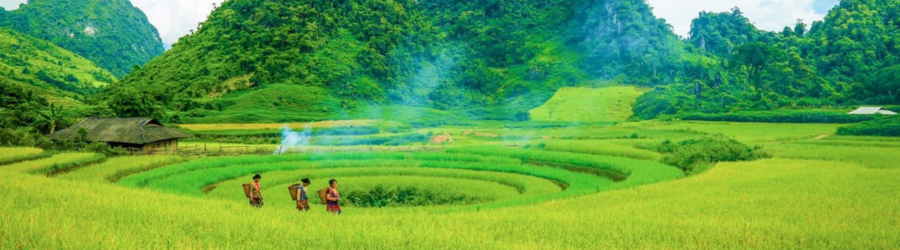
When it comes to ethnic minorities in Vietnam, the mountainous Northwest region cannot be overlooked, as it is home to some of the country’s most authentic and well-preserved indigenous cultures. Among these destinations, Dien Bien stands out as a true “living museum” of ethnic groups in Vietnam, where 19 ethnic communities live side by side, creating a vibrant cultural mosaic amid dramatic mountain landscapes. Traveling to discover ethnic villages in Dien Bien and the surrounding area is not only about exploring breathtaking scenery, but also about experiencing deep, meaningful, and authentic cultural encounters with local communities.
How to discover ethnic villages in Dien Bien?
I. An overview of ethnic groups in Vietnam and how to meet them
Vietnam is one of the most ethnically diverse countries in Southeast Asia, with 54 ethnic groups living together as the result of centuries of cultural interaction. The Kinh (or Viet) people make up more than 80% of the total population, while the remaining 53 ethnic minority groups in Vietnam are scattered across the country. Exploring ethnic minorities in Vietnam means discovering a rich cultural tapestry, as each group has its own language, traditional clothing, customs, beliefs, and way of life.

Most ethnic groups in Vietnam live in the northern mountainous regions, the Central Highlands, and parts of the central coastal areas. Therefore, travelers seeking authentic cultural experiences and genuine encounters with local people should include mountainous provinces in their Vietnam itinerary, alongside popular destinations such as Hanoi, Ha Long Bay, or Da Nang.
Community-based tourism is the most sustainable and immersive way to experience the daily life of Vietnam minority groups. Staying in ethnic villages in Vietnam, visitors can live with local families, explore traditional houses, handicrafts, local cuisine, and folk festivals. Provinces such as Ha Giang, Lao Cai, Son La, and especially Dien Bien are ideal destinations to engage closely with ethnic minority communities whose cultures remain largely intact.
II. Dien Bien tourism, one of Vietnam’s provinces with the highest number of ethnic minorities
Located in the far Northwest of Vietnam, bordering Laos and China, Dien Bien is known for its high mountains, wide valleys, and stunning terraced rice fields. With its dramatic natural landscapes, rare untouched beauty, and rich presence of ethnic minorities in Vietnam, Dien Bien is increasingly attracting travelers interested in cultural exploration and local traditions.
As a mountainous border province, Dien Bien is home to 19 ethnic groups, including 18 ethnic minority groups in Vietnam, creating a culturally diverse and colorful living space. The long-standing coexistence of ethnic groups in Vietnam in this region has resulted in an exceptionally rich tangible and intangible cultural heritage.
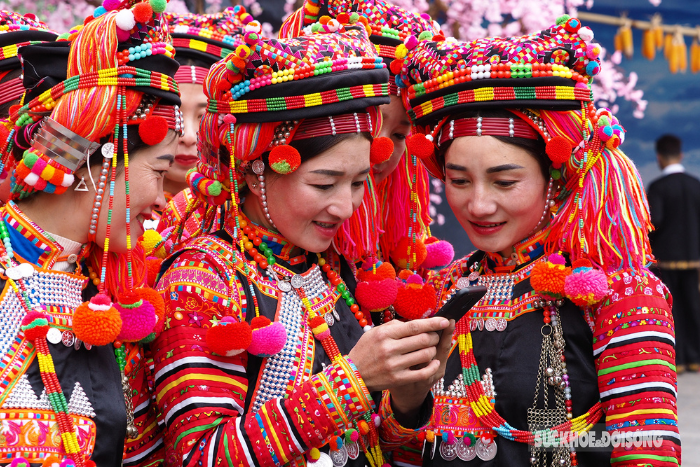
Each ethnic community contributes its own unique cultural elements, from the traditional stilt houses of the Thai people, the closely clustered Kho Mu villages near the Lao border, to the festivals and artistic practices of the Dao. Together, these features make ethnic villages in Dien Bien one of the most attractive cultural destinations in Northwest Vietnam.
You may be interested in:
>>> Dien Bien 5-day travel itinerary
>>> 2 days in Dien Bien
III. Some outstanding ethnic villages in Dien Bien
1. Che Can Village
Che Can Village (Muong Phang Commune, Dien Bien District) is one of the most representative ethnic villages in Dien Bien, well known for its community-based tourism model closely linked to the preservation of ethnic culture. Nestled at the foot of the Pu Don mountain range, near the Pu To Co peak rising to about 1,700 meters above sea level, the village enjoys a harmonious landscape of mountains and lush valleys.
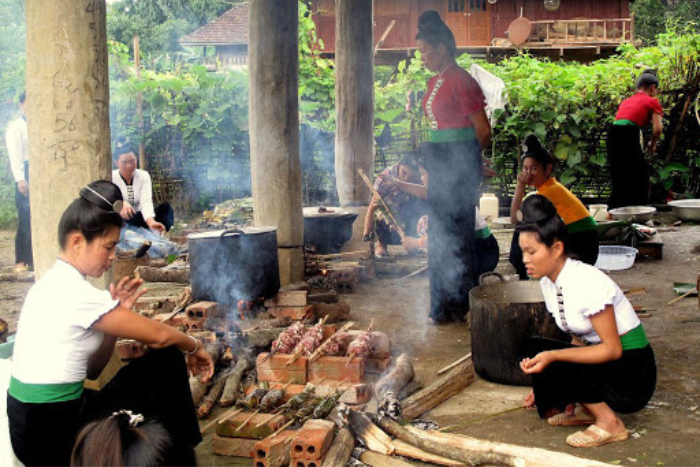
Today, Che Can is home to nearly 100 households, mainly from the Thai Black ethnic group, living alongside Kho Mu and Hmong communities. Visiting this ethnic village in Vietnam, travelers can explore the Dien Bien Phu Campaign Headquarters, experience riding a buffalo cart around the village, and immerse themselves in the daily life of ethnic minority groups in Vietnam. Traditional Thai cultural values such as stilt houses, costumes, beliefs, festivals, and handicrafts (brocade weaving, basketry, blacksmithing, carpentry, musical instrument making) are still well preserved.
Exploring ethnic villages in Vietnam would not be complete without discovering local cuisine. With typical Thai dishes such as grilled fish, smoked buffalo meat, five-colored sticky rice, and forest bamboo shoots, visitors gain deeper insight into the local way of life. In addition, activities like rice planting, harvesting, cooking, or cycling through peaceful scenery offer authentic experiences when discovering ethnic villages in Dien Bien and the surrounding area.
2. Ta Ko Khu Village
Ta Ko Khu Village (Sin Thau Commune, Muong Nhe District) is one of the ethnic villages in Dien Bien that strongly reflects the cultural identity of the Ha Nhi people. Located in one of the most remote areas of the country, at Vietnam’s westernmost point, the village has managed to preserve its traditional identity thanks to a slow-paced lifestyle and limited urban influence.
The Ha Nhi community is well known for its rich system of traditional festivals, including the Ho Su Cha New Year, the De Khu Cha rainy season festival, and especially the Ga Ma Thu village ritual, which has been recognized as a national intangible cultural heritage. These ceremonies deeply reflect the worldview, beliefs, and harmonious relationship between humans and nature, which are characteristic features of ethnic minorities in Vietnam.

Beyond its cultural value, Ta Ko Khu impresses visitors with its majestic mountain scenery and later sunsets due to its unique geographical location. Travelers can check in at the Vietnam–Laos–China tri-border landmark, experience traditional fabric weaving with local residents, and enjoy simple yet flavorful local dishes deeply rooted in the mountain lifestyle.
3. Men Village
Men Village, located in Thanh Nua Commune, Dien Bien District, lies about 5 km from Dien Bien Phu city center. It is a long-established settlement of the Black Thai people and one of the earliest cultural tourism villages in Dien Bien Province. Thanks to its convenient location and rich historical background, Ban Men is an ideal stop for travelers exploring ethnic villages in Dien Bien and the surrounding area.
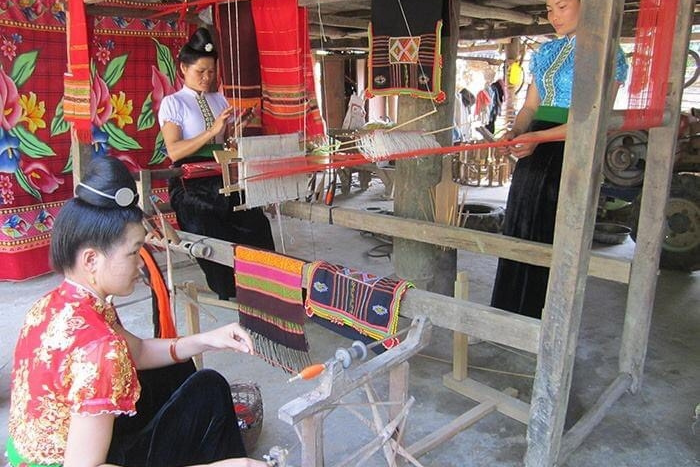
Beyond its cultural value, Ban Men preserves important historical relics related to Vietnam’s resistance wars. Visitors can experience traditional Black Thai crafts such as weaving and embroidery, with iconic products including pieu scarves, traditional costumes, and handmade bags, showcasing the refined aesthetics of one of the most representative ethnic minority groups in Vietnam.
Guests may stay in traditional stilt houses and take part in daily activities such as fishing in nearby streams, collecting firewood in the forest, or joining village life. Ban Men’s local cuisine reflects the flavors of the mountains, featuring upland sticky rice, grilled stream fish, bamboo-tube rice, bitter bamboo shoots, and dishes made from ban flowers, a cultural symbol and also specialties of Dien Bien.
4. Phieng Loi Village
Phieng Loi Cultural Tourism Village is a picturesque Thai ethnic village located in Thanh Minh Commune, about 5 km north of Dien Bien Phu city center. Well known for its proximity to major historical sites, Phieng Loi is also an ideal destination for discovering ethnic villages in Dien Bien, thanks to its strong agricultural traditions.
The village enjoys a fresh and poetic natural landscape. Local residents mainly rely on farming, growing rice and crops, raising livestock, and maintaining traditional handicrafts such as hand embroidery and bamboo weaving. The Thai stilt houses, built against the mountains and facing the Nam Ron River and green rice fields, create a peaceful and authentic rural scene.
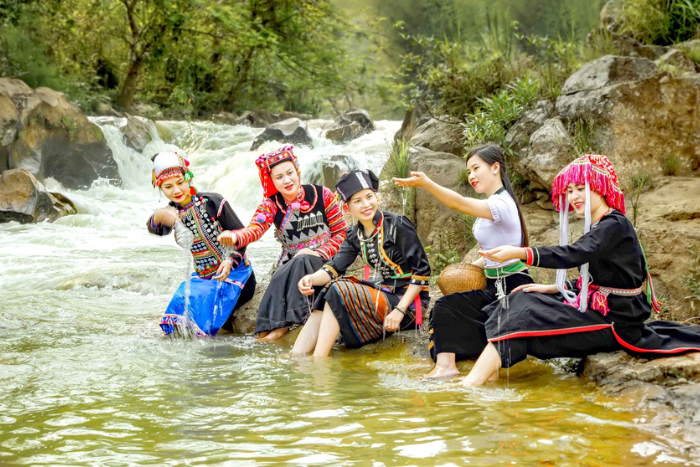
By staying in Phieng Loi, visitors can join campfire activities, bamboo dancing, folk singing, and traditional Thai performances. Since the development of community-based tourism, many families have transformed their stilt houses into homestays, combining local cuisine and handicrafts, making Phieng Loi one of the most authentic ethnic villages in Vietnam.
IV. What to do when visiting ethnic villages in Dien Bien?
Visiting ethnic villages in Dien Bien is not just sightseeing; it is an opportunity to slow down and immerse yourself in local life. One of the most meaningful experiences is staying in homestays within ethnic villages in Dien Bien, where travelers sleep in stilt houses, share meals with host families, and learn about the customs of different ethnic communities.
Visitors can take part in daily activities such as rice farming, harvesting, traditional weaving, basket making, cooking local dishes, or visiting ethnic markets. This close and sustainable approach helps travelers better understand the lives of ethnic minorities in Vietnam, while supporting local livelihoods.
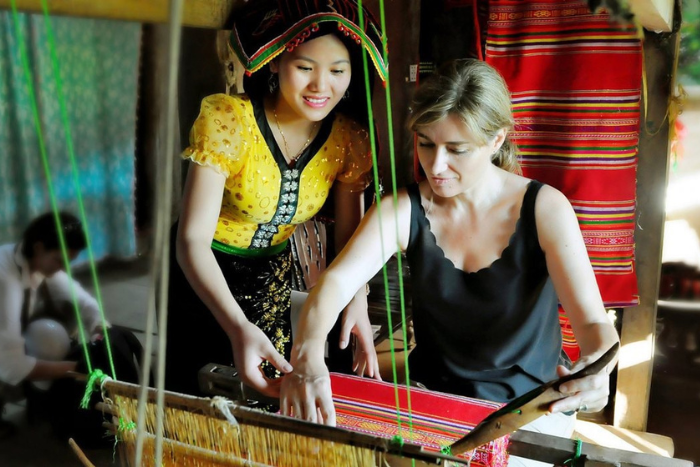
Exploring traditional festivals, folk arts like Thai Xoe dance, bamboo dancing, folk songs, and indigenous spiritual rituals allows visitors to deeply appreciate the cultural identity of northwestern Vietnam. When visiting ethnic villages in Dien Bien and the surrounding area, respecting local culture and protecting the environment are essential to making each journey a meaningful and sustainable cultural exchange.
Discovering ethnic villages in Dien Bien is a journey into the cultural depth of ethnic Vietnam, where identity lives on through architecture, dance, cuisine, and everyday life. From Che Can and Ta Ko Khu to Ban Men and Phieng Loi, each village enriches the diverse mosaic of ethnic groups in Viet Nam. For a more authentic cultural experience in Vietnam, Autour Asia, a local travel agency in Vietnam, specializes in designing immersive and meaningful journeys.
You may also like:
>>> Best places to trek in Dien Bien
>>> Vietnam Travel Guide
>>> Hanoi Ha Giang Cao Bang Ban Gioc 6 days
>>> Vietnam Packages Tours
In addition to the ethnic villages in Dien Bien, you can discover other ethnic minority groups in Vietnam in the northern mountainous regions such as Sapa and Ha Giang, as well as in the Central Highlands and some parts of Central Vietnam. Each ethnic community has its own lifestyle, traditions, and cultural identity, offering travelers authentic and diverse experiences across different regions.
If you wish to combine visits to ethnic villages in Dien Bien with nature exploration, it is recommended to spend between 1 and 3 days in Dien Bien, depending on your itinerary and interests. One day is enough to visit the main historical sites, while 2-3 days allow you to explore ethnic villages, experience community-based tourism, enjoy local cuisine, and immerse yourself in the mountainous landscape.
Yes, the northern mountains of Vietnam are definitely worth visiting. You may consider joining a Northern Vietnam tour to fully experience the region’s landscapes and activities. With its dramatic mountains, stunning terraced rice fields, and unique ethnic minority culture, this area is ideal for travelers who enjoy hiking, trekking, adventure travel, and authentic local experiences.
Related travel guide
Other similar articles


CUSTOMIZABLE BY LOCAL EXPERTS
Personalized trip at the original price!

REFUND GUARANTEE
We believe in our work and promise to give you money back.

GOOD PRICE / QUALITY
95% satisfied more than expected!

24/7 LOCAL SUPPORT
We are always available online to provide assistance at any time.

Most read articles


Autour Asia is highly recommended on
Embracing the mission of "Satisfied more than expected" and providing authentic experiences, we have received numerous recommendations on reputable travel forums: