Vietnam is today considered an accessible destination but the real cost of a stay mainly depends on the way you choose to travel. During my 2-week itinerary in Vietnam, I quickly understood that this country offers excellent value for money. I was able to discover spectacular landscapes, a rich culture and a varied gastronomy without spending as much as in other destinations.
Of course, the budget varies depending on the period, the type of accommodation, transport and activities. By organizing my trip well, I managed to control my expenses while fully enjoying each stage, which allowed me to understand that a Vietnam travel expensive or cheap mainly depends on the choices you make. If you are preparing your stay, I advise you to take inspiration from the itinerary below to better plan your budget and your experience.
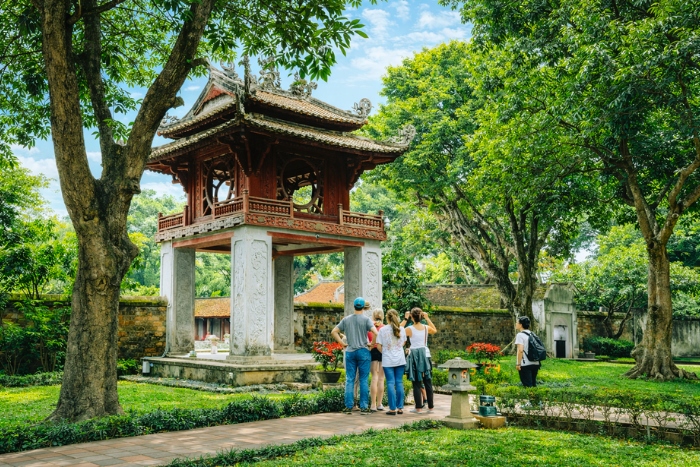
To start my trip to Vietnam and better understand the budget for a 2-week trip in Vietnam, I discovered Hanoi, a vibrant capital where history blends with the lively rhythm of the streets. The day began with a walk around Hoan Kiem Lake, the heart of the city, where locals walk or practice tai chi early in the morning. As I continued my exploration, I headed to the Old Quarter, famous for its lively alleys and small local shops. To better feel the local atmosphere, I took a cyclo ride (about $5). At lunchtime, I tasted the famous bun cha, a fragrant local specialty. Later, I visited the Temple of Literature (about $3) before ending the day at Hanoi train street with a Vietnamese coffee.
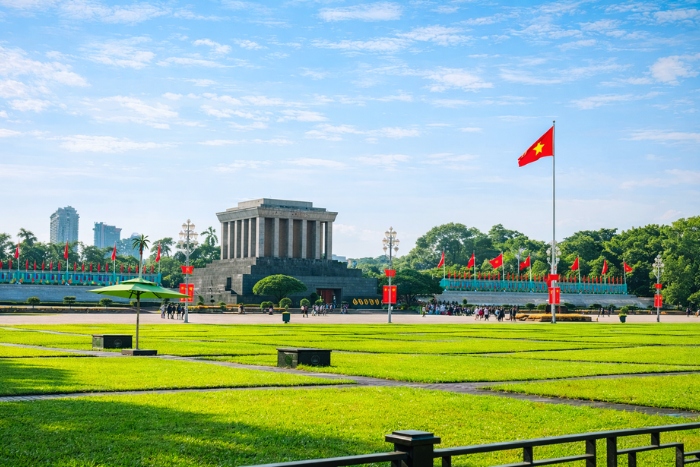
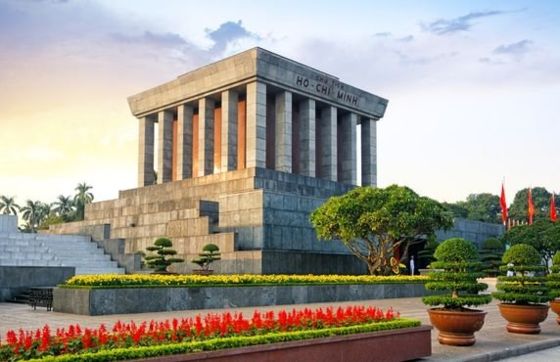
After this first immersion in Hanoi, I devoted the second day to discovering several emblematic places of the capital, a step that also allowed me to concretely assess whether Vietnam travel expensive or cheap during the stay. The morning began at the Ho Chi Minh Mausoleum, a historical site accessible for free. A few steps away, I visited the One Pillar Pagoda, a small temple built on a single column in the middle of a pond. I then explored the Museum of Ethnology (about $4) to better understand the cultural diversity of Vietnam. At noon, I enjoyed a bowl of pho for about $4. Later, I returned to the Old Quarter to buy some souvenirs and enjoy again the lively atmosphere of the capital before going back to the hotel.
Total budget for these 2 days: about $100 - $120 per person, including two nights in the city center, meals, visits and activities and a few souvenir purchases in the Old Quarter.

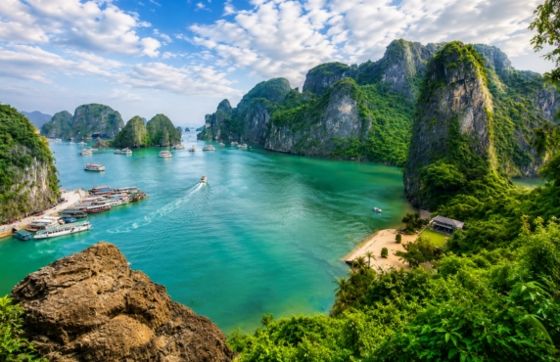
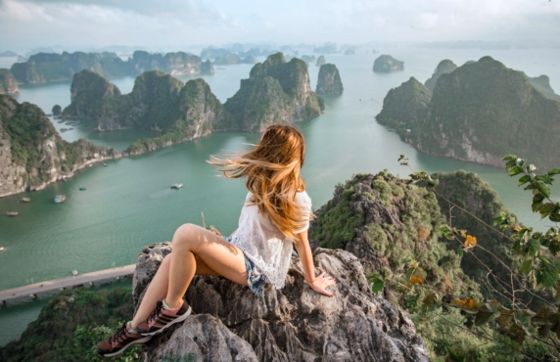
After 2 days spent discovering the lively atmosphere of Hanoi, I left the capital to head to Halong Bay, located about 3 hours away by road. If you wonder how much a trip to Vietnam costs, this step showed that it was possible to experience spectacular moments without spending excessively. At Tuan Chau port, I boarded a 2-day and one-night cruise including cabin, meals and activities. As soon as the boat started to sail, the landscape became spectacular with limestone islets on emerald water. After lunch on board, I went kayaking, then visited Sung Sot Cave before admiring the sunset.
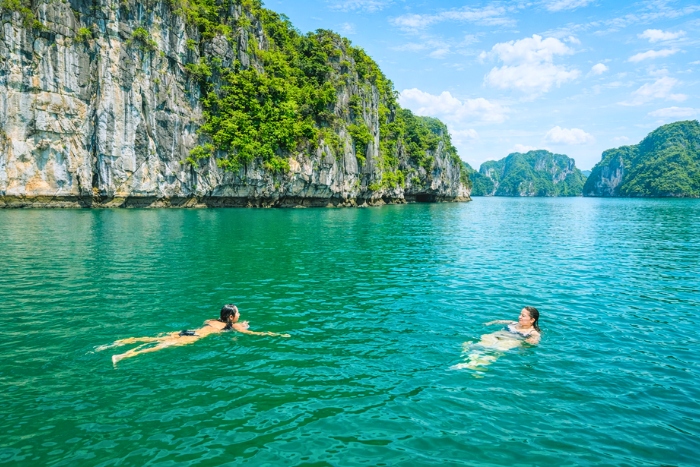
The next morning, I woke up to the calm of Halong Bay, surrounded by cliffs covered with vegetation. The day began on the boat deck with a tai chi session, ideal for enjoying the sunrise and the fresh air. After breakfast, the boat continued its navigation between the islets, offering superb views of this UNESCO-listed site. At that moment of the trip, I understood that the Vietnam travel budget mainly depends on the chosen style. Before returning to the port, I took some time to swim in the calm waters. After lunch on board, the cruise ended at Tuan Chau, then I took the road to Ninh Binh and settled in Tam Coc.
Total budget for these 2 days: about $220 - $250, including the cruise in Halong Bay, the transport to Ninh Binh and one night at the hotel.
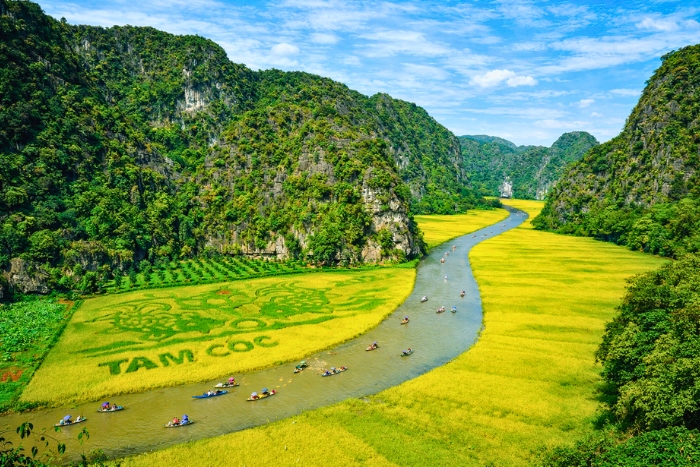
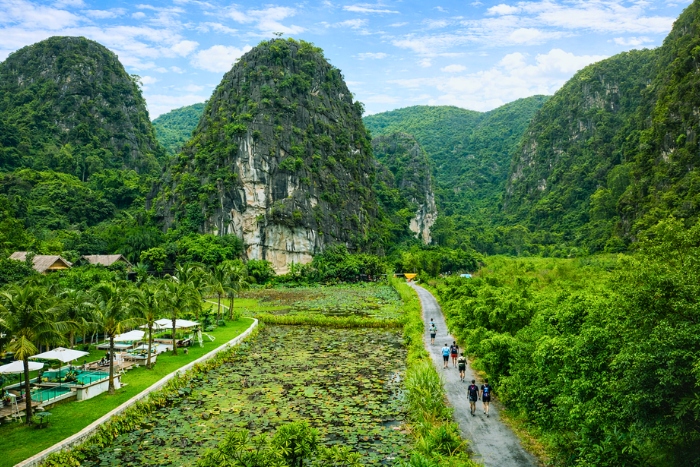
Upon waking up in Tam Coc, I began to explore the peaceful landscapes of Ninh Binh, often called the “Halong Bay on land”. During a 2-week itinerary in Vietnam, this step also allows you to better understand the Vietnam travel cost while enjoying nature. The morning began with a boat ride on the Ngo Dong River, an emblematic activity of the region. For nearly two hours, the boat glided between rice fields and karst peaks while passing through several caves. The excursion costs about $10. After this discovery, I headed to Bich Dong Pagoda, a small sanctuary set against the mountain. In the mid-afternoon, I rented a bicycle to ride through the countryside around Tam Coc, between rice fields, water buffaloes and quiet villages.

For this new day in Ninh Binh, I started early with the ascent of Hang Mua, one of the most beautiful viewpoints in the region. After nearly 500 steps, I reached the top and admired the view over the Tam Coc valley and its karst mountains. The entrance costs about $6, a good example for those who wonder whether a Vietnam travel expensive or cheap while enjoying spectacular landscapes. I then continued to Hoa Lu, the former capital of Vietnam in the 10th century, where the Dinh Le Temple tells the history of the country. After the visit, I took the road back to Hanoi to catch a flight to Hue and rest at the hotel.
Total budget for these 2 days: about $160 - $180 per person, including visits, bicycle rental, meals, one night in a hotel in Tam Coc, the transfer to Hanoi and the domestic flight to Hue.
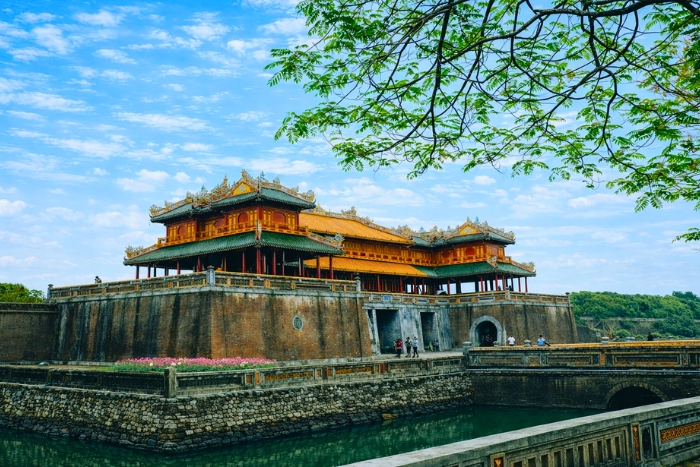
Leaving the karst landscapes of Ninh Binh, my journey took me to Hue, the former imperial capital of Vietnam. After my arrival and settling into the hotel, I began by visiting the famous Imperial Citadel of Hue, a vast complex listed as a UNESCO World Heritage site. Passing through its monumental gates and crossing the royal courtyards, I discovered palaces, temples and pavilions recalling the Nguyen dynasty. The entrance costs about $8, proof that you can visit major sites while keeping an affordable Vietnam 2-week travel budget. At nightfall, I went to the Perfume River for a cruise with traditional Hue music.

Waking up in Hue, I continued the discovery of the former capital by visiting several emblematic sites, a step also interesting to understand the Vietnam living cost for a tourist during 2 weeks in Vietnam. The morning began at Thien Mu Pagoda, a spiritual symbol on the banks of the Perfume River. I then visited the Khai Dinh tomb, combining Vietnamese and European styles, then that of Minh Mang, known for its harmony with nature. In the afternoon, I tasted bun bo Hue, a local specialty, before returning to the hotel to rest before continuing the journey to Hoi An the next day and discovering traditions and typical landscapes of central Vietnam.
Total budget for days 7 - 8: about $120 - $140 per person, including visits, meals, two nights at the hotel in Hue and souvenirs.
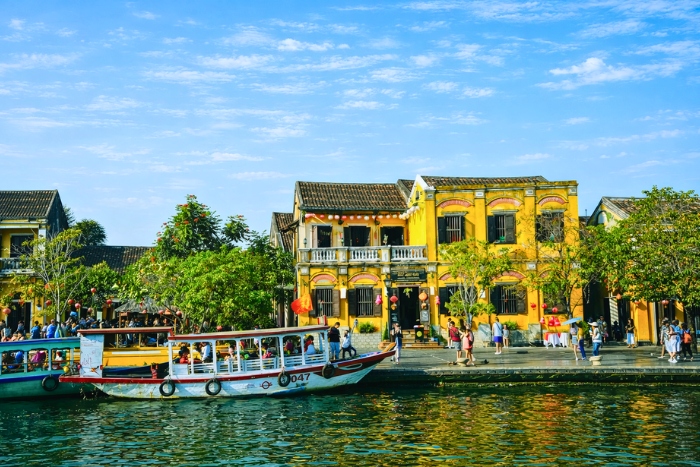
After discovering the former imperial capital, my journey continued to Hoi An, a small charming town known for its colorful lanterns and its UNESCO-listed historic center. Upon arriving, I got lost in the streets lined with yellow houses, where Vietnamese, Japanese and Chinese architectures blend together. I visited the famous Japanese Covered Bridge as well as some old houses and Chinese congregations thanks to the entrance ticket of the historic center, a good reference to understand how much a trip to Vietnam costs. At sunset, the town lights up with lanterns. To enjoy this romantic atmosphere, I ended the day with a short boat ride on the Hoai River (about $3).
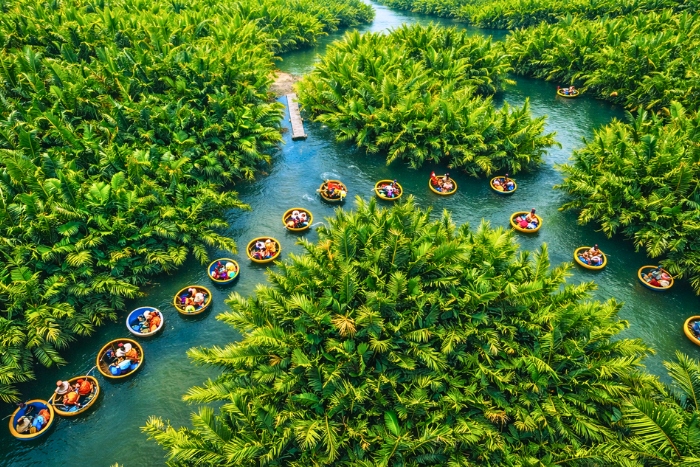
To discover another side of Hoi An, I devoted the second day to the villages around the city. In the morning, I went to Tra Que vegetable village, famous for its organic gardens cultivated using traditional methods. This simple but authentic visit often makes you reflect on the question of whether Vietnam travel expensive or cheap. I then continued to the Bay Mau coconut forest for a basket boat ride through the canals lined with water coconut trees, a typical and fun activity. In the evening, I went to Da Nang airport to take a flight to Ho Chi Minh City and settle into the hotel.
Total budget for days 9 - 10: about $170 - $190 per person, including visits, activities, meals, two nights at the hotel, some souvenir purchases, the transfer to the airport and the flight to Ho Chi Minh City.
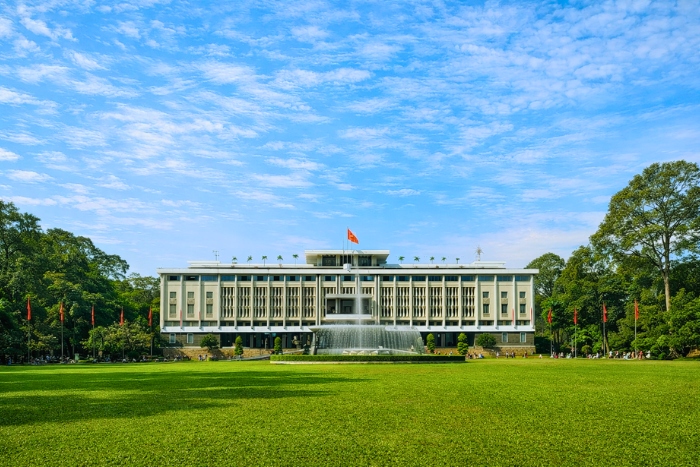
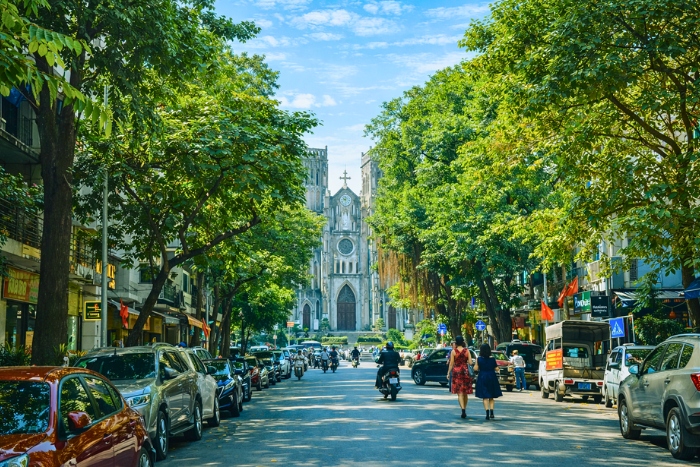
Continuing my journey to the south of Vietnam, I reached Ho Chi Minh City, a dynamic metropolis blending history and modernity. I started by exploring the center, where several monuments can be visited on foot. I stopped in front of Notre-Dame Cathedral of Saigon, then at the Central Post Office, known for its elegant architecture and old maps. The walk continued to the Independence Palace, a place rich in history whose entrance costs about $3, illustrating the Vietnam living cost for a tourist during a cultural visit. Later, I went to Nguyen Hue walking street, very lively, ideal for feeling the energy of the city.
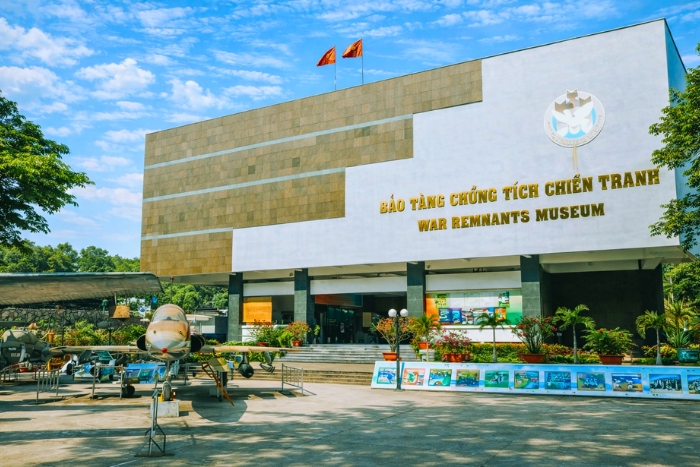
To continue my exploration of Saigon, I devoted this day to several emblematic places illustrating the history and cultural diversity of the city. I began with the War Remnants Museum, a striking site presenting numerous historical testimonies. The entrance costs about $2, an example that shows that Vietnam travel expensive or cheap can remain accessible while discovering important places. After this visit, I headed to the famous Ben Thanh Market, one of the oldest in the city, where you can find souvenirs and local specialties. I then explored Cholon, the Chinatown and visited Thien Hau Pagoda before enjoying the lively atmosphere.
Total budget for these 2 days: about $110 - $130 per person, including visits, meals, transportation in the city, some purchases at the market and two nights in the center of Ho Chi Minh City.
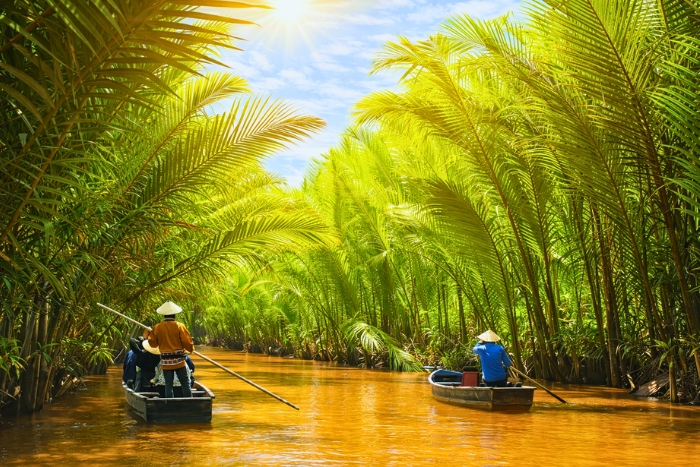
For the last stage of my trip, I left Ho Chi Minh City to reach Ben Tre, in the heart of the Mekong Delta, a region known for its coconut trees and river landscapes. Upon arrival, I boarded a boat ride through the small canals to observe local life. The excursion costs about $15, an activity that shows that a Vietnam 2-week travel budget can remain reasonable while offering authentic experiences. I then visited a coconut candy workshop, a specialty of Ben Tre, and explored the villages by bicycle between orchards and rice fields. At the end of the day, I went to Can Tho to spend the night.
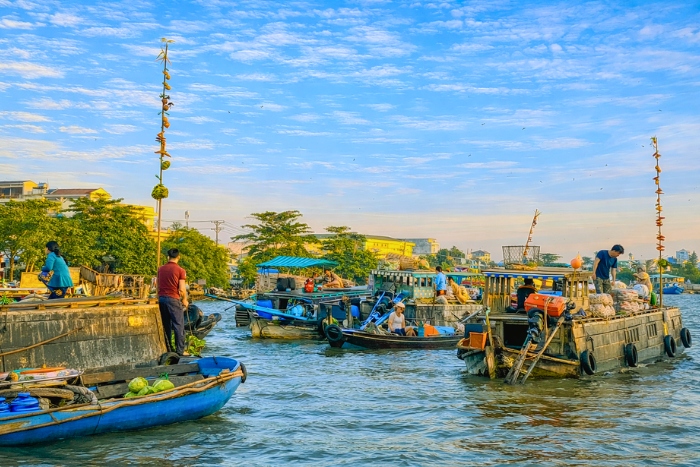
Very early in the morning, I set off by boat to discover the famous Cai Rang floating market, one of the liveliest in the Mekong Delta. From the boat, I observed traders selling fruits and local specialties directly on the water, a typical scene of river trade. The visit costs about $10, which also helps to better understand how much a trip to Vietnam costs while living an authentic experience. After this immersion, I continued with the visit of Binh Thuy ancient house, an elegant 19th-century residence combining Vietnamese architecture and French influences. Before returning to Ho Chi Minh City, I stopped at a tropical orchard to taste some local fruits and conclude this journey in the heart of the Mekong.
Total budget for these 2 days: about $110 - $130 per person, including boat excursions, local visits, meals, transportation from Ho Chi Minh City and one night in Can Tho.
Thus ends these 2 weeks in Vietnam, an itinerary rich in discoveries that allowed me to explore spectacular landscapes, historic cities and a fascinating culture, while staying within a reasonable budget.
Travel style | Estimated budget per day | Details |
Budget travel | about $30 - $45 | Simple accommodation, street food, local transport, authentic experience |
Comfort travel | about $55 - $110 | 3 - 4 star hotels, local restaurants, convenient travel, good balance |
Luxury travel | about more than $130 | High-end resorts, gastronomy, private services and premium experience |
Total budget for 2 weeks in Vietnam: about $1,100 - $1,400 per person (excluding flights). This budget allows a comfortable and balanced trip to discover the main destinations. For a more high-end experience, with luxury hotels and premium cruises, you should plan between $2,000 to $2,750 per person.
Organizing a stay in this fascinating country consists of finding the right balance between your desires and your expenses. Many travelers wonder what Vietnam travel budget to plan, but the answer depends on the travel style, the activities and the desired level of comfort. By planning your itinerary well, it is possible to control your Vietnam travel budget while fully enjoying the experience. This also allows you to understand whether Vietnam travel expensive or cheap according to your choices. To facilitate the organization, you can rely on the expertise of a local travel agency in Vietnam such as Autour Asia. Two weeks are enough to experience a rich and varied adventure.
Learn more:
- 2-week family trip to Vietnam
- 2-week itinerary in Vietnam on a budget
- 15-day family summer holiday itinerary in Vietnam
- Best places for summer holidays in Vietnam
- Vietnam Travel Guide
- Vietnam Trip 2 weeks itinerary
- Vietnam Tours







 FR
FR ITA
ITA