
Top 15 Handicraft Villages In Saigon And The Mekong Delta Vietnam
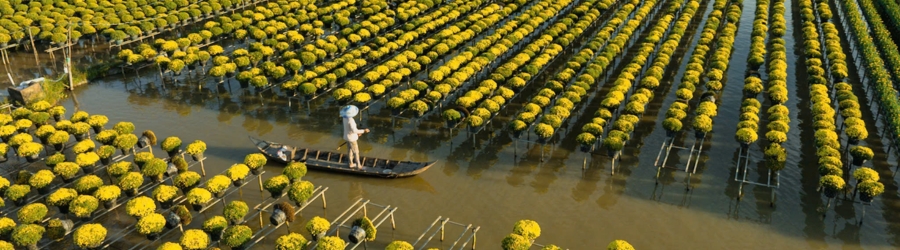
Southern Vietnam is full of artisanal treasures often overlooked by travelers in a hurry. The handicraft villages in Saigon and the Mekong Delta offer an authentic dive into know-how passed down from generation to generation. Pottery, lacquer, brocade, conical hats, woven mats, incense, ornamental flowers: each village carries the unique imprint of its region. Here is our selection of the best villages to discover during your South Vietnam trip.
Handicraft villages in Saigon and the Mekong Delta
I. Saigon and surroundings
1. Tuong Binh Hiep lacquer village
- Address: 17 Ho Van Cong Street, Chanh Hiep, Ho Chi Minh City
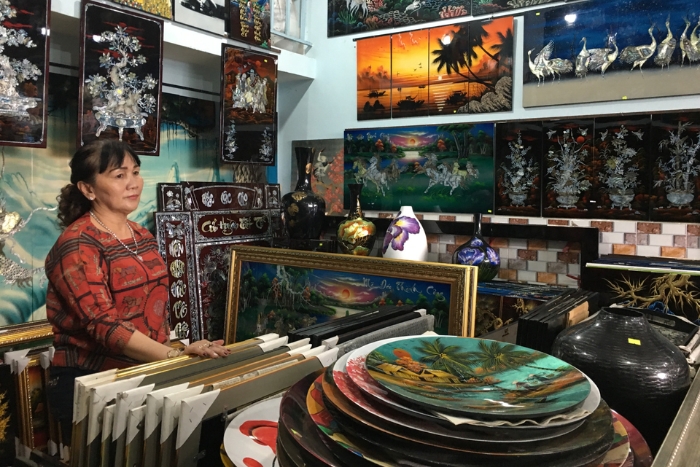
Founded in the 18th century, Tuong Binh Hiep lacquer village is one of the jewels of South Vietnamese craftsmanship, and ranks among the best handicraft villages in Saigon and the Mekong Delta to discover. Each piece - lacquered painting, decorative object, art panel - requires more than 25 meticulous production steps. This exceptional know-how has been officially listed as part of the national intangible cultural heritage. Close to Ho Chi Minh City, this craft village is an essential stop for any traveler wishing to discover the tradition of lacquer painting in the South of the country.
2. Lai Thieu pottery village
- Address: Thuan An, Binh Duong - about 25 km from Saigon
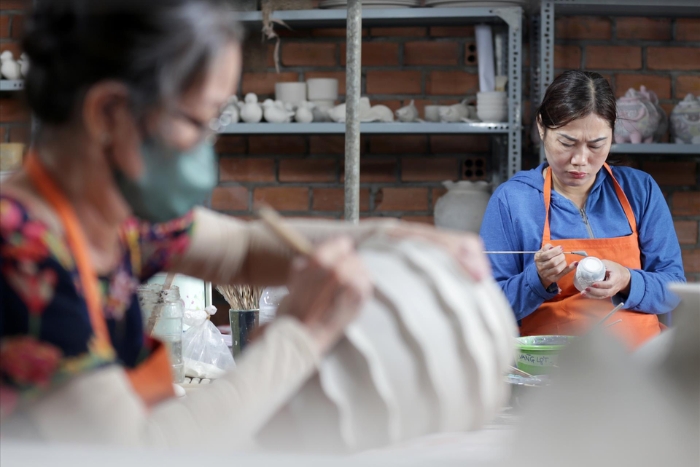
Born around 1860 on the banks of the Saigon River, Lai Thieu pottery village is one of the craft villages in Ho Chi Minh City that carries on ancestral techniques of Chinese origin. Artisans shape bowls, plates and pots from a soft local clay, fired in traditional wood-burning kilns that give the pieces a unique glaze. Recognizable by their folk motifs - lotus, carp, dragons and phoenixes - Lai Thieu ceramics, alongside those of Bien Hoa, once formed the great triangle of pottery in South Vietnam.
3. Bien Hoa pottery village
- Address: Bien Hoa, Dong Nai - about 30 km east of Saigon
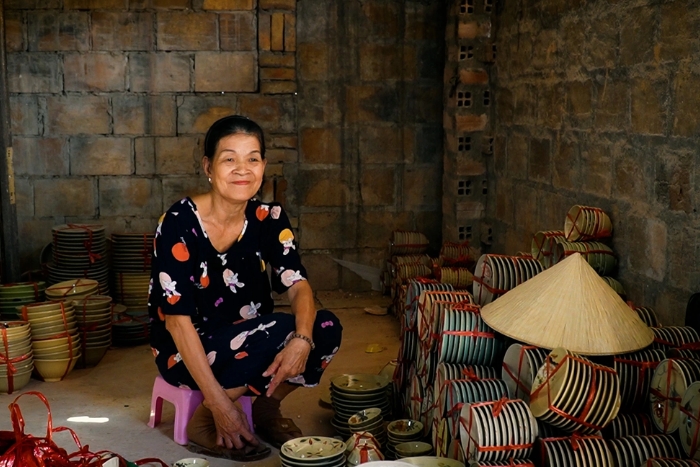
Established more than 300 years ago on the banks of the Dong Nai River, Bien Hoa pottery village is one of the historic cradles of ceramics in Vietnam and ranks among the most emblematic handicraft villages in Saigon and the Mekong Delta. Its distinctiveness lies in a unique blend of Chinese and French influences, expressed through incised engravings, enamel paintings, and decorative pieces with a porous, cream-colored texture. Vases, statues and ornamental urns from Bien Hoa are now exported around the world. A major craft village in the landscape of South Vietnam's ceramic heritage.
4. Le Minh Xuan incense village
- Address: Binh Loi, Binh Chanh, Ho Chi Minh City
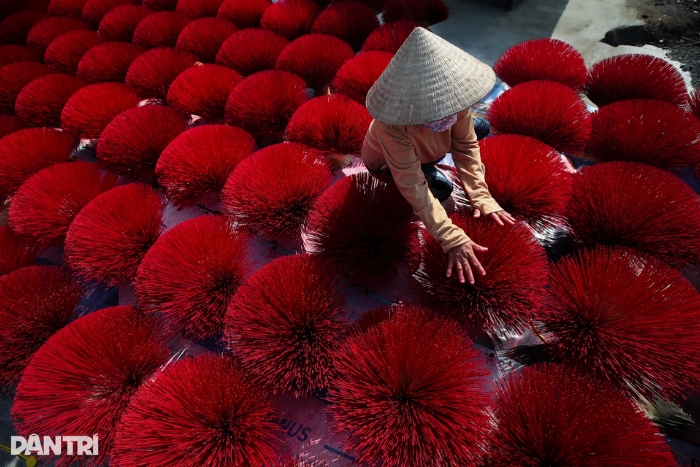
A century old and still active, Le Minh Xuan incense village is one of the largest centers of handmade incense production in South Vietnam. Every step - dyeing the bamboo sticks, rolling, sun-drying, packaging - is still done by hand. Bundles of red and gold incense stretch as far as the eye can see along the village paths, creating highly photogenic scenes. This handicraft village in Saigon is ideal for fans of Vietnamese spiritual traditions and documentary photography.
5. Cu Chi basketry village
- Address: Thai My, Cu Chi, about 60 km northwest of Saigon
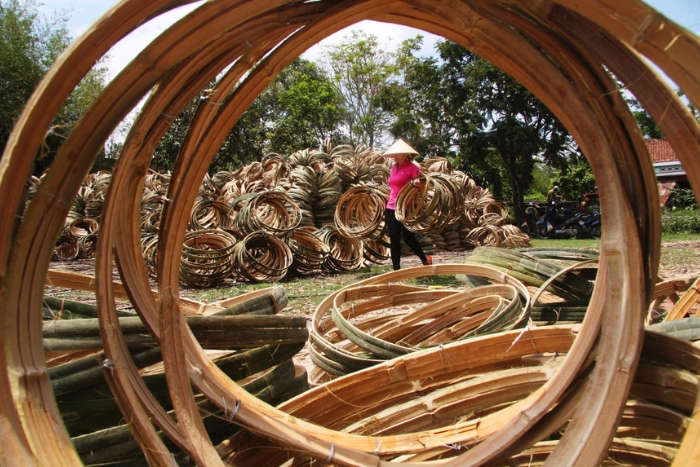
Less known than the famous tunnels nearby, Cu Chi basketry village is well worth the detour. As one of the notable craft villages in Ho Chi Minh City, several families here weave baskets, hats and crates from bamboo and rattan fibers in a lush green setting. Workshops open to visitors allow you to follow the entire process: gathering the fibers, preparation, weaving and finishing. An authentic craft experience to combine with a visit to the Cu Chi tunnels for a full day on the outskirts of Saigon.
6. Trang Bang rice paper village
- Address: Trang Bang, Tay Ninh - about 50 km from Saigon
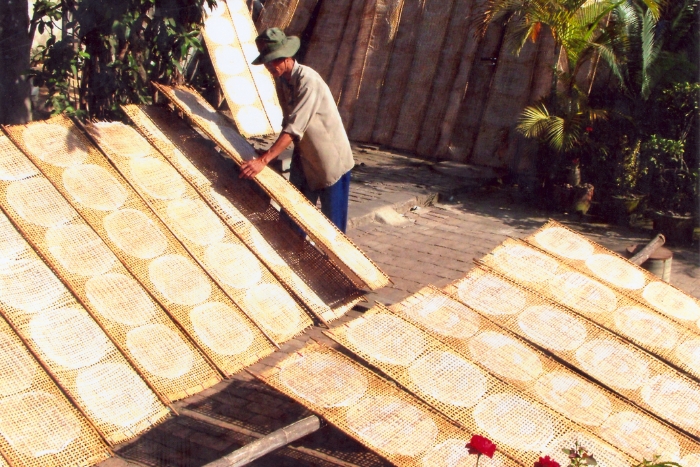
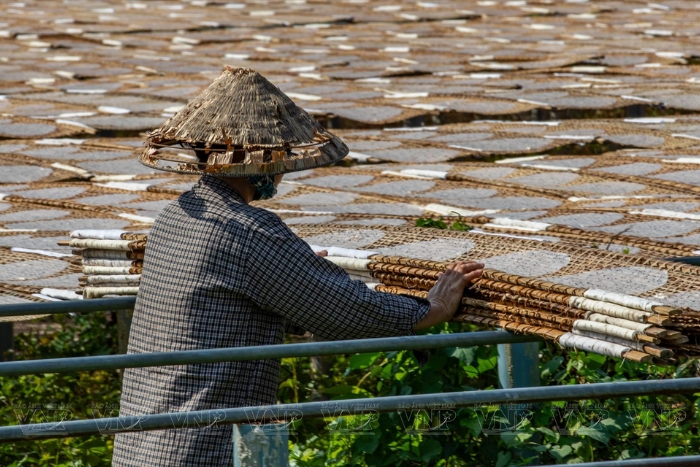
Trang Bang rice paper is a culinary and artisanal institution of South Vietnam, to discover on a tour dedicated to the handicraft villages in Saigon and the Mekong Delta. The artisans steam-cook the rice batter, spread it on bamboo mats, then leave the sheets to rest outdoors overnight so they absorb the morning dew - a technique that gives them their characteristic texture and aroma. This semi-industrial production, still largely done by hand, is one of the emblematic culinary skills of the Tay Ninh region.
II. Ben Tre
7. Coconut products village
- Address: An Hiep, Chau Thanh, Ben Tre Province
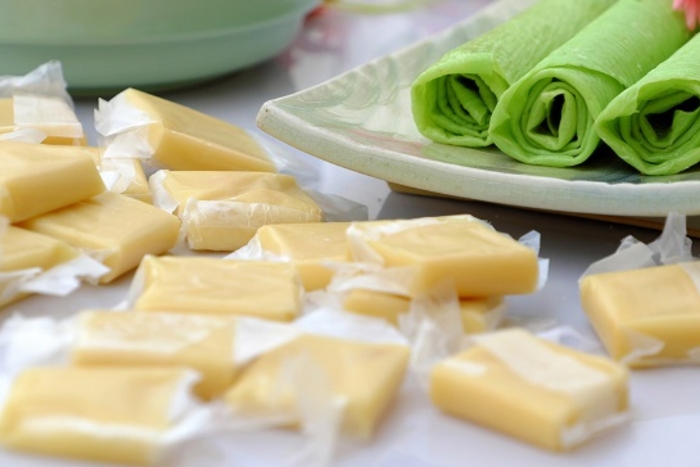
Ben Tre, nicknamed the "coconut capital," owes part of its reputation to its craft workshops that transform every part of the coconut tree into finished products, and it ranks among the famous handicraft villages of the Mekong Delta. Kitchen utensils, statuettes, candles, coconut milk candies: the creativity of local artisans is limitless. In the villages of Con Phung and Hung Phong, visitors can take part directly in making the famous coconut candies, a must-have sweet souvenir from the Delta.
8. My Long rice paper village and Son Doc puffed cakes village
- Address: My Long / Son Doc, Giong Trom District, Ben Tre Province
Two neighboring villages, two emblematic specialties: Banh Trang My Long - rice paper renowned throughout the Delta for its fineness - and Banh Phong Son Doc, a traditional puffed cake made from glutinous rice flour. As craft villages in the Mekong Delta Vietnam, both produce handmade goods passed down from mother to daughter, still shaping the daily life of families in Giong Trom today. Best visited in the morning to watch the artisans at work in their open workshops.
9. Phu Le rice wine distillery village
- Address: Phu Le, Ba Tri District, Ben Tre Province
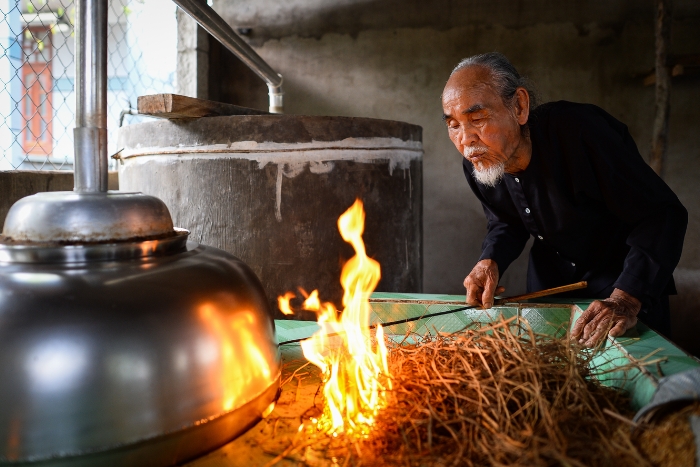
Phu Le craft village is the leading producer of handmade rice wine in Ben Tre Province. Dozens of families here carry on the tradition of still distillation according to non-industrial, ancestral methods. Phu Le rice wine, clear and fragrant, is prized throughout South Vietnam for its smooth notes and natural production. An original address for fans of gastronomy and culinary craftsmanship in the Mekong Delta.
III. Dong Thap
10. Tan Quy Dong flower village
- Address: Tan Quy Dong, Sa Dec, Dong Thap Province - about 150 km from Saigon
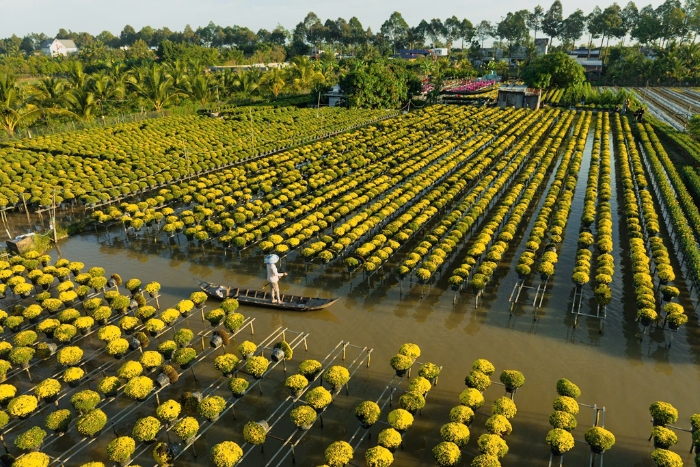
Sa Dec flower village is one of the most colorful and most photographed sites in the Mekong Delta, and ranks among the best handicraft villages of the Mekong Delta to include on your itinerary. More than 1,500 households grow over 1,000 varieties of flowers - roses, daisies, marigolds, gerberas - across dozens of hectares. The visit is especially magical in the pre-Tet period (lunar December), when the village supplies flowers to all the provinces of the South. Horticulture workshops, walks between flower beds, and direct sales make it an essential stop on any Mekong Delta itinerary.
11. Dinh Yen mat and carpet village
- Address: Dinh Yen, Lap Vo, Dong Thap - about 33 km from Sa Dec
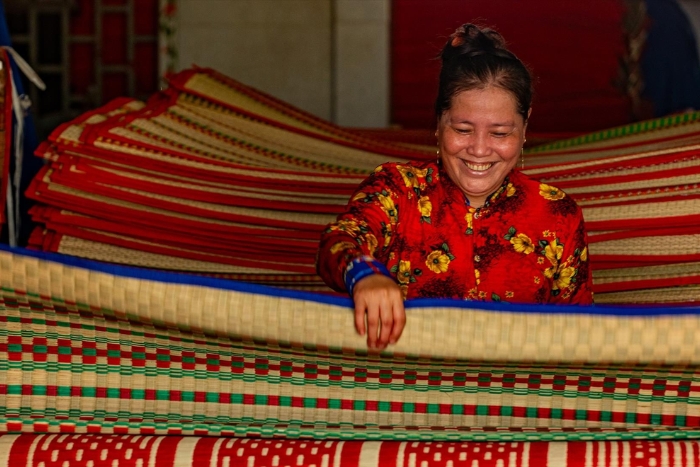
Nestled on the banks of the Hau River, the century-old village of Dinh Yen is famous for its woven, colorful mats and carpets made from Co Bang (Lepironia articulata). Its so-called "ghost" market, which comes alive in the darkness of the early morning hours, is a unique sight in Vietnam. The weaving season runs from January to April, an ideal time to watch artisans at work amid a landscape of rice fields and orchards. An off-the-beaten-path discovery for travelers seeking authenticity.
IV. An Giang
12. Lanh My A black silk village
- Address: Tan Chau, An Giang Province - about 230 km from Saigon
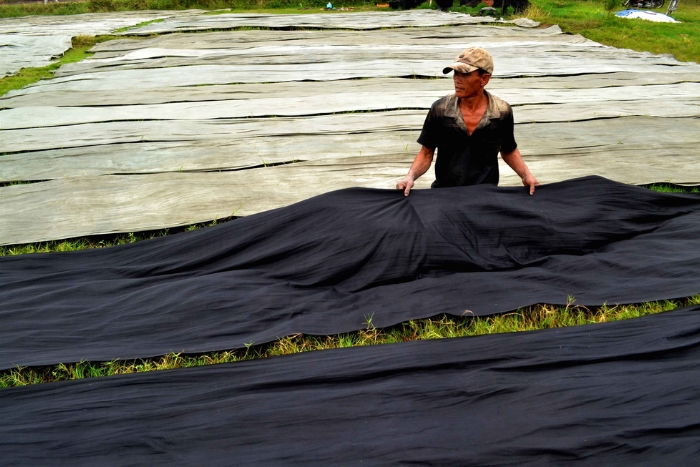
One of the last villages in Vietnam to produce the prestigious Lanh My A black silk, naturally dyed with the fruit of the Mặc nua. This village is one of the best handicraft villages in Saigon and the Mekong Delta embodying the South's textile excellence. This fabric, once reserved for nobility and important ceremonies, is now experiencing a revival of interest thanks to contemporary Vietnamese fashion. Visitors can observe mulberry cultivation, silkworm rearing, hand weaving, and the sun-drying of the dyed pieces. An exceptional textile heritage, symbol of the Delta's craft know-how.
13. Chau Phong Cham brocade village
- Address: Chau Phong, Tan Chau Town, An Giang Province
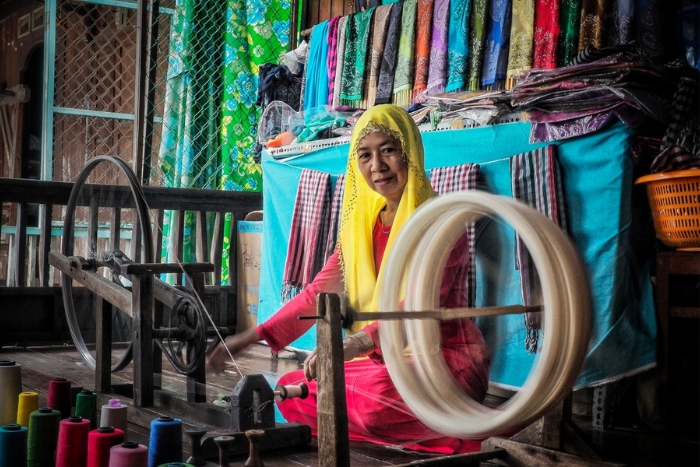
In Chau Phong commune, artisans from the Cham community carry on a centuries-old weaving art, making this one of the best handicraft villages of the Mekong Delta dedicated to textile heritage. Cham brocade fabrics are woven in silk and dyed with natural colorants extracted from latex, bark and fruit, giving them durable shades and a unique visual depth. From early morning, the clatter of looms echoes through the stilt houses. A living craft village, steeped in the cultural diversity of the Cham ethnic group in the Mekong Delta.
V. Can Tho
14. Thoi Tan A conical hat village
- Address: Thoi Tan A, Thoi Lai, Can Tho
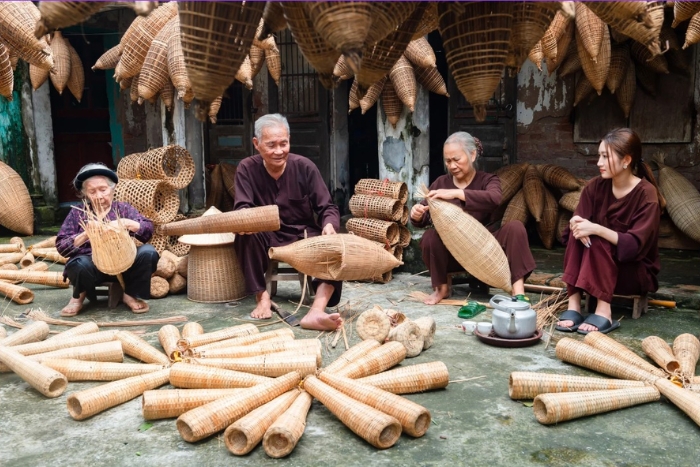
In Can Tho, the hamlet of Thoi Tan A is one of the leading producers of Non La conical hats in the Delta. Here, palm leaves - dried, ironed, and layered onto a bamboo frame - replace the latania leaves used in the North. The entirely manual craftsmanship requires skill acquired over many years. Thoi Tan A's hats are valued for their durability and neat finish, and are exported throughout the region.
15. Thuan Hung rice paper village
- Address: Thuan Hung, Thot Not, Can Tho
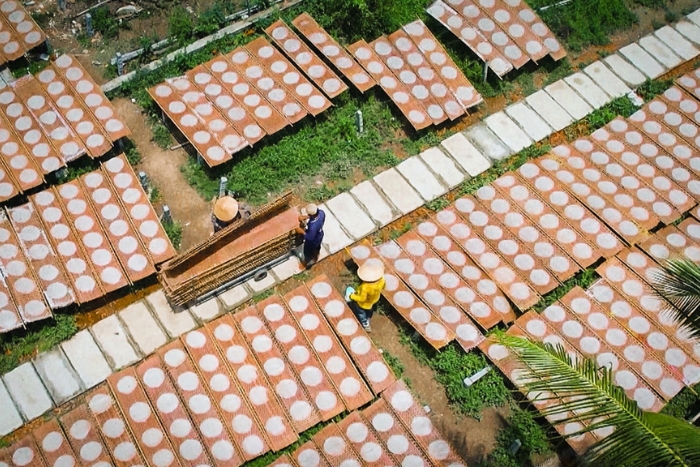
For more than 200 years, Thuan Hung craft village has kept its kilns running day and night. More than 500 wood-fired ovens continuously produce the famous Banh Trang Thuan Hung, rice paper renowned throughout the South for its fineness and aroma. A production that never quite meets demand. Visiting Thuan Hung means witnessing traditional culinary craftsmanship on a large scale, in an atmosphere of ovens and steam typical of the Delta countryside.
From the lacquer workshops of Binh Duong to the rice fields of Dinh Yen, passing through the coconut plantations of Ben Tre and the looms of Chau Phong, the handicraft villages in Saigon and the Mekong Delta form a living heritage of exceptional richness. Each village is a gateway to a local culture, an ancestral technique, a way of life in its own right.
To organize your custom craft trip 2 weeks in Vietnam, Autour Asia, travel agency in Saigon, accompanies you at every step of your journey.
>>> Vietnam Mekong Delta tour
>>> 24h Mekong Delta tour
>>> Vietnam Travel Guide
>>> Vietnam Tour 15 days
>>> Vietnam Tours
Yes, several handicraft villages in Saigon and the Mekong Delta offer hands-on workshops. In Ben Tre, visitors can try making coconut candies. In Chau Phong, it is possible to watch Cham brocade weaving on traditional looms set up in stilt houses. These immersive experiences provide a better understanding of ancestral gestures and let you take home a souvenir made with your own hands.
Among the most renowned handicraft villages in Saigon and the Mekong Delta are Tuong Binh Hiep lacquer village and Bien Hoa pottery village, both easily accessible from Ho Chi Minh City. The first carries on a centuries-old know-how in lacquer painting, while the second, established on the banks of the Dong Nai River, is famous for its ceramics with Sino-French influences. Both sites offer an authentic immersion in the traditional craftsmanship of South Vietnam, ideal as a complement to a Delta tour.
If you are wondering how much money you need for 2 weeks in Vietnam, the answer depends on your travel style. On average, a budget traveler should plan to spend about $49 per day, which covers accommodation, meals, transportation, and activities. That comes to around $700 for the full two weeks. If you include international flights, the total budget usually ranges between $1,700 and $2,500 per person. This means that with careful planning, a trip can be both affordable and enjoyable, whether you choose budget-friendly options or add a touch of comfort.
Related travel guide
Other similar articles


CUSTOMIZABLE BY LOCAL EXPERTS
Personalized trip at the original price!

REFUND GUARANTEE
We believe in our work and promise to give you money back.

GOOD PRICE / QUALITY
95% satisfied more than expected!

24/7 LOCAL SUPPORT
We are always available online to provide assistance at any time.

Most read articles


Autour Asia is highly recommended on
Embracing the mission of "Satisfied more than expected" and providing authentic experiences, we have received numerous recommendations on reputable travel forums: