
Mosquito Risk In Laos - How To Avoid Dengue Fever ?
Every year, Laos draws travelers with its beautiful landscapes, Buddhist temples, and the slow, easy pace of life along the Mekong River. But the warm, tropical weather that makes the country so green is also perfect for mosquitoes. Dengue fever in Laos is something worth knowing about before you go, and the mosquito risk in Laos changes a lot depending on the time of year. In this article, you'll learn what dengue is, when the risk is highest, how to spot the symptoms, and how to protect yourself so you can enjoy your trip.
Dengue fever in Laos
1. Dengue fever in Laos - the realistic risk
Dengue is a viral disease transmitted by the bite of an infected mosquito, mainly the tiger mosquito (Aedes), which, contrary to popular belief, bites mostly during the day. This mosquito transmits the virus to millions of people worldwide every year, sometimes infecting the same person more than once. Laos is among the countries where the disease is firmly established: the World Health Organization considers dengue endemic in Laos, just as it is in Cambodia, the Philippines, and Vietnam.
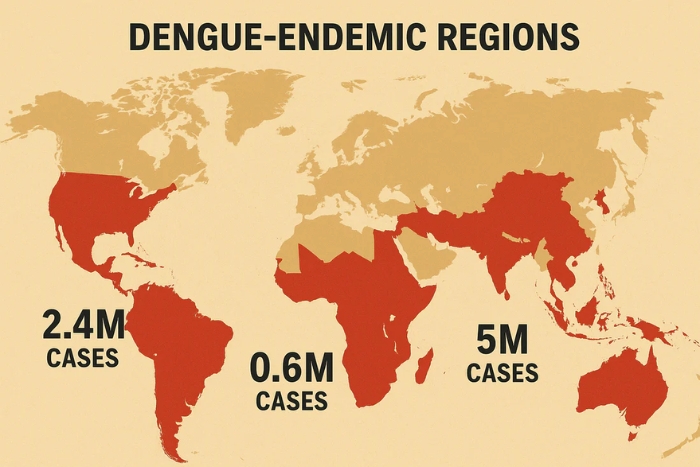
The numbers confirm this reality. In 2024, the country recorded more than 20,000 dengue cases and 11 deaths, with the capital Vientiane alone accounting for nearly 5,800 cases, while Luang Prabang province reported the highest number of deaths. The good news is that the situation is improving: between January and September 2025, only 9,408 cases and a single death were recorded, with Vientiane still representing nearly half of all infections, followed by Oudomxay and Vientiane provinces. Understanding the scale of dengue fever in Laos allows you to approach your trip with a clear head, without giving in to unnecessary worry.
2. When is the dengue season in Laos?
Laos has a tropical climate with two distinct seasons, and these directly shape how active mosquitoes are throughout the year. Knowing the mosquito risk in Laos month by month makes it easier to plan precautions around your exact travel dates.
May to January - rainy season: This is when mosquitoes are most active overall. Dengue outbreaks in Vientiane generally peak during these months, as the heat and humidity create ideal breeding conditions, following a quieter period of transmission during the dry season.
July to September - highest point: Within the rainy season, this stretch sees the sharpest mosquito activity. The hardest-hit regions, including the capital, have recorded their biggest spikes in cases during these months, when the rainy season in Laos reaches its peak intensity.
November to April - dry season: Mosquito activity drops noticeably as humidity falls, though it doesn't disappear completely, especially in urban areas.
Year-round - some risk remains: Dengue stays hyperendemic in Laos, with transmission driven by Aedes mosquitoes and influenced by climate patterns such as El Niño, causing risk levels to vary from one region to another. So mosquito activity is never fully zero, even outside the rainy season.
3. Where dengue actually transmits in Laos?
Official data shows that dengue transmission in Laos isn't uniform across the country: it's heavily concentrated in certain provinces, particularly around the capital and urban areas in the north. Below is a summary of the most affected cities and provinces, based on the latest figures from the Ministry of Health.
| Region | Dengue Risk | Peak Months | Notes |
|---|---|---|---|
| Vientiane Capital & Vientiane Province | High | May - January | Outbreaks generally peak during the rainy season, following lower transmission in the dry season; the country's main hotspot, with cases reported almost year-round |
| North (Luang Prabang, Luang Namtha, Oudomxay) | Moderate to High | June - October | Second and fourth most affected areas in the country in 2025; marked increase during the monsoon |
| Savannakhet & Pakse (Champasak) | High | May - October (monsoon) | Laos's highest vulnerabilities were observed in the provincial capitals of Savannakhet and Pakse, partly linked to urban development and local deforestation |
| Bolaven Plateau (south) | Low | Sporadic | A highland region in southern Laos, reaching 1,000 to 1,350 meters in elevation; the cooler climate limits mosquito activity |
| Far northern mountains (Phongsaly, Houaphanh, Xiengkhouang) | Low to Very Low | Rare | Cool high-altitude climate reduces mosquito proliferation; isolated dengue clusters have nonetheless been reported in remote forest villages, even during the cool season |
4. Recognizing dengue fever symptoms
A common mistake is to confuse dengue fever in Laos with a simple flu and keep traveling right through the critical phase. The WHO distinguishes three phases: febrile (days 1-3), critical (days 4-6), and recovery (from day 7 onward).
Days 1-3: Febrile phase
- Sudden fever (39-40°C)
- Severe headache, behind the eyes
- Muscle and joint pain ("breakbone fever")
- Nausea, sometimes a red skin rash
Days 4-6: Critical phase (the most dangerous)
Begins as the fever drops and lasts 24 to 48 hours. Warning signs to watch for:
- Severe abdominal pain
- Persistent vomiting
- Bleeding (gums, nose, stool)
- Extreme fatigue, unusual restlessness
Days 7-10: Recovery
- Gradual overall improvement
- A possible second, itchy rash
- Fatigue that can sometimes linger for several weeks
See a doctor immediately if:
- A warning sign appears during the critical phase
- You're unable to keep fluids down
- You feel dizzy when standing
- Fever above 39°C lasts more than 48 hours, especially in Vientiane or the north during the rainy season in Laos

5. Mosquitoes in Laos - how to protect yourself ?
When it comes to dengue fever in Laos, prevention remains the best defense, since no specific treatment currently exists. The official recommendations are clear and easy to follow.
Before and during your stay: limiting bites
Sleep under a mosquito net and choose air-conditioned rooms or ones equipped with mosquito protection. Belgian health authorities recommend sleeping under a mosquito net, using DEET-based repellents, and considering a prophylactic product for short stays.
Choose a good DEET-based mosquito repellent and apply it regularly to exposed skin, both during the day (the tiger mosquito bites mostly in daylight) and at dusk.
Wear long sleeves and long, covering trousers. You may also want to treat your clothing with permethrin for added protection.

If you suspect a fever: what to pack in your first-aid kit
If a fever develops during your trip, a few key reflexes can help avoid worsening a possible case of dengue. One critical point: you should never self-medicate a suspected fever with ibuprofen or any other anti-inflammatory (NSAID). Anti-inflammatories must be strictly avoided, because as the illness moves into its critical phase - marked by a drop in platelet count - these medications can increase the risk of nosebleeds, internal or digestive bleeding, put strain on the liver, worsen a potential state of shock, and complicate medical treatment.
Instead, it's best to pack the following:
Paracetamol on its own (not combined with other active ingredients) dosed at 10 to 15 mg per kg of body weight, taken every 4 to 6 hours if the fever persists.
An oral rehydration solution (such as Oresol), mixed strictly according to the package instructions and sipped in small amounts throughout the day to stay well hydrated.
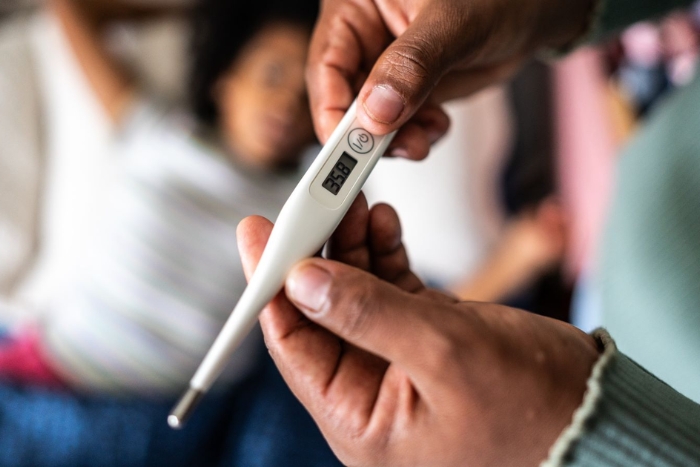
A thermometer, so you can keep track of how your temperature is changing.
Regarding vaccination, the dengue vaccine is not currently recommended for most travelers and is only indicated for children who have already had the disease in the past, which makes these physical protection measures and a properly stocked first-aid kit all the more important throughout your stay in Laos.
6. Lao travel tips during mosquito season
Beyond individual protective habits, a few organizational precautions and Laos travel advice can help you face the mosquito risk in Laos with confidence, especially if your trip falls during the rainy season in Laos.
Before you leave
See a doctor or an international vaccination center a few weeks before departure for personalized advice.
If you're traveling with young children, plan a bit more carefully: kids tend to be more vulnerable to severe dengue and can struggle to describe their symptoms clearly. Where possible, aim for the dry season, and if not, stay extra vigilant and check in with a pediatrician beforehand.
Get travel insurance that covers medical costs and repatriation, in case a complication requires hospitalization.
Pack your first-aid kit before you go rather than counting on finding everything locally, mosquito repellent, paracetamol (on its own, not combined with anything else), oral rehydration solution, and a thermometer.
Remember that risk builds with time: the longer you stay, the more exposure you get, especially if you're traveling during a local outbreak or the rainy season. Worth factoring in for longer trips.
During your stay
Choose accommodation with mosquito nets or air conditioning, particularly outside the cities or in the Mekong Delta.
Apply repellent starting in the morning, the tiger mosquito is a daytime biter, and reapply as the product instructions recommend.
Don't let water collect near where you're staying (vases, saucers, gutters); these are exactly where mosquitoes breed.
Save outdoor plans for the lower-risk hours when you can, and keep protecting yourself the rest of the day regardless.
After you return
- Keep an eye out for fever in the weeks after you're back, it's worth seeing a doctor if it shows up either during the trip or after, even once you've left Laos.
In short, a trip to Laos is still every bit the unforgettable experience travelers hope for, you just need to come prepared for mosquitoes. Once you understand the mosquito risk in Laos, know how to spot the early symptoms, and stick to a few simple precautions, you cut your chances of dengue fever in Laos way down. At Autour Asia, a travel agency in Asia, we help travelers get ready for Southeast Asia every step of the way, from health advice to building out your full itinerary across Laos and the Mekong region. Get in touch whenever you're ready, and we'll help you put together a smooth, tailor-made trip.
>>> 2 weeks in Laos on a budget
>>> Laos motorbike tour
>>> Laos Travel Guide
>>> Laos travel itinerary 2 weeks
>>> Laos Tours
Two weeks in Laos is generally enough to experience the country’s highlights at a relaxed pace, especially if you follow a well-planned Laos travel itinerary 2 weeks route. In 14 days, you can explore the UNESCO-listed temples of Luang Prabang, enjoy outdoor adventures in Vang Vieng, discover the laid-back capital Vientiane, and even head south to the 4,000 Islands. Laos is not a country to rush, so two weeks allows enough time for cultural immersion, nature, and slow travel without feeling exhausted.
Yes, mosquitoes are a genuine concern in Laos, mainly because of the Aedes tiger mosquito, which spreads dengue and bites mostly during the day rather than at night. The mosquito risk in Laos rises sharply during the rainy season, roughly May through January, when warm, humid conditions help mosquitoes breed, with Vientiane and the northern provinces recording the highest case numbers each year. Outside this period the threat eases but never disappears completely, especially in towns and cities. Fortunately, simple precautions, repellent, long sleeves, mosquito nets, air-conditioned rooms, go a long way, so mosquitoes shouldn't stop you from enjoying a well-prepared trip to Laos.
Related travel guide
Other similar articles


CUSTOMIZABLE BY LOCAL EXPERTS
Personalized trip at the original price!

REFUND GUARANTEE
We believe in our work and promise to give you money back.

GOOD PRICE / QUALITY
95% satisfied more than expected!

24/7 LOCAL SUPPORT
We are always available online to provide assistance at any time.

Most read articles


Autour Asia is highly recommended on
Embracing the mission of "Satisfied more than expected" and providing authentic experiences, we have received numerous recommendations on reputable travel forums: