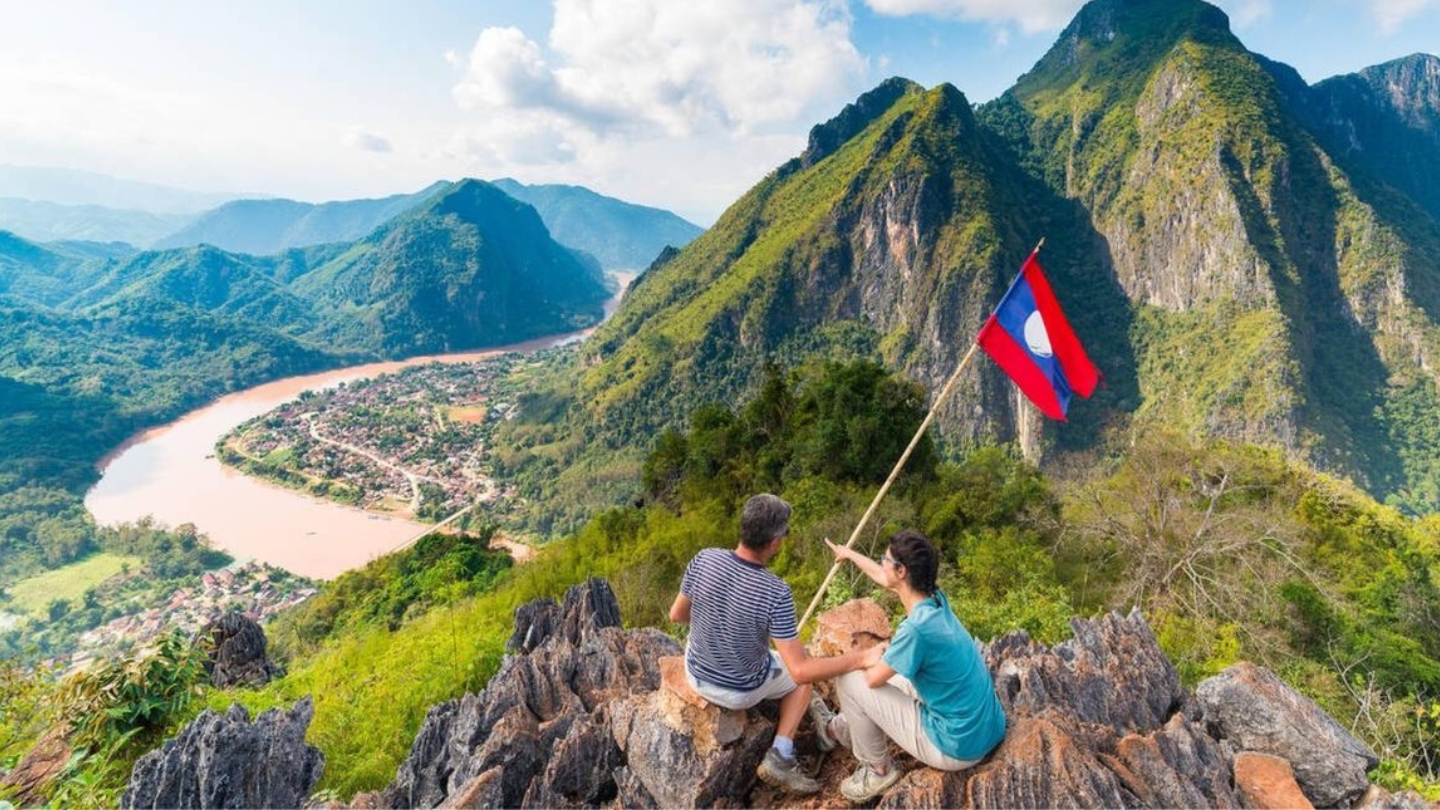
November is considered the ideal time to travel to Laos. The dry season has returned, and the rain no longer interferes with your excursions. Additionally, the temperatures are not as high as in the summer, providing a pleasant atmosphere perfect for exploring the beautiful land of a million elephants. In particular, the northern region of Laos enjoys cool weather and lush green landscapes. Discover in the guide below why visiting Laos in November is an excellent idea!
Marking the return of the dry season, Laos in November experiences very little rainfall, with an average of about 26 mm. Thus, most days are sunny, making it ideal for exploring this beautiful Southeast Asian country.
This is the perfect time to discover northern Laos (Bokeo, Luang Prabang, Luang Namtha, Xaignabouli, Phongsaly, Oudomxay,...), a region known for its majestic mountains, pristine forests, and stunning waterfalls. In central and southern Laos (Vientiane, Savannakhet, Attapeu, Champasak, Salavan, Sekong,...), the rural areas boast splendid green rice fields that flourish after the rains of the rainy season.
In terms of temperature, the climate is very pleasant in northern Laos, averaging around 23°C to 24°C in Luang Prabang (75°F). In some mountainous regions, temperatures can drop to 20°C (68°F) at night, so it’s advisable to bring warm clothing. The weather becomes milder as you head south, with temperatures around 26°C (79°F) in Pakse and the 4000 Islands (Si Phan Don), which remains ideal for outdoor activities.
Yes, November in Laos is generally a very good time to travel, particularly if you want to explore temples, historic towns, waterfalls and rural landscapes. It marks the beginning of the drier season in much of the country, following the main rainy months. Rainfall usually decreases, and daytime conditions are often suitable for sightseeing and outdoor activities.
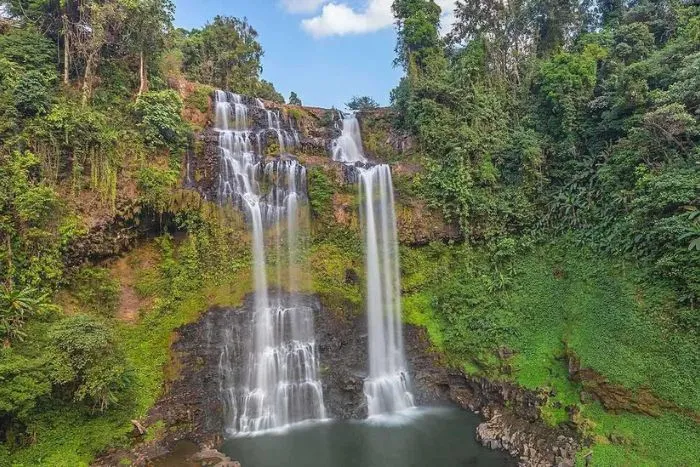
Another advantage is the landscape. The countryside can remain lush after the rainy season, and waterfalls may still have substantial flow, depending on recent rainfall. In northern Laos, mornings and evenings can feel cool, creating pleasant conditions for walking through historic towns or enjoying the scenery around the Mekong River.
November also brings an important cultural event: Boun That Luang in Vientiane. If your dates coincide with the celebrations, you may have the opportunity to observe religious ceremonies and experience one of Laos' most significant festivals. However, this month is not perfect everywhere or every day. Temperatures vary between the mountainous north and the warmer south, occasional showers are still possible, and popular destinations can become busier as the main travel season begins. The best approach is to choose destinations according to your interests, allow enough time for transfers and check the conditions relevant to your travel dates.
What makes November special?
| Advantage | What it means for your trip |
|---|---|
| Generally drier weather | Outdoor sightseeing and excursions are often easier to organise than during the main rainy season. |
| Green post-monsoon landscapes | Rice fields, forests and waterfalls can still be visually rewarding. |
| Cooler conditions in the north | Walking through Luang Prabang and exploring mountain areas can be more comfortable, although mornings may be chilly. |
| Boun That Luang in Vientiane | Travellers whose dates coincide with the festival can discover an important part of Lao religious and cultural life. |
| A good time for varied itineraries | You can consider combining historic towns, nature and the Mekong, provided you allow enough time for transport. |
For most first-time visitors, visit Laos in November is a strong choice. The main decision is not whether to travel, but how to organise the route to make the most of the season.
You can see more:
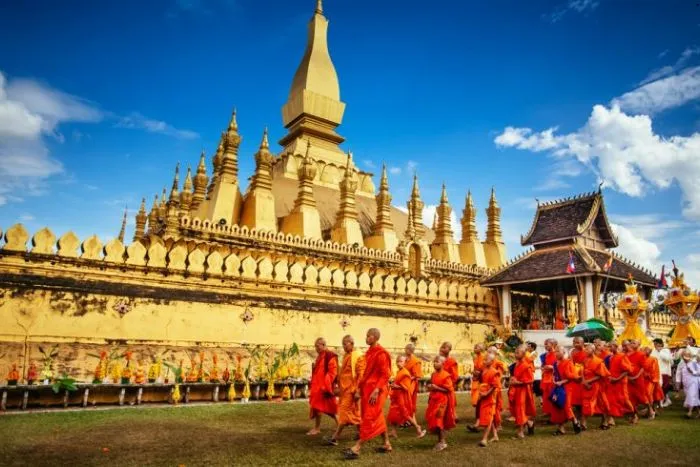
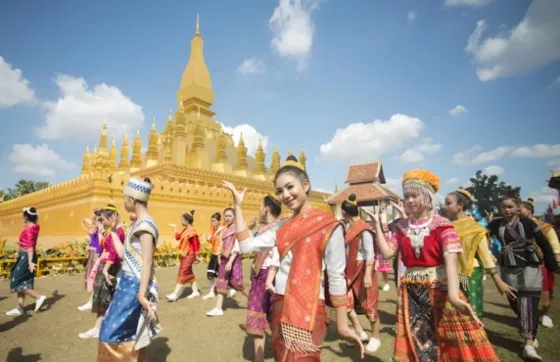
Boun That Luang is the most important religious festival in Laos in November, held annually in Vientiane. The festival centers around the Pha That Luang, the country’s national symbol and sacred stupa.
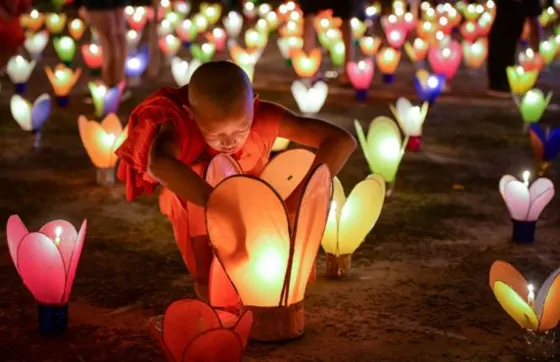
Celebrations begin with a lively candlelit procession called the "wax castle" parade, which starts at Wat Simeuang. Thousands of participants carry candles, flowers, and intricately decorated wax structures to honor the city pillar and pay homage to Lord Buddha. The following day, the procession continues to the That Luang stupa, where worshippers, dressed in traditional Lao attire, walk three times around the stupa in a clockwise direction, led by chanting monks.
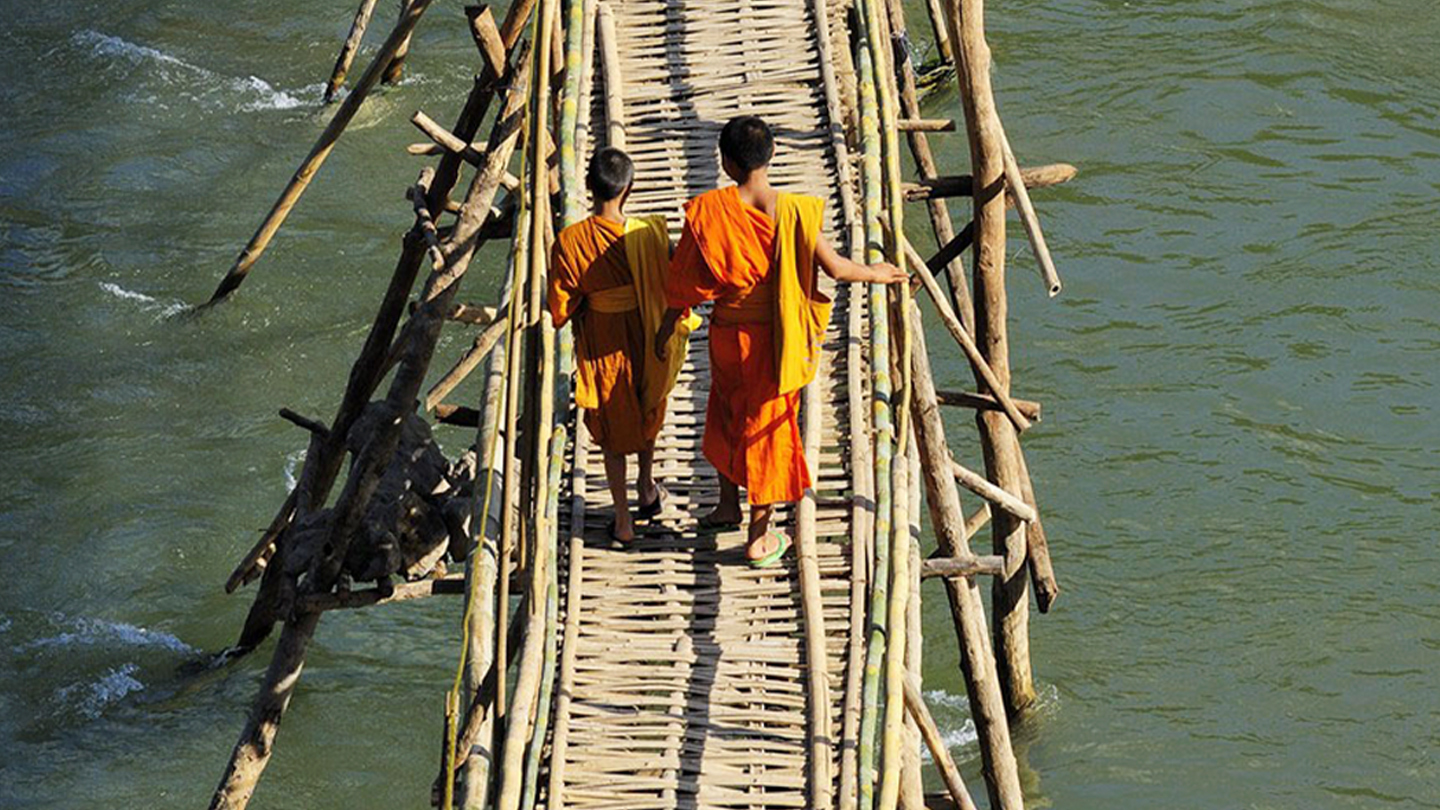
One of the main highlights is the almsgiving ceremony held at dawn, where hundreds of monks gather to receive offerings from the crowd. This peaceful ritual is followed by traditional games such as Tikhy, a Lao form of hockey. The capital is filled with cultural performances, trade fairs, and concerts throughout the festival, making it an exciting time to visit Laos in November.
Vientiane is a practical starting point for many trips to Laos. The capital has a relatively relaxed atmosphere, and its attractions combine religious architecture, national history, local markets and riverside life.
Explore top best things do do in Laos in november, start with Pha That Luang, the golden stupa that symbolises the country's Buddhist heritage and becomes the focus of Boun That Luang. Its significance makes it an essential stop for travellers interested in Lao culture. Another landmark is Patuxay, a prominent monument inspired in part by the Arc de Triomphe but incorporating Lao architectural elements. From there, you can continue to Wat Sisaket, known for its cloister and numerous Buddha images, and Ho Phra Keo, a former royal temple that now serves as a museum of religious art.
Wat Si Muang is also an important place of worship for local residents. When visiting active religious sites, allow time to observe respectfully rather than rushing through for photographs.
In the late afternoon or evening, head towards the Mekong riverside. The atmosphere is different from that of the city's monuments: local residents come out to walk, exercise and spend time outdoors, while the night market offers an opportunity to browse stalls and sample casual food. For most travellers, one or two days is enough for a first introduction to Vientiane. If you are visiting during Boun That Luang, consider allowing more time for the festival and its associated activities.
Best for: Culture, history, religious landmarks and travellers interested in Boun That Luang.
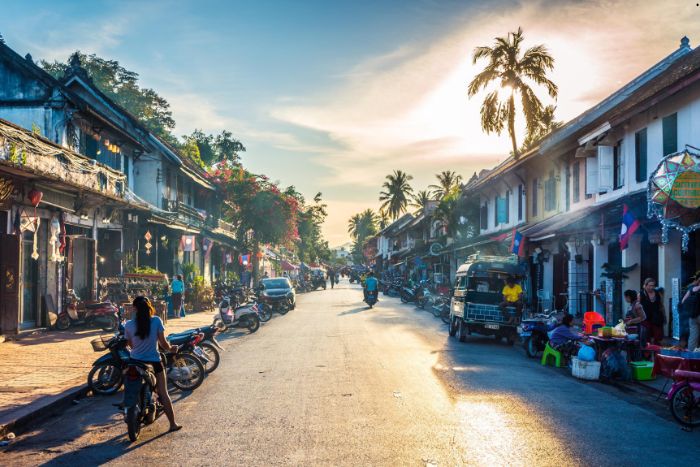
For travellers visiting Laos for the first time, Luang Prabang is often one of the most rewarding destinations. Its historic centre is recognised as a UNESCO World Heritage site for the way Lao traditional architecture and European colonial-era buildings come together within a distinctive townscape.
The best way to discover the town is to explore at a relaxed pace. Walk through the historic streets, visit its temples, stop at local cafés and spend time along the Mekong and Nam Khan rivers. November is often a good month for this kind of sightseeing, although early mornings can feel cool. One of the most important temples is Wat Xieng Thong, known for its traditional architecture and decorative details. You can also visit the former Royal Palace, now a museum, to learn more about the country's royal history, subject to current opening arrangements.
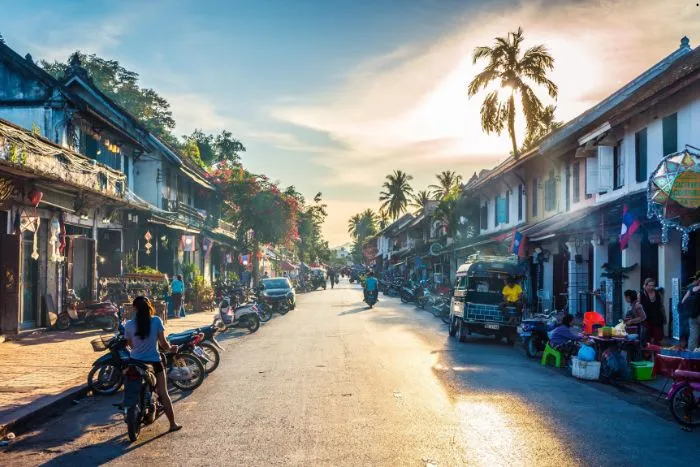
For panoramic views, Mount Phousi is a popular viewpoint overlooking the town and the surrounding rivers. The climb involves steps, so allow enough time and take care if the weather has been wet. Beyond the historic centre, Kuang Si Waterfall is one of the best-known excursions from Luang Prabang. Its cascades and pools are set within a forested landscape. Swimming may be permitted in designated areas when local conditions allow, but visitors should always follow current signs and safety instructions.
Another option is a river excursion to Pak Ou Caves, where numerous Buddha images have been placed over time. The journey itself offers views of the Mekong and the communities along its banks.
Where to visit in Laos in november? If you are interested in local markets and handicrafts, the night market is worth a visit. It is a convenient place to browse textiles, handmade items and souvenirs while experiencing the town's evening atmosphere. I recommend allowing at least two or three days in Luang Prabang if you want to explore the historic centre and take one or two excursions without rushing. Travellers who enjoy hiking, rural scenery or a slower pace may want to stay longer.
Best for: Cultural heritage, temples, local markets, river scenery and nature excursions.
A note on the morning alms-giving ceremony: This is a Buddhist religious practice, not a tourist performance. If you choose to observe it, remain quiet, dress modestly, keep a respectful distance and avoid using flash or interrupting the participants.
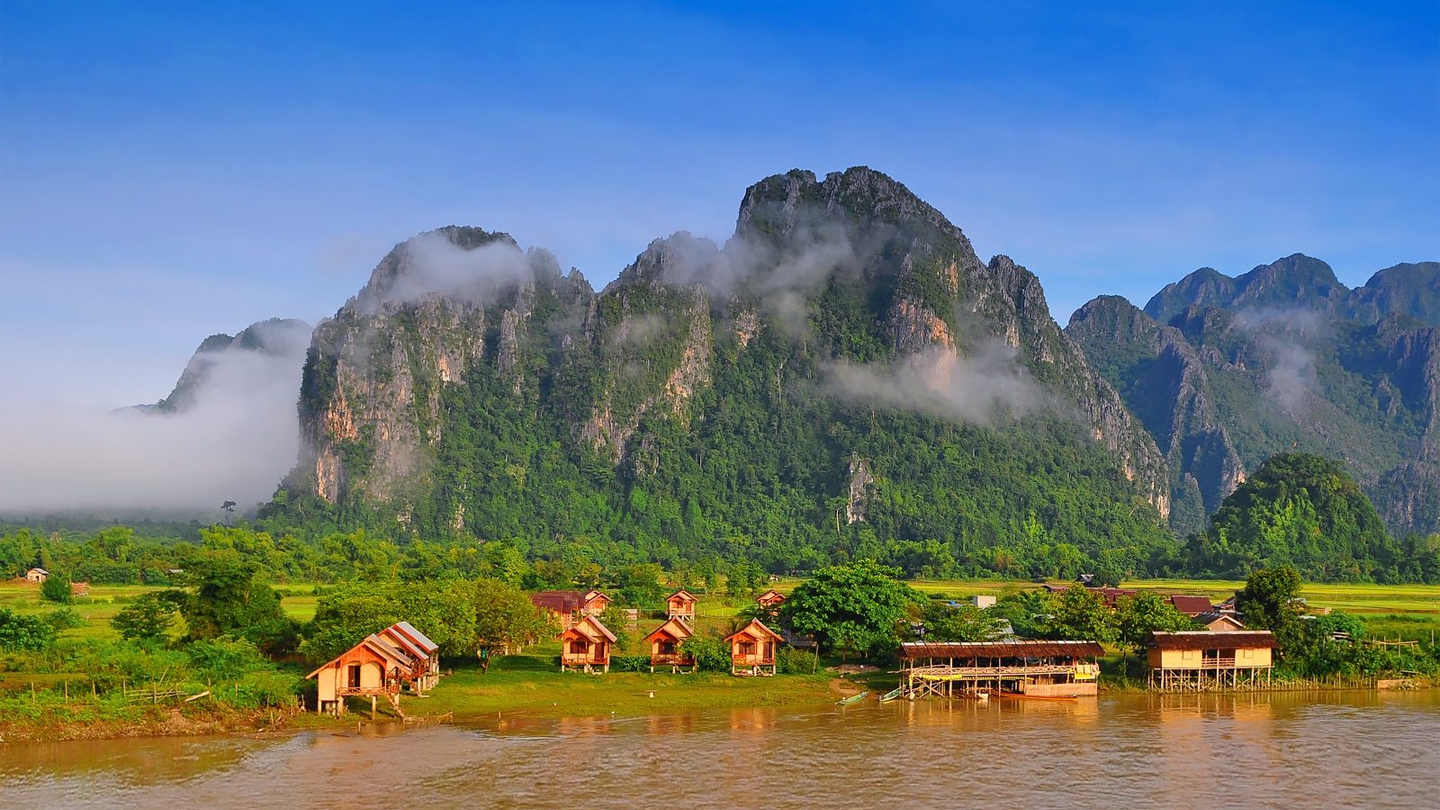
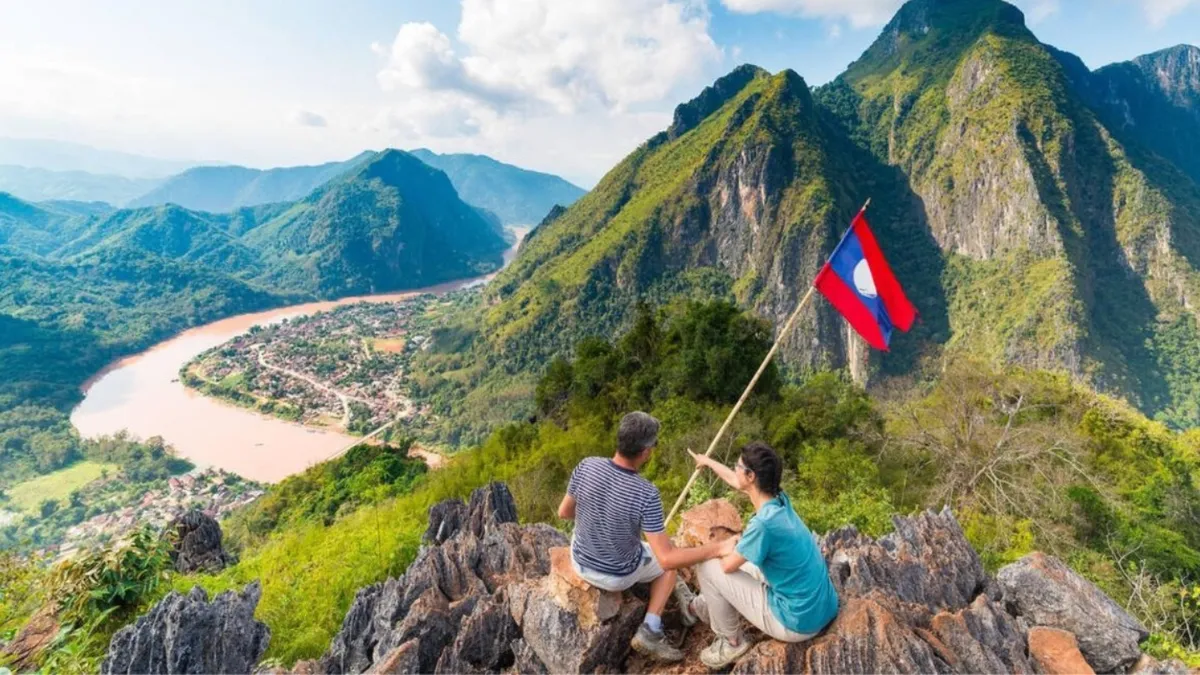
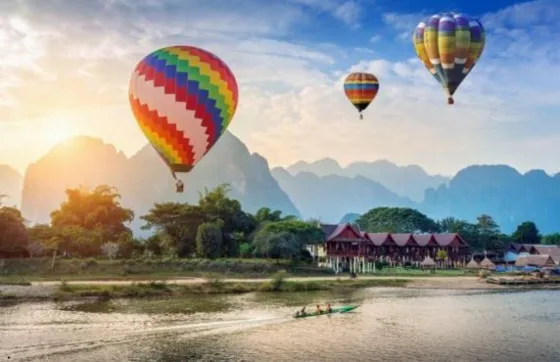
Explore top best things to do in Laos in november? Vang Vieng offers a different experience from the historic atmosphere of Luang Prabang and the urban character of Vientiane. It is known for its limestone mountains, river scenery and countryside, making it appealing to travellers who want to include outdoor activities in their trip.
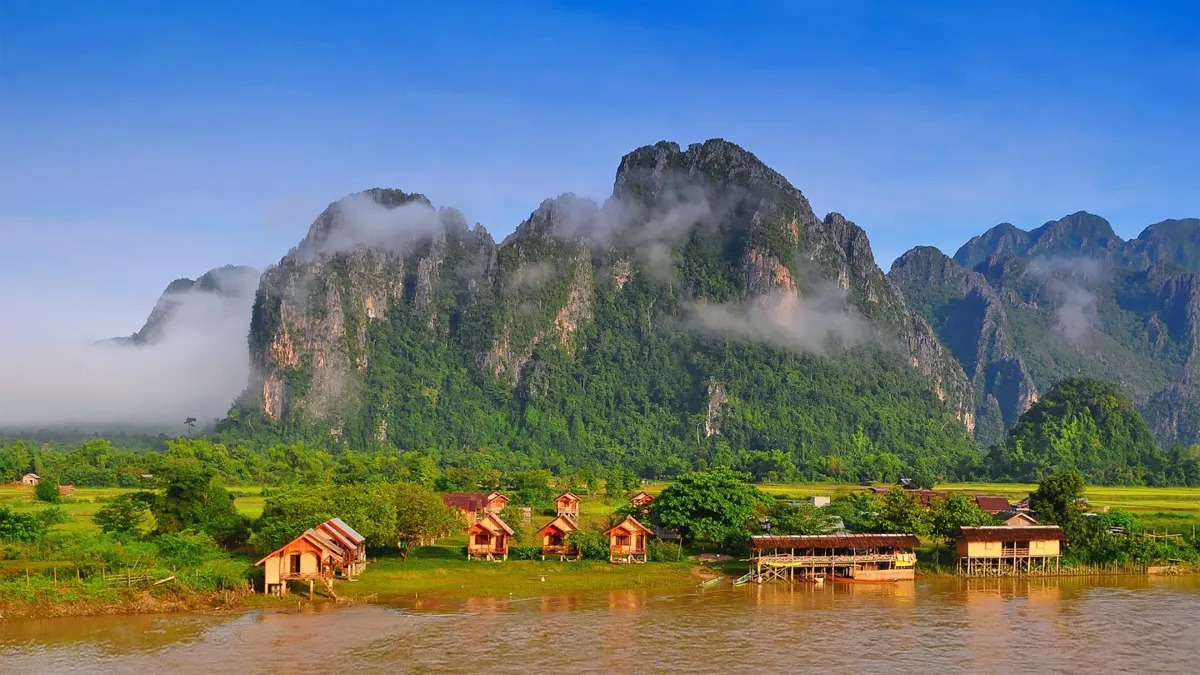
Visit Laos in november, depending on your interests and local conditions, activities may include cycling, walking, kayaking or visiting caves and viewpoints. November is often a suitable period for exploring outdoors, but you should confirm weather conditions and activity availability before making firm plans. The main reason to include Vang Vieng is the landscape. Instead of filling the day with monuments, you can spend time in the countryside and enjoy views of the mountains. If you prefer a relaxed holiday, choose a small number of activities rather than trying to fit everything into one day. Vang Vieng can be included between Luang Prabang and Vientiane in a northern Laos itinerary. Before confirming your route, check the available transport options and journey times for your dates.
Best for: Scenic landscapes, outdoor activities, couples, friends and travellers who want a break from city sightseeing
Southern Laos is an excellent choice for travellers who want to explore beyond the best-known northern destinations. Champasak provides access to several distinct landscapes and cultural sites, including the Bolaven Plateau, Wat Phou and the Mekong islands.
The Bolaven Plateau is known for its coffee-growing areas, rural scenery and waterfalls. The higher elevation can make parts of the plateau feel cooler than the surrounding lowlands. Travellers interested in coffee can look for opportunities to learn about local cultivation and production, although specific visits should be arranged in advance.
Among the area's waterfalls are Tad Fane and Tad Yuang. Both are popular stops for visitors exploring the plateau, but their flow and appearance can vary according to recent rainfall. Allow time for the journey between attractions rather than assuming they can all be visited quickly.
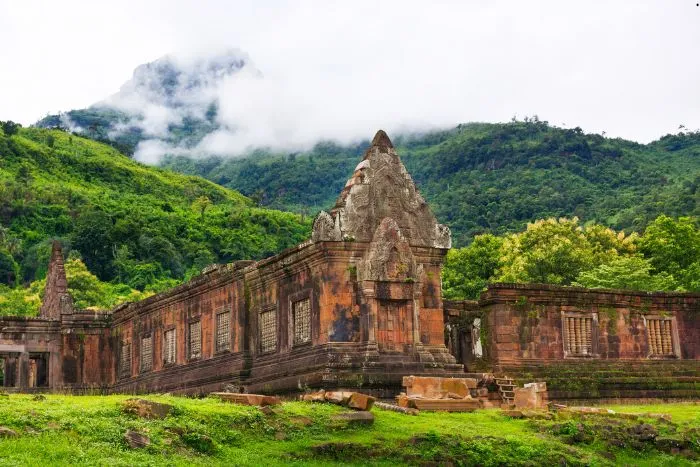
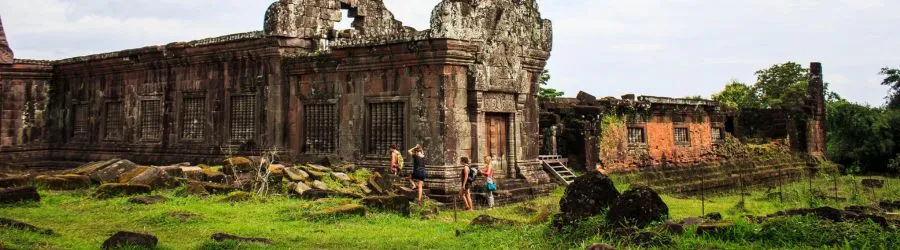
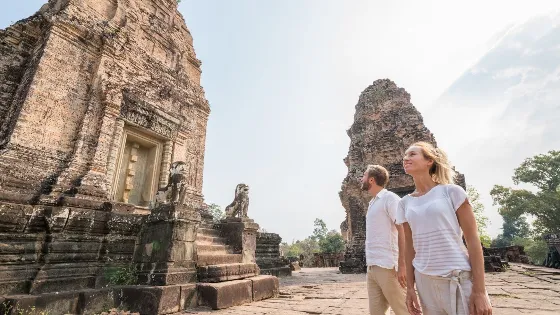
Another major site is Wat Phou, an ancient temple complex with Khmer architectural influences. The site is recognised as a UNESCO World Heritage property and provides an important perspective on the region's historical and religious heritage. It is a worthwhile addition for travellers who want to combine nature with archaeology.
Pakse is often used as a base for exploring the region. From there, you can organise excursions to the plateau and surrounding attractions, depending on your schedule and transport arrangements.
Best for: Waterfalls, coffee-growing areas, rural landscapes and ancient temples.
Further south, near the Cambodian border, lies Si Phan Don, commonly known as the 4,000 Islands. This area of the Mekong is characterised by islands, river channels, villages and a slower pace of life.
Si Phan Don is less about ticking off major attractions and more about spending time in the landscape. Depending on where you stay, you can cycle through villages, enjoy views of the river, visit local communities and relax in riverside cafés.
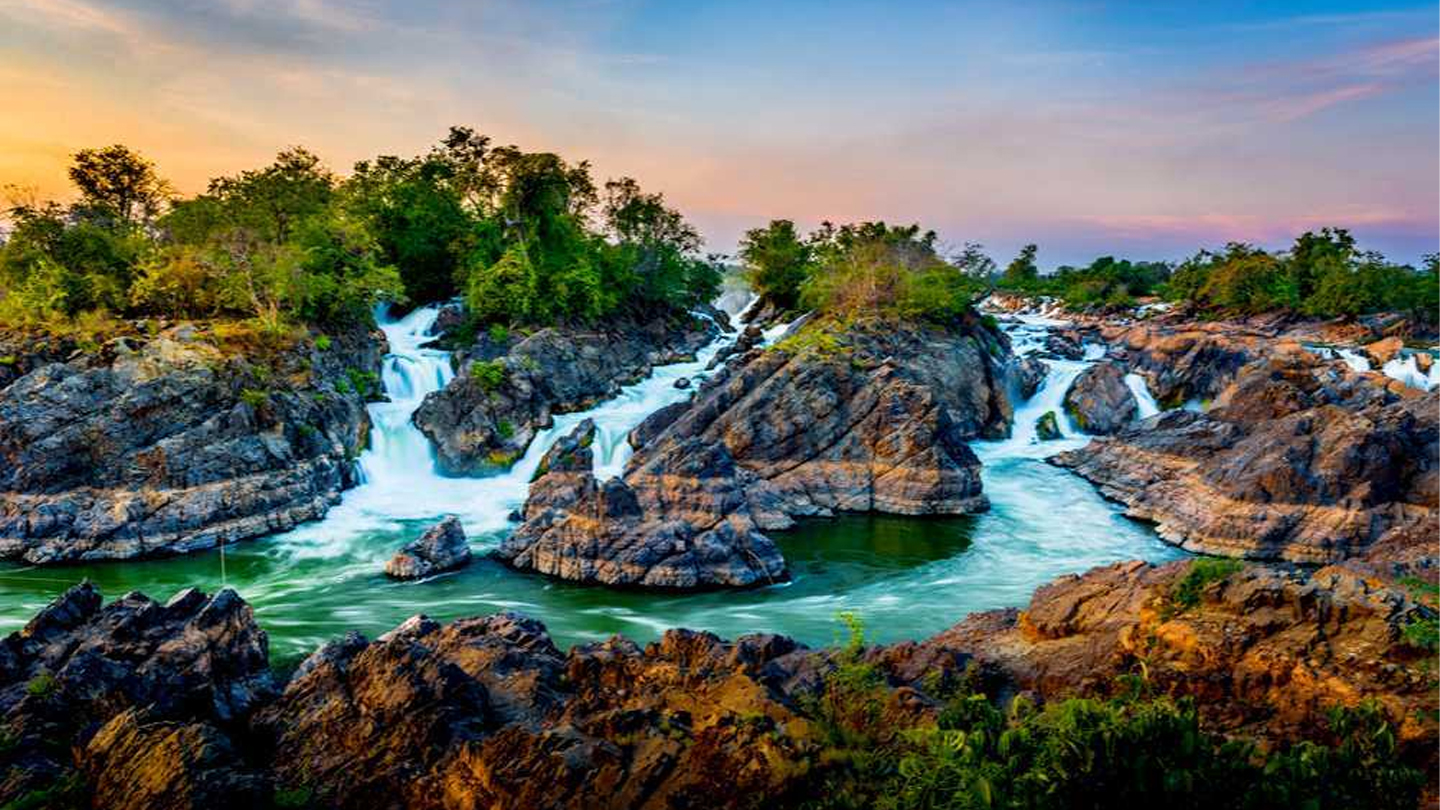
One of the region's best-known natural attractions is Khone Phapheng Falls, an extensive series of rapids and cascades on the Mekong. It is widely known for the volume of water flowing through the falls, rather than for the height of a single vertical drop. This is an important distinction when describing the site accurately.
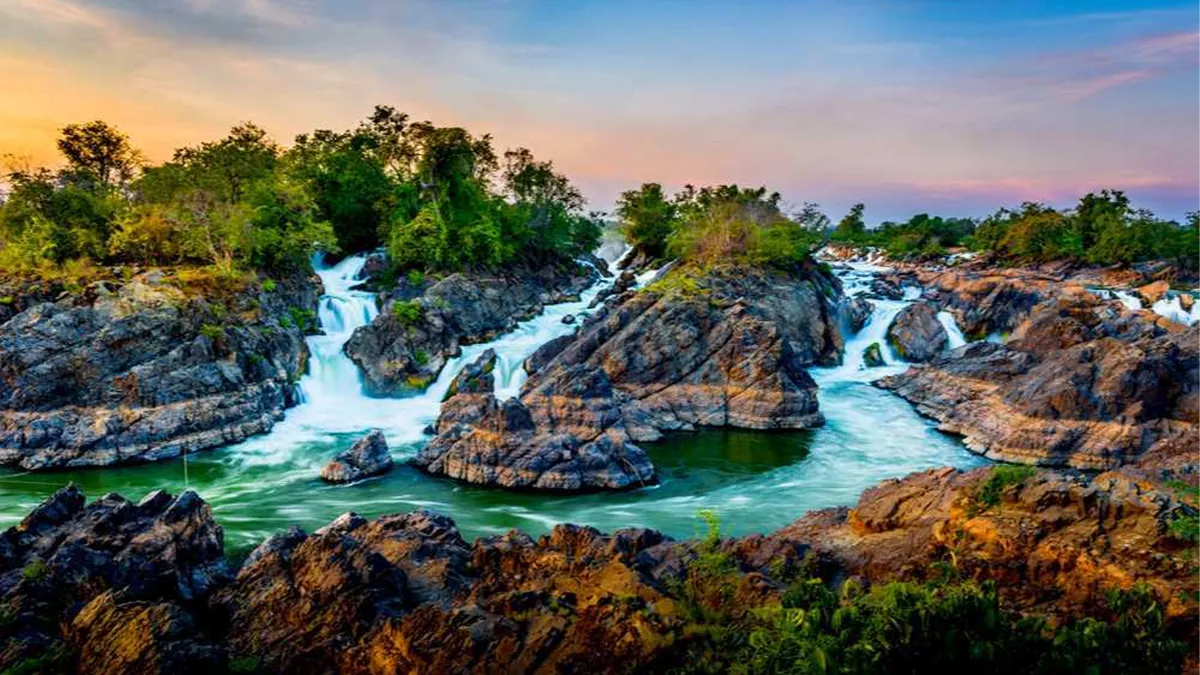
You may also hear about Li Phi Falls, another waterfall area associated with the Mekong islands. Check local access and transport arrangements before visiting, as the experience depends on the location of your accommodation and available connections. Si Phan Don is a good choice if you want to slow down after visiting cities and cultural sites. I would recommend spending at least two nights if you have enough time, rather than travelling there only for a brief stop.
Best for: River landscapes, cycling, village life, waterfalls and travellers who prefer a relaxed pace.
Take a look at:
How long should you spend in Laos? The answer depends on whether you want a short introduction to the country, a combination of culture and nature, or a longer journey that includes both the north and the south.
With one week in Laos, it is better to focus on a limited number of destinations. A route combining Luang Prabang and Vientiane can provide a useful introduction to Lao culture, architecture and everyday life. Suggested route: Luang Prabang → Vientiane.
Spend several days exploring Luang Prabang's historic centre, temples and nearby attractions, then continue to Vientiane for its monuments and riverside atmosphere. If Boun That Luang coincides with your travel dates, adjust the order of the route so you can attend the festival. This itinerary works best for travellers who prefer cultural sightseeing and do not want to spend too much of their holiday in transit. The exact number of nights in each destination should be based on your arrival and departure times and the transport connections available.
Laos packages 10 days allow you to add a destination between the historic towns or to spend more time on excursions. Suggested route: Luang Prabang → Vang Vieng → Vientiane. Begin in Luang Prabang, where you can explore the old town and visit Kuang Si Waterfall. Continue to Vang Vieng for limestone mountain scenery and outdoor activities, then finish in Vientiane.
This route is suitable for travellers who want a balance between heritage and landscapes without attempting to cover the entire country. It also allows some flexibility if you prefer to spend an additional night in one destination. If your main interest is southern Laos, consider a different 10-day itinerary focused on Pakse, the Bolaven Plateau, Wat Phou and Si Phan Don. Trying to combine all of these with a full northern itinerary can make the journey feel rushed.
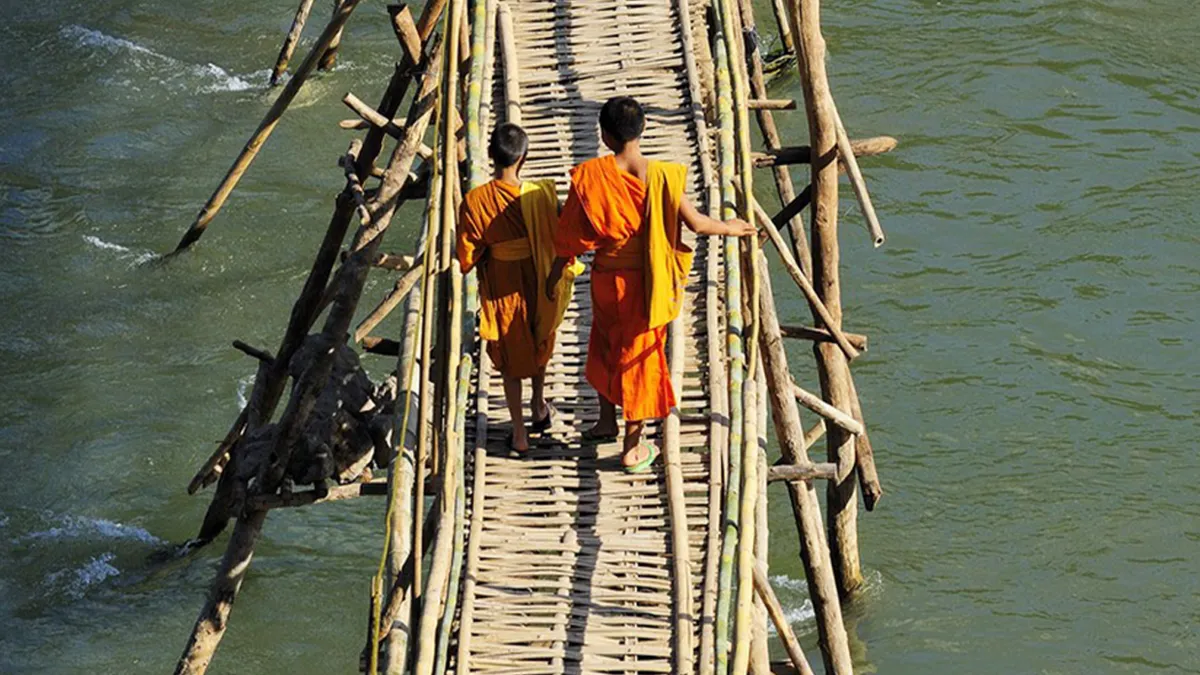
Laos highlights 14 days give you more opportunity to experience different parts of the country. You can combine the historic towns of the north with the waterfalls, highlands and river landscapes of the south, provided you plan transfers carefully. Suggested route: Luang Prabang → Vang Vieng → Vientiane → Pakse → Bolaven Plateau → Wat Phou → Si Phan Don.
This route combines cultural heritage, mountain scenery, waterfalls and the Mekong. Depending on your interests, you may choose to shorten one section or spend additional time in the south. The main consideration is transport. The distances between northern and southern Laos are significant, so check flight schedules, road journeys and onward connections before confirming accommodation. Avoid scheduling major excursions immediately after a long transfer.
For travellers who want a varied first journey and have two weeks available, this route can be a good starting point for a tailor-made itinerary.
With Laos tour 3 weeks, you can travel at a more relaxed pace and explore areas that require additional time. In addition to Luang Prabang, Vang Vieng and Vientiane, you might consider Nong Khiaw or Luang Namtha in the north, followed by the Bolaven Plateau and Si Phan Don in the south. This longer itinerary is particularly suitable for travellers interested in trekking, rural communities, local culture and extended stays in nature. Rather than moving every day, consider spending several nights in places where you can explore nearby villages and landscapes.
You do not need to visit every destination. The best use of three weeks is to create a route that reflects your interests while leaving enough time to appreciate the places you visit.Here’s the complete travel guide for Laos in November. Whether you’re exploring the historic sites of Vientiane, the breathtaking Kuang Si waterfalls, or the serene beauty of Luang Prabang, there’s something for everyone to enjoy. If you have any questions, feel free to contact Autour Asia, your Laos tour operator. Our knowledgeable travel advisors are dedicated to helping you create a memorable journey and will respond to you as soon as possible.
A little preparation can make your journey easier, especially if you plan to visit several regions.
✓ Book around major festivals and popular destinations
November marks the beginning of a busier travel period in Laos. If your trip coincides with Boun That Luang, or if you want accommodation in popular areas of Luang Prabang, it is sensible to arrange key services in advance. You do not necessarily need to book every activity months ahead, but fixed-date travel, preferred accommodation and important transfers should be checked early.
✓ Allow enough time for transport
Do not judge travel time by distance alone. Road conditions, connections and local schedules can affect how long a journey takes. If you are combining northern and southern Laos, verify the actual transport options before finalising your itinerary. It is also worth keeping the day after a long transfer relatively light. This gives you time to rest and reduces the risk of missing an excursion if the journey takes longer than expected.
✓ Respect local customs at religious sites
Temples and religious monuments remain important places of worship. Wear clothing that covers your shoulders and knees, remove your shoes where required and follow instructions from staff or local guides. If you observe a ceremony or the morning alms-giving ritual, keep a respectful distance and avoid treating worshippers as photographic subjects without permission.
✓ Prepare for outdoor excursions
For waterfalls, trekking and countryside visits, wear suitable footwear and check local conditions. Trails and access arrangements may vary according to recent weather. Do not swim in restricted areas or ignore safety signs. If an excursion involves a boat journey, confirm the departure point, duration and return arrangements before setting off.
✓ Keep some flexibility in your schedule
Even during the drier season, weather can change. Some activities may also depend on local operating conditions or transport availability. A flexible itinerary makes it easier to adjust plans without losing an entire day. For travellers who want to visit several destinations, a local guide or travel adviser can help coordinate connections and identify which activities are realistic within the time available.
November is an excellent time to discover Laos, when the end of the rainy season leaves the countryside green and the weather generally becomes more favourable for exploring. Beyond its temples, historic towns and natural landscapes, the country offers something more meaningful: an opportunity to experience everyday life, understand local traditions and appreciate the peaceful rhythm of Lao culture. For travellers interested in cultural encounters, Boun That Luang can add a memorable dimension to their journey, provided they check the festival dates in advance. To make the most of your stay, choose an itinerary that balances sightseeing with enough time to enjoy each place without rushing. With Autour Asia, you can plan a tailor-made trip to Laos in November that reflects your interests, travel pace and budget, with personalised advice from our local team.
Maybe you're interested in:


When planning a trip to Laos in November, it is useful to carry Laos currency (some cash in Lao kip) for local markets, small restaurants and rural areas where card payments may not be available. ATMs and currency exchange services can be found in major tourist centres, but access may be more limited in remote villages. Keep smaller banknotes handy for everyday purchases and check whether your accommodation or tour provider accepts international cards. Before travelling, confirm the latest exchange arrangements and any fees with your bank to avoid unnecessary costs during your stay.
Laos in November can suit families and older travellers, but comfort depends on the itinerary and the amount of time spent travelling between destinations and Laos transportation. Some journeys involve long road transfers, uneven paths or stairs at temples and viewpoints. To make the experience more comfortable, choose accommodation with convenient access, allow time for rest and avoid scheduling several demanding activities on the same day. Private transfers and a flexible itinerary can also reduce logistical stress. Before booking, discuss mobility requirements, children's needs and any accessibility concerns with your travel provider.
A Laos travel itinerary 2 weeks is ideal for travelers who want to explore the country's highlights at a relaxed pace. However, the ideal length of a trip depends on your interests and travel style. 5 to 7 days is enough to visit Luang Prabang, Vang Vieng and Vientiane. For a slower journey, 10 to 14 days allows you to discover rural villages, local markets, waterfalls and outdoor activities. With two weeks, you can also explore southern Laos, including Pakse and the Bolaven Plateau, to experience coffee plantations, spectacular waterfalls and traditional village life without rushing between destinations.




 FR
 ITA