
Laos 15 Days Itinerary With Point Of View Of Julian
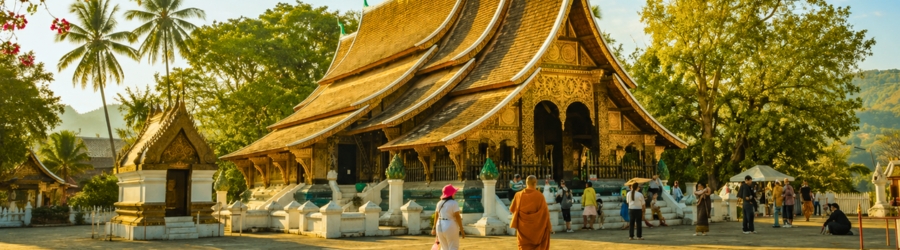
Hello, my name is Julian. I traveled through Laos for fifteen days with the desire to discover its different facets, from the unspoiled mountains of the North to the peaceful landscapes of the Mekong. With Autour Asia, I followed a Laos 15 days itinerary through various regions, among local communities, temples, waterfalls, villages and remarkable natural landscapes. Over the course of these 15 days in Laos, I particularly appreciated the country’s diversity and the changes in atmosphere at each stop. In this travel story, I share with you my journey, the experiences that left the greatest impression on me and some personal advice drawn from this stay, to help you prepare your own trip to Laos.
Table of Contents
- I. Overview of my 15-day Laos itinerary
- II. My detailed Laos 15 days itinerary
- 1. Days 1 - 3: Immersion in northern Laos
- 2. Days 4 - 5: In the heart of the northern mountains
- 3. Day 6: From the Nam Ou to Luang Prabang
- 4. Days 7 - 8: Culture and nature in Luang Prabang
- 5. Days 9 - 10: Adventure and landscapes in Vang Vieng
- 6. Day 11: Cultural discovery of Vientiane
- 7. Days 12 - 13: Discovering southern Laos
- 8. Days 14 - 15: In the heart of the 4000 Islands
I. Overview of my 15-day Laos itinerary
By following this 15-day trip to Laos, I discovered all the diversity of the country, from the lush mountains of the North to the peaceful islands of the South. Throughout the journey, I appreciated this balance between nature, heritage and local encounters, passing through lively markets, ancient temples, traditional villages and striking landscapes.
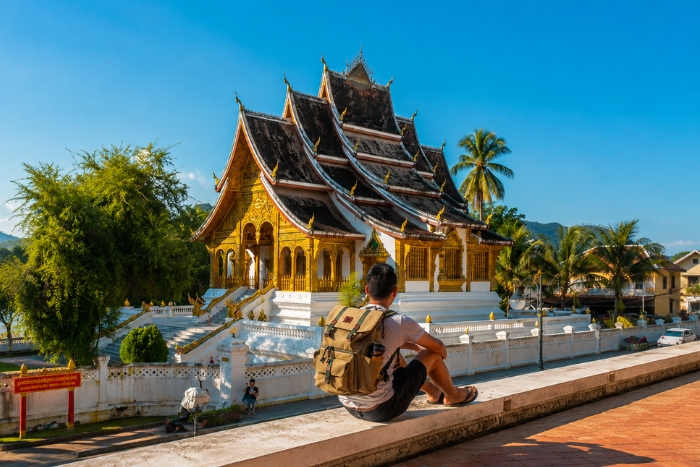
Each stop took me a little deeper into the heart of Laos: I traveled through still unspoiled regions, sailed along the Mekong and discovered several iconic cultural sites. Between walks through lush nature, historical discoveries and moments of relaxation in Si Phan Don, these 15 days in Laos offered me an experience that was as varied as it was immersive. It is this richness, between landscapes, traditions and local life, that I am delighted to share with you today.
II. My detailed Laos 15 days itinerary
1. Days 1 - 3: Immersion in Northern Laos
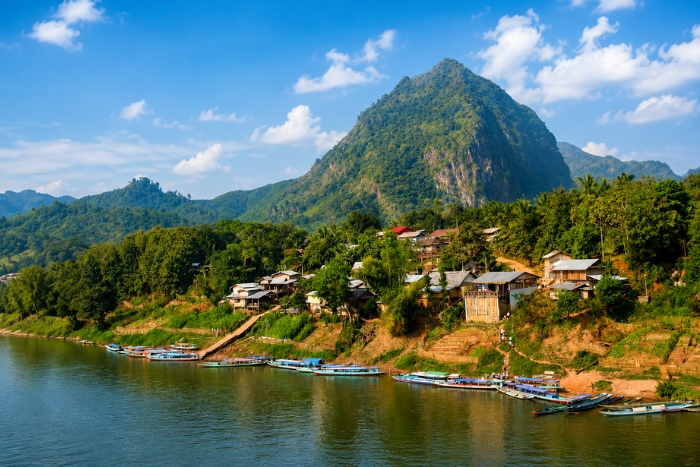
As soon as I arrived in Houeixay, I headed to Luang Namtha and discovered the mountainous landscapes of northern Laos. This first stop on my Laos 15 day tour immersed me in a region close to China and Myanmar, marked by great ethnic diversity. Along the way, I was told about the history of the regions we passed through and their cultural particularities were explained to me. I appreciated this first day, which allowed me to quietly enjoy the landscapes while gaining a better understanding of the region. Once I arrived in Luang Namtha, I settled into the hotel for a peaceful evening. I recommend doing the same to get a good rest.
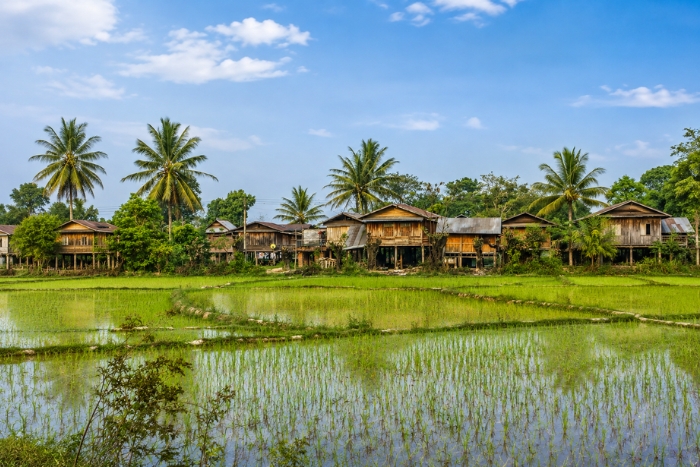
The next day, I left Luang Namtha after breakfast and headed to Muang Sing, the former capital of the Lu principality and a memorable discovery on my Laos 15 days itinerary. Along the way, I stopped at Ban Lak Khammai, Ban Kolakham and Ban Thin That, where I discovered different communities and observed their daily life. These stops made the journey interesting, between rural landscapes and local encounters. Upon arrival, I explored Muang Sing and its surroundings, surrounded by mountains and peaceful countryside. If you are looking for a more authentic Laos, this region offers an atmosphere that is still preserved from mass tourism.
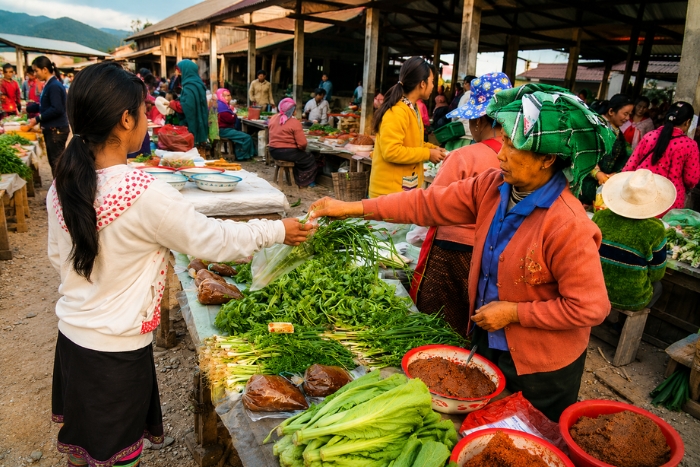
For my third day of this 2-week Laos itinerary, I started early at the Muang Sing market, a lively place where people from the surrounding mountains gathered to exchange agricultural products and news. I enjoyed observing this everyday scene, which perfectly reflected the cultural diversity of this region close to China and Myanmar. After the market, I continued exploring by minibus and then on foot through several villages inhabited by the Yao, Akha and Lanten communities. This day allowed me to get closer to their way of life while enjoying the rural landscapes. I recommend this experience if you are particularly interested in local encounters.
Read more: Where to visit in Northern Laos with family
7-day itinerary in Northern Laos
2. Days 4 - 5: In the heart of the northern mountains
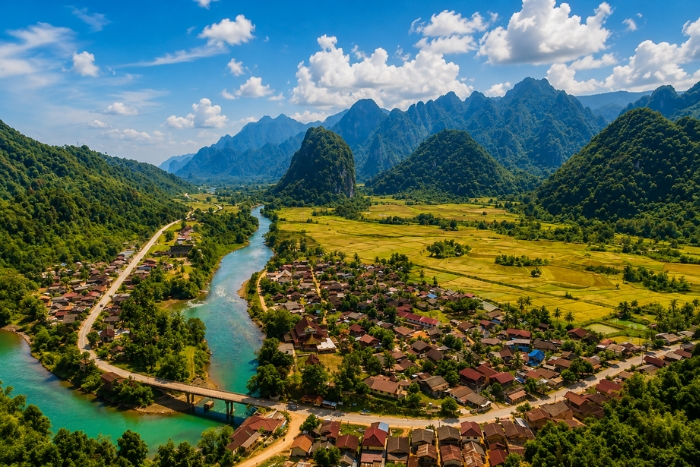
After these wonderful discoveries around Muang Sing, I continued south toward Oudomxay, a new stop on my Laos 15 days itinerary. The journey took me through Ban Na Teui, Namor and Ban Tawan, in the heart of a region home to the Lao Houei, Yao, Lanten and Hmong communities. I enjoyed observing the mountainous landscapes and rural life passing by along the way, while gradually discovering the cultural diversity that characterizes this region. At the end of the day, I reached Muang Xay, the provincial capital, where I settled into the hotel to enjoy a restful evening.
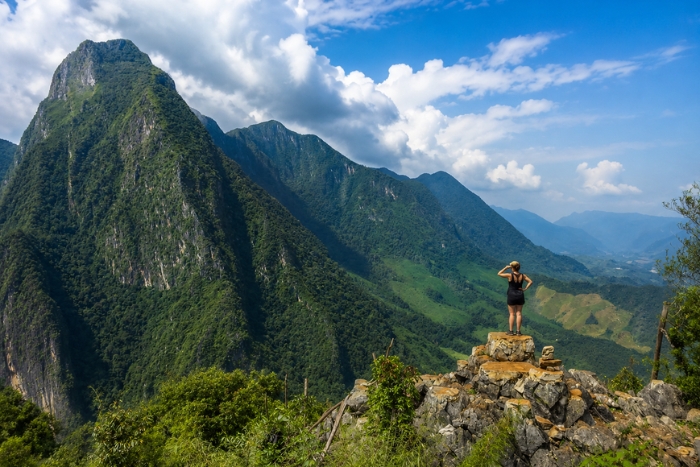
To continue my 15 days in Laos and this immersion in the north of the country, I left Muang Xay for Muang Khua via Muang La. The road offered me beautiful landscapes of forests and mountains, giving this transfer day real interest. As I approached Muang Khua, the scenery became more spectacular with the Nam Ou Valley. Despite being a small town, Muang Khua charmed me with its peaceful atmosphere and natural surroundings. I ended the day in a local guesthouse, a simple and pleasant experience that I recommend to fully enjoy the area.
3. Day 6: From the Nam Ou to Luang Prabang
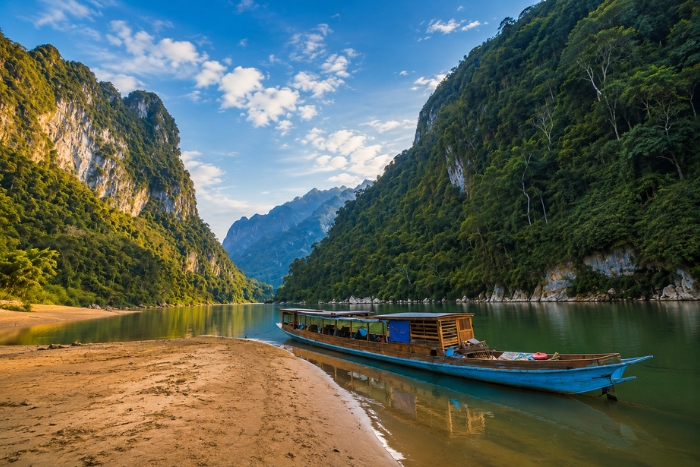
On the morning of the sixth day, a beautiful stage awaited me, combining river, mountainous landscapes and cultural discoveries. I boarded a boat in Muang Khua to reach Nong Khiaw along the Nam Ou, admiring limestone cliffs, lush mountains and scenes of life along the water. From there, I continued by road toward Luang Prabang, with a stop at the Pak Ou Caves, an ancient pilgrimage site housing thousands of Buddha representations. I then stopped at Ban Xang Hai, known for its traditional rice alcohol. This journey toward Luang Prabang marked a beautiful transition in my Laos north to south itinerary. I finally reached the former royal city in the late afternoon to freely enjoy my first evening.
4. Days 7 - 8: Culture and nature in Luang Prabang
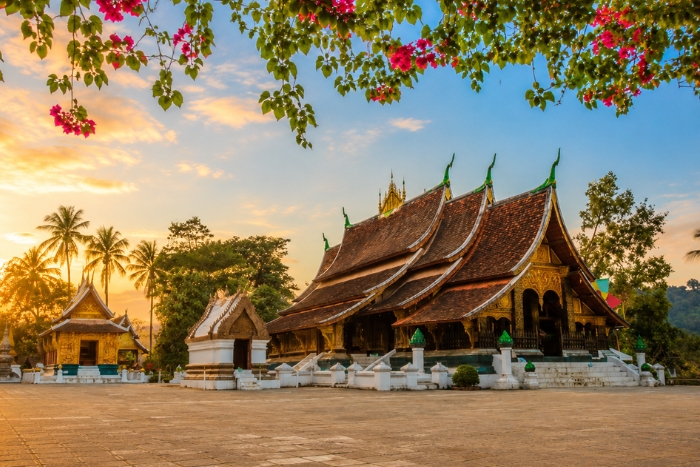
After a first evening in Luang Prabang, I devoted this seventh day to discovering the cultural and spiritual soul of the former royal city. If you are looking for the best things to do in Laos, Luang Prabang truly deserves some time. Before dawn, I attended the Tak Bat, a peaceful moment that immersed me in Buddhist traditions. The morning continued at the Royal Palace Museum and the magnificent Wat Xieng Thong, whose architecture left a strong impression on me. Later, the craft villages and the Traditional Arts and Ethnology Centre revealed the cultural richness of Laos to me. Finally, I climbed Mount Phousi to admire the sunset, before returning to the atmosphere of the night market.
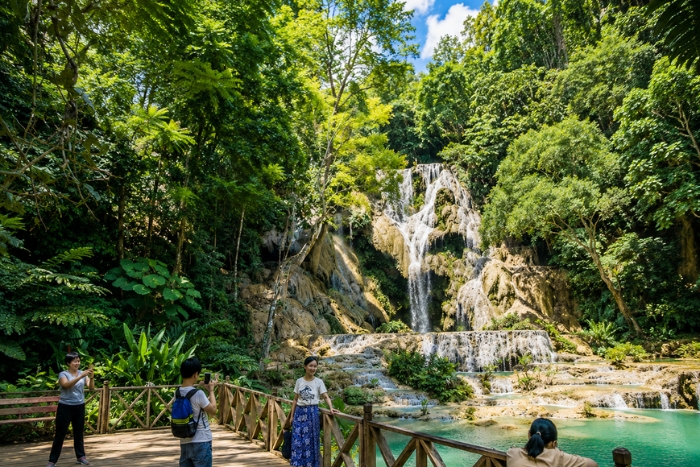
The eighth day of my Laos 15 days itinerary offered me a wonderful break between nature and local encounters. After immersing myself in Phousi Market, I headed to Kuang Si Waterfalls, whose turquoise pools were one of my most beautiful memories in Luang Prabang. On the way back, I stopped at Ban Tha Pan, Ban Ou and Ban Na Ouane to discover the Khmu, Lao Loum and Hmong communities, then at Ban Phanom, renowned for its weaving. At the end of the day, I took the train to Vang Vieng, about an hour away. Upon arrival, I settled into the hotel to quietly enjoy my first evening in Vang Vieng.
5. Days 9 - 10: Adventure and landscapes in Vang Vieng
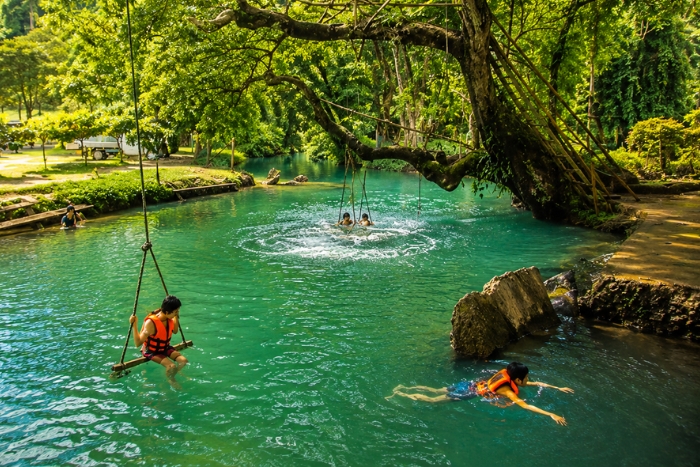
In Vang Vieng, it was by leaving the streets of the town center that I discovered some of the most beautiful landscapes of my Laos 15 days tour. For this ninth day, I crossed the Nam Song by bicycle before cycling through rice fields, small villages and imposing karst formations. Along the way, a short hike led me to Dok Ngern Cave, hidden within this wild scenery. I then followed the Nam Kouang to the Blue Lagoons, a refreshing break with their turquoise waters surrounded by vegetation. After a pleasant swim, I finally got back on my bicycle to return to Vang Vieng under the last light of the sunset.
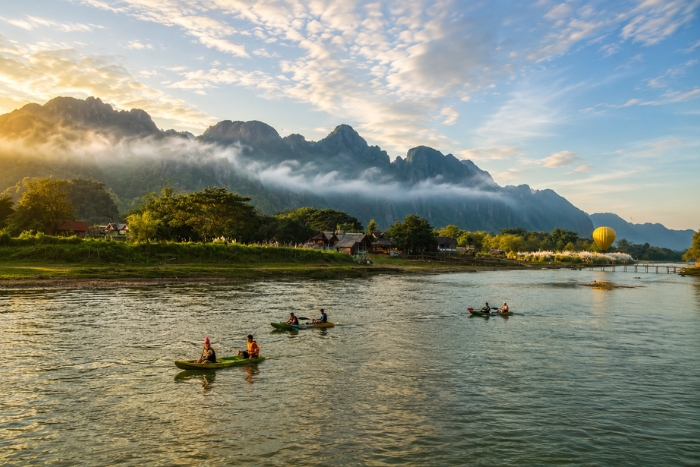
The next day, I discovered a more peaceful side of Vang Vieng, with other things to do in Vang Vieng after the previous day’s adventures. I started the morning at its local market before returning to the banks of the Nam Song. The boat ride allowed me to admire the limestone formations from another angle, then explore Tham Jang, a cave steeped in history that was once used as a refuge. In the afternoon, I continued my 2 weeks in Laos by taking the train to Vientiane, about an hour away. After settling into the hotel, I headed to the banks of the Mekong to admire the sunset and end the day in the lively atmosphere of the night market.
Learn more: How many days in Vang Vieng is enough
6. Day 11: Cultural discovery of Vientiane
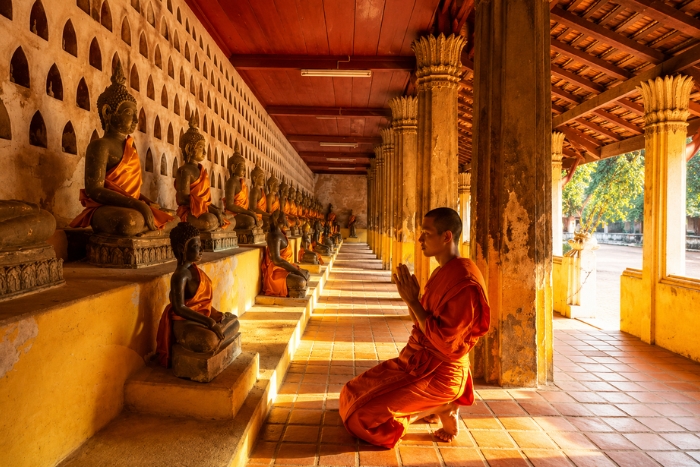
In the heart of Vientiane, day 11 allowed me to better understand the history and spirituality of the capital. I started with Wat Sisaket, remarkable for its representations of Buddha, before discovering the former royal temple of Wat Ho Phra Keo. I then headed to Pha That Luang, an imposing golden stupa and national symbol, with a stop in front of Patuxai, with its Lao motifs. This discovery of Vientiane brought a more historical and spiritual dimension to my Laos north to south itinerary, after several days focused on nature.
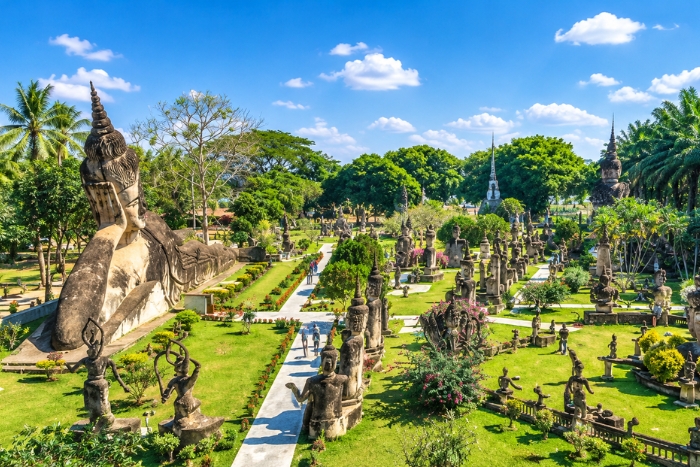
In the afternoon, I experienced a change of atmosphere by exploring the Xieng Khuan Buddha Park in Vientiane, an astonishing garden featuring more than 200 Buddhist and Hindu sculptures along the banks of the Mekong. Back in Vientiane, I ended the day by strolling through the night market and enjoying the local atmosphere while tasting a few Lao specialties.
7. Days 12 - 13: Discovering southern Laos
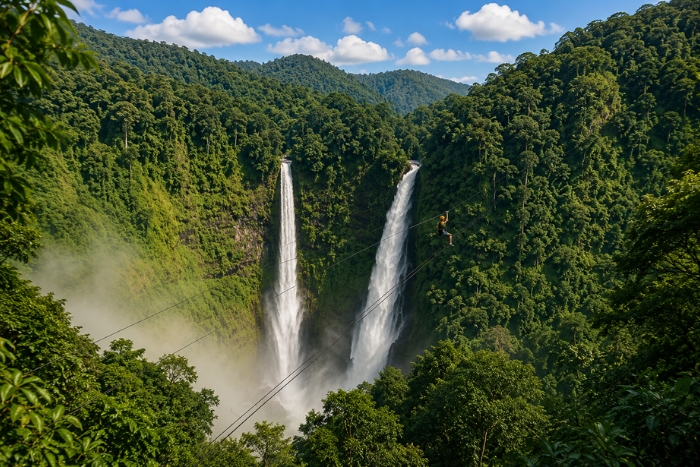
A change of scenery for this twelfth day: I left Vientiane by plane to reach Pakse, the gateway to southern Laos. This journey south brought a new atmosphere to my Laos 15 days itinerary. From there, I headed to the Bolaven Plateau, where the cool air, plantations and lush vegetation changed the scenery. I particularly enjoyed Tad Fane and its impressive waterfalls, then Tad Ngeuan, where I took a break over a local coffee. Continuing toward Tad Lo, I passed through lands devoted to coffee, tea and cardamom, then discovered villages of the Alak, Nge and Katu communities. I finally spent the night in Tad Lo, in a peaceful atmosphere.
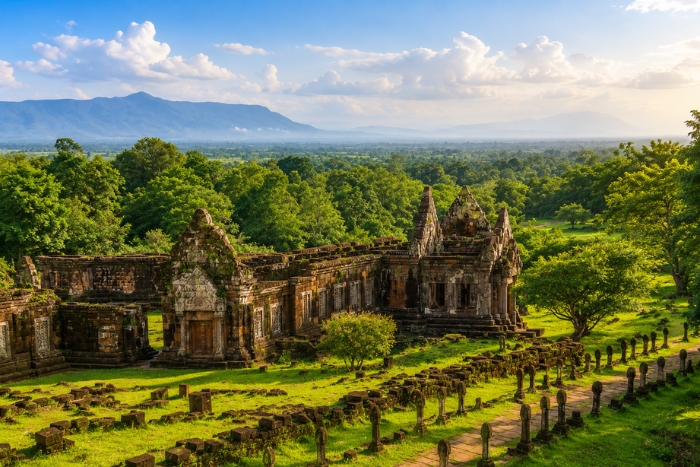
Day 13 took me to another side of southern Laos, marking a new turning point in my Laos 15 days tour. Leaving the heights of the Bolaven Plateau, I returned to the Mekong and the open landscapes of Champassak, a striking contrast after the previous day’s waterfalls and plantations. I discovered Wat Phou, an ancient Khmer sanctuary nestled against the mountain, whose ruins give off a distinctive atmosphere. This immersion in history gave way to a more island-like atmosphere as I continued toward Si Phan Don, the 4000 Islands region. Little by little, the Mekong widened between islands and islets until Don Khong, the largest island in the archipelago, where I settled in for the night.
8. Days 14 - 15: In the heart of the 4000 Islands
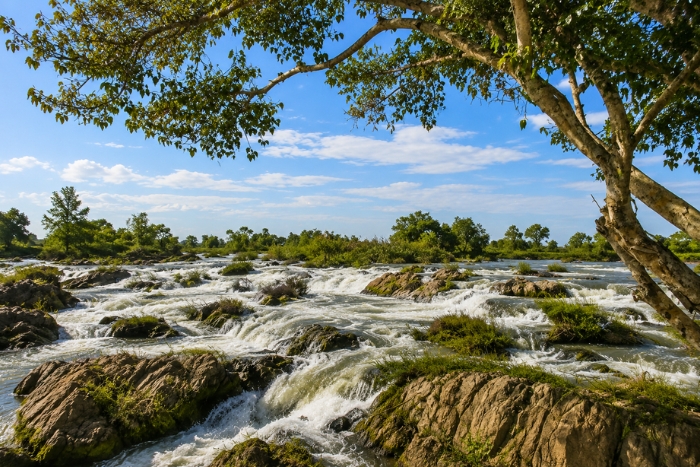
This penultimate day of my 2-week trip to Laos allowed me to fully enjoy the atmosphere of the 4000 Islands. From Don Khong, I boarded a long-tail boat to Don Khone, passing between lush islets and peaceful landscapes of the Mekong. On the island, I discovered Ban Khone and its French colonial past, visible in its old houses and the remains of Laos’s first railway. The walk then led me to Li Phi Falls or Somphamit, where the Mekong rushes powerfully between the rocks. The contrast between the peaceful boat ride and the power of the rapids made this day particularly memorable.
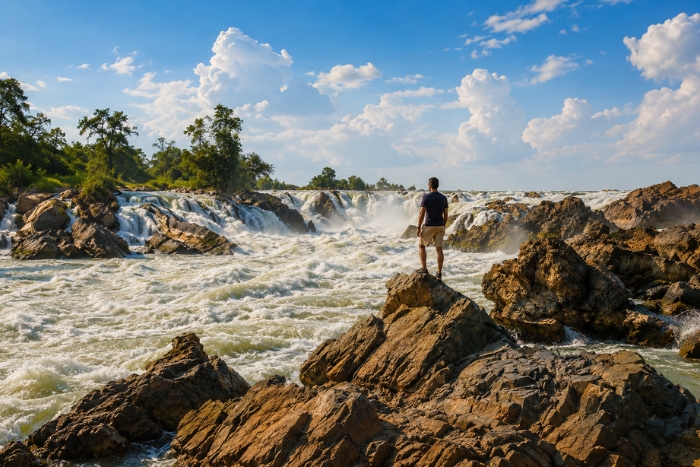
For my last day in Laos, the Mekong offered me one of the most impressive natural spectacles of the trip. After reaching Ban Nakasang by boat, I continued by road toward Khone Phapheng Falls. Nicknamed the “Niagara of the East”, they revealed one last side of the river to me, with its powerful waters flowing between rocks and rapids. This stop marked a beautiful conclusion to my journey and sums up Laos travel itinerary 15 days to discover its diversity. I then reached the Laos–Cambodia border crossing at Dong Kalor, the final stop of a journey that began in the mountains of the North and ended in the heart of the peaceful landscapes of the Mekong.
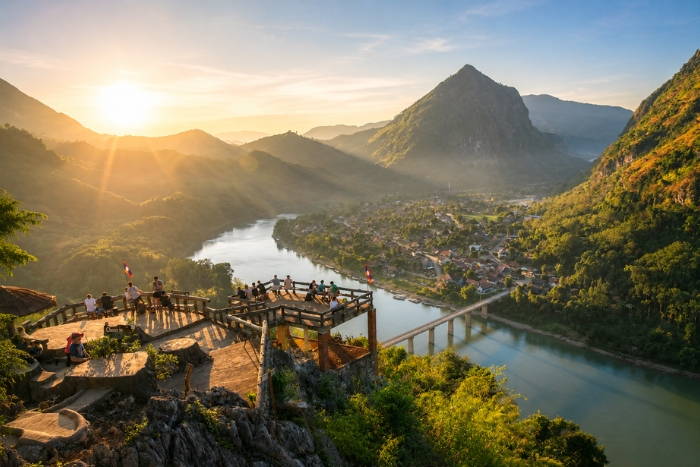
After these 15 days in Laos, I am left with memories of a journey of great diversity. From the mountains and ethnic villages of the North to the temples of Luang Prabang, from the landscapes of Vang Vieng to the waterfalls of the Bolaven Plateau, each stop revealed a different side of the country to me. I particularly appreciated the balance of this Laos 15 days itinerary, between heritage, nature and local encounters, all the way to the peaceful 4000 Islands. Despite a few long journeys, these 2 weeks in Laos allowed me to fully enjoy the trip. If you would like to have a similar experience, Autour Asia, an authentic travel agency in Laos, can assist you in creating a tour tailored to your preferences to discover the country in the best conditions.
If you would also like to experience a 15-day trip to Laos as rich in discoveries as mine, do not hesitate to contact AUTOUR ASIA, a tailor-made travel agency in Laos, to create an itinerary adapted to your preferences and discover the country at your own pace.
You may also like:
- Summer vacation in Laos
- Traveling to Laos with pet
- Laos luxury travel
- 3 weeks in Laos
- Laos Travel Guide
- Laos travel itinerary 2 weeks
- Laos Packages Tours
A Laos travel itinerary 2 weeks is best organized from north to south, combining the country’s major cultural sites with its most beautiful natural landscapes. Begin in Luang Prabang, then set aside time for Kuang Si Waterfall and the mountainous surroundings of Nong Khiew. Continue south to Vang Vieng to experience its limestone scenery before stopping in Vientiane to explore the capital. The second part of the journey leads to Pakse and southern Laos, before finishing on Done Khong Island in the 4,000 Islands. Following this route makes it possible to experience several different sides of Laos within two weeks, from historic towns and waterfalls to mountains and the tranquil scenery of the Mekong.
For 3 weeks in Laos, prioritize an itinerary from north to south to enjoy a variety of experiences without traveling too quickly. Start with four days in Luang Prabang to discover its temples, the Pak Ou Caves and Kuang Si Falls, then spend three days in Vang Vieng to enjoy the Nam Song, the Blue Lagoons, caves and karst landscapes. Two days in Vientiane then allow time to visit Pha That Luang, Patuxai and Wat Sisaket. Continue south to the Bolaven Plateau and Champasak, with coffee plantations, waterfalls and Wat Phou, before ending with several days in Si Phan Don, the 4000 Islands, to discover Don Det, Don Khone and Khone Phapheng at a more peaceful pace.
For a tourist stay of 15 days in Laos, French travelers must obtain a visa before or upon entering the country. Several options are available: applying for an e-Visa online, applying through a Lao diplomatic mission or, at certain entry points, obtaining a visa on arrival. The passport must also meet the validity requirements set by the authorities. If the itinerary involves entering Laos by land, check the border crossing carefully, as not all crossings necessarily accept the e-Visa or issue visas on arrival. It is therefore advisable to check the official entry requirements shortly before departure.
Related travel guide
Other similar articles


CUSTOMIZABLE BY LOCAL EXPERTS
Personalized trip at the original price!

REFUND GUARANTEE
We believe in our work and promise to give you money back.

GOOD PRICE / QUALITY
95% satisfied more than expected!

24/7 LOCAL SUPPORT
We are always available online to provide assistance at any time.

Most read articles


Autour Asia is highly recommended on
Embracing the mission of "Satisfied more than expected" and providing authentic experiences, we have received numerous recommendations on reputable travel forums: