
Complete Guide To Traveling To Laos With Pet

Traveling without your faithful companion is not always easy when you are used to sharing everything with them. However, traveling to Laos with pet remains possible with good preparation. Entry formalities, vaccinations, transportation, suitable accommodation and health are all points to anticipate in order to travel with peace of mind. Traveling with a dog or cat also requires adapting your pace to their needs, without giving up the pleasure of discovering the country. In this guide, Autour Asia brings together useful information to organize your stay and prepare to travel to Laos with dog in good conditions. All that remains is to prepare your documents, your suitcase and your companion’s !
Table of Contents
I. Is it possible to travel to Laos with a pet ?
Traveling to Laos with pet is entirely possible with a dog or cat, but requires preparation adapted to local conditions. The country is well suited to slow travel: a few stops, longer stays and private transfers make the journey more comfortable.
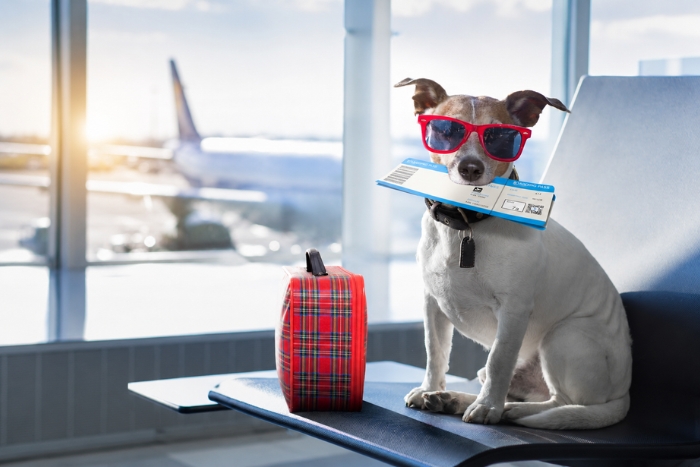
In tourist destinations, you will easily find accommodation that accepts pets, while pet-friendly and veterinary services remain more limited in remote areas. To discover Laos with a pet, consider your companion’s age, size, temperament and sensitivity to heat. Short tours involving a lot of public transportation are less practical. With advance reservations, regular breaks and outings during the cooler hours, you can travel with peace of mind while respecting your companion’s needs.
II. Formalities and entry requirements for traveling to Laos with a pet
1. Documents required to enter Laos with a pet
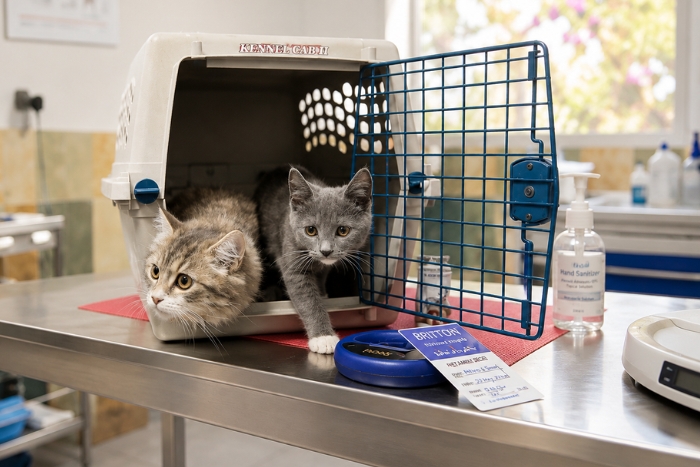
To prepare for traveling to Laos with pet with peace of mind, start the procedures several weeks before departure:
Microchip and identification: Your pet must be identifiable and the microchip number must match the number on its health documents.
Up-to-date vaccination record: To prepare for traveling to Laos with dog, check that it clearly lists all vaccinations received within the required timeframes.
Rabies vaccination: This is an essential formality. According to the official Lao health certificate template, the vaccination must be valid and administered at least one month before departure. Therefore, remember to check its date well in advance.
Rabies antibody titration: A serological test may be required depending on your situation. It is also important to plan this procedure in advance if your country of residence requires it for your return.
Antiparasitic treatments: Your companion must be protected against internal and external parasites. The official certificate requires treatment to be carried out between 2 and 7 days before export.
Official health certificate: Your pet must undergo a clinical examination within the 7 days before departure to confirm that it is in good health and fit to travel. Keep the original certificate with you during the journey.
Import permit: Check in advance the necessary procedures with the Laos Department of Livestock and Fisheries (DLF) and make sure you obtain the applicable authorizations before the animal is shipped.
2. Checks on arrival and formalities for the return
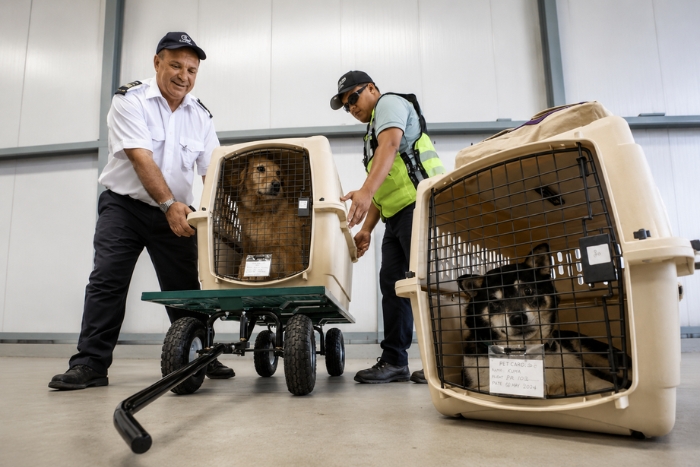
Upon your arrival in Laos, a few checks may be carried out. Also think about your return when preparing for traveling with pet in Laos, as the requirements differ depending on the country.
Checks on arrival: The authorities may check the original documents, identification, vaccinations, import permit and health status of pets in Laos. Therefore, keep the entire file easily accessible.
Possible quarantine: If the documents and health status are compliant, the formalities are simpler. In the event of a missing document, non-compliance or a health issue, quarantine or other measures may be imposed.
Preparing for your return: After your stay in Laos with a pet, check the requirements for returning to France or the EU. In particular, your pet must have compliant identification and a valid rabies vaccination.
Rabies antibody titration: Depending on the applicable rules, a result of at least 0.5 IU/ml may be required. When required, it is better to carry out the test before the trip.
Documents before leaving Laos: Find out well in advance about the health certificate or export formalities required, then also check the requirements of your airline and destination country.
Good anticipation of these steps will above all help you avoid dealing with complex administrative procedures at the last minute.
III. How to travel to Laos with a pet ?
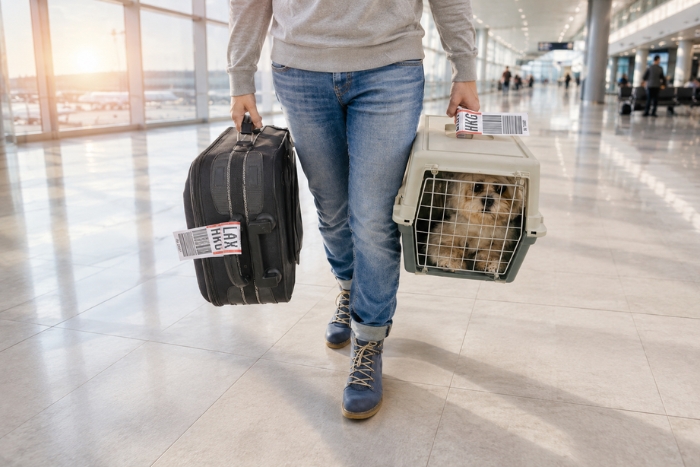
Traveling by plane: Flying remains the most practical way to travel to Laos with dog or with cat. Depending on the airline, your pet can travel in the cabin, in the hold or as cargo. Check the weight limits, crate dimensions and breed restrictions. In case of a stopover, check the rules for each flight and the transit country. Choose fewer connections and get your companion used to a suitable crate before departure.
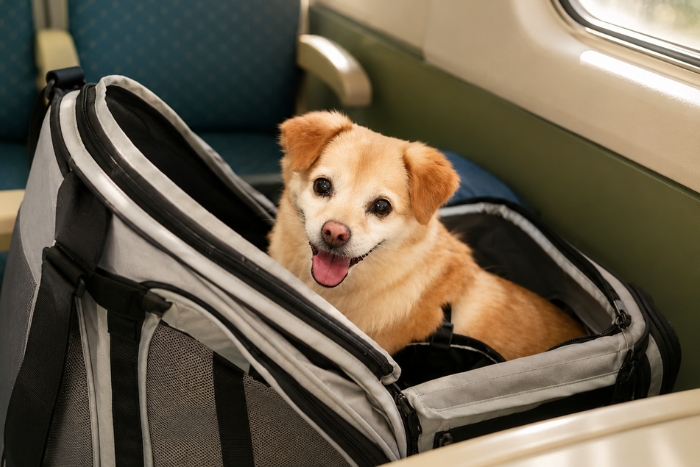
Traveling by land: If traveling to Laos with pet begins in Thailand, Vietnam or a neighboring country, traveling by land offers an interesting alternative. Check that the chosen border crossing allows veterinary formalities and prepare the documents required to leave the previous country and enter Laos. A suitable private vehicle generally remains more comfortable than public transportation, particularly for organizing breaks, ensuring hydration and reducing your pet’s stress.
IV. How to get around Laos with a pet ?
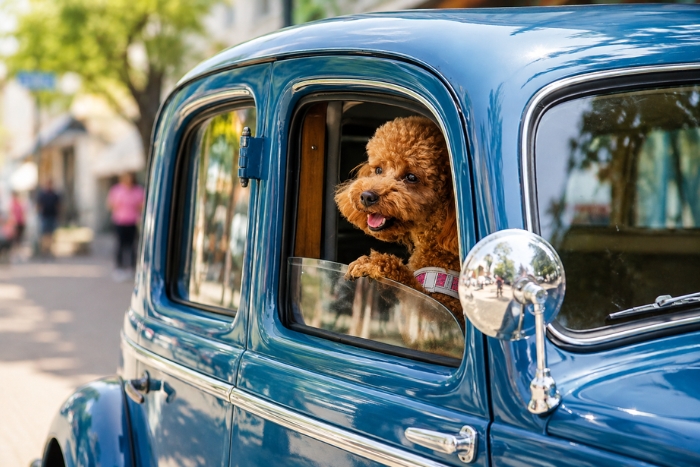
For getting around Laos with pet, choose comfortable options and always check whether your pet is accepted before booking.
Private car with driver: This is the most flexible option between Vientiane, Vang Vieng or Luang Prabang. You can enjoy air conditioning and plan breaks to drink, walk and rest. Simply inform the driver in advance.
Domestic flights: Convenient for avoiding long hours on the road over long distances. Transportation of pets in Laos depends on the airline’s conditions regarding weight, crate and availability. Therefore, book their place well in advance.
Laos-China Railway: Despite its speed for reaching Vang Vieng or Luang Prabang, the train applies restrictive rules regarding animals. Check the latest conditions before planning your itinerary and consider a private transfer as an alternative.
Tuk-tuk, songthaew and taxi: These forms of transportation are convenient for short trips in the city, provided you obtain the driver’s agreement. Keep your dog on a short leash or your cat in a secure crate and choose an air-conditioned vehicle during hot hours.
Buses and minivans: Less practical with a pet due to limited space and varying rules. For long journeys, a private transfer generally remains more comfortable.
V. Where to stay in Laos with a pet ?
For traveling to Laos with pet, the choice depends as much on the destination as on the type of accommodation. An outdoor space will be particularly appreciated with a dog, while a calm and secure environment will be more suitable for a cat.
Pet-friendly hotels and resorts: Easier to find in Vientiane, Luang Prabang, Vang Vieng and Pakse, some have gardens. Confirm that your pet is accepted, the weight limits and any additional fees.
Villas and apartments: Interesting options in Vientiane and Luang Prabang, they offer more privacy and space. A villa with a fenced garden is suitable for dogs, while a secure apartment is more reassuring with a cat.
Guesthouses and bungalows: In Vang Vieng, Luang Prabang or southern Laos, they offer a peaceful atmosphere and access to outdoor spaces. Nevertheless, check the rules and the presence of other animals.
Ecolodges and rural accommodation: Around the Bolaven Plateau or Champasak, they allow you to enjoy nature. Choose a secure property and check the available transportation and veterinary services.
Whatever option you choose for traveling with pet in Laos, do not rely solely on the “pets allowed” filter on booking platforms: always contact the property before booking and specify that you are traveling with a dog or cat.
VI. Health and safety of your pet in Laos

Laos’s tropical climate requires a few precautions to protect your companion. Before departure, a veterinary consultation allows you to check their vaccinations, antiparasitic protection and medications suited to their health condition.
Heat and humidity: When traveling to Laos with dog, choose outings early in the morning or at the end of the day, with fresh water and breaks in the shade. Avoid hot surfaces and closed vehicles. Excessive panting, heavy salivation or weakness may indicate heatstroke.
Stray dogs: You may encounter them in villages, streets or around certain temples. Keep your companion on a leash, avoid confrontations and stay vigilant at night, particularly because of the risk of bites.
Parasites and diseases: Mosquitoes, ticks and fleas can transmit various diseases. Ask your veterinarian for suitable preventive treatment and maintain it throughout your stay, especially in rural and humid areas.
Water and food: Choose safe drinking water and bring your pet’s usual food. Avoid sudden changes and monitor what your pet eats during walks.
Traffic and outings: Around motorcycles, cars and tuk-tuks, keep your dog on a leash or secure harness and your cat in a crate or closed carrier.
Veterinary care: Locate a clinic and keep its contact details. For remote areas, prepare a small first-aid kit and your pet’s usual medications.
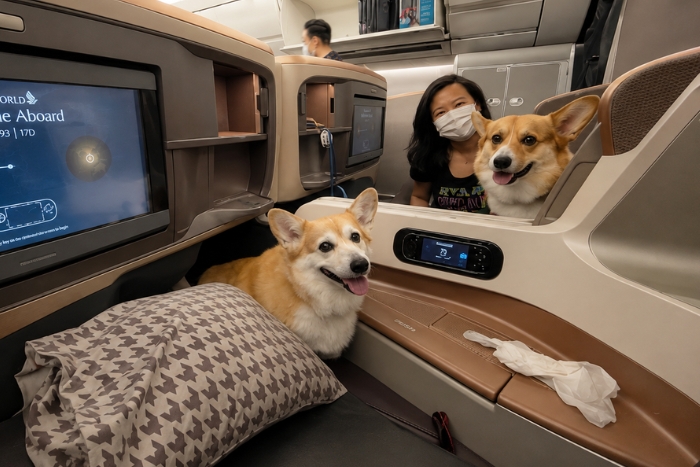
Traveling to Laos with dog or with cat, can make your stay even more special. To fully enjoy this experience, good preparation remains essential: formalities, transportation, accommodation and health must be anticipated according to your companion’s needs. With a suitable itinerary and a few precautions, traveling to Laos with pet can therefore go smoothly, without sacrificing anyone’s comfort. Autour Asia, a local travel agency in Laos, can also assist you in organizing a tailor-made stay, designed around your pace and that of your pet. All that remains is to pack your things and set off together to discover Laos !
You might be interested in:
- Summer vacation in Laos
- Vietnam and Laos travel cost
- Laos luxury travel
- Mosquito risk in Laos
- Laos Travel Guide
- Laos travel itinerary 2 weeks
- Laos Tours
For a Laos travel itinerary 2 weeks, plan an itinerary that combines the country’s cultural heritage, natural landscapes and peaceful riverside destinations. Start in Luang Prabang, a UNESCO World Heritage Site, and visit the beautiful Kuang Si Waterfall before continuing to Nong Khiaw for its spectacular mountain scenery. Then head to Vang Vieng to discover its karst landscapes before exploring the capital, Vientiane. In southern Laos, continue to Pakse, an ideal gateway to the region, before ending your journey on Don Khong Island in the 4,000 Islands, where you can enjoy the tranquil atmosphere and landscapes of the Mekong.
For the best Laos summer itineraries for family trips, prioritize a balance between cultural discoveries, nature and gentle activities suitable for children. In Luang Prabang, explore the temples and markets before enjoying Kuang Si Waterfalls or the Pak Ou Caves. In Vang Vieng, kayaking, lagoons and karst landscapes offer great outdoor adventures, while Vientiane allows for cultural visits at a relaxed pace. For a longer stay, continue to the Bolaven Plateau, Wat Phou and the 4000 Islands to discover waterfalls, heritage and peaceful life along the Mekong. In summer, prioritize visits in the morning and keep the afternoons for flexible activities or moments of relaxation with the family.
To prepare your pet’s luggage before traveling to Laos with pet, pack the essentials to ensure their comfort throughout the stay: enough of their usual food, a collapsible bowl, a supply of water for journeys, their bed or a familiar blanket, as well as a leash, harness and suitable travel crate. Add waste bags, a towel, a few toys and a small first-aid kit. Do not forget their usual medications and the antiparasitic products recommended by your veterinarian. Also keep their vaccination record, health certificate and other travel documents in an easily accessible place. Finally, prepare an identification tag with your contact details so you can travel with greater peace of mind in case of an unexpected situation.
Related travel guide
Other similar articles


CUSTOMIZABLE BY LOCAL EXPERTS
Personalized trip at the original price!

REFUND GUARANTEE
We believe in our work and promise to give you money back.

GOOD PRICE / QUALITY
95% satisfied more than expected!

24/7 LOCAL SUPPORT
We are always available online to provide assistance at any time.

Most read articles


Autour Asia is highly recommended on
Embracing the mission of "Satisfied more than expected" and providing authentic experiences, we have received numerous recommendations on reputable travel forums: