Customize this tour
FRFR ENEN
2 weeks in Vietnam 3 weeks in Vietnam 15 days in Vietnam
• 4,782 views Tra My

Get Your Guide To The Angkor Temple Complex In Siem Reap, Cambodia

I. Introduction General about the Angkor Wat  Complex Temple?

1. What is Angkor Wat?

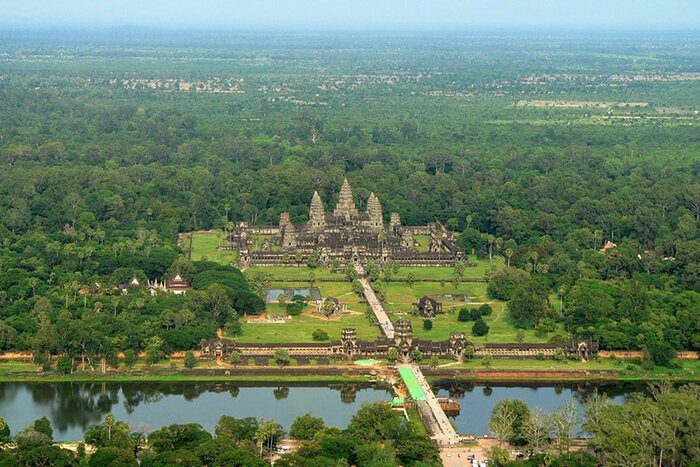
Angkor Wat (Angkor Temple Complex), located in Cambodia, meaning "City of Temples" in the Khmer language, is a temple complex in Cambodia and the largest religious monument in the world, covering 162.6 hectares. The building was initially built as a Hindu temple of the Khmer Empire, and gradually transformed into a Buddhist temple at the end of the 12th century, it served as a state temple and his eventual mausoleum. Its towering sandstone spires, intricate carvings, and sprawling galleries depict Hindu mythology and the journey towards enlightenment. Today, it remains a powerful symbol of Cambodia's rich history and cultural heritage. Angkor temple complex stands as a symbol of Cambodia's rich history and cultural heritage, attracting millions of visitors each year who come to marvel at its grandeur and immerse themselves in its mystical atmosphere.
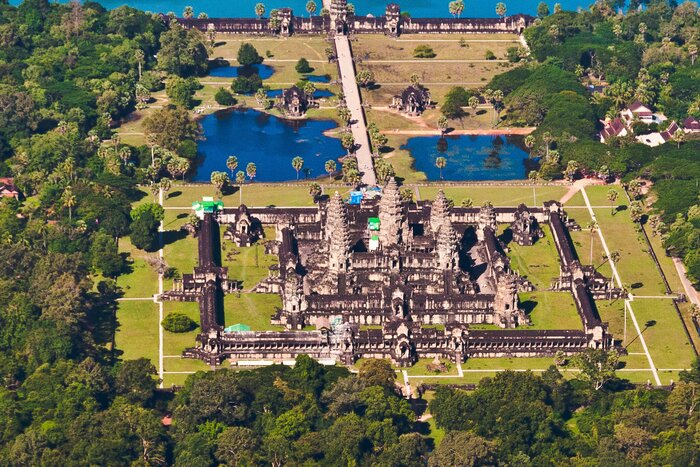
Panorama of Angkor Temple Complex
Whether you're an avid history buff, an architecture enthusiast, or simply someone seeking a glimpse into a lost civilization, this complex promises an unforgettable experience. From watching the sunrise paint the temple in golden hues to exploring the hidden corners of its galleries, prepare to be transported to a world of ancient wonders and spiritual serenity.

2. Get your guide to the Angkor Temple Complex in Cambodia

a.The best time to visit Angkor Complex 

If you want to enjoy the peaceful surroundings of Angkor Wat, November to March is the best time. This season, Cambodia experiences a dry season, mild temperatures and clear skies make exploring Angkor Wat more enjoyable.

However, if you want to experience a different Angkor Wat, then from June to October is also a good choice when the weather also becomes cool for tourist activities. In particular, April is the time for the traditional Khmer New Year. Although the temperature can be quite high, you will witness and participate in unique and colorful festivals.

b. What is the best way to get to Angkor Wat?

Below are some suggestions for transportation around the Angkor temple complex that you can consider for your trip: 

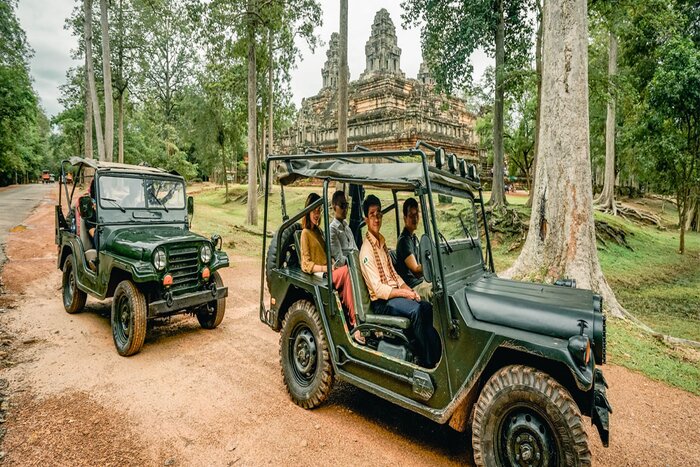
  • By Tuk Tuk: This is the most traditional and popular means of transport in Cambodia. You will easily see them everywhere, especially around the Angkor temple area. The average price for a day of tuk-tuk rental ranges from 25 USD.

  • By bicycle: Renting a bicycle is a great choice for those who want to enjoy the natural space, exercise, and explore Angkor temple freely. Bicycle rental prices are very affordable, only about 1 USD/day.

  • Rent a car or private taxi: This is the best option if you want to avoid the heat and want to move quickly between locations. Car rental price for 1 day usually ranges from 30 - 40 USD.
Tourists experience a tuk tuk to the Angkor Complex

c. Angkor Wat Entrance Fee

Angkor Wat offers one-day, three-day, and seven-day passes, with prices increasing for longer durations. Purchase your pass in advance to avoid queues at the entrance.
Entrance ticket price:
  • Ticket for 1 day: 37 USD
  • Ticket for 3 days: 62 USD (valid for 1 week)
  • Ticket for 7 days: 72 USD (valid for 1 month)
Tickets must be purchased exclusively from the Angkor Ticket Office; avoid purchasing them from other sources. Once a ticket is acquired, it is non-transferable, and refunds are not permitted. In the event of a lost ticket, a new one must be purchased.

II. The architecture of the Angkor Temple Complex in Cambodia  

Located in Siem Reap province, Cambodia, the Angkor complex is a large ancient architectural complex, including more than 600 works built from the 9th to the 15th century. This is one of the largest and most massive architectural complexes in the world and is one of seven World Heritage sites recognized by UNESCO.
The architectural wonder of Angkor perfectly blends Indian and Khmer cultural influences, showcasing structures largely crafted from sandstone and laterite, exuding a majestic and intricate splendor... The temple complex in cambodia is a combination of basic and sophisticated Khmer architecture. It is temple architecture with long, narrow corridors. The special mark of Angkor architecture lies in its meticulous design, reflecting the sacred Meru mountain that often appears in Hindu legends. The three-story main hall has a rectangular architecture located between a moat and a bridge. The wall is 3.6km long, connected by many deep corridors. The complex consists of 5 towers with a central tower and 4 square towers as the center of the throne. The structures at Angkor exhibit a pyramidal shape, characterised by multiple stacked levels, serving as an iconic representation of Mount Meru.
Get your guide to the Angkor Temple Complex
Another feature is the towers are a characteristic element of Angkor architecture. Towers are often built in the center of buildings, or at the corners, symbolizing protective gods. Another highlight of Angkor architecture is the exquisite reliefs. Angkor's buildings are decorated with many sophisticated reliefs, depicting scenes of daily life, war, religion,...

III.  What's inside the Cambodia Temple Complex?

Angkor Wat is a sprawling complex, which has over 1,000 temples of different sizes and shapes bearing Khmer architectural style. So be prepared to see it! Below are some famous architectural works you might consider

1. Angkor Wat Temple 

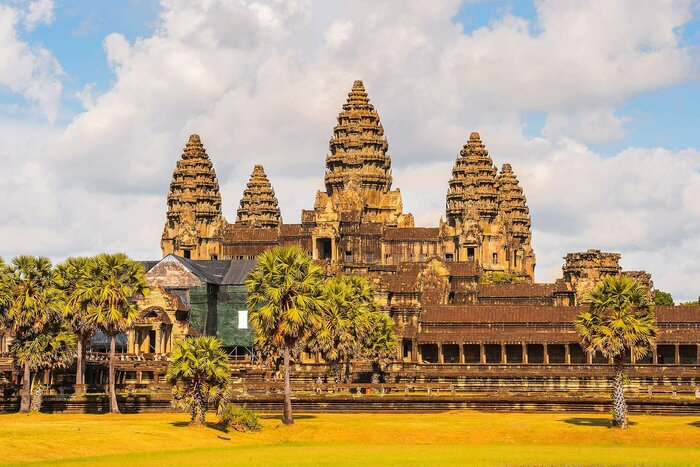
Angkor Wat Temple is the most prominent architectural work in the Cambodia Temple Complex. This is a captivating blend of Hindu and Buddhist influences, featuring sandstone terraces adorned with intricate carvings of celestial dancers and scenes from Hindu epics. The five lotus bud-shaped towers symbolize Mount Meru, the mythical abode of gods. Despite challenges, over 3000 beguiling apsaras, each with unique carvings and 37 hairstyles, grace its walls. Restoration efforts, like the German Apsara Conservation Project, are preserving these masterpieces.
This temple boasts a total of 398 rooms connected by a 1,500-meter-long corridor. Above, five interconnected towers stand in a tiered architectural structure, with the tallest tower reaching an impressive height of 65 meters and four subsidiary towers soaring to 40 meters. Each tower is divided into three symbolic levels: the first level represents the underworld or earth, the second symbolizes the human realm, and the third embodies the divine realm. The pathway leading to the main entrance of Angkor Wat is constructed with stone blocks, stretching 230 meters in length, nearly 10 meters in width, and positioned 5 meters above the water level of the surrounding moat. 
Angkor Wat Temple in Cambodia
This meticulous design not only showcases the architectural prowess of the builders but also emphasizes the spiritual significance embedded in every aspect of Angkor Wat's structure. With its intricate carvings, symbolic towers, and harmonious layout, Angkor Wat stands as a testament to the rich cultural and religious heritage of Cambodia.
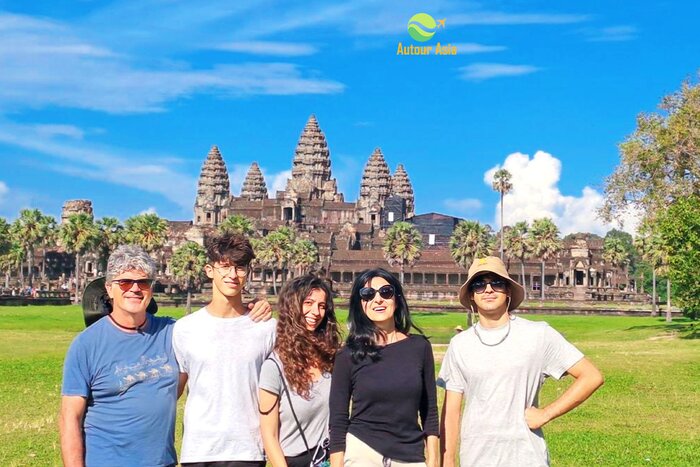
Tourists enjoy the beauty of Angkor Wat

2. Angkor Thom 

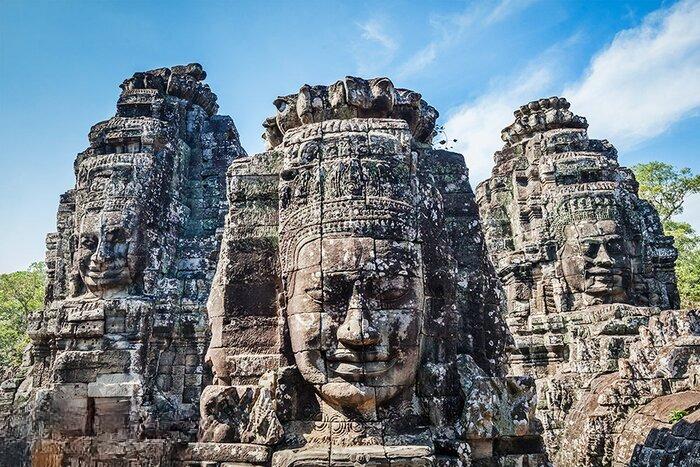
Get your guide to the Angkor temple in Cambodia by exploring the nearby "Great City" with its iconic Bayon temple, featuring giant rock faces overlooking the outside. A city with walls decorated with giant stone faces looks serenely through a moat filled with lotus flowers. This is Angkor Thom, the last and most enduring capital of the Khmer Empire, a place of ancient grandeur and vibrant life.
Step through the majestic South Gate, surrounded by towering guardians and guarded by mythical beasts. At its center, the mysterious Temple of Bayon rises, its mysterious faces radiating wisdom and compassion, their enigmatic smiles harboring the secrets of a forgotten age. Be prepared to discover intricate carvings that adorn every surface, depicting scenes from battles and royal ceremonies. Angkor Thom is more than just a collection of ruins, it is a testament to the enduring power of the imagination and a place where history whispers through every moss-covered stone.
Angkor Thom in Cambodia Temple Complex

3. Bayon Temple 

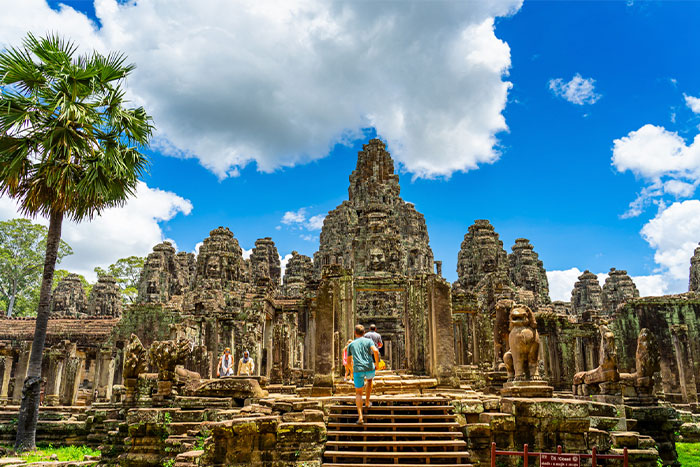
Located in the center of the Angkor Thom complex, Bayon Temple is one of Cambodia's most famous temples. The temple was built in the 12th and early 13th centuries by King Jayavarman VII, with bold Buddhist architecture.
 
Bayon Temple has a total of 54 large and small towers, each tower is sculpted with 4 faces of the god Lokesvara, facing four different directions. This is one of the outstanding features of the temple, creating a unique and impressive beauty. According to Khmer beliefs, 54 towers in Bayon are considered lucky numbers according to astrology. These towers also represent the 54 provinces of the Khmer kingdom under King Jayavarman VII. For this reason, the towers here have uneven sizes, symbolizing the different large and small areas between provinces.
Bayon Temple in the Angkor Temple Complex
 
In addition, Bayon Temple in cambodia temple complex also has a structure consisting of four surrounding walls, inside each wall is a different area, including the entrance gate, tower, ritual space, courtyard, shrine, and many connecting corridors. With unique beauty and profound historical significance, Bayon Temple is one of the architectural masterpieces of Khmer civilization and one of the world heritage sites recognized by UNESCO. The temple attracts many tourists to visit and admire its ancient and mysterious beauty.

4. Ta Prohm 

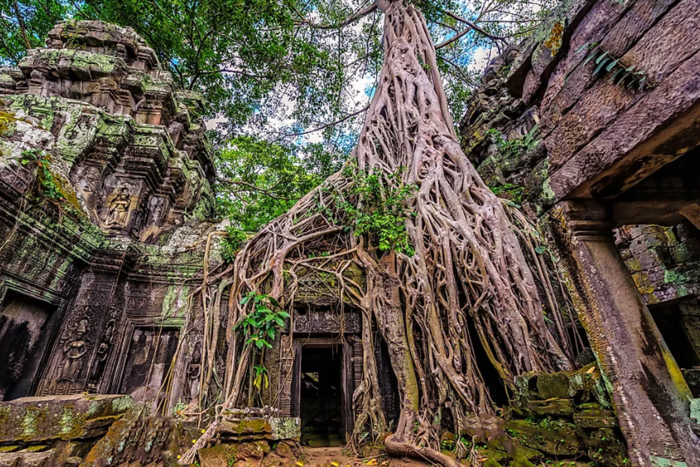
Imagine entering a forgotten jungle kingdom, where trees overwhelm ancient stone towers and emerald vines snake through crumbling corridors. That's Ta Prohm Temple, Cambodia's atmospheric ruins that will transport you to a world straight out of Indiana Jones. Dubbed the "Tomb Raider Temple" after Angelina Jolie's famous adventure, Ta Prohm is not your typical sleek monument.
Ta Prohm - the temple of strange tree roots
Built in the 12th century, this majestic complex was once a thriving Buddhist monastery and university. However, after the decline of the Khmer Empire, it was swallowed by the rainforest. Instead of clearing the jungle, archaeologists decided to preserve this unique combination of nature and history. The result is a breathtaking combination of ruined stone galleries, towering cottonwood trees whose roots cling to the ruins like giant tentacles, and hidden courtyards that sparkle with sunlight... So put those guidebooks away and prepare to be amazed. Wander through overgrown paths, discovering ancient carvings covered in these amazing layers of moss.

5. Banteay Srei in Angkor Temple Complex 

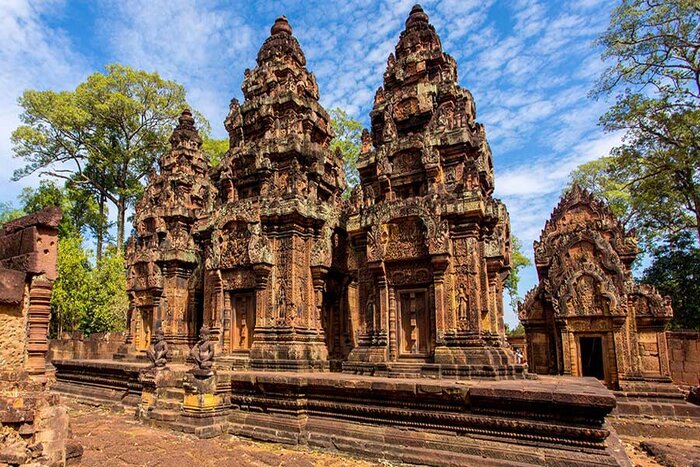
Tucked away amidst the vast Angkorian complex lies Banteay Srei, a jewel unlike any other. Unlike the grand sandstone giants that dominate Angkor, Banteay Srei whispers its beauty in a symphony of rose-colored stone. Built in the 10th century, this Hindu temple dedicated to Shiva and Parvati is a masterpiece of intricate carvings, earning it the nickname "Citadel of the Women" for the delicate touch it exudes.
Banteay Srei in Angkor Temple Complex
Every surface in Banteay Srei tells a story. Delicately carved scenes from Hindu epics like the Ramayana and Mahabharata dance across the walls, while celestial beings and mythical creatures peek out from the lintels and frieze, with intricate floral motifs, lifelike figures, and even depictions of everyday life etched with astonishing precision. Sunlight filtering through the gopurams casts shifting shadows on these stories, adding a touch of magic to the already enchanting atmosphere.

6. Rolous Group Temples 

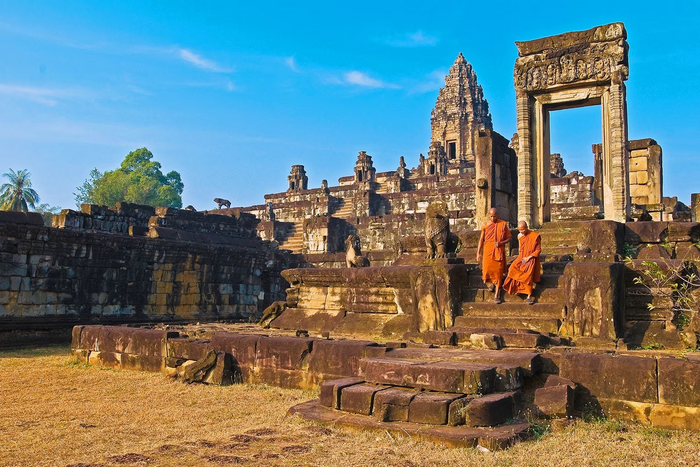
Nestled amidst the Cambodian jungle, 13 kilometers east of the famed temple complex in cambodia, lies the quieter charm of the Rolous Temples. This trio of ancient wonders – Bakong, Lolei, and Preah Ko – predates Angkor by a century, whispering tales of the Khmer Empire's early days. Imagine towering Bakong, a majestic five-tiered mountain temple rising from the emerald foliage, its sandstone facade glowing with the golden hues of sunrise. Nearby, Lolei and Preah Ko, adorned with intricate carvings and serene courtyards, offer glimpses into the artistic and spiritual life of this bygone era. A visit to the Rolous Temples is like stepping back in time, a chance to witness the nascent genius of Khmer architecture before it blossomed into the monumental grandeur of Angkor. So, escape the throngs of tourists and embark on a journey to these serene sanctuaries, where history whispers in the rustling leaves and ancient stones reveal the secrets of a forgotten empire.
A corner of the Rolous Group Temples

IV. Some useful tips for visiting the Cambodia Temple Complex

  • Dress modestly: Angkor Wat is a sacred site, so dress respectfully. Cover your knees and shoulders, avoiding revealing attire. Opt for breathable, comfortable clothing, as exploring will involve walking and climbing...

  • Sunrise or Sunset: Experience the magic of Angkor Wat bathed in the golden light of dawn or dusk.

  • Respect the Site: Treat the site with reverence. Avoid touching ancient carvings or climbing on structures. Remember, you're a guest in this historical haven.

  • Bonus Tip: Immerse yourself in the local culture by attending a traditional Apsara dance performance in Siem Reap.

  • Immerse Yourself in Culture: Siem Reap, the gateway to Angkor Wat, offers a vibrant cultural experience. Immerse yourself in the beauty of Apsara dance, a traditional Cambodian performance that tells ancient stories through graceful movements and elaborate costumes.

Visiting the Angkor Temple Complex in Cambodia is a journey of discovery. By planning your trip wisely and following these tips, you'll be rewarded with an unforgettable experience that will stay with you long after you leave the jungle behind. So, pack your sense of wonder, lace up your walking shoes, and let Autour Asia transport you to a world of ancient grandeur and timeless beauty.
This may help you

>>>  Siem Reap 3-day itinerary 
>>> Siem Reap Travel Guide 
>>> Our Cambodia Itinerary 15 Days
>>> All our Cambodia Packages Tours 
>>> Please contact AUTOUR ASIA, best travel agency in Asia 
0.0
No reviews yet
Share this article
Author:Tra My

Leave a comment

Your email address will not be published.

Related articles

Visiting Phan Thiet Mui Ne In November - Everything You Need To Know
14 October 2026 98 views

Visiting Phan Thiet Mui Ne In November - Everything You Need To Know

Nhi Nguyen Useful infos

What to do in Mui Ne and Phan Thiet in november?

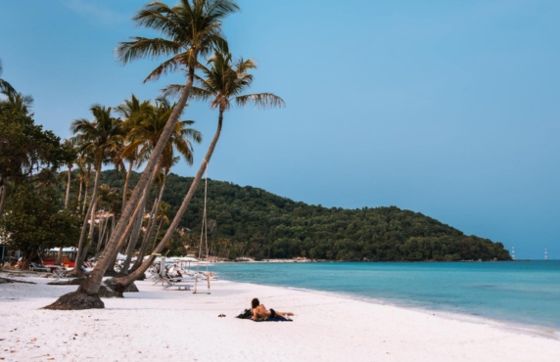
Phan Thiet, a coastal city in Binh Thuan Province, is best known for Mui Ne, an internationally renowned seaside destination. With its beaches, fishing villages, and desert-like sand dunes, the region offers a diverse range of landscapes rarely found elsewhere in Southeast Asia. In November, temperatures remain pleasant for exploring the coast, although occasional showers are still possible. Visiting Phan Thiet Mui Ne in November requires a little preparation to make the most of your stay. This complete guide covers the weather, must-see attractions, transportation options, and practical tips to help you plan your trip to Vietnam in November.
When Is The Best Time To Visit Beaches In Vietnam?
14 October 2026 310 views

When Is The Best Time To Visit Beaches In Vietnam?

Ngan Ha Useful infos

Best time to visit beaches in Vietnam

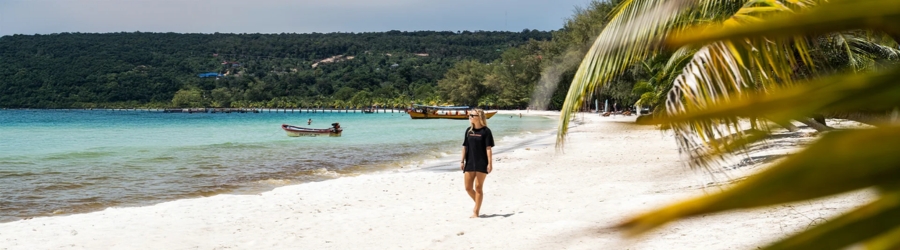
Vie​tnam’s​​​​​ ​be​aches are best enjoye​d at different time​s of the year, dependi​n​g on the region. From the turquoise ​waters of the Sout​h to the long stretches​ of white sand in th​e Central region and tropical islands,​ ​each area has its own climate patterns. To better understand when to visit Vietnam, it is ​im​​​​​​​​​porta​nt to con​sider the weather​ conditions in eac​h destination. T​he best time to visit beaches ​in Vietn​​​​​​am de​pends on ​​re​gion you​ choo​se as well as the acti​vities you have planned. The ​bes​t time to s​wi​m in Vie​tnam also ​varies accor​ding to​ rainfall, water temperature and sea conditions. U​nderstanding the Vie​tnam beach season helps​ you choose desti​nations that match ​your t​ravel dates and enjoy th​e coastline in good ​conditions.

Where To Find The Best Agency For Thailand Farm Tours?
14 October 2026 408 views

Where To Find The Best Agency For Thailand Farm Tours?

Noah Useful infos

Discover how to find the best agency for agricultural tours in Thailand

Discovering Thailand through its rice fields, plantations, and rural villages offers a different way to travel, far from traditional tourist circuits. But how can you choose the best agency for Thailand farm tours to enjoy authentic experiences with local communities? Several tour operators offer trips combining agriculture, gastronomy, and encounters with producers. Among them, Autour Asia is an option for travelers who want to personalize their itinerary. Known as Vietnam travel agency - Autour Asia, the company also offers tailor-made trips to several countries in Southeast Asia. With the local travel agency in Thailand - Autour Asia, travelers can explore a trip designed around their interests. Here are five organizations worth knowing, their distinctive features, and the essential criteria for planning a successful agricultural tour in Thailand.

Guide To Vietnam’s Pre-Arrival Form 2026 (72 Hours Before Arrival)
14 October 2026 162 views

Guide To Vietnam’s Pre-Arrival Form 2026 (72 Hours Before Arrival)

Nguyen Phuong Useful infos

Guide To Vietnam’s Pre-Arrival Form 2026 (72 Hours Before Arrival)

Planning a trip to Vietnam? Before packing your bags, take a few minutes to check the latest entry requirements and prepare the documents you may need at the airport.

Vietnam’s Pre-Arrival Information (PAI) system allows international travellers to submit selected personal, visa and travel details online before arriving in the country. After a successful submission, the system generates a QR code that travellers can save on their phones or print for use during immigration procedures. Although the online declaration is designed to help make arrival procedures smoother, travellers should understand when it applies, how to complete it correctly and which documents they still need to enter Vietnam.

In this practical guide, you will discover where to access the official PAI portal, what information to prepare, how to complete the declaration step by step, how to correct common mistakes and what to do when you arrive at the airport.
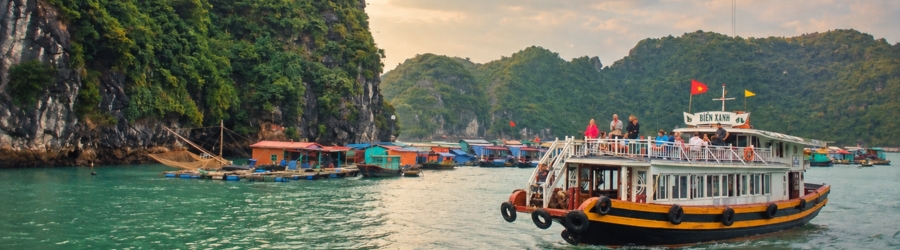
Important: Vietnam’s PAI arrangements may change as the system is implemented. Check the latest official guidance before departure. The PAI declaration is not a visa application and does not replace any visa or entry permission you may need.
Vietnam Or Thailand - Which Destination To Choose For A Safe Trip ?
14 October 2026 422 views

Vietnam Or Thailand - Which Destination To Choose For A Safe Trip ?

Phuong Thao Useful infos

Is Vietnam safer than Thailand ?

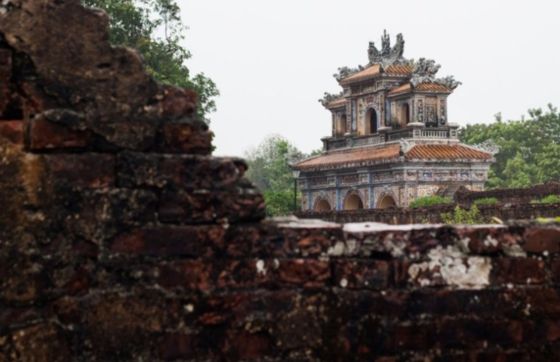
With its exotic landscapes, fascinating cultures and diverse experiences,‎‎ Vietnam and Thailand are among the most popular destinations in Southeast Asia.‎‎ However,‎‎ safety remains an important criterion when planning your trip. So, how can you choose Vietnam or Thailand for a safe trip depending on the way you travel‎‎ ? And is Vietnam safer than Thailand‎‎ ? Each destination has its own characteristics and points to consider. In this article,‎‎ Autour Asia helps you compare Vietnam and Thailand to better understand their differences and choose the destination that meets your expectations for your next trip to Asia.
Visiting Hue In November - Everything You Need To Know
13 October 2026 78 views

Visiting Hue In November - Everything You Need To Know

Nhi Nguyen Useful infos

November in Hue

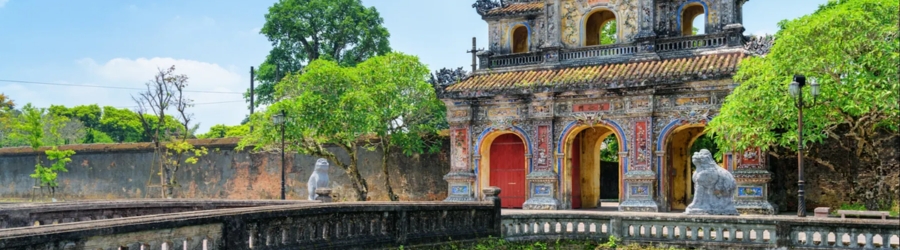
Planning a trip to Hue in November requires a little more flexibility than at other times of the year. Visiting Hue in November means experiencing the rainy season in central Vietnam, with prolonged showers and a risk of flooding. However, this period can also be an opportunity to explore the former imperial capital’s royal heritage, pagodas and renowned cuisine in a quieter atmosphere. The key is to choose your activities carefully, prepare alternative plans and check the weather conditions before setting out.


What To Know About Blowing Your Nose In Cambodia?
13 October 2026 385 views

What To Know About Blowing Your Nose In Cambodia?

Ngan Ha Useful infos

What to know about blowing your nose in Cambodia?

When‎ travelling‎ in Cambodia, some everyday‎ habits may raise‎ questions about local‎ customs. Is blowing‎ your‎ nose in public considered polite?‎ How should you‎ behave in restaurants,‎ on public transport‎ or‎ during a visit? These small details‎ matter when you‎ want to respect the local‎ culture. Discover‎‎ how to manage blowing your nose‎ in Cambodia discreetly, along with practical‎ tips on using‎ tissues during your trip. Autour Asia, Cambodia travel agency, helps you‎ discover local‎ customs with advice tailored to‎ travellers. From Cambodia travel etiquette to‎ personal hygiene‎‎ and everyday situations, a‎ few simple guidelines‎ can make your journey‎ more comfortable.‎‎ In Phnom Penh, Siem Reap‎ or Kampot, understanding‎ local customs helps you‎ avoid awkward‎‎ moments while making the most‎ of your stay.

Is It Rude To Blow Your Nose In Laos?
10 October 2026 419 views

Is It Rude To Blow Your Nose In Laos?

Nhi Nguyen Useful infos

Blow your nose in Laos: etiquette tips to know

Blow your nose in Laos is not necessarily considered rude, but it is best to do so discreetly, especially in quiet places or during meals. If you have a cold, use a clean tissue and avoid blowing your nose loudly in public. In temples and other places of worship, respect the peaceful atmosphere and local customs. If you need to blow your nose frequently, step away from others for a moment whenever possible. Finally, dispose of used tissues in a rubbish bin. These simple habits will help you observe good manners during your trip to Laos.


Hanoi, Vietnam
Satisfied more than expected
Phone & WhatsApp+84 971 33 77 08
Hanoi, Vietnam
Hanoi, Vietnam
MAY Place, 38/11 Hoang Cau, O Cho Dua Ward, Hanoi
Ho Chi Minh City, Vietnam
103/2 Tran Thai Tong, Tan Son Ward, Ho Chi Minh City
Siem Reap, Cambodia
007 Merry, Svay Dangkhum
Contact us WhatsApp Customize this tour