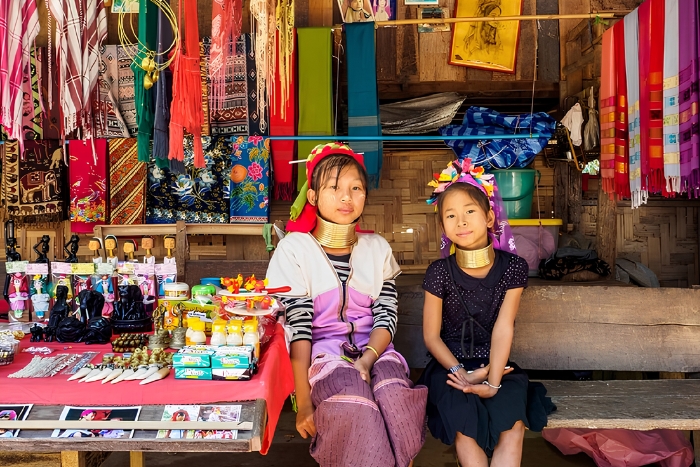
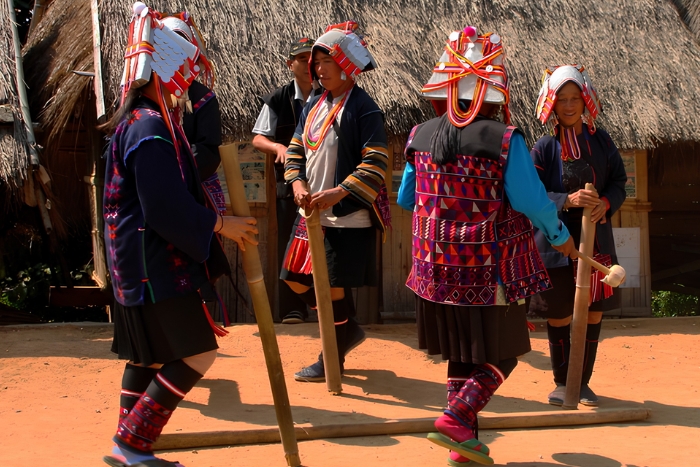
The Long Neck Village is located about 30 km from Chiang Rai. It is known for the image of Karen women wearing their brass neck rings from a young age. While the village is primarily known for this unique tradition, it is also renowned as a traditional craft village in Chiang Rai. You can watch the weaving process and purchase products directly from the artisans. For a more authentic experience, prioritize direct purchase and conversation rather than simply taking photos.
The village is open daily from 7:00 am to 7:00 pm. The entrance fee is approximately 200-300 baht (about 5-8 USD) per person, which directly contributes to the development of the local community and allows the village to continue welcoming tourists for many years to come.
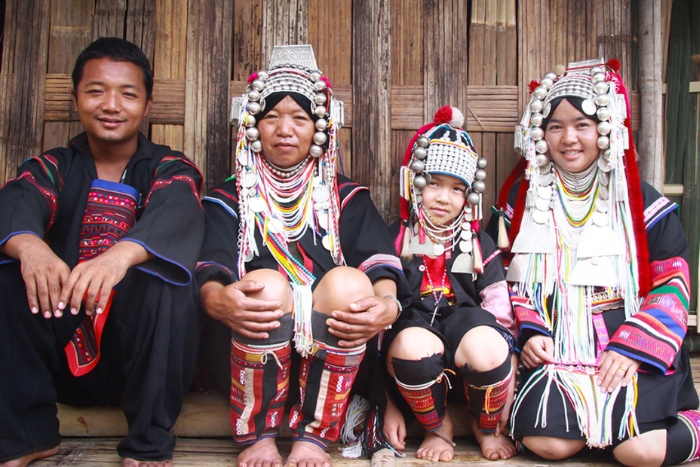
The second of traditional craft villages in Chiang Rai is Ban Lorcha, located on Route 1089, near the turnoff to Mae Salong. This Akha village is unique in that it is directly managed by a village cooperative with support from the PDA (Population and Community Development Association).
This community-based tourism project avoids the pitfalls of excessive commercialization. A local guide leads visitors through traditional stilt houses, past the Akha spirit gate, and through demonstrations of weaving on a loom and ancestral hunting techniques. The visit concludes at the village's small shop, where all proceeds from textiles and handicrafts are reinvested in the community.
The entrance fee is 80 baht (approximately €2-3), a symbolic price that will fund community projects and help create new ones in other villages.
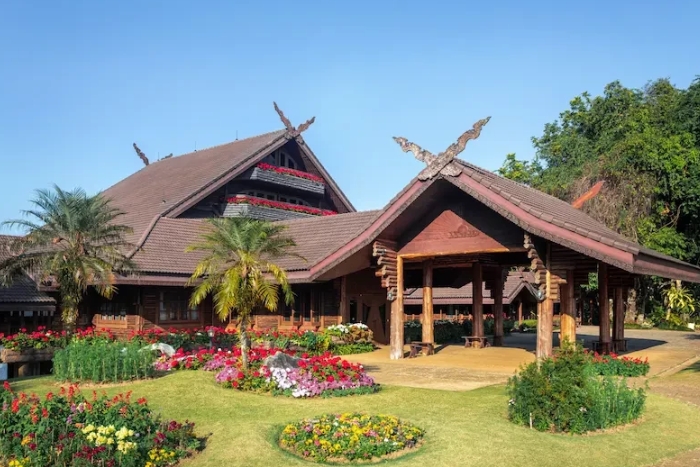
Nestled in the mountains 60 km north of Chiang Rai, the royal Doi Tung project is much more than a tourist site. Initiated in the 1980s by the Queen Mother, this sustainable development program has transformed a region once marked by opium cultivation into a model of responsible craftsmanship, involving the Akha, Lahu, Tai Lue, Lawa, and Shan communities.
Textile crafts play a central role. Women from the villages weave fabrics with remarkably precise geometric patterns and vibrant, harmonious colors on traditional looms. Embroidered scarves, bags, clothing, and accessories are sold in shops, with profits going directly to the producing families. Arabica coffee grown on the mountainside is also available, offering a perfect olfactory souvenir.
The entrance fee to Doi Tung is divided into several zones. For a complete exploration, you can buy individual tickets for each site or a combined ticket, priced from about 50 to 350 baht (about 2-10 EUR per person).
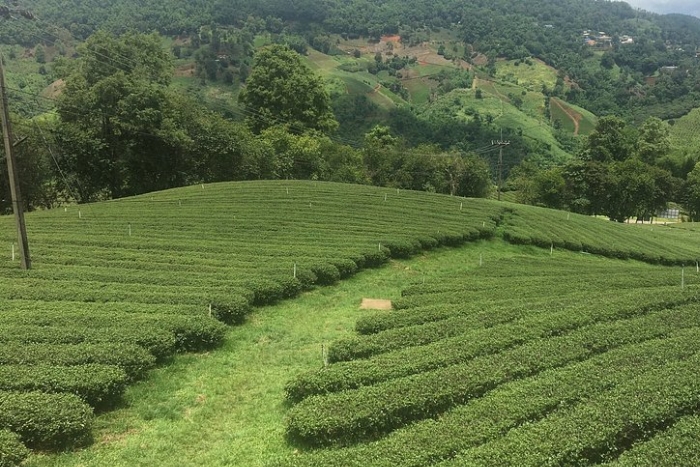
You have to climb to an altitude of 1,300 meters to discover Mae Salong, one of traditional craft villages in Chiang Rai, as surprising as it is exotic. Founded by Chinese nationalist soldiers who fled Yunnan after 1949, this village still strongly bears the imprint of Sino-Yunnanese culture: signs in Mandarin, Chinese temples, and above all, tea plantations stretching as far as the eye can see.
Local crafts here revolve around oolong tea, cultivated and processed using ancestral methods from China. In the producers' shops, you can taste and buy tea directly from the source at very reasonable prices. Besides tea, local artisans also offer calligraphy, Chinese pottery, sachets of medicinal herbs, and some silver jewelry inspired by the surrounding Akha traditions.
Visiting the village of Mae Salong (Doi Mae Salong, Chiang Rai) is completely free. You can stroll freely through the streets and tea plantations without paying an entrance fee. Only certain historical sites or hotel complexes in the village require payment.
Less frequented by tourists, Huai Khrai offers exactly what travelers are looking for: a village where craftsmanship isn't just on display for visitors, but practiced daily. Here, locals handcraft baskets, lightweight furniture, decorative objects, and kitchen utensils from bamboo and rattan using time-honored techniques.
The quality-price ratio is among the most affordable in the region. It's the perfect place to find items that are both useful and beautiful: a shopping basket, a tray, a bottle holder, or a fruit bowl to take home and decorate your kitchen.
Exploring the cultural villages of the Huai Khrai region is often free. Some community sites are open to visitors free of charge (donations are welcome).
The traditional craft villages in Chiang Rai create a unique cultural space where minority groups preserve their techniques, artisans, and traditions. They welcome visitors with exceptional hospitality. These villages share a common culture and contribute to telling the story of northern Thailand. When traveling in this region, you can buy directly from the artisans, which also contributes to preserving these traditions and supporting the development of the communities that depend on them. So, on your next trip to Chiang Rai, consider dedicating a day or two to visiting these villages. Upon your return, you will leave with memories enriched by the stories and culture of these places..









 FR
FR ITA
ITA