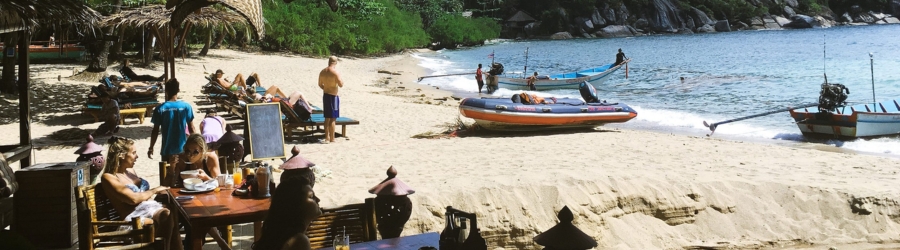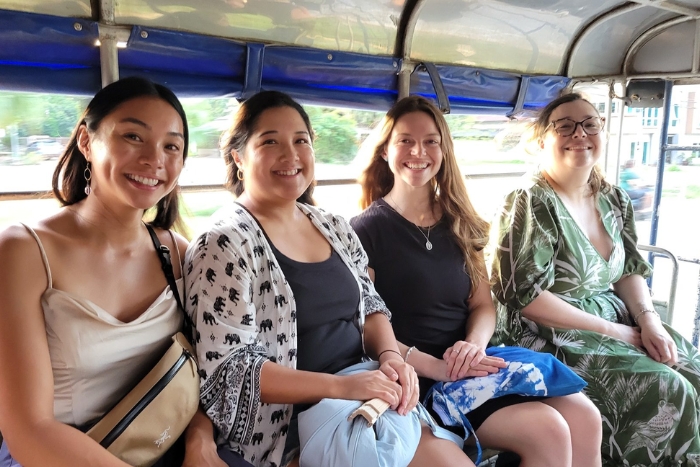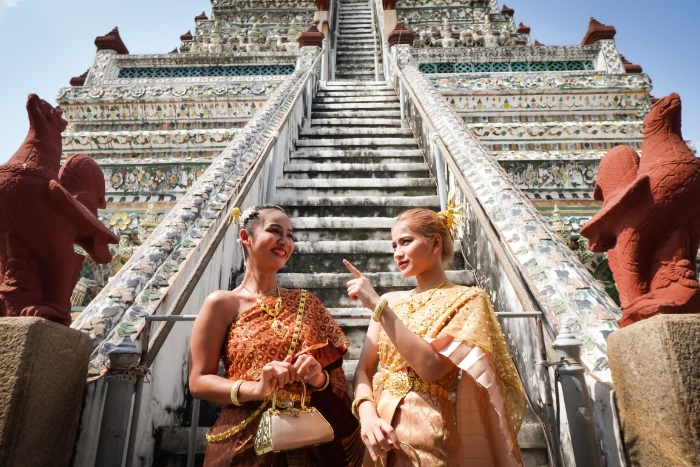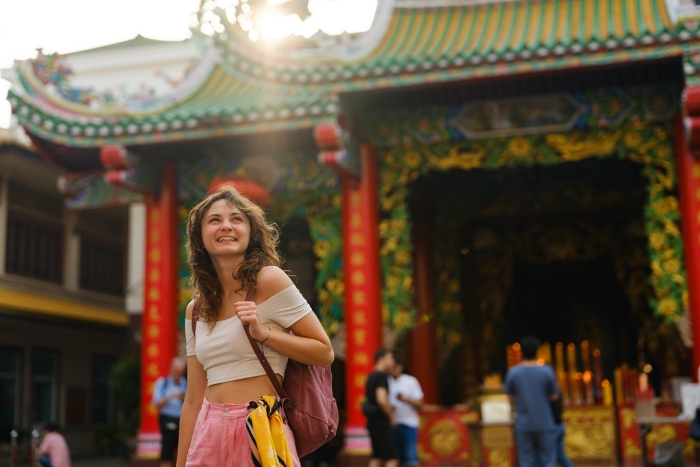
Is Thailand a good place for a solo trip? Yes. It is one of the easiest countries in Asia to travel alone: transport is simple, accommodation is plentiful, Thai people are used to visitors, and you are never far from other travelers if you want company. I went to Thailand last May on my own, with excitement and a little apprehension, and came home convinced that it is the perfect place for a first solo trip. This guide gathers what I learned on the road and what our team in Hanoi knows from organizing private trips in Thailand: how safe it is, what it really costs, where to go, how to meet people, a 2-week route, and a special section for women traveling alone.
For most visitors, Thailand is a safe destination to explore alone. The problems solo travelers meet most often are small and easy to avoid if you know them in advance:
Before you leave, read your government's official advice for Thailand (for example the UK travel advice for Thailand), take out travel insurance and save the Tourist Police number, 1155, in your phone.
Before my trip, the question on my mind was simple: is it risky to travel alone as a woman in Thailand? From the first day, I was struck by how respectful people were. I followed a few basic rules: avoid deserted places at night, keep an eye on my belongings and use Grab instead of renting a scooter. Honestly, I felt safer there than in some big European cities. Overall, Thailand is a very good destination for a solo female trip, as long as you stay as alert as you would at home.
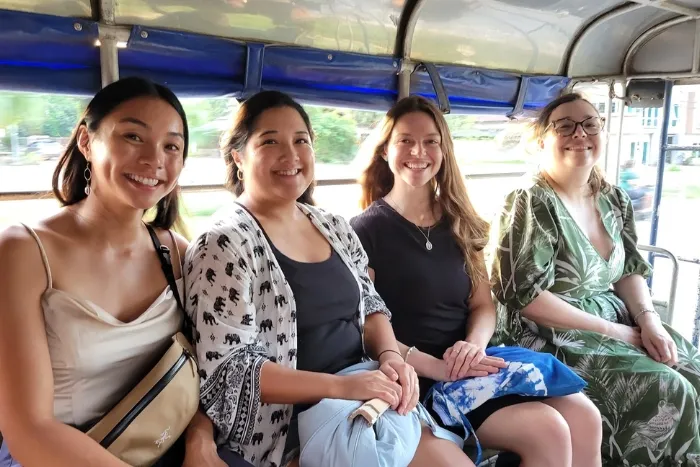
I did have one uncomfortable moment. At a night market in Chiang Mai, a man insisted on walking with me. I said "no" firmly and walked away towards a busy stall, and that was the end of it. It reminded me that trusting your instincts and setting clear limits is the best protection. Joining small group excursions for some activities also made me feel more at ease.
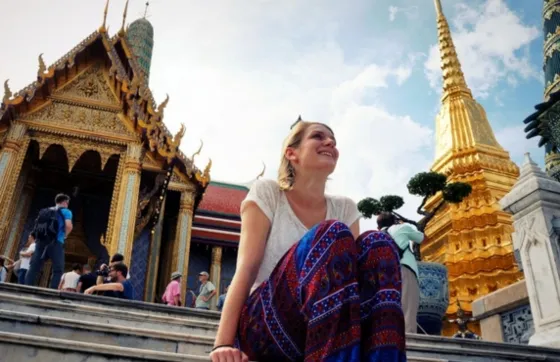
Thailand is a deeply Buddhist country, and dressing modestly is a sign of respect, not just a rule. I wore light, loose clothes: long skirts, wide trousers and tops that covered my shoulders, and I always kept a shawl in my bag for temple visits, where shoulders and knees must be covered. On the islands the atmosphere is relaxed, but topless sunbathing is not accepted. Modest outfits also helped me blend in and avoid unwanted attention. More advice in our guide on how to dress in Thailand.
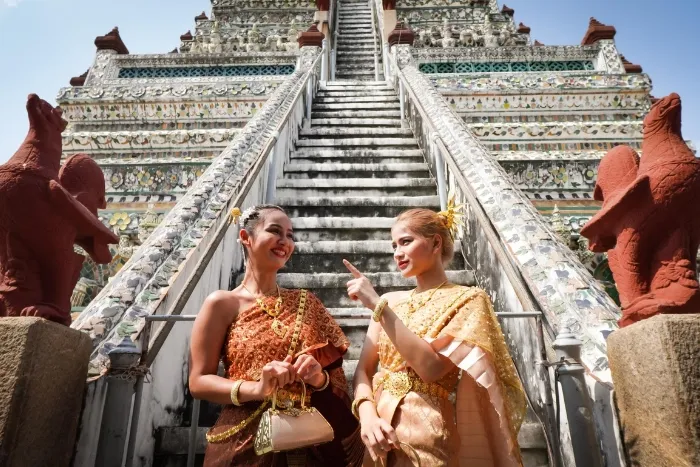
I always chose hotels with secure access (key cards or door codes) and a 24-hour reception, which was reassuring during the first nights. In Bangkok, I loved the quiet Ari district with its cafes under the trees; on the islands, I picked bungalows close to the beach but not isolated. A small tip that helped every time: send a message to the hotel before arrival to say you are traveling alone. If you travel with us, our team chooses well-located hotels and our driver waits for you at the airport: in Bangkok and Phuket, the pick-up team waits up to 2 hours after your flight's actual landing time.
Read also:
- 6 Best 4-star hotels in Bangkok
- Best 5-star hotels in Bangkok
The honest answer: traveling alone costs more per person than traveling as a couple, because nothing is shared. Three things make the difference:
To give you an idea, here are estimated prices from recent private trips quoted by our team (travel in 2027, 3-star hotels). These are estimates, not fixed prices: the final price depends on when you book and when you travel, as hotels and flights cost more in high season, and peak periods such as Christmas, New Year and major festivals can carry a surcharge.
| Private trip | Travelers | Estimated price per person |
|---|---|---|
| 20 days: Bangkok, Ayutthaya, Chiang Rai, Chiang Mai, Krabi, Kanchanaburi, with English-speaking guide | 2 people, double room | about 3,430 EUR (trip in January) |
| 21 days: Bangkok, Sukhothai, the north, Koh Samui and Koh Tao | 4 people, double rooms | about 2,255 EUR (trip in July-August) |
The larger the group, the lower the price per person. For one traveler, the same trip costs more than the 2-person price, and the exact amount depends on your dates, hotels and how many days you want a guide. Domestic flights are extra and their fares change often: in these quotes, a flight such as Bangkok - Chiang Rai or Krabi - Bangkok was about 99 EUR per person, and Chiang Mai - Krabi about 129 EUR, with 20 kg of luggage. For an exact price, the best is to ask for a quote with your travel dates.
A good way to keep a private solo trip affordable is to mix guided days and free days: use a guide for Bangkok, Ayutthaya and the north, where context makes a real difference, and enjoy the beach on your own at the end. For tips, we suggest about 4-5 USD per day for the guide and 2-3 USD per day for the driver. Ask us for a quote for one traveler: we will show you the price with and without guided days.
Almost all of Thailand works for a solo traveler, but some places make it especially easy:
For details on each place, read our list of the 10 best places in Thailand for solo travelers.
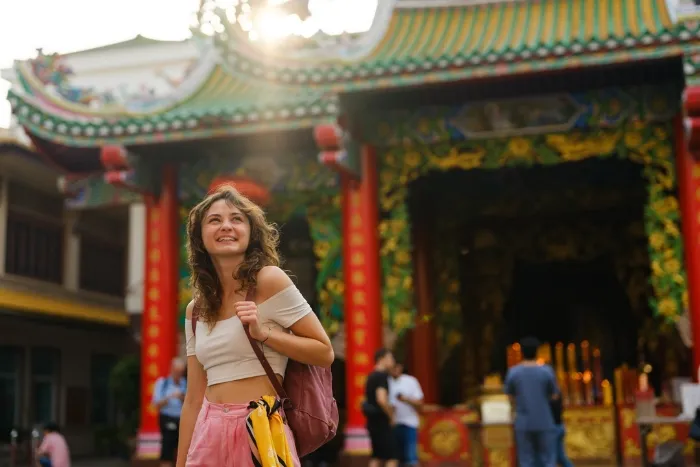
Traveling alone does not mean being alone all the time. In Thailand, company is easy to find:
You can also read how Alica spent 2 days in Bangkok in a small group.
This route follows the one we use most often for private trips: culture first, mountains next, and the beach at the end to rest. It works well alone because the guided days are in the places where context matters most, and the beach days are free.
| Day | Route | Highlights |
|---|---|---|
| 1 | Arrival in Bangkok | Airport pick-up, rest after the flight |
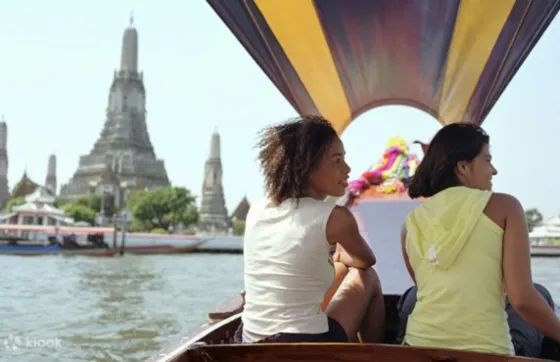
| 2 | Bangkok | Grand Palace, Wat Pho, long-tail boat on the canals, Wat Arun |
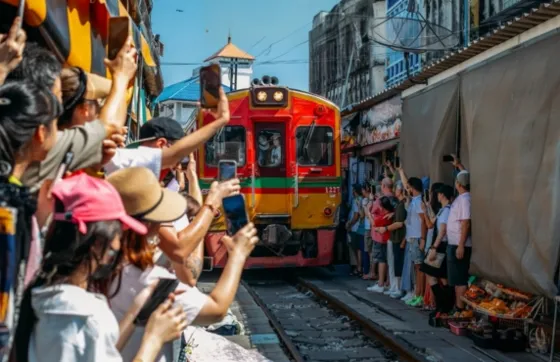
| 3 | Bangkok - Kanchanaburi | Maeklong railway market, Damnoen Saduak floating market, bridge over the River Kwai |
| 4 | Kanchanaburi - Ayutthaya | Erawan waterfalls, then the temples of Ayutthaya |
| 5 | Ayutthaya - flight to Chiang Rai | Morning visits, flight from Bangkok in the afternoon |
| 6 | Chiang Rai | White Temple, Blue Temple, Black House, boat on the Mae Kok river |
| 7 | Chiang Rai - Chiang Mai | Golden Triangle on the Mekong, then about 3.5 hours by road to Chiang Mai |
| 8 | Chiang Mai | Old town temples, Doi Suthep, night market |
| 9 | Chiang Mai | Shared cooking class or ethical elephant sanctuary |
| 10 | Chiang Mai | Doi Inthanon, Thailand's highest mountain, or a free day |
| 11 | Flight to Krabi | Transfer to Ao Nang |
| 12-13 | Krabi | Free days: Railay, island hopping, kayaking |
| 14 | Departure | Flight to Bangkok and home |
From June to October, swap Krabi for Koh Samui and Koh Tao, which are drier at that time of year. See our private itineraries for 2 weeks in Thailand and 10 days in Thailand, and the best months for each region in our Thailand tours guide.
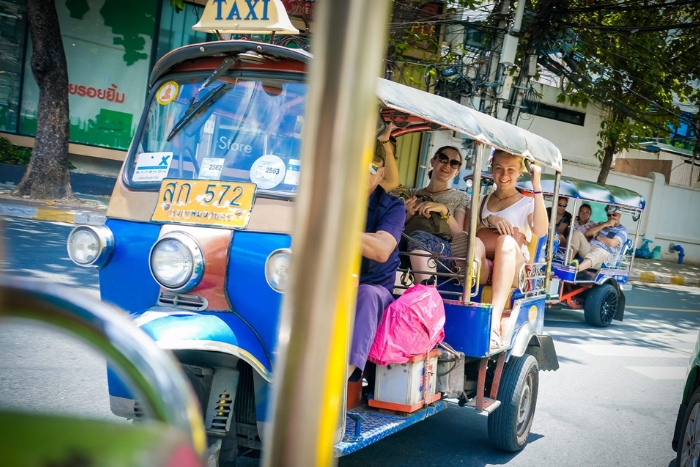
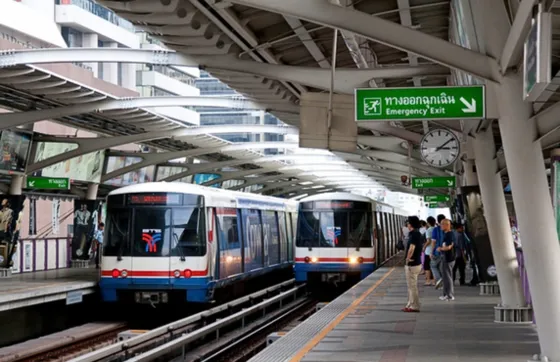
In Bangkok, the BTS Skytrain and the MRT metro help you avoid the heat and the traffic, and the river boats on the Chao Phraya are a lovely way to see the city. For taxis, one rule: no meter, no ride. At night, I always used the Grab app. Tuk-tuks are fun for short rides, as long as you agree on the fare first.
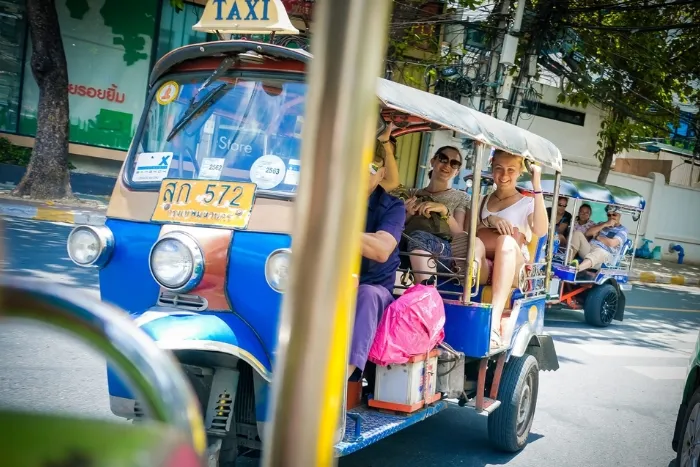
Between regions, domestic flights are the fastest option: Bangkok to Chiang Mai, Chiang Rai, Krabi, Phuket or Koh Samui takes about an hour to an hour and a half. The night train between Bangkok and Chiang Mai is a classic, safe experience if you enjoy slow travel. Ferries and speedboats link the islands. More details in our guide on how to get around in Thailand.
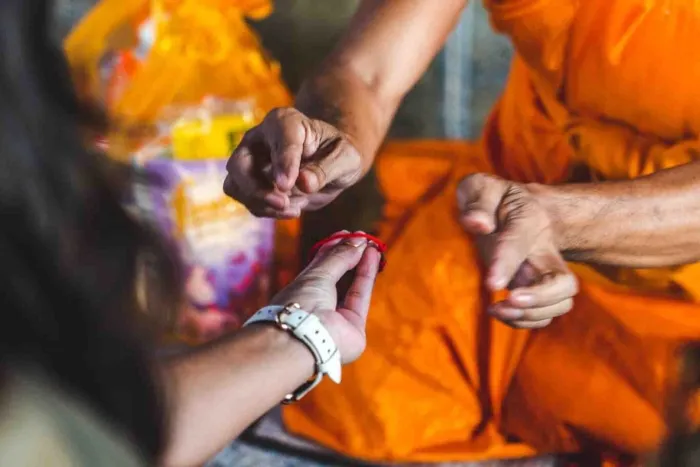
Looking back, my solo trip to Thailand felt like a gift: a sunset on the beach in Koh Lanta, a long chat with a market vendor, and uncontrollable laughter in a tuk-tuk stuck in Bangkok traffic. With a bit of common sense, Thailand is the perfect place to start traveling on your own. If you would like a route planned for you, with a guide on the days that matter and freedom on the others, our team will be happy to help: discover our private Thailand tours.
Learn more:
🧭Last updated : November 2026


Yes, Koh Phi Phi is generally a safe destination for solo travelers, thanks to its friendly atmosphere and numerous tourist facilities. When visiting Koh Phi Phi in November, you can explore the beaches, join group excursions and easily meet other travelers. However, remain vigilant with your personal belongings, especially in crowded places, and avoid isolated beaches after dark. For boat trips, choose reliable operators and check the weather conditions to enjoy your stay with peace of mind.
For most travelers, the best time to visit Thailand is from November to February, during the cool and dry season. Temperatures are pleasant in Bangkok and the north, and the Andaman coast around Phuket, Krabi and Koh Lanta enjoys calm seas and sunny days. It is also the busiest period, so book hotels early.
✔️ March to May: the hot season, with April the hottest month. It is also the time of Songkran, the Thai New Year water festival in mid-April.
✔️ June to October: the rainy season in most of the country, with short tropical showers, green landscapes, fewer visitors and lower prices.
✔️ The Gulf of Thailand (Koh Samui, Koh Phangan, Koh Tao) follows a different pattern: it is often at its best from January to August, while October to December is wetter there.
To choose the right month for your route, read our detailed guide to the best time to visit Thailand by region and month, then pick your highlights with our selection of the top 10 places to see in Thailand.
For an ideal Thailand itinerary 2 weeks, start in Bangkok (days 1 - 3) to explore its magnificent temples, royal palaces and lively markets, including a day trip to the ancient city of Ayutthaya. Continue to Chiang Rai (days 4 - 5) to discover the White Temple, Blue Temple and Golden Triangle, where Thailand, Laos and Myanmar meet. Then head to Chiang Mai (days 6 - 9) for its cultural heritage, traditional markets and the famous Wat Phra That Doi Suthep temple. Finally, spend the last five days on Koh Chang (days 10 - 14), enjoying its beautiful beaches, snorkeling and water activities. This two-week itinerary combines cultural discoveries, historical sites, mountain landscapes and seaside relaxation.
Yes, 10 days in Thailand is enough to combine two or three regions at a comfortable pace: Bangkok and the central plains with the north around Chiang Mai and Chiang Rai, or Bangkok, Chiang Mai and a few days on the beach in Phuket. It is not enough to see the whole country, so we suggest choosing two regions, three at most. See our 10 days in Thailand itineraries.
It depends on your interests and your dates. The north (Chiang Mai, Chiang Rai, Pai, Mae Hong Son) suits travellers who love temples, mountains and hill villages, and it is green and quiet in the rainy season. The Andaman beaches around Phuket are best from November to April, when the sea is calm. With 10 days you can also do both: a week in Bangkok and the north, then three days by the sea.
Our Thailand tour packages generally include accommodation in a double or twin room with daily breakfast, a private air-conditioned vehicle for all tours and transfers, an English-speaking guide, entrance fees for the visits in the itinerary, the meals specified in the programme, boat or bamboo rafting trips as mentioned, water and cool towels, and government taxes and service charges. Each itinerary page lists exactly what is included for that tour.
Domestic flights, for example from Bangkok to Chiang Rai or from Chiang Mai to Phuket, are not included in the package price. We quote them separately so that you see the real fare, and we can book them for you without booking fees.
Yes. Every Thailand package is a private tour, so the itinerary is a starting point. You can add or remove nights, change hotels, choose another island, swap activities or adjust the pace. A travel consultant reworks the programme with you until it suits your dates and interests.
Yes. Foreign travelers entering Thailand by air, land, or sea must generally complete the Thailand Digital Arrival Card (TDAC) online within three days before arrival, regardless of whether they hold a visa, qualify for visa exemption, or enter using a visa on arrival. The TDAC is an immigration declaration, not a visa, and does not replace any visa requirements. Travelers should complete the form through the official immigration website before their journey.
The cost depends on the visa type, whether you apply for single or multiple entry, your nationality, and the Thai embassy or consulate processing your application. Visa-on-arrival applicants from eligible countries are generally charged a fee of 2,000 Thai baht. Thailand Tourist visa fees may differ by application location and are usually non-refundable. Before applying, check the official e-Visa portal or contact the relevant Thai diplomatic mission for the current fee and accepted payment methods.


 FR
 ITA