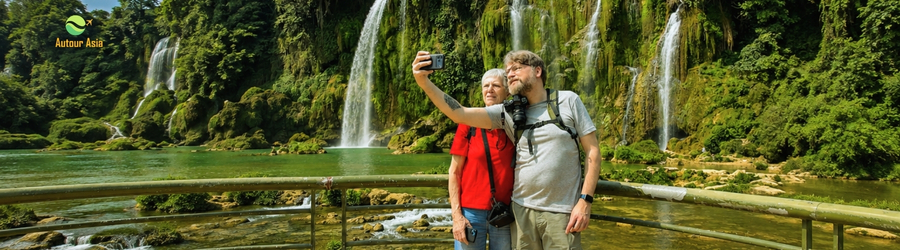
Traveling with a backpack means seeking greater freedom, more encounters and flexibility at every stage. A 15-day Vietnam backpacking itinerary allows you to go from lively cities to the mountains of the North, from rice fields to ancient towns, before discovering the peaceful life of the Mekong Delta. A backpacking trip in Vietnam thus offers a great diversity of experiences, but traveling across such a vast country in only two weeks requires suitable planning: which stops should you prioritize, how can you optimize your journeys and what budget should you plan without turning the trip into a race ? With Autour Asia, discover how to build a realistic, balanced backpacking itinerary rich in experiences to make the most of your trip to Vietnam.
A 15-day Vietnam backpacking itinerary gives you enough time to discover several sides of the country while maintaining the freedom that comes with traveling from place to place. Along the way, the bustle of the cities gives way to the mountains of the North, lush green rice fields, ancient towns and then the peaceful landscapes of the Mekong Delta. This diversity naturally gives the trip its rhythm, between cultural discoveries, nature and quieter moments.
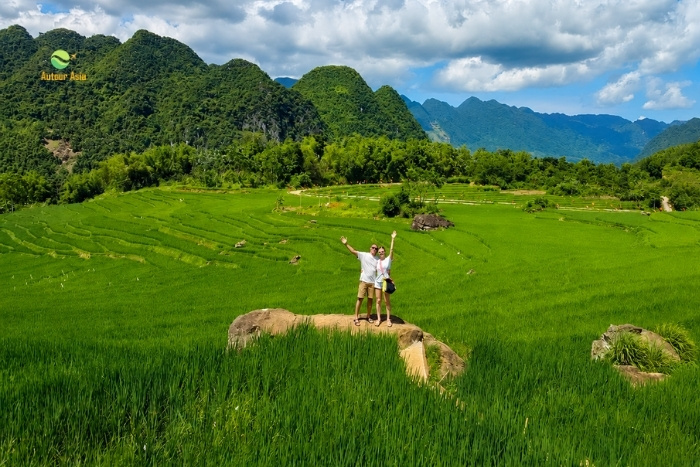
Backpacking also makes this mobility easier. Hostels, homestays, trains, buses and local transport allow you to travel simply and maintain a certain flexibility in both your budget and your journeys. For long distances, a few overnight journeys or domestic flights can save valuable time.
As Vietnam stretches a long way from north to south, fifteen days nevertheless require a coherent itinerary. With well-chosen stops and optimized transfers, you can fully enjoy the trip without spending most of your stay on the road.
A 15-day Vietnam trip with a backpack requires a well-planned itinerary to discover several regions without spending too much time traveling. Here are the stops to prioritize from North to South.
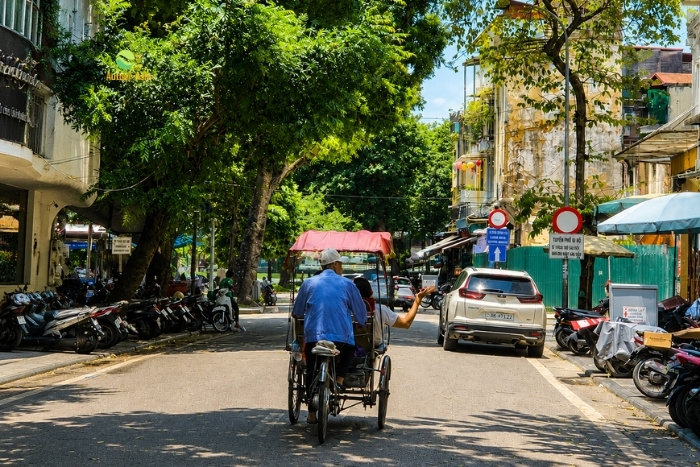
In Hanoi, your Vietnam 15 days backpacking begins in the heart of a capital where it is easy to get carried away by the atmosphere. One to two days allow you to wander through the narrow streets of the Old Quarter, take a break by Hoan Kiem Lake and observe life on the sidewalks. Between walks, sit down on a small stool to enjoy bún chả, phở or cà phê trứng, as close as possible to everyday life in Hanoi.
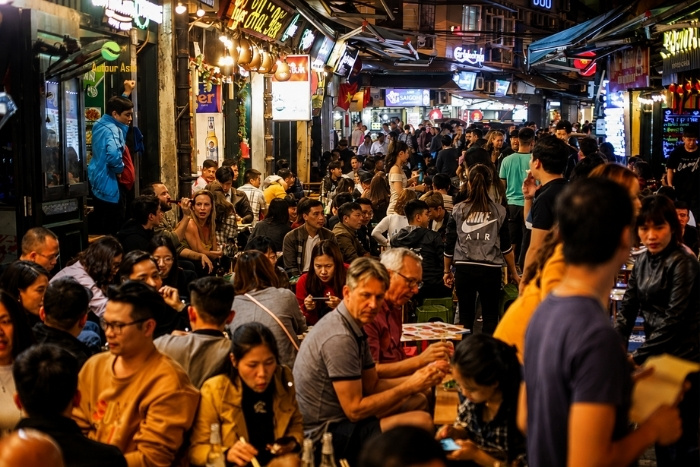
With its hostels, small eateries and cafés, the Old Quarter is an ideal base for backpackers. You can explore the city center on foot, improvise an evening around Ta Hien or get lost in the narrow streets as you wish. Transport is also easy to arrange to continue your itinerary. Hanoi thus offers welcome freedom on a 15-day Vietnam backpacking tour: discovering a lot, simply, without an overly busy schedule.
A change of pace awaits in the valleys of Mai Chau, where one day and one night offer a rural break during your 15-day Vietnam backpacking itinerary. Here, the bicycle becomes your best ally: the relatively flat paths cross rice fields, small hamlets and limestone landscapes around Lac and Pom Coong villages. Without a busy schedule, you can observe village life, discover traditional weaving or simply cycle through the landscapes at your own pace.
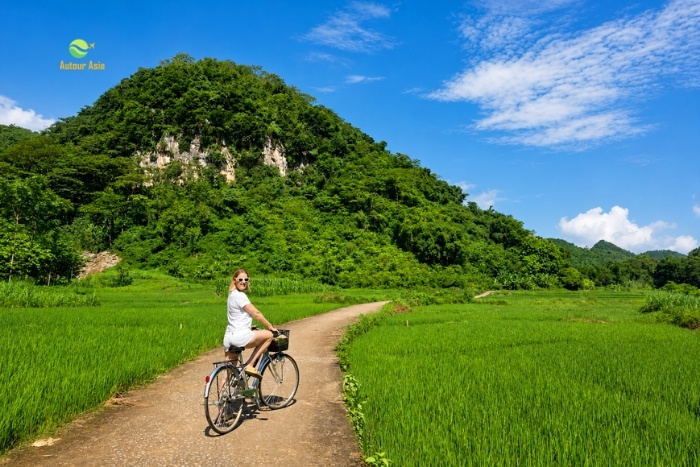
The experience naturally continues with a night in a homestay, sometimes in a traditional stilt house run by a local family. Shared meals, simple accommodation and a friendly atmosphere fit well with the backpacker spirit, while keeping the budget reasonable. Mai Chau is therefore better suited to a short immersion than to a succession of visits: you slow down, put down your backpack and fully enjoy the Vietnamese countryside before continuing your journey.
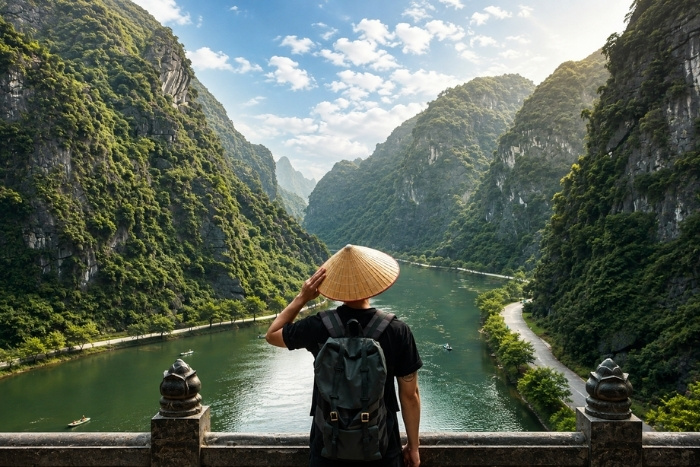
Ninh Binh offers a welcome break during your Vietnam 15 days backpacking. One to two days allow you to enjoy its limestone peaks, rice fields and waterways, in a more peaceful atmosphere that contrasts with the urban stops.
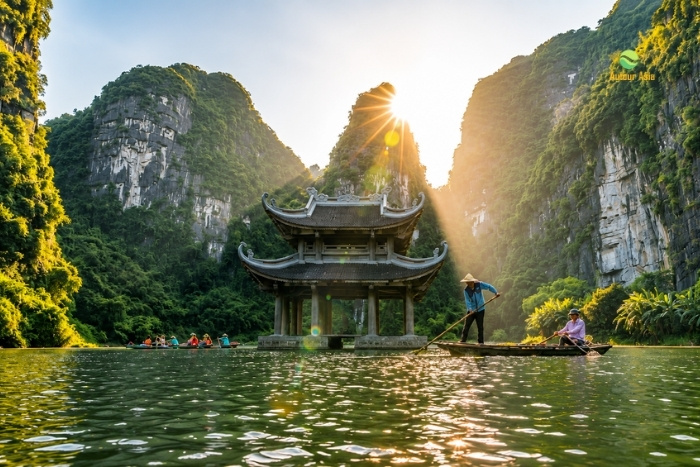
In Trang An or Tam Coc, a boat ride takes you between cliffs, natural caves and landscapes opening onto the countryside. The experience continues at Hang Mua, where the climb reveals a vast panorama over the valley. Below, the small roads between rice fields and villages are particularly well suited to cycling, at your own pace.
Tam Coc is also a pleasant base for a backpacking trip, with its guesthouses, small restaurants and bicycle rentals. From this area, Bich Dong Pagoda and the ancient capital of Hoa Lu easily complement the experience when time allows.
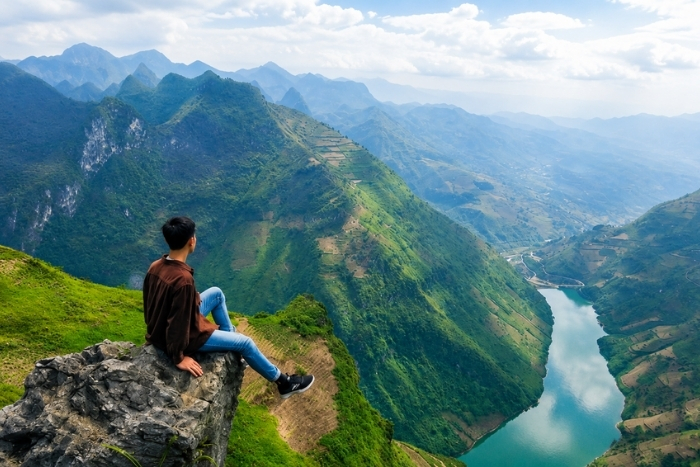
Wilder, Ha Giang adds an adventurous dimension to a 15-day backpacking trip to Vietnam. Two to three days are the minimum to explore part of the Ha Giang Loop, through valleys, ethnic villages and scenic roads. Dong Van and the spectacular Ma Pi Leng Pass are among the most memorable parts of the journey, with landscapes that sometimes give you the impression of traveling to the ends of the earth.
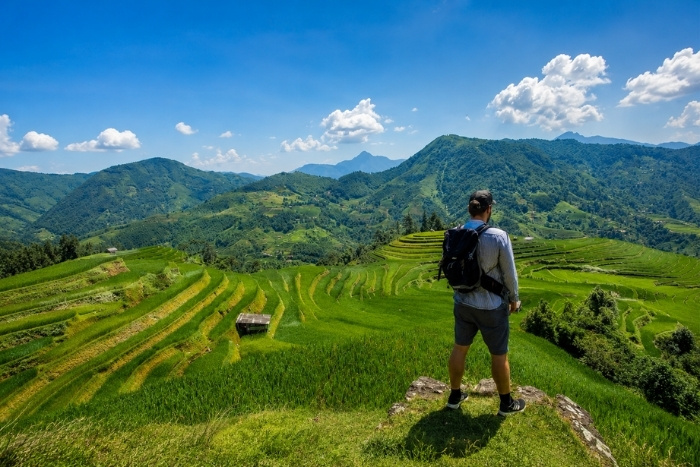
Once there, the days are largely spent on the road, between stops in villages and nights in homestays. A few hikes also allow you to walk among mountains, terraced fields and isolated hamlets. Each stop thus reveals another side of the Far North. The roads remain demanding, with many bends and visibility sometimes reduced by rain or fog.
Ha Giang ideally deserves more time. In a fifteen-day itinerary, this stop brings a real dose of adventure, but involves a faster pace.
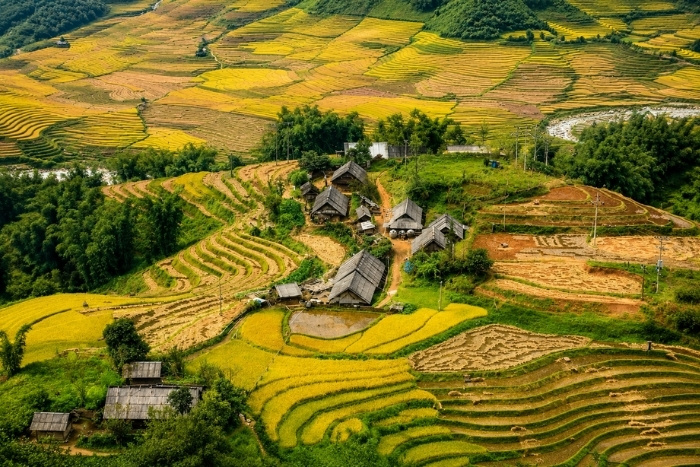
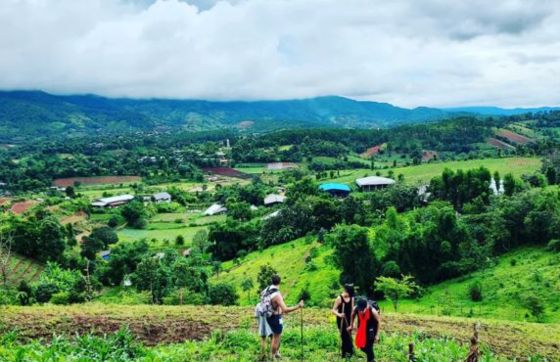
In Sapa, the adventure leaves the roads and continues on foot. One to two days of your 15-day Vietnam backpacking itinerary allow you to walk through the heart of the Muong Hoa Valley, where trails wind between terraced rice fields and mountain villages. Around Lao Chai and Ta Van, trekking brings you closer to rural life and offers an immersion quite different from the scenic road journeys of Ha Giang.
A night in a homestay naturally extends this experience and allows you to stay as close as possible to the landscapes. Depending on the chosen itinerary, the walk passes through small hamlets, rice fields and country paths, with distances adapted to the time available.
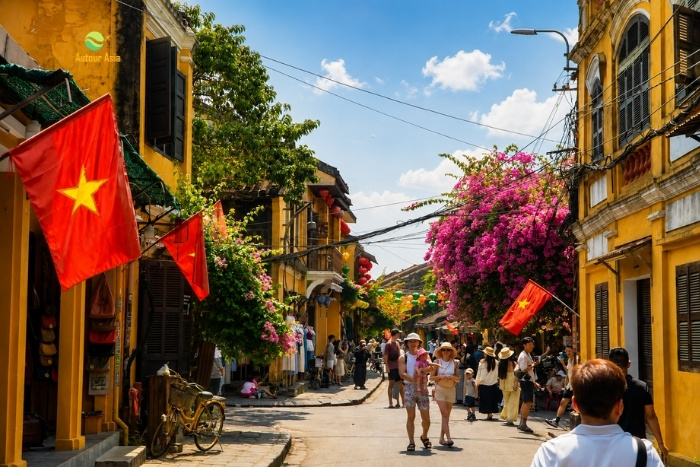
After the mountains of the North, Hoi An offers a gentler break in the middle of the journey. Two days allow you to explore the Old Town on foot, among yellow façades, ancient houses, the market and the Japanese Bridge. At nightfall, lanterns light up the narrow streets and riverbanks, while small local eateries invite you to try Cao Lầu or Mì Quảng.
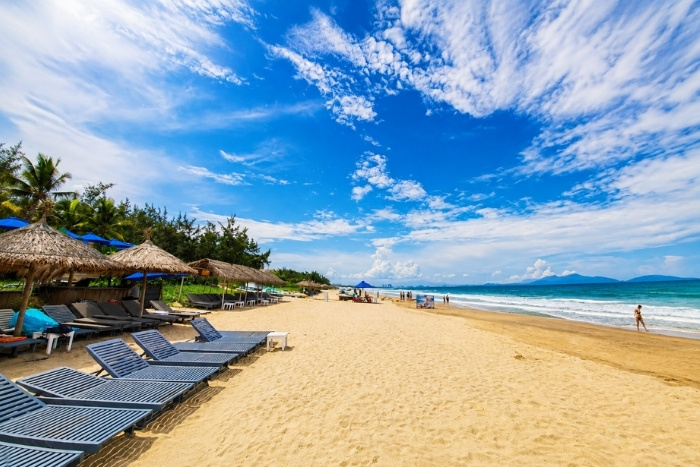
During your 15-day Vietnam backpacking tour, the atmosphere quickly changes as soon as you get on a bicycle in Hoi An. Just a few kilometers are enough to reach the rice fields, cycle through the countryside around Tra Que or continue to An Bang Beach for a break by the sea. This proximity between heritage, countryside and coastline makes the stop particularly enjoyable without requiring too many journeys.
With its hostels, guesthouses and restaurants suited to different budgets, Hoi An remains easy to experience as a backpacker. The proximity to Da Nang also makes it easier to continue the journey south.
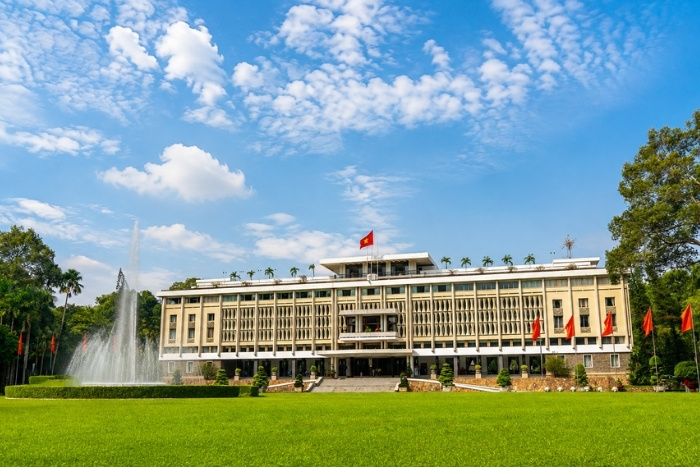
The scenery changes radically in Ho Chi Minh City, where the journey takes on a more urban pace. In one to two days, you discover a lively metropolis where skyscrapers, historic buildings and popular neighborhoods stand side by side. The Independence Palace and the War Remnants Museum offer an insight into its history, while a walk through the city center reveals a more contemporary side of Saigon.
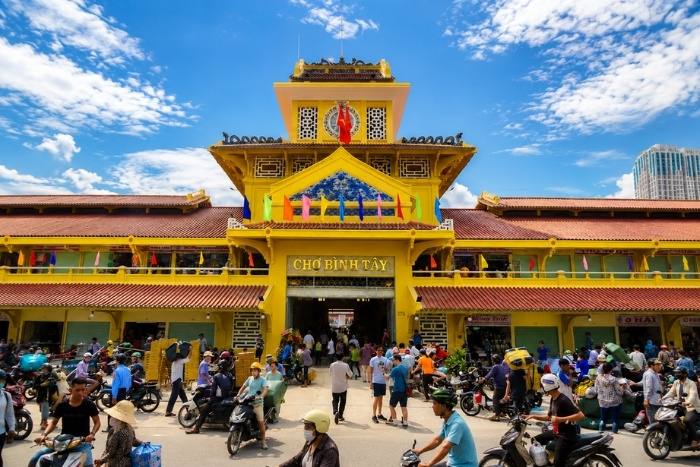
The atmosphere is different in Cholon, among Binh Tay Market, temples and shopping streets. Later, markets, small eateries and street food stalls allow you to try cơm tấm, bánh xèo or the famous cà phê sữa đá, while enjoying the energy of the city.
Easy to explore on foot in the city center, then by Grab or taxi for more distant neighborhoods, Ho Chi Minh City fits naturally into 15 days backpacking in Vietnam. With its many services and transport connections, it is also a convenient hub before heading to the Mekong Delta.
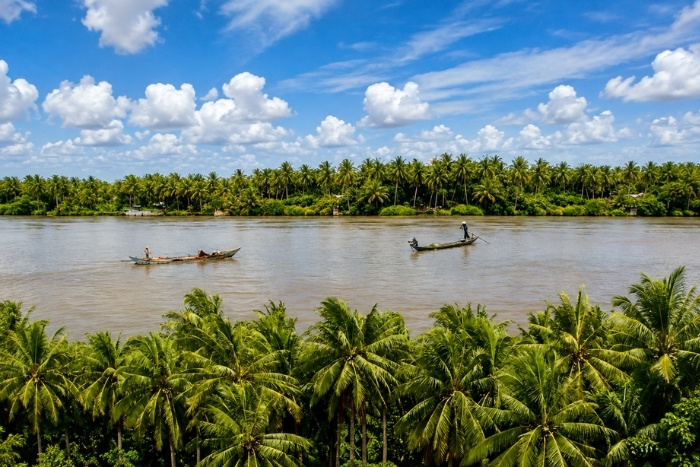
One last change of atmosphere: the Mekong Delta takes you far from the urban bustle, amid canals, coconut groves and villages of the South. For this final stop of your 15 days in Vietnam backpacking, one to two days allow you to discover Ben Tre or Can Tho, two stops with different atmospheres at the heart of river life.
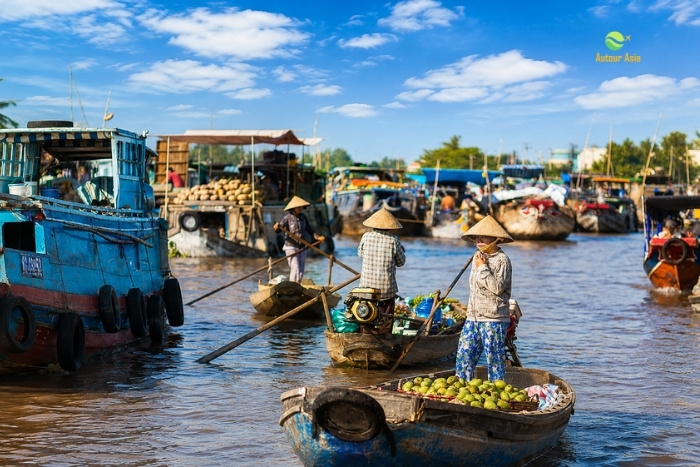
In Ben Tre, boat trips take you through small canals lined with coconut trees, while cycling allows you to pass through villages, orchards and coconut-related workshops. Can Tho offers a livelier atmosphere, particularly around Cai Rang Floating Market, where activity begins early on the river.
An organized excursion makes logistics easier, while an overnight stay gives you more freedom to appreciate the local pace of life. This immersion between waterways and countryside offers a more peaceful end to the journey before returning to Ho Chi Minh City.
With such a packed itinerary, transport plays an essential role in 15 days in Vietnam. The ideal approach is to combine several options depending on the distances in order to preserve your time, budget and energy.
Bus and minivan: practical for nearby stops such as Hanoi - Mai Chau - Ninh Binh and several connections in the North, with a reasonable budget.
Private car: more flexible for traveling between Hanoi, Mai Chau, Ninh Binh or other nearby stops without depending on schedules. The cost becomes more attractive when shared among several travelers.
Train: an interesting option on certain routes for traveling more comfortably and enjoying the scenery, despite journeys that are often longer.
Night bus or train: useful for saving time over long distances, even though a night spent in transit is generally less restful.
Plane: particularly suitable for Hanoi - Da Nang and then Da Nang - Ho Chi Minh City to make this 15-day itinerary more realistic.
Scooter and bicycle: suitable for local exploration, particularly in Mai Chau, Ninh Binh and Hoi An. In Ha Giang, riding requires experience, a valid license, insurance and caution depending on road conditions.
Walking, Grab and taxi: practical in Hanoi and Ho Chi Minh City for combining exploration on foot with quick journeys to more distant neighborhoods.
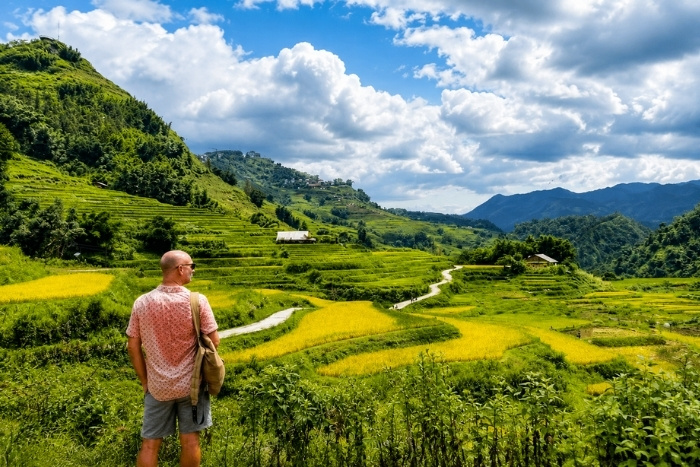
Traveling light remains essential when your 15-day Vietnam backpacking itinerary involves multiple stops and journeys. Versatile, easy-to-carry items allow you to keep your backpack practical throughout the trip.
A backpack suitable for two weeks of travel
A 40 to 50 L backpack, along with a small daypack and a rain cover, is generally enough. A weight of around 8 to 10 kg remains comfortable: it is better to plan on washing your clothes along the way than filling your backpack for fifteen days.
Clothing suited to different regions
Pack lightweight clothing, a warm layer for the mountains of the North and a waterproof jacket. Trekking shoes, sandals and an outfit covering the shoulders and knees for religious sites complete the essentials.
Practical essentials
Passport, necessary documents, insurance and digital copies remain priorities. Add a bank card, cash, a power bank, an adapter, a water bottle, sun protection and a small first-aid kit for everyday needs.
For a 15-day Vietnam backpacking, a budget of around €500 to €900 per person provides a realistic basis for this itinerary from North to South, excluding international flights. Transport and certain activities account for a significant share of the expenses.
Expense | Budget | More comfortable budget |
Accommodation | $105 - $175 | $210 - $350 |
Meals | $140 - $210 | $255 - $350 |
Transport | $165 - $255 | $235 - $350 |
Activities | $95 - $175 | $140 - $235 |
Safety margin | $60 - $95 | $80 - $115 |
Estimated total | $560 - $910 | $920 - $1,400 |
Transport deserves particular attention since the route combines buses, minivans and domestic flights from Hanoi to Da Nang and from Da Nang to Ho Chi Minh City. Activities in Ha Giang, trekking in Sapa or excursions in the Mekong Delta can also affect the total cost.
Backpacking Vietnam travel does not always mean choosing the cheapest option: over fifteen days, paying more for a domestic flight may be more worthwhile than losing long hours on an overland journey.
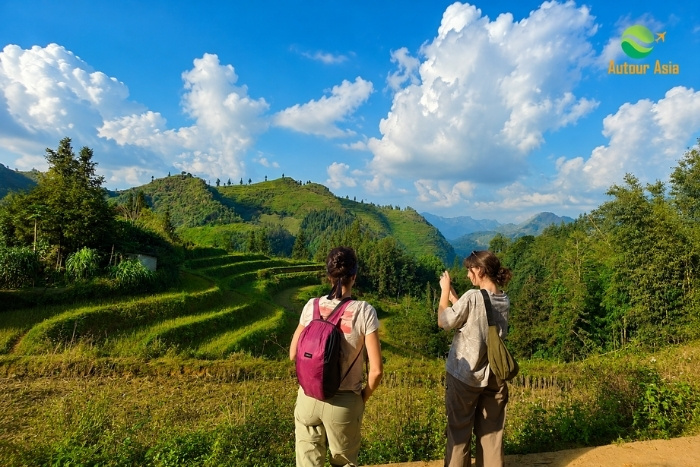
Accept a fairly fast pace: with several stops from North to South, plan a few moments of rest to limit fatigue.
Book important transport in advance: plan ahead especially for domestic flights, trains and night buses during busy periods.
Keep some flexibility in the North: in Ha Giang and Sapa, rain, fog or poor visibility can affect road and trekking conditions.
Limit consecutive overnight journeys: they save time, but remain less restful than a proper night spent in one place.
Travel light: with the many transfers, a lightly packed backpack makes daily travel much easier.
Keep copies of your documents: keep digital copies of your passport, insurance and important reservations.
Allow for a small margin: delays, weather or changes of plans may occur during your 15-day Vietnam backpacking itinerary.
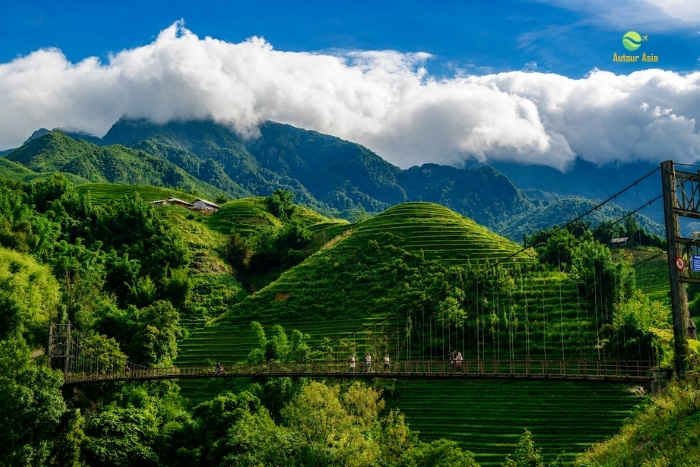
A 15-day Vietnam backpacking itinerary allows you to discover several sides of the country while maintaining the freedom that comes with backpacking. From the mountains of the North to the narrow streets of Hoi An, then from the energy of Ho Chi Minh City to the landscapes of the Mekong Delta, each stop brings a different experience. The key is to balance sightseeing, transport and rest time well in order to enjoy the journey without accumulating too much fatigue. To create a 15-day Vietnam backpacking trip suited to your pace and budget, Autour Asia, a local travel agency in Vietnam, can help you organize the stops, transport and experiences that truly match the way you travel.
If you would like to organize a 15-day Vietnam backpacking itinerary suited to your pace and budget, do not hesitate to contact AUTOUR ASIA, a tailor-made travel agency in Vietnam, for personalized advice and to create an itinerary that matches your preferences.
Learn more:
- 15-day trekking in Vietnam
- Vietnam in 15 days for couple
- 15-day luxury Vietnam trip
- 3 weeks in Vietnam
- Vietnam Travel Guide
- Vietnam Trip 2 weeks itinerary
- Vietnam Packages Tours







 FR
FR ITA
ITA