Yes, but a 2 weeks itinerary in Vietnam with your dog requires more careful preparation than a trip without a pet. Before even choosing your destinations, you need to check the entry requirements for Vietnam, the required health documents, and the rules of the airline you will use. The Vietnam travel agency - Autour Asia can also help travelers anticipate these practical requirements and organize an itinerary that takes their pet’s needs into account.
Vietnamese authorities provide for health checks for animals arriving from abroad. The owner must present the required documents, including the quarantine certificate issued by the competent authorities in the country of origin. The formalities must therefore be prepared sufficiently in advance.
It is also important to distinguish between the requirements for entering Vietnam and those imposed by the airline. An airline may have its own restrictions concerning the animal's weight, the transport crate, or the number of animals allowed on a flight.
For this reason, two weeks is an interesting length of time: you can create a relatively short itinerary and avoid too many transfers.
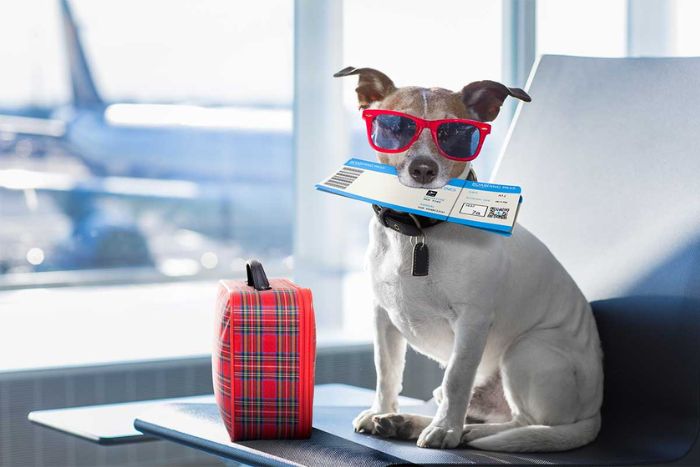
For a 2 weeks itinerary in Vietnam with your dog, it is better to focus on three main destinations and allow enough time for breaks. The following itinerary is a suggestion that can be adapted according to your dog's age, health, and habits.
Start in Hanoi to give your dog time to gradually acclimatize to the climate, sounds, and Vietnamese environment. The first few days can remain relatively relaxed: walks, exploring different neighborhoods, and plenty of rest.
Avoid scheduling too many visits immediately after arrival. The traffic and lively atmosphere of the city center can be overwhelming for an animal that is not used to them.
Ninh Binh is a particularly interesting stop for slowing down the pace. Rice fields, villages, and small roads allow you to focus on outdoor activities.
You can plan walks through the countryside or a cycling trip if your dog is accustomed to this type of activity. For boat trips in Trang An or Tam Coc, check the pet-access conditions with the service provider beforehand.
To reach Central Vietnam, flying can reduce travel time, but the conditions for transporting animals must be confirmed with the airline before booking.
In Hoi An, plan a more relaxed pace. The areas surrounding the city are well suited to walking or cycling, particularly in the rural areas.
For a 2 weeks itinerary in Vietnam with your dog, staying a few additional nights in Hoi An may be preferable to adding another destination. This is particularly true if your dog does not cope well with long journeys or is traveling for the first time.
If your pet is accustomed to traveling and transportation conditions are suitable, you could consider adding another stop. However, the goal should remain to keep the trip comfortable rather than simply increasing the number of destinations.
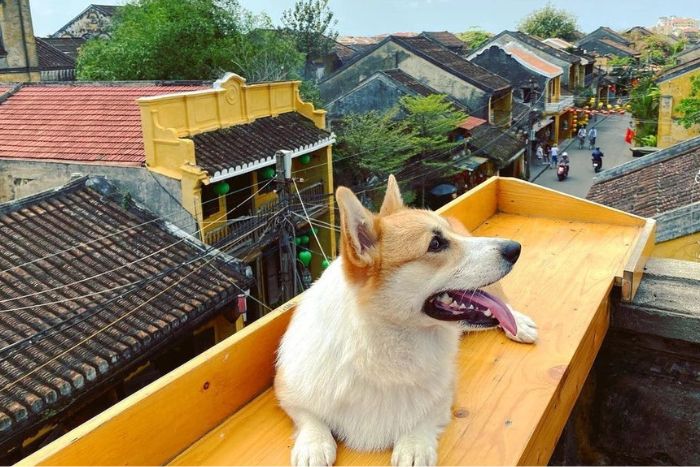
The success of a 2 weeks itinerary in Vietnam with your dog also depends on choosing suitable activities. It is preferable to prioritize outdoor experiences and allow plenty of time for breaks.
In Ninh Binh, walks through the countryside allow you to discover rice fields and karst landscapes without requiring intense physical effort. A cycling trip can also be considered if your dog is accustomed to this type of outing.
In Hoi An, country lanes and rice fields around the city provide a pleasant setting for walking or cycling. However, water-based activities and boat trips should be confirmed with service providers beforehand.
Visits to temples, museums, and monuments also require checking the access rules. Not all tourist sites automatically allow dogs.
For animals that are sensitive to heat, choose early-morning or late-afternoon outings and always carry enough water.
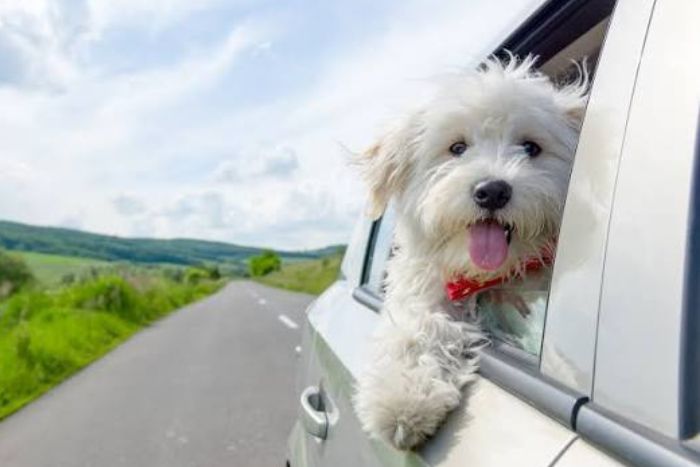
Transportation is an essential part of a 2 weeks itinerary in Vietnam with your dog. For short or regional journeys, a private car can be a particularly practical solution. It allows you to choose your schedule, take breaks, and avoid crowded public transportation.
For long distances, flying can save time, but each airline has its own rules. Vietnam Airlines notably allows the transportation of dogs and cats under certain conditions concerning age, weight, the transport crate, and the method of transportation. The service must be booked in advance, and the conditions applicable to your specific flight should be checked before purchasing your ticket.
When it comes to accommodation, do not simply look for the term “pet-friendly.” Check directly whether dogs are accepted in your chosen room category, whether an additional fee applies, and whether there are restrictions concerning the size or number of pets. It is also advisable to ask whether your dog is allowed to stay alone in the room.
Some pet-friendly accommodations along the itinerary
To make planning a 2 weeks itinerary in Vietnam with your dog easier, here are several establishments located in the main destinations along the route. This selection makes it easier to find suitable accommodation without having to completely change your planned itinerary.
Destination | Pet-friendly accommodation | Location | Why consider it? |
Hanoi | Hanoi La Palm Premier Hotel & Spa | Hoan Kiem, Hanoi | Located in central Hanoi, near Hoan Kiem Lake; currently listed among pet-friendly establishments. |
Hanoi | Euphoria Hotel & Spa | Hoan Kiem, Hanoi | A centrally located hotel with a terrace, currently listed as pet-friendly. |
Hanoi | Somerset Grand Hanoi | Hanoi | A practical option for longer stays thanks to its apartment-style residence format; currently listed as pet-friendly. |
Ninh Binh | THE GOAT BOUTIQUE RESORT | Ninh Binh | A property surrounded by greenery, with a garden and swimming pool, currently listed as pet-friendly. |
Ninh Binh | Tam Coc Village Bungalow | Tam Coc, Ninh Binh | An interesting option for staying close to the landscapes of Tam Coc; currently listed among pet-friendly accommodations. |
Ninh Binh | Trang An Sunny Garden Homestay | Ninh Binh | Accommodation with outdoor space, currently listed among establishments that welcome pets. |
Hue | Pilgrimage Village Resort & Spa | Hue | A resort in a quieter setting, currently listed as pet-friendly. |
Hue | Than Thien - Friendly Hotel | Central Hue | A hotel in the city center, close to the Perfume River and Truong Tien Bridge. |
Hue | La Y Riverview | Hue | Accommodation in a peaceful setting, particularly suitable for a dog that needs space and tranquility. |
Hoi An | Flamingo Villa Hoi An | Cam Pho, Hoi An | A villa near Hoi An's historic center, currently indicated as pet-friendly. |
Hoi An | La Terrazza | Cam Pho, Hoi An | Accommodation where pets are currently indicated as accepted; pet amenities are also mentioned. |
Hoi An | Coco Bungalows Hoi An | Dien Duong, Quang Nam | Bungalows in an environment that is more suitable for staying with a pet. |
Hoi An | Bellerive Hoi An Hotel & Spa | Cua Dai, Hoi An | An option to consider for staying near Hoi An while enjoying a quieter setting. |
Hoi An | Mayci Eco Boutique Hotel Hoi An | Cam Thanh, Hoi An | Located in a greener area of Hoi An, which can be interesting when traveling with a dog. |
Da Nang | Danang Amazing Ocean Villas | Da Nang | Villas with gardens, swimming pools, and access to a private beach; currently listed among pet-friendly accommodations. |
Da Nang | Dian Hotel & Apartment | Da Nang | Hotel and apartments currently listed as pet-friendly. |
Da Nang | Wink Danang Riverside, Unscripted by Hyatt | Da Nang | A riverside hotel currently listed among pet-friendly establishments. |
This selection makes it possible to stay consistent with the itinerary while identifying suitable accommodation options at each stop. However, this does not mean that pets will automatically be accepted in every room or under all conditions.
Before booking, contact the property directly to confirm that your dog is accepted on your planned dates, in your chosen room type, and for the entire duration of your stay. Also ask whether an additional fee applies, whether there is a weight or size limit, and whether your pet is allowed to stay alone in the room.
For a 2 weeks itinerary in Vietnam with your dog, also prioritize quiet accommodation with easy outdoor access and, if possible, a garden, terrace, or space where your pet can relax after traveling.
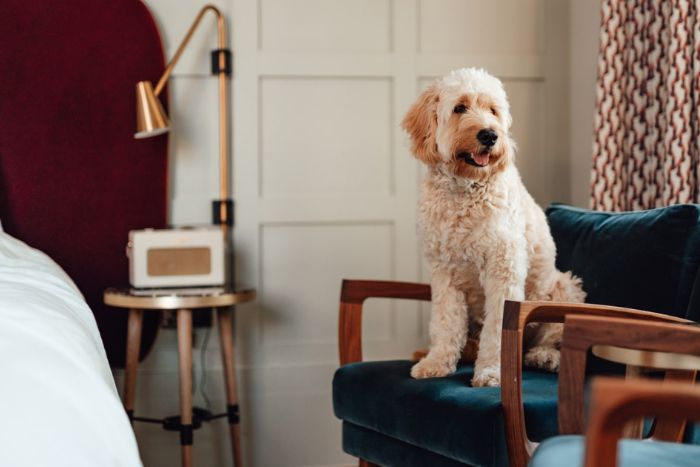
The weather is particularly important for a 2 weeks itinerary in Vietnam with your dog, as heat and humidity can make walks difficult.
If you travel in June, July, or August, it is preferable to focus on Central Vietnam, particularly Hoi An and its surroundings, while scheduling outdoor activities early in the morning or at the end of the day. Ninh Binh can also be visited, but outings during the hottest hours should be avoided.
Between November and February, conditions vary depending on the region. The North can be cooler, while Central Vietnam may experience rainy periods. Southern Vietnam can then be an interesting alternative depending on the weather conditions.
When traveling with a dog, therefore, there is no single perfect period for the entire country. Instead, choose the regions whose climate matches the period of your trip.
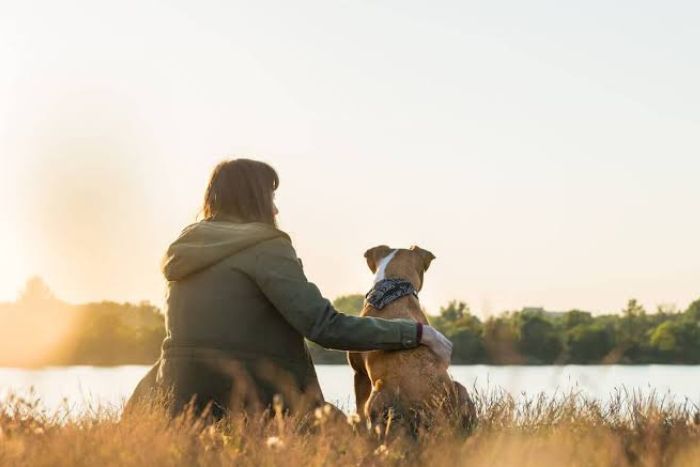
The cost of a 2 weeks itinerary in Vietnam with your dog depends on your desired level of comfort, the number of transfers, and especially the additional costs associated with traveling with a pet.
As a general indication, plan for:
Expense | Indicative budget |
Accommodation | $40–100 / night |
Meals | $10–25 / person / day |
Private car | $50–90 / day |
Activities | $20–50 / person |
Dog transportation | Varies depending on the airline |
Pet-related costs, particularly for air transportation, cannot be set at a single fixed rate: they depend on the airline, the animal's weight, the transport crate, and the itinerary.
For more information about the general expenses involved in a trip to Vietnam, also see our guide to the Vietnam travel budget.
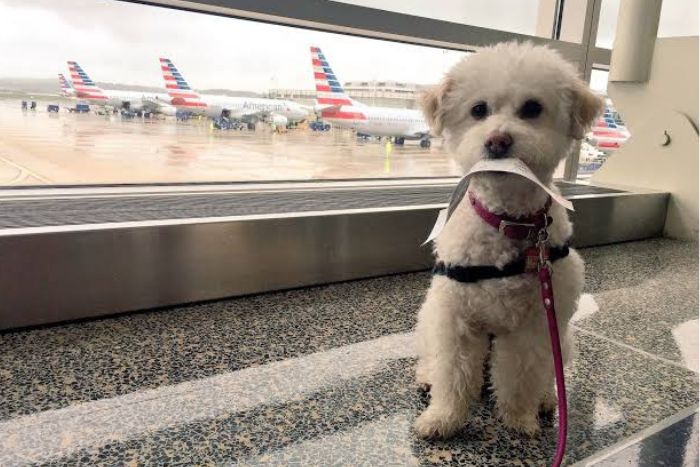
A good 2 weeks itinerary in Vietnam with your dog should above all respect your pet's pace. A few precautions can make a significant difference during your stay.
Before departure, check the health formalities, air transportation requirements, and policies of each hotel. Also keep the necessary veterinary documents easily accessible.
During the trip, avoid long walks during the hottest hours. Always carry water and give your dog periods of rest, particularly after changing cities.
Also avoid changing hotels every two days. For an animal, staying in the same environment for several consecutive nights can make the trip much more relaxing.
Finally, never assume that a restaurant, boat, monument, or means of transportation will automatically accept dogs. Checking in advance will help you avoid having to change your plans at the last minute.
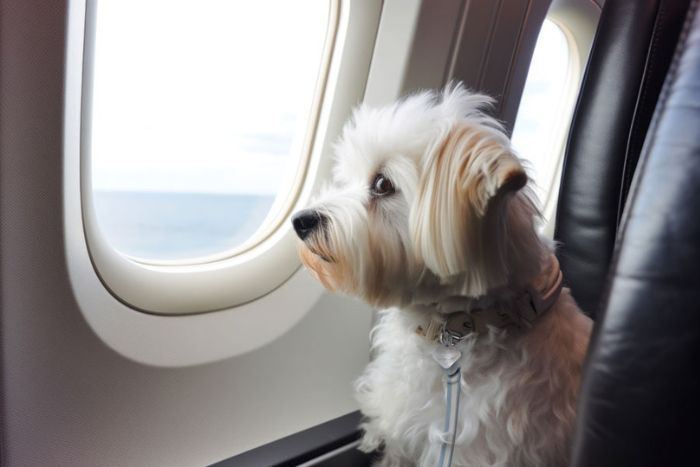
A 2 weeks itinerary in Vietnam with your dog can be a wonderful experience as long as you prioritize the quality of the trip over the number of destinations visited. For a first trip, Hanoi, Ninh Binh, and Hoi An offer an interesting combination of cultural discovery, natural landscapes, and outdoor activities. The most important thing is then to adapt each stop to your dog's habits: reduce long transfers, choose genuinely suitable accommodation, avoid extreme heat, and allow enough time for rest. Entry formalities and airline regulations should also be checked before making any booking. With the Vietnam travel agency - Autour Asia, you can create a more personalized itinerary that takes into account both your desire to explore and your companion's comfort.











 FR
FR ITA
ITA