
Transport In Phuket - Best Ways To Get Around Phuket For Travellers

How to travel around Phuket ? Phuket is Thailand’s largest island, and while its postcard-perfect beaches and jungle-clad hills are stunning, the reality of moving between them can be frustrating. Finding the best ways to get around Phuket is rarely as straightforward as visitors hope. Between haggling with tuk-tuk drivers, navigating winding coastal roads, and the sheer distance from, say, Patong to the airport, you need a solid plan. This guide breaks down the real costs, risks, and smart choices for transport on the island, written from a Western perspective that values safety, value, and a little adventure.
How to get around Phuket ?
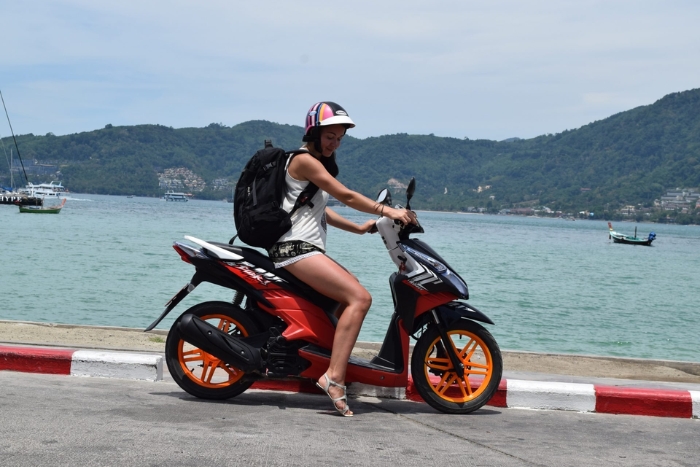
1. Motorbike - the cheapest way to get around Phuket
For experienced riders, a motorbike (scooter) is one of the cheapest ways to get around Phuket. You can zip past traffic, stop at any viewpoint, and pay around 200–300 baht (£5–7) per day. Petrol is cheap – 50 baht gets you a full tank from a roadside glass bottle. However, be brutally honest with yourself: have you ridden a 125cc bike in wet, chaotic conditions before? Phuket’s roads are dangerous. Tourists without a valid motorcycle licence (an International Driving Permit with a motorcycle endorsement) are not insured. If you crash – and many do – you pay hospital bills out of pocket. Also, police set up frequent checkpoints, especially in Patong, and fine unlicensed riders 500–1,000 baht on the spot. If you proceed, always wear a helmet and never leave your passport as a deposit.
2. Taxis - the best way to get around in Phuket
For most Western travellers, a private car is the most stress-free choice. Use the Grab app (Southeast Asia’s Uber) or Bolt (cheaper). You see the price before booking, no haggling. A trip from Phuket Airport to Patong typically costs 700–900 baht (£16–20). From Patong to Big Buddha, around 400 baht. Grab is more expensive than local taxis used to be, but the transparency is worth it. The cars are air-conditioned, drivers are tracked, and you can pay by card. During heavy rain or late at night, this is easily one of the best ways to get around Phuket for peace of mind. The only catch? Availability drops at 2–3am, and surge pricing can double fares.

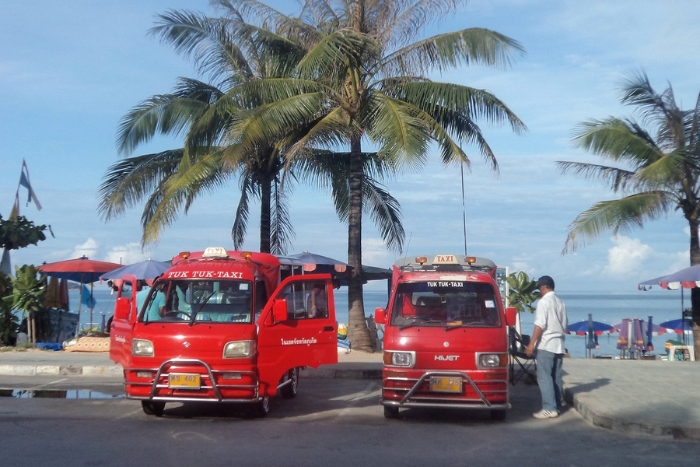
3. Tuk-tuks
Red, open-sided tuk-tuks are the face of Phuket transport, but they are also the most overpriced. Unlike Bangkok’s metered tuk-tuks, Phuket’s operate on a cartel-like system. A short 2-kilometre hop from Patong Beach to Bangla Road might be quoted at 200 baht – and that’s after bargaining. For the same distance, a Grab car is often cheaper, safer, and has air-con. That said, tuk-tuks are fun for a one-off experience with a group of friends. Agree on a price before climbing in, and keep small notes ready. Never take a tuk-tuk to the airport – the price will be astronomical.
4. Songthaews
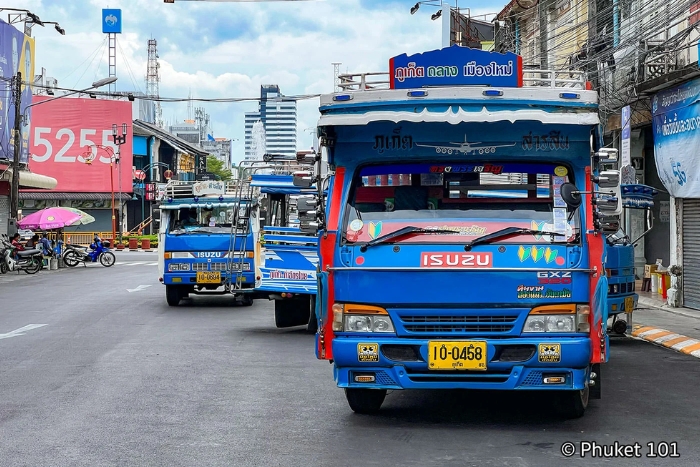
How to get around Phuket ? Songthaews are converted pick-up trucks with two bench seats in the back. They run fixed routes along the west coast (e.g., from Phuket Town to Patong, Karon, Kata). The fare is 30–50 baht per person, regardless of distance. You flag one down, tell the driver where you’re going, and pay when you get off. Why doesn’t everyone use them? Because they are slow, infrequent, and stop for anyone on the route. A trip from Patong to Phuket Town takes over an hour (compared to 30 minutes by car). They also stop running around 6pm. For a frugal solo traveller with no luggage, songthaews are viable. For anyone on a schedule, they are not.
5. Renting a car
For many, one of the best ways to get around Phuket for families is a rental car. If you are travelling with children or have a lot of luggage, a rental car is a solid option. Prices start at 800 baht (£18) per day for a small hatchback. The road network is decent, and driving is on the left (same as the UK, opposite to the US). Major international agencies (Hertz, Avis) operate at the airport, but local rental shops are cheaper. The downsides: parking in Patong is a nightmare (paid lots fill up early), and some roads to viewpoints like Promthep Cape are steep and narrow. Also, you must have an International Driving Permit – Thai police checkpoints target rental cars. If you crash, the insurance excess can be high, so consider buying the full waiver.

6. Phuket Smart Bus
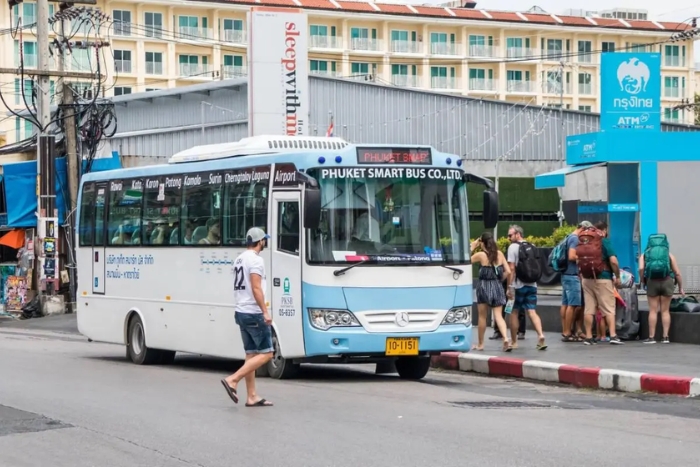
Is the Smart bus the best way to get around Phuket ? Not always, but it's a solid budget choice. The blue-and-white air-conditioned Smart Bus runs along Phuket's west coast from the airport down to Rawai Beach, stopping at Mai Khao, Bang Tao, Patong, Karon, and Kata along the way. You pay by distance – anywhere from 50 baht up to 170 baht for the full route – and buses come roughly every 30 to 60 minutes between 6am and 9pm. If you're a budget traveller staying on one beach for a few days, it's safe, cheap, and saves you from haggling. The downsides? It doesn't go to the Big Buddha, Promthep Cape, or most of the east coast. And after 9pm, you're back to taxis or tuk-tuks. There are also local government buses (orange or pink) that run from Phuket Town to the main beaches – they're only 30–40 baht, but they have no AC, no luggage space, run every 1–2 hours, and finish by 5pm. Those are really only worth it if you're travelling light and have nowhere to be in a hurry.
How to get around Phuket ? Above all, never rely on just one method. You might ride a motorbike for a week, then take a Grab car during a downpour. You might use a songthaew to save money, then splurge on a tuk-tuk for the nostalgia. The key is to start each journey with a clear idea of the distance, the traffic, and your own tolerance for hassle. If you are planning your trip with Autour Asia - a travel agency in Asia, it is also worth asking for local transport tips based on your itinerary. Getting around Phuket will never be as seamless as Singapore or Tokyo, but with this guide, you can navigate the chaos like a seasoned traveller – not a frustrated one.
>>> 1 week in Phuket
>>> Girlie weekend in Phuket
>>> Phuket Travel Guide
>>> Thailand Tours
>>> Thailand itinerary 2 weeks
Seven days in Phuket is not too long if you balance beach time with island hopping and inland adventures. For a well-rounded Thailand itinerary 2 weeks, spending a full week in Phuket allows you to explore beyond Patong – think the quiet sands of Mai Khao, a day trip to Phi Phi, and the viewpoint at Big Buddha. However, if you prefer non-stop variety, you might find seven days repetitive. The key is to mix day trips (Phang Nga Bay, Similan Islands) and avoid staying in one party-centric beach. With smart planning, a week gives you both relaxation and discovery.
For most travelers, Grab is the most reliable taxi app in Phuket, offering transparent pricing, wide coverage, and an English-friendly interface. Bolt is often cheaper (up to 30% less) but has fewer drivers, especially during peak hours or late at night. Both are far superior to street haggling. When considering transport in Phuket, having both apps on your phone is smart: use Bolt for short daytime trips and Grab for airport runs or when availability is low. Neither is perfect during heavy rain or after 2am, but together they represent the safest and fairest way to get around the island without a rental car.
Tourists in Phuket rely on a mix of transport options depending on budget and comfort. For families, renting a car is often one of the best ways to get around Phuket, offering space and convenience. Many rent motorbikes for flexibility, though this requires caution and a valid license. Others use the Grab or Bolt apps for private cars—safe, air-conditioned, and haggle-free. Tuk-tuks are iconic but overpriced for short trips. Budget travellers take songthaews (shared pick-up trucks) or the Smart Bus along the west coast. Ultimately, most visitors combine several methods rather than sticking to just one.
Related travel guide
Other similar articles


CUSTOMIZABLE BY LOCAL EXPERTS
Personalized trip at the original price!

REFUND GUARANTEE
We believe in our work and promise to give you money back.

GOOD PRICE / QUALITY
95% satisfied more than expected!

24/7 LOCAL SUPPORT
We are always available online to provide assistance at any time.

Most read articles


Autour Asia is highly recommended on
Embracing the mission of "Satisfied more than expected" and providing authentic experiences, we have received numerous recommendations on reputable travel forums: