
Information About Thailand Country - All You Need To Know
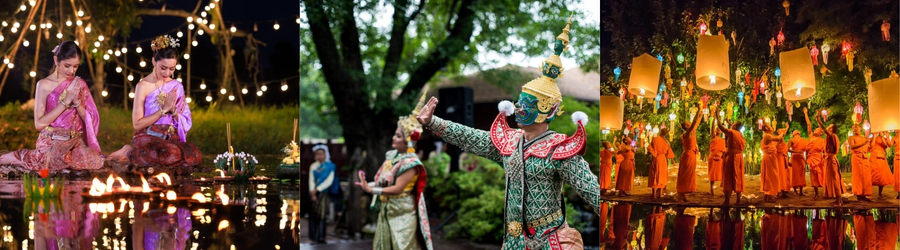
Thailand is one of the most sought-after destinations in Southeast Asia, renowned for its majestic temples, tropical beaches, fascinating culture, and warm hospitality. From the golden temples of Bangkok to the lush mountains of the North and the paradise-like beaches of the South, the country offers a wide range of experiences suited to every type of traveler. In this Thailand travel guide, we provide comprehensive Thailand information and essential info Thailand to help you prepare before departure, including history, geography, climate, entry requirements, budget, and practical advice. Whether you are planning your travel to Thailand, organizing your Thailand stay, or simply looking for reliable Thailand tourism information, this article brings together clear, structured, and up-to-date general Thailand info to support your travel in Thailand with confidence.
I. General Overview of Thailand
1.1. Meaning of the name "Thailand"
Among the key elements of info Thailand, the origin of the country’s name holds special importance.
Thailand is one of the few countries in Asia that was never colonized, a source of deep national pride firmly rooted in its identity. This historical independence sheds light on the profound meaning of its current name.
Formerly known as the Kingdom of Siam, the country retained this name until 1939, then briefly between 1945 and 1949, before officially adopting "Thailand" on May 11, 1949. The name change in 1939 marked the affirmation of a modern and sovereign national identity, while honoring the cultural heritage of the Thai people in a rapidly changing international context. Today, the name continues to symbolize independence, resilience, and historical continuity.
Key fact: The word "Thai" means "free", which explains the expression "land of the Free" or "Meuang Thai". The term "Meuang" once referred to an autonomous city-state typical of Thai peoples. As early as the 13th century, these populations migrating from southern China organized the territory into independent kingdoms.
1.2. Brief Historical Overview
Thailand’s history is one of the most frequently searched topics by travelers, especially history enthusiasts, when consulting Thailand general information. Understanding the major historical periods not only enhances appreciation of the sites visited, but also helps prepare your travel to Thailand with a clearer understanding of its cultural context.
- Prehistory
The earliest traces of human settlement in present-day Thailand were discovered in Lampang Province, where stone tools attributed to Homo Erectus date back approximately 70,000 years. Human presence is clearly attested from the Bronze Age onward. The archaeological site of Ban Chiang, listed as a UNESCO World Heritage Site in 1992, demonstrates the existence of an organized society through tools, pottery, and burial remains.
- The Thai Kingdom of Sukhothai (13th Century)
Before the rise of the Thai people to power, much of the peninsula had been under the influence of the Khmer Empire since the 9th century. In the mid-13th century, Thai groups migrating from southern China gradually became the dominant population. In 1238, the Kingdom of Sukhothai was founded, marking independence from Khmer rule and laying the foundations of the first Thai state. An inscription dated 1292 mentions King Ramkhamhaeng (Rama the Bold), often considered the birth certificate of the Thai nation. However, Sukhothai’s power declined roughly a century later.
- The Golden Age of Ayutthaya (1350–1767)
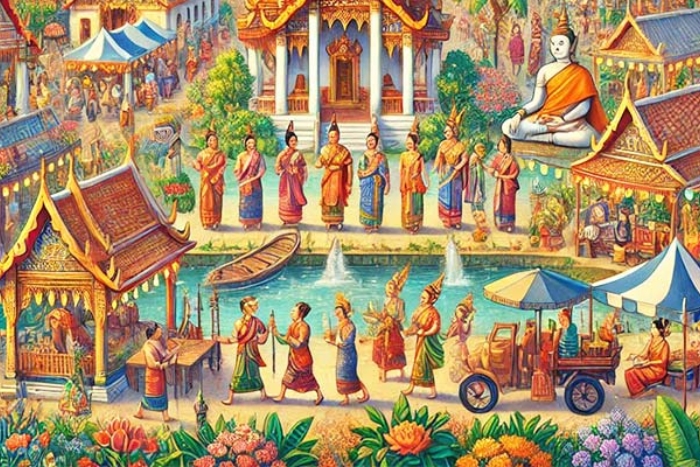
About a century later, power shifted to the Kingdom of Ayutthaya, which controlled central and southern Thailand. For over 400 years, Ayutthaya became a major political, economic, and cultural center, shaping the Thai language, traditions, and national identity.
Much of the heritage admired during travel in Thailand originates from this prosperous era.
- Thonburi, the Chakri Dynasty, and Bangkok
In 1767, Ayutthaya fell to Burmese armies. General Phya Taksin regrouped forces, reunified the territory, and ascended the throne in 1769, choosing Thonburi as the new capital.
After his assassination in 1782, General Chao Phya Chakri took the throne and founded the Chakri dynasty, which still reigns today. Bangkok was then established as the new capital of the kingdom.
- Thailand in the 19th Century
Thanks to military strength and reform-minded leadership, Kings Rama I, Rama II, and Rama III expanded Siam’s territory toward Vietnam and Malaysia. Throughout the 19th century, numerous trade treaties were concluded with Western powers, allowing Siam to maintain its status as the only Southeast Asian country never colonized.
- The 20th Century and Constitutional Monarchy
In 1932, a coup ended absolute monarchy and established a constitutional monarchy. In 1939, Phibun officially changed the country’s name from Siam to Prathet Thai (Thailand), meaning “country of the Thai people.” The constitutional monarchy continues to this day, illustrating a balance between tradition and modernization.
1.3. Geographical Location and Area
Geography is an essential part of Thailand general information, helping to explain the country’s strategic role in Southeast Asia.
Thailand is located at the heart of Southeast Asia, on the Indochinese Peninsula and extending into the Malay Peninsula, serving as a bridge between mainland Asia and the maritime world. The country covers an area of approximately 513,120 km².
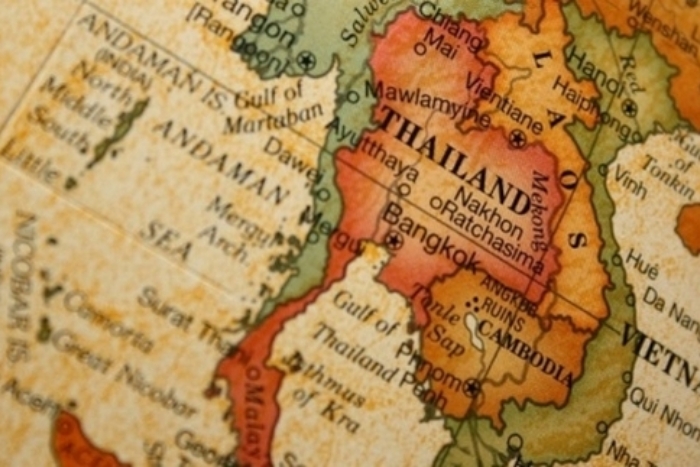
Thailand shares land borders with Myanmar to the west and northwest, Laos to the northeast, Cambodia to the east, and Malaysia to the south. It is also bordered by the Andaman Sea to the west and the Gulf of Thailand to the southeast, which supports trade and coastal tourism development.
These geographical factors are key elements of Thailand tourism information when planning a coherent itinerary.
1.4. Regional distribution
Thailand is divided into four major natural regions with contrasting landscapes, offering remarkable diversity for any Thailand stay.
The North, dominated by mountains, lush forests, and deep valleys, is home to Chiang Mai, the country’s cultural hub. This region frequently appears in Thailand travel information for travelers interested in trekking and traditional culture.
The Central Plains, crossed by the Chao Phraya River, form the agricultural and economic heart of the country. Fertile and green, this region includes the capital, Bangkok.
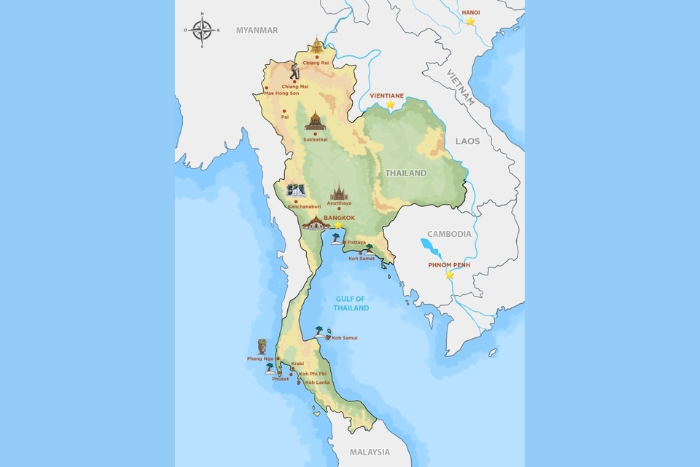
To the east, the Northeast (Korat Plateau or Isan) features rolling terrain, drier soils, and contrasting climatic conditions marked by both droughts and floods. This Thailand information is important when adapting your itinerary to seasonal variations.
Finally, the southern peninsula, alternating between rugged mountains, dense tropical forests, and coastlines along the Andaman Sea and the Gulf of Thailand, concentrates major beach destinations and is a key area for rubber production and tropical agriculture.
These geographical landmarks represent essential Thailand practical info for organizing a well-structured itinerary during your Thailand travel.
1.5. Population, Language and Culture
Thailand has a population of approximately 71.8 million people, characterized by significant ethnic diversity. The majority are ethnic Thais, alongside minorities such as Sino-Thais, Malays, and various hill tribe communities.
The official language is Thai, spoken by nearly the entire population, while English is widely understood in tourist areas and major cities.
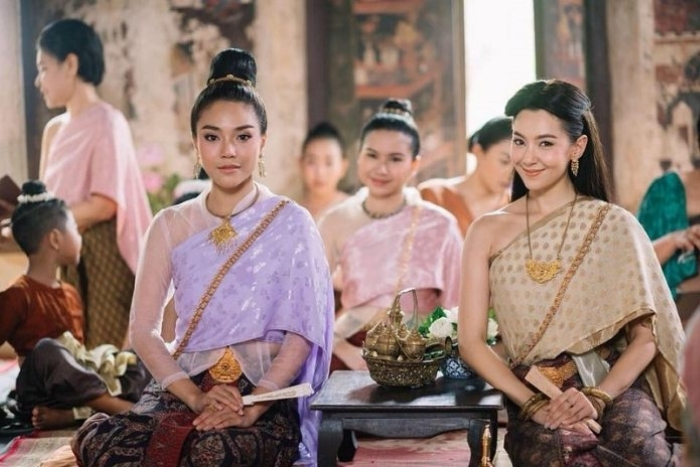
Religion is one of the most important aspects of general Thailand info to understand before departure, as it profoundly shapes the country’s culture and daily life. Theravada Buddhism is practiced by over 94% of the population. Islam represents around 4%, while Christianity (approximately 1%) and Hinduism are also present.
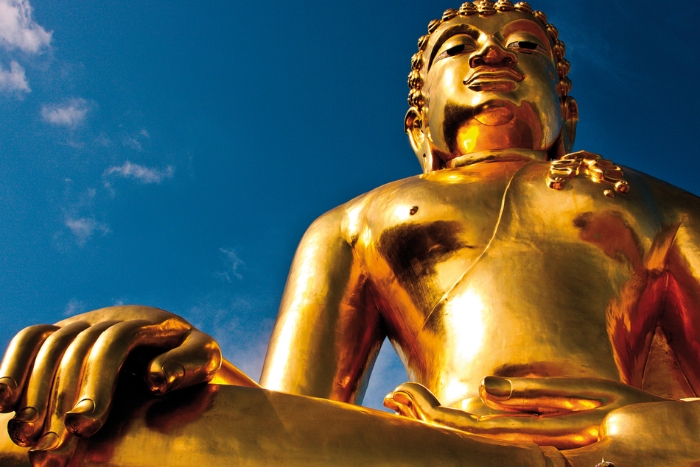
Thai culture is deeply influenced by Theravada Buddhism, which shapes beliefs, art, and everyday life. Social traditions emphasize politeness, harmony, and respect for elders, illustrated by practices such as the wai (traditional greeting).
The role of the constitutional monarchy remains central to national identity, with strong reverence for the King as a symbol of unity and continuity.
II. Festivals, Customs and Gastronomy in Thailand
Discovering local traditions is an essential part of Thailand tourism information, helping travelers better understand the country’s identity. Beyond landscapes and temples, these cultural elements represent valuable Thailand general information to know before any travel to Thailand.
2.1. Festivals
Thailand is deeply influenced by Theravada Buddhism; therefore, most festivals are closely linked to religious beliefs and local traditions. The most famous celebration is Songkran (mid-April), the Thai New Year, also known as the Water Festival, during which locals pray for good fortune and symbolically cleanse themselves of past misfortunes. For many visitors, experiencing this celebration is a highlight of a Thailand stay.
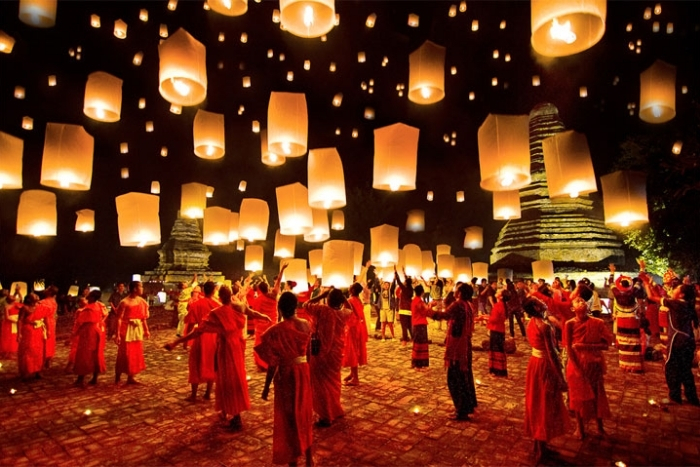
Another major festival is Loy Krathong (usually in November), marked by the floating of illuminated offerings on rivers to express gratitude and wishes for peace.
Each region also hosts its own traditional festivals reflecting the country’s cultural diversity: the Phi Ta Khon Ghost Festival (June or July) in Dan Sai, the Yi Peng Sky Lantern Festival in Chiang Mai (November), and the Bun Bang Fai Rocket Festival in Yasothon (June or July).
These events are part of essential Thailand practical info to check before departure, as they can greatly enrich your Thailand travel experience.
2.2. Customs
Thai customs, strongly influenced by Buddhism, place great importance on etiquette and respect. Understanding these traditions is part of the essential Thailand info needed for smooth and respectful travel in Thailand.
The traditional greeting, the wai (hands pressed together in front of the chest), expresses respect and consideration for others.
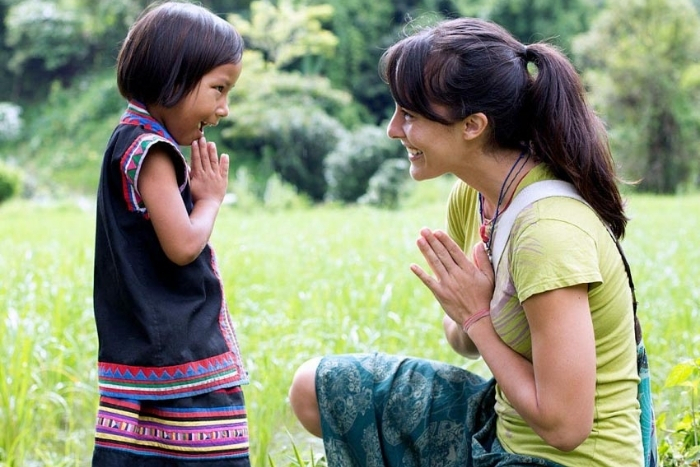
The head is considered the most sacred part of the body and should never be touched. In contrast, the feet are regarded as the lowest part and should not point toward people or be used to indicate objects.
Public displays of affection are limited. Women should avoid direct physical contact with monks.
In temples, sacred places, or private homes, visitors should dress modestly and remove their shoes before entering.
The monarchy is deeply respected; any words or actions perceived as disrespectful must be strictly avoided, including stepping on banknotes bearing the King’s image.
At the table, Thais generally use a spoon and fork rather than chopsticks.
2.3. Thai Gastronomy
Cuisine is one of the aspects of Thailand information that most attracts travelers. Thai food is renowned for its harmonious balance of sour, spicy, salty, bitter, and sweet flavors.
Among the iconic dishes are Pad Thai, Tom Yum, Som Tam, and mango sticky rice. Street food is highly developed, diverse and affordable, making it an essential part of any Thailand travel guide and an unforgettable element of travel to Thailand.
It is advisable to choose clean and busy establishments and to avoid ice or raw food in places that do not guarantee proper hygiene. These recommendations are part of useful Thailand practical info to prevent inconvenience during your Thailand stay.
2.4. Lifestyle
The pace of life in Thailand is generally relaxed and friendly. Thai people are well known for their hospitality and sense of respect, elements frequently highlighted in Thailand general information.
In major cities such as Bangkok, life is dynamic and modern, while in rural areas or on the islands, the atmosphere is more peaceful and ideal for relaxation, offering diverse experiences for those planning travel in Thailand.
III. Thailand Climate – When to travel to Thailand?
Climate is one of the most frequently consulted aspects of info Thailand before organizing any Thailand travel.
Thailand enjoys a tropical monsoon climate, hot and humid throughout the year. Three main seasons can be distinguished:
Dry season (November to February): cooler temperatures, little rainfall, and generally pleasant weather, especially in the north.
Hot season (March to May): intense heat that can exceed 40°C, with rising humidity.
Rainy season (June to October): frequent but often short-lived showers, with lush green landscapes.
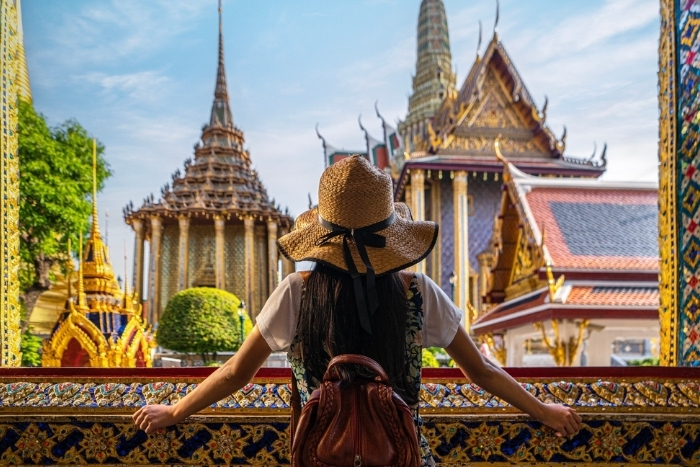
When to travel to Thailand? The ideal period is from November to March, with sunny and comfortable weather (high tourist season runs from November to February).
From March to May, there are fewer tourists and more affordable prices despite the heat, along with major events such as Songkran in April.
From June to October, it is low season, offering attractive rates, fewer crowds, vibrant natural scenery, and Buddhist festivals such as Asahna Bucha in July.
These climatic factors are essential Thailand tourism information to help you choose the best time according to your priorities: weather, budget, or cultural events.
IV. Practical information for Travelers
Among the most searched Thailand general information before departure are health requirements, visas, time differences, and budget considerations. This Thailand practical info is essential to organize a smooth travel to Thailand experience and avoid unexpected issues.
4.1. Vaccinations for Thailand
Regarding health-related Thailand practical info, Thailand currently does not require any mandatory vaccinations for international travelers, except for those arriving from countries where yellow fever is endemic (a vaccination certificate is then required).
However, as part of recommended Thailand information before departure, it is advisable to update routine vaccinations (diphtheria, tetanus, polio, measles, mumps, rubella, etc.) and consult a healthcare professional at least one month before traveling.

Recommended vaccines for Thailand travel generally include:
Hepatitis A (recommended for all travelers),
Hepatitis B,
Typhoid (especially for stays in rural areas),
Rabies (if engaging in activities such as trekking),
Yellow fever,
Japanese encephalitis,
Meningococcal meningitis.
The COVID-19 vaccine is no longer mandatory, but staying up to date is advisable in case of regulatory changes.
4.2. Local time and International time difference
Among useful general Thailand info, time differences play an important role in planning your trip.
Regarding Thailand time zone, the country operates on ICT (UTC+7) and does not observe daylight saving time, ensuring a stable time difference throughout the year. Countries sharing the same time zone (UTC+7) include Vietnam, Cambodia, Laos, western Indonesia (including Jakarta), and certain regions of Russia such as Krasnoyarsk.
Time difference with Europe:
France: +6 hours in winter, +5 hours in summer.
United Kingdom: +7 hours in winter, +6 hours in summer.
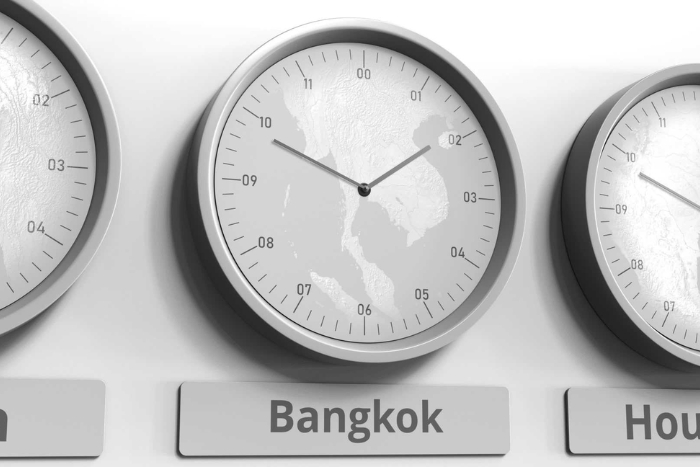
Compared with Asia:
−1 hour compared to China, Singapore, Malaysia and the Philippines.
−2 hours compared to Japan and South Korea.
+1 hour 30 minutes compared to India, +2 hours compared to Pakistan.
These references are useful Thailand tourism information for planning flights, connections, and your first days of adjustment during your Thailand stay.
4.3. Visa
Visa requirements are among the most consulted aspects of info Thailand before a Thailand stay.
Is it possible to travel to Thailand without a visa? Most travelers are required to obtain a tourist visa to enter Thailand. However, nationals from visa-exempt countries may stay without a visa for a varying duration depending on nationality (14, 30, or 90 days).
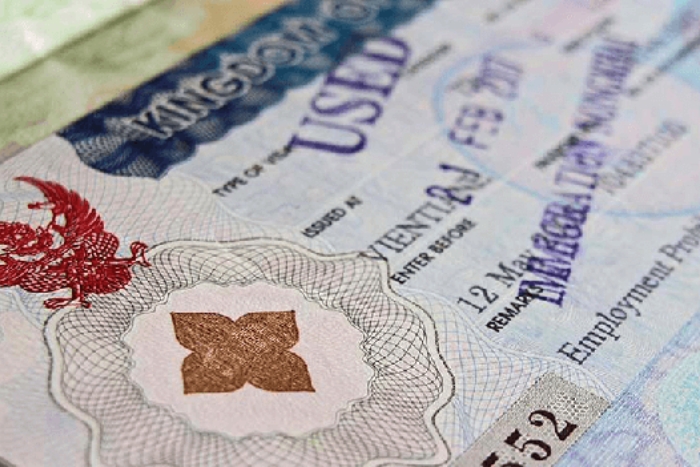
2 main types of tourist visas are available:
Single-entry visa: valid for 3 months after issuance, allowing a stay of up to 60 days.
Multiple-entry visa: valid for 6 months, with a maximum stay of 60 days per entry.
How to obtain a tourist visa for Thailand? Depending on nationality, three options are possible:
Visa on Arrival: issued at airports or border checkpoints for certain nationalities.
E-Visa (online visa): via the official website of the Thai Ministry of Foreign Affairs.
Visa through a Thai embassy or consulate before departure.
4.4. Currency of Thailand
The official currency of Thailand is the baht (THB), symbolized by ฿. Banknotes currently in circulation include 20, 50, 100, 500, and 1,000 baht, while coins include 1, 2, 5, and 10 baht, as well as 25 and 50 satang, which are now less common. As an indication, the Thailand exchange rate is approximately 1 EUR≈37 THB and 1 USD≈31 THB, although these values may fluctuate depending on the market.
Among essential Thailand practical info, it is recommended to check exchange rates before departure.
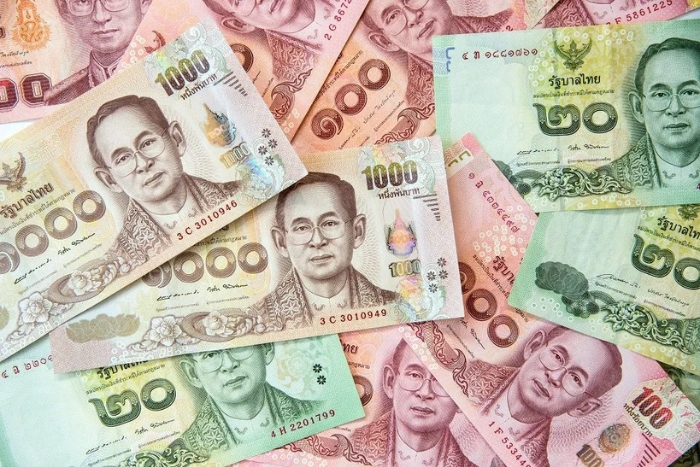
Where to exchange money?
Airport: convenient but less favorable exchange rates.
Banks and exchange offices in the city (e.g., Super Rich, Value Plus): generally better rates.
ATMs: widely available; foreign cards are usually charged a fee of around 220 THB (approximately 6–7 EUR) per withdrawal.
How to pay in Thailand? Payment methods depend on location. Cash remains the most widely used method, especially in markets, street food stalls, small shops, and rural areas. Visa and Mastercard are commonly accepted travel bank cards in Thailand, particularly in hotels, shopping malls, and tourist restaurants, although some establishments may apply an additional 2–3% surcharge.
Overall, Thailand remains an affordable destination, although your budget will depend on your chosen Thailand travel style: backpacker, mid-range comfort, or luxury.
4.5. Tourist SIM Cards
Among important Thailand tourism information to know before departure, internet connectivity is essential. A Thailand SIM card makes it easier to access maps, reservations, and transportation apps during your travel in Thailand.
Travelers can choose between a physical SIM card or an eSIM, depending on their device and needs. Options include 4G data-only SIM cards (internet access only) and SIM cards with calls (calls, SMS, and data). The 4G data SIM is generally the most popular thanks to its simple activation process and reasonable cost; communication can be done via apps such as WhatsApp, Messenger, Facebook, or Instagram.
The three main mobile operators in Thailand are AIS, TrueMove H, and DTAC. In terms of speed, AIS is considered the fastest, followed by TrueMove and DTAC. All provide good nationwide coverage. For eastern Thailand, AIS or TrueMove are recommended, while in the west, AIS or DTAC are preferable. In terms of pricing, AIS is generally the most expensive, TrueMove offers mid-range prices, and DTAC is usually the most affordable and widely used.
Thailand SIM cards can be purchased at airports, official operator stores, or convenience stores such as 7-Eleven, Tesco, Family Mart, or Lotus.
4.6. Travel Adapter for Thailand
Before going on vacation to Thailand, it is important to check the electrical compatibility of your devices and bring a suitable electric plug Thailand to use them without issue during your Thailand stay.
Thailand’s electrical system operates at 220V – 50Hz, similar to France; therefore, most devices do not require a voltage converter. However, the plug types used (A, B, C, F, and O) may require an adapter for European travelers. This Thailand info is essential to avoid charging problems during your trip.
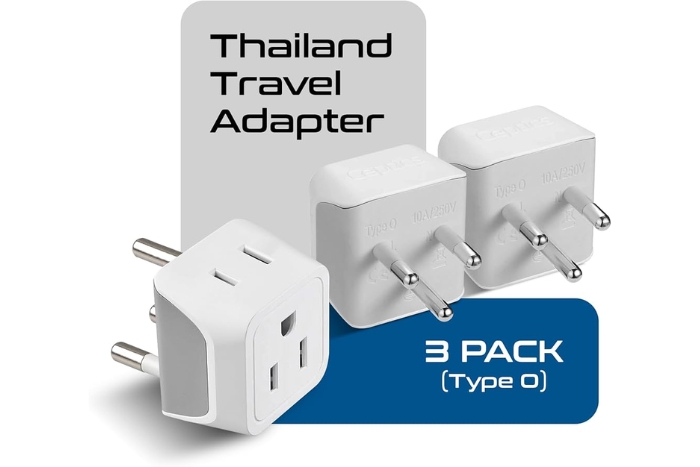
You can choose a Thailand-specific adapter (compact and affordable) or a universal adapter (compatible with multiple countries). It is advisable to purchase one before departure in-store or online at a lower cost, although adapters are also available in airports and shopping centers in Thailand, usually at higher prices.
4.7. Transportation in Thailand
Regarding Thailand practical info, the transportation network is diverse and suitable for all budgets. So, how to get around in Thailand?
For long distances, domestic flights are fast and affordable, while trains and interprovincial buses efficiently connect major cities and tourist regions.
In large cities such as Bangkok, public transportation is well developed: the BTS Skytrain, MRT Bangkok, buses, taxis, and ride-hailing apps make getting around easy. Tuk-tuks offer a typical local experience for short distances.
In islands and rural areas, ferries, boats, minivans, and motorcycle taxis are widely available. Overall, getting around in Thailand is simple, affordable, and relatively comfortable for travelers planning their Thailand stay.
This info Thailand allows travellers to easily plan their trips.
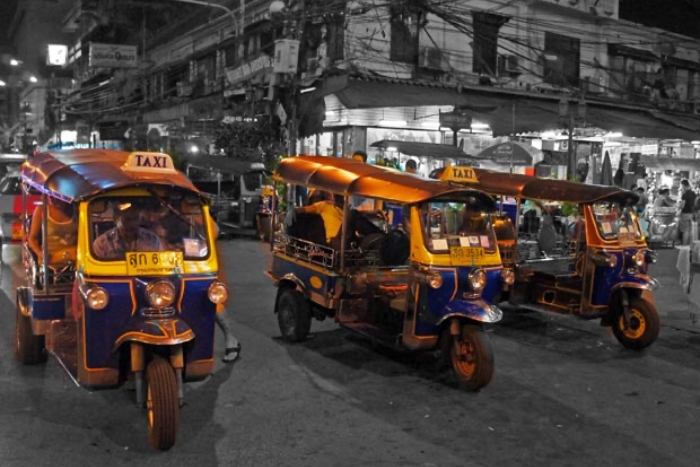
If you wish to drive in Thailand, it is essential to know the local rules. In Thailand, driving is on the left. Helmets are mandatory for motorcycles (headlights on; highways prohibited for motorcycles), and in cars, seat belts are compulsory. Using a mobile phone without a hands-free system is prohibited, and the legal blood alcohol limit is 0.5 g/l. Speed limits are generally 50 km/h in urban areas, 90 km/h on rural roads, and 120 km/h on highways. Traffic can be dense, especially in cities, so caution is advised. These info Thailand details are essential for travelers wishing to rent a car or scooter.
For foreign visitors, an International Driving Permit (IDP) is accepted for short stays (up to approximately 3 months) and must be obtained before departure in the country of residence. For longer stays, it is possible to apply for a temporary Thai driving license at the Department of Land Transport, with a passport, valid visa, national driving license, and sometimes a medical certificate.
Above are all the most important and essential Thailand general information for travelers before planning to discover the Land of Smiles. From Thailand information about its culture, customs, gastronomy, and climate to Thailand practical info for visitors, each aspect contributes to a better understanding of the country. Good preparation not only ensures a smooth and cost-effective trip, but also helps avoid inappropriate cultural misunderstandings.
> Daily budget in Thailand
> Useful Thailand information
> Thailand travel guide
> 21 days in Thailand
> Thailand Tours
Related travel guide
Other similar articles


CUSTOMIZABLE BY LOCAL EXPERTS
Personalized trip at the original price!

REFUND GUARANTEE
We believe in our work and promise to give you money back.

GOOD PRICE / QUALITY
95% satisfied more than expected!

24/7 LOCAL SUPPORT
We are always available online to provide assistance at any time.

Most read articles


Autour Asia is highly recommended on
Embracing the mission of "Satisfied more than expected" and providing authentic experiences, we have received numerous recommendations on reputable travel forums: