I. What is Tet holiday in Vietnam ?
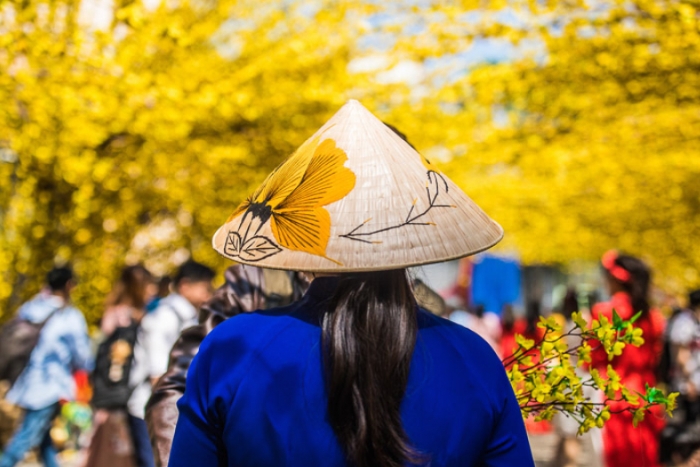
Tet holiday in Vietnam, a celebration embracing the dawn of the new year in accordance with the lunar calendar, serves as a cherished juncture for reflection upon the bygone year's endeavors and accomplishments. Regarded as a pivotal milestone for envisaging alterations, crafting plans, and gauging progress, Tet embodies profound significance within Vietnamese culture. The inaugural day of this festivity holds profound weight as Vietnamese tradition holds that actions taken on this day reverberate throughout the ensuing year, influencing its trajectory.
Hence, every uttered word and action undertaken is meticulously deliberated upon, exemplifying the gravity accorded to this momentous occasion. Beyond its ceremonial significance, Tet stands as a rare juncture wherein all members of the familial tapestry reunite, reveling in joyous camaraderie after a year marked by unwavering toil and dedication.
II. How long is Tet holiday in Vietnam ?
How long is Tet holiday in Vietnam ? Tet holiday aligning with the lunar calendar, typically aligns with the Lunar New Year, with its dates shifting annually within the span from mid-January to late February. This festivity grants most Vietnamese citizens a generous 5-day hiatus.
Tet is calculated according to the lunar calendar and is usually celebrated on the same day as Lunar New Year. The dates change every year, but fall between mid-January and late February. Most Vietnamese people will have 5 days off for Tet.
Tet holiday can last from 3 days and last up to a week. The festival is divided into the day before New Year's Eve, New Year's Eve and New Year's Day.
All of these days coincide with the Vietnamese or lunar calendar, so each year they will take place on a different day. Tet holiday 2024 falls on Saturday, February 10, 2024.
III. What is the meaning of Tet in Vietnam?
Tet Vietnamese holiday encapsulates profound cultural significance, embodying numerous cherished beliefs. It signifies the juncture between the waning old year and the promising dawn of the new, offering a sanctified moment to extend heartfelt sincerity to deities and Buddha, beseeching for the blessings of a bountiful year ahead.
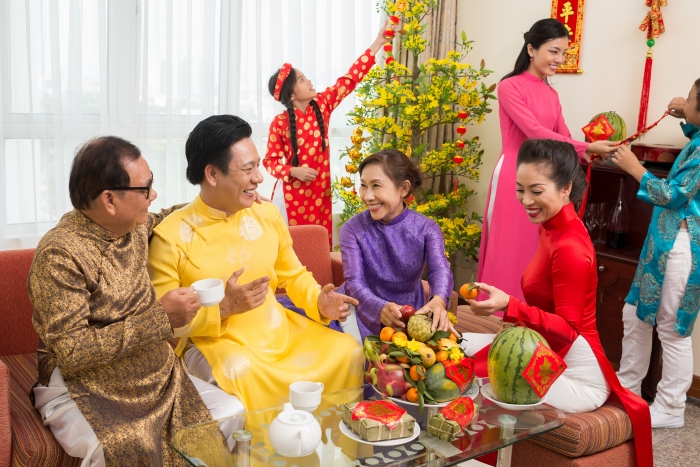
Moreover, Tet holiday serves as an eminent occasion for the familial tapestry to convene and reunite, a time when expressions of reverence toward parents and grandparents resonate alongside the remembrance of ancestors. It stands as an indelible thread weaving families and villages into a harmonious bond, fostering deep connections amidst the hustle and bustle of contemporary life. In today's context, the Tet festival assumes the role of a rejuvenating pause, signifying both the closure of the past journey and the inaugural marker of a new, promising year ahead.
IV. What are Tet activities ?
1. Send the kitchen god to heaven
Preparations among the Vietnamese populace for the Lunar New Year commence around the 23rd day of the twelfth lunar month, precisely a week ahead of Tet's arrival, marked by the auspicious God of Wealth Festival hosted within homes. During this pivotal time, revered spirits, including the Kitchen God, Earth God, and the Shopping Goddess, depart their dwelling within the household, ascending to the celestial realm to present a comprehensive report to the Emperor about the household's happenings throughout the past year.
This celestial delegation doesn't merely render a recount; they also beseech blessings upon the family: wishes for boundless luck, robust health, burgeoning prosperity, and unyielding joy. Their celestial sojourn culminates on the eve of the New Year when they ceremoniously return to their earthly abode, signifying the imminent arrival of the New Year.
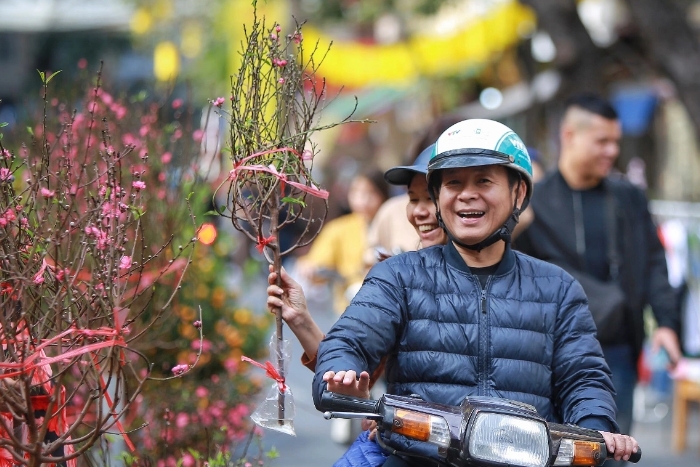
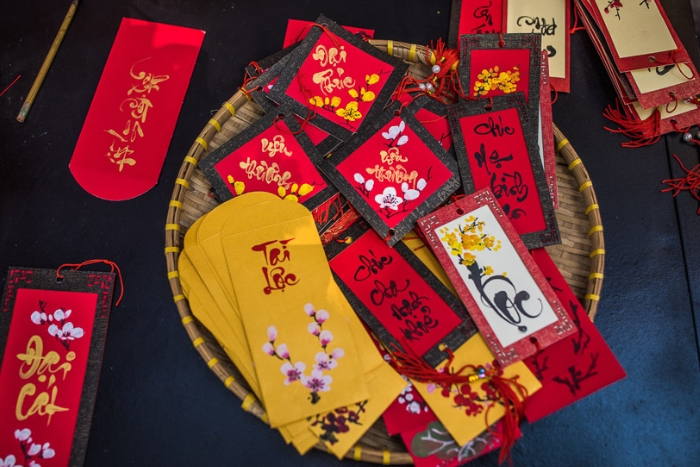
Go shopping is one of the Tet activities not to be missed during Tet. The Tet market is a bustling pre-Tet fair held from December 25th to December 30th. Amidst the familiar stalls, one finds an array of goods tailored for the Tet celebrations: dong leaves for wrapping traditional cakes like Chung cake, packets for wrapping sticky rice cakes or preparing roosters and fruits for ancestral worship , red envelopes for good luck, Tet-themed fashion, fresh flowers, Tet decorations, and a kaleidoscope of colors.
After a demanding year, everyone desires to bring meaningful gifts back home to their families. What do these gifts symbolize? This is the busiest time of the year, as people rush to shop and adorn their homes anew. As the year draws to a close, the sight of apricot blossoms, kumquat trees, or peach blossoms appearing in the flower market signals that Tet is nearly upon us.
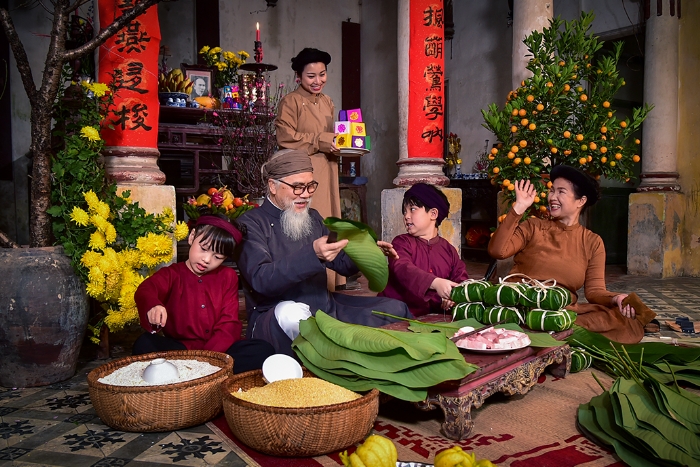
3. Clean and decorate the house
Tet Vietnam holiday affectionately dubbed the "house cleaning Tet," embodies a cherished tradition where, a week prior, each family member diligently tends to the sanctity of their abode, nurturing not only its physical spaces like the house, garden, and altar but also adorning them with festive embellishments.
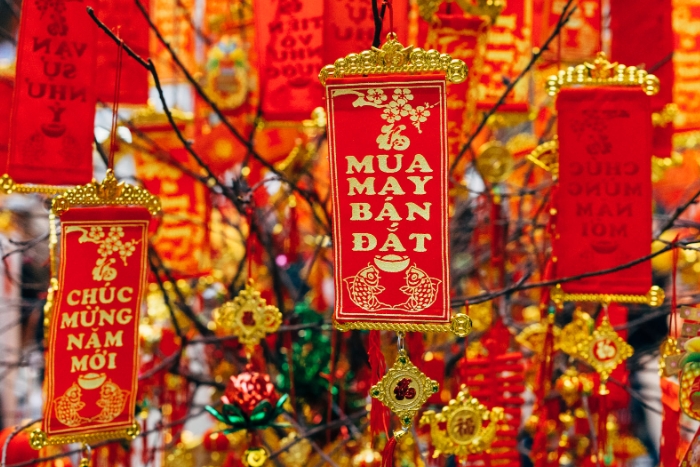
It's a time where broken fragments find restoration, aged items yield to renewal, and vibrant additions like garments and ornamental adornments - be it lanterns, lights, or the modern led lights - find their way into the household. These meticulous preparations all converge with a singular aim: to usher in the Lunar New Year in the most auspicious manner, inviting in luck and prosperity.
4. Worship the ancestors
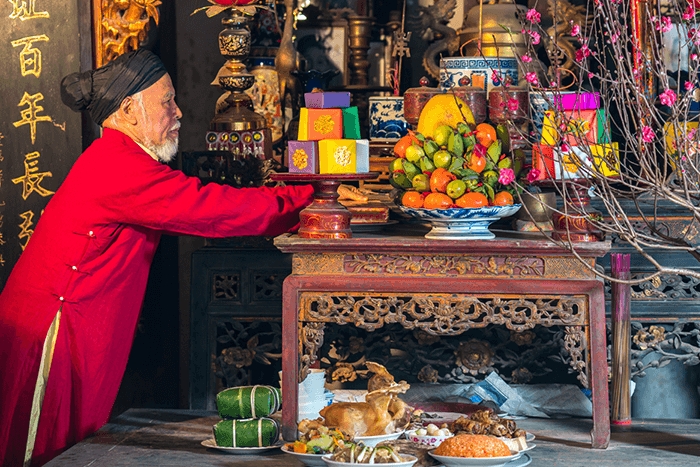
Worship the ancestors on Tet embodies filial piety and a deep sense of appreciation for parental guidance. During Tet, individuals attire themselves in fresh attire, approach the ancestral altar with solemnity, and earnestly beseech blessings for the forthcoming year. This practice stands as a testament to nurturing humanistic values and fostering a collective national identity.
Ancestor veneration serves as an educational tool, imparting lessons to descendants about upholding morality, cultivating gratitude, embracing discipline, faithfulness, and goodness. True filial children understand the significance of being thankful for their parents' nurturing presence and guidance, extending this gratitude to their departed ancestors and grandparents.
5. Watch New Year's Eve fireworks
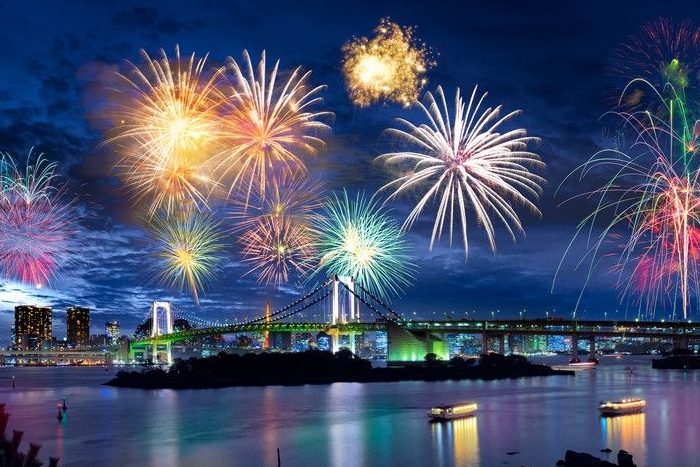
New Year's Eve marks the pivotal transition from the old year to the new. It's a time when families come together to exchange heartfelt wishes and blessings. Traditionally, fireworks illuminate the expansive, open spaces, adding a vibrant display to the celebration. Families partake in New Year's Eve rituals, encompassing both indoor and outdoor ceremonies to pay homage and honor the passing year. These ceremonies hold deep significance, signifying a reverence for the old and an embrace of the upcoming year.
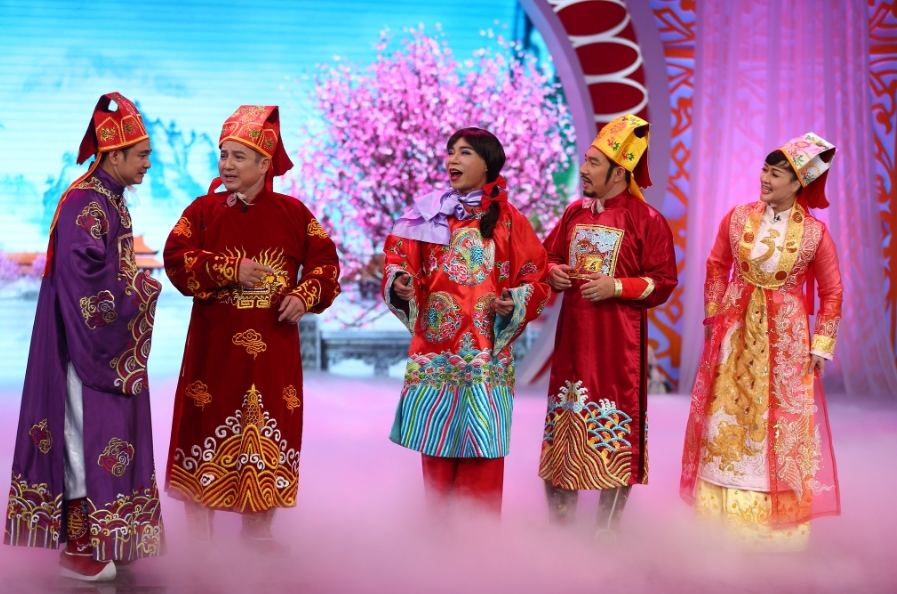
In addition, on New Year's Eve, family members also watch Tao Quan show, looking back at the events of the past year.
6. First visit
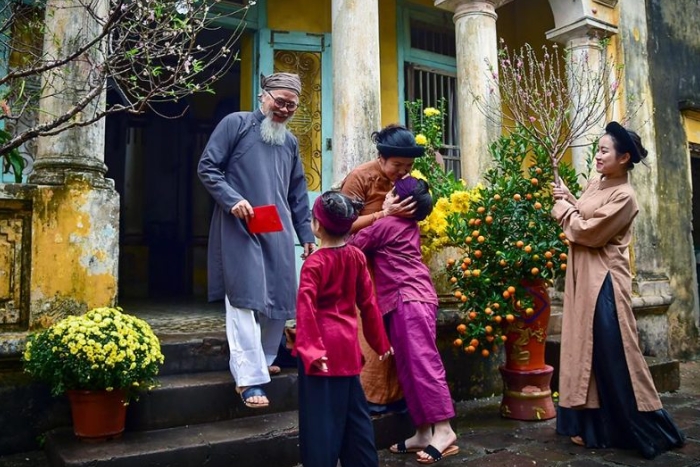
The custom of "breaking the ground" or "opening the goods" holds deep roots in Vietnamese traditions, signifying the inauguration of a new year. It's widely believed that the initial day of the year symbolizes the "opening" of a prosperous cycle. People hold the conviction that a smooth and fortunate start on this day forecasts a year filled with goodness and favorability. Directly following New Year's Eve, anyone entering a house with New Year's wishes is deemed to usher those well-wishes into the home. Hence, the significance of the first visitor of the year is paramount.
As the year draws to a close, there's a deliberate search for relatives or neighbors known for their cheerful, vibrant, virtuous, and accomplished traits, inviting them to be the inaugural guests. Typically, these visitors engage in brief visits lasting around 5 to 10 minutes, prioritizing brevity to ensure the homeowner's smooth year ahead. This practice underscores the importance placed on the auspicious start of the year and the belief in the influence of initial interactions on the year's fortunes.
7. Depart and picking buds
Exodus" refers to the act of leaving home on the first day of the year in search of blessings for oneself and one's family. Prior to embarking on this journey, meticulous consideration is given to selecting an auspicious day, time, and direction, in hopes of encountering benevolent deities such as those associated with wealth, happiness, and nobility.
According to ancient beliefs, the departure time must align with the Zodiac and be suitable for the traveler's age without invoking any taboos or harsh energies. A stroke of ill-fortune or an inauspicious start might perpetuate a streak of misfortune. Hence, the meticulous selection of an auspicious departure time stands as a crucial determinant for a successful journey.
For numerous Vietnamese, the act of picking buds holds an indispensable place as Tet approaches. This practice is deeply rooted in the belief that plucking buds ushers in luck and auspicious beginnings for the upcoming year. Simultaneously, it serves as a means to dispel lingering misfortune from the past year, fostering an aura of peace and renewal.
8. Exchange New year’s wishes
The tradition of exchanging Tet wishes holds a significant place in Vietnamese culture, an indispensable part of welcoming the new year with hope for prosperity. On the initial day of the new year, families pay homage to their lineage, starting with heartfelt well-wishes extended to grandparents, followed by aunts and uncles. Visiting the ancestral altar, they offer incense and convey their warmest and most auspicious wishes to their relatives.
The second day is dedicated to celebrating with one's maternal family, an occasion to bestow blessings and inquire about everyone's well-being and endeavors over the past year. Similar to the prior day's rituals, families visit grandparents and relatives, forging familial connections both near and far.
Then comes the third day, dedicated to extending sincere New Year wishes to those who have served as educators - present teachers and those from the past. This practice underscores the Vietnamese tradition of acknowledging and honoring the fount of knowledge, akin to remembering the source when quenching one's thirst and paying reverence to teachers.
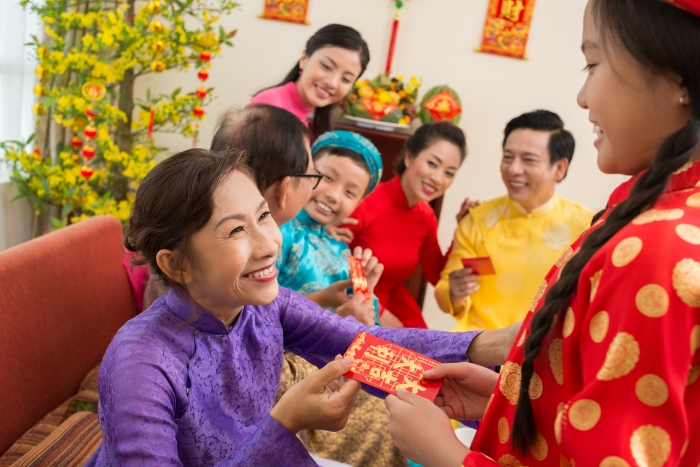
9. Give lucky money
Bestowing lucky money at the year's inception stands as a cherished cultural practice among the Vietnamese, symbolizing the aspiration for a fortuitous start to the new year. This tradition isn't confined solely to the first day of Tet holiday in Vietnam; it extends across the initial three days and can persist even until the ninth or tenth days of the festival.
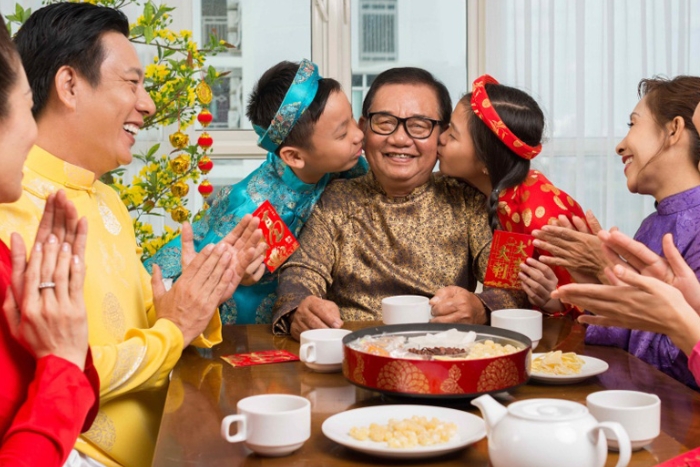
According to Vietnamese customs, on the morning of the inaugural day of Tet, families convene to share a meal and exchange heartfelt wishes. Following this gathering, they embark on visits to relatives' homes, extending Tet well-wishes to each household.
During these visits, parents and grandparents tenderly bestow wishes of joy and prosperity upon their children and grandchildren, fostering an atmosphere of familial warmth and blessings. In turn, younger generations reciprocate these wishes, extending heartfelt greetings to their elders, friends, and close kin, expressing mutual wishes for a prosperous new year.
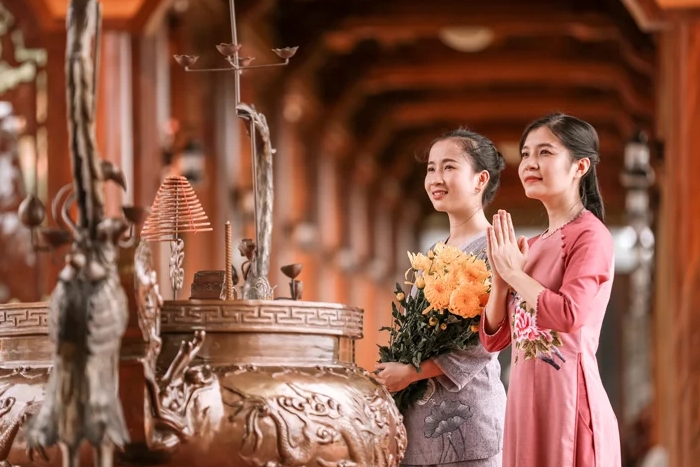
10. Go to the pagoda to pray for luck
Going to the pagoda at the onset of the year stands as an essential tradition embraced by all during the New Year festivities. This practice has evolved into a splendid cultural cornerstone in the fabric of Vietnamese life.
Tet heralds the inception of a fresh year, brimming with aspirations and heartfelt wishes. Within the sanctified walls of a Buddhist temple resides a haven of tranquility and immaculateness. Thus, it's customary for individuals to converge there, seeking serenity, bidding farewell to the woes of yesteryear, and beseeching blessings for the upcoming year.
V. Traditional Vietnamese foods for Tet
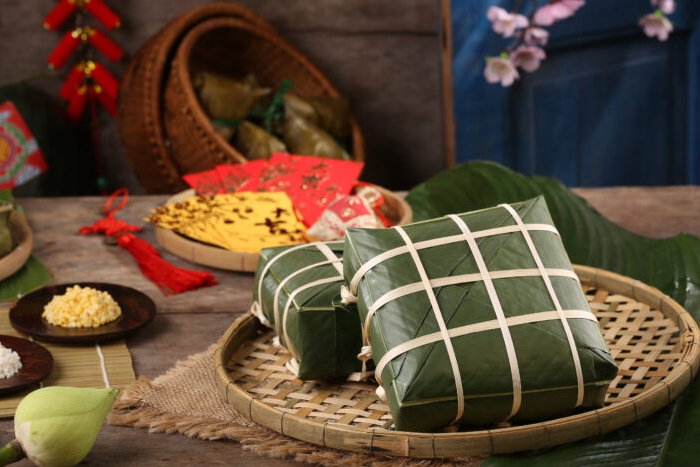
Chung cake is Vietnamese Tet food with a long history in Vietnamese culinary culture. Therefore, this dish cannot be missing from the Tet feast of Northerners. Its significance reverberates with the gratitude of Prince Lang Lieu towards the 16th King Hung, as well as a reverent homage to the harmonious union between heaven and earth
The exquisite fusion of glutinous rice, beans, subtle spices, and savory meats orchestrates the unmistakable essence of Tet holiday, encapsulating a delectable and harmonious delight within this well-rounded cake. The anticipation, amidst the Northern populace, of a pot brimming with Chung cake cooking away has become an indelible image ingrained in their subconscious, heralding the arrival of Tet each year.
The Tet meals across Vietnam's three regions showcase the distinctive culinary heritage of each locality. The onset of spring heralds a joyous reunion, uniting grandparents, parents, and children in celebratory gatherings that commemorate the advent of a new season and a fresh year. As a result, the Tet feast holds profound significance for every family, meticulously attended to with utmost care and reverence.
1. Tet tray of the North
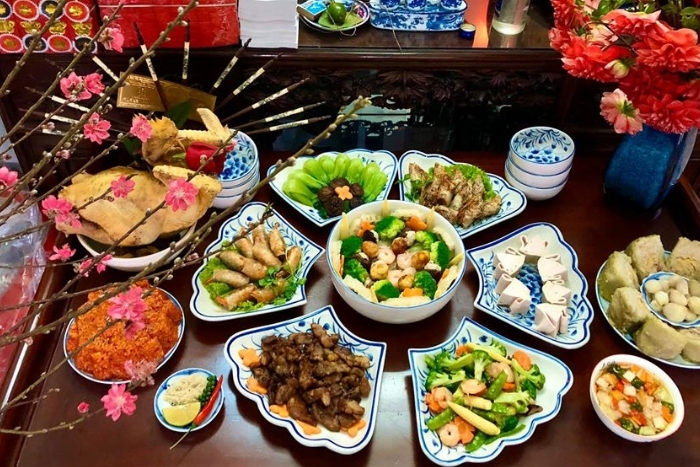
Among Northern communities, Tet Vietnamese holiday epitomize meticulous harmony. Every element, from color, aroma, and flavor to the fusion of meats, vegetables, dried and fresh dishes, is meticulously curated. The heart and soul of the Tet feast reside in the iconic green Chung cake, complemented by preserved meats and pickled onions. Essential to this culinary symphony is the aromatic boiled chicken adorned with fragrant lemon leaves, paired elegantly with sticky rice.
Side accompaniments encompass a flavorful array of pork sausages, crispy fried spring rolls, tangy pickled mustard greens, and vibrant salads. Moreover, the culinary tableau includes exquisite dishes like pork sausages stewed with bamboo shoots, as well as chicken intestine vermicelli, each representing the rich tapestry of Tet cuisine.
2. Tet tray of the central
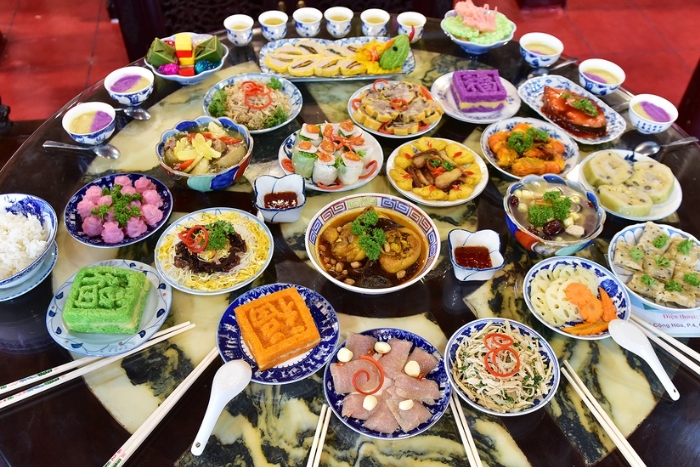
Central people's Tet trays also have many traditional Vietnamese foods for Tet. Owing to its unique geography, the Tet spread in the Central region predominantly features savory dishes designed for long-term preservation. Consequently, seafood delicacies like shrimp and fish take center stage, representing an unmistakable hallmark of the Central region's Tet repast. Characterized by diversity, immaculate presentation, and a sense of solemnity, these feasts embody the Central people's aspirations for a prosperous and fulfilling new year.
Central Tet banquets boast a grandeur of offerings, including the iconic Chung cake or Tet cake, sumptuous braised shrimp and meat, alongside flavorful chicken, spring rolls, and meats steeped in rich fish sauce. Complementing these delights are rustic dishes such as stir-fried bamboo shoots with meat, the freshness of stir-fried bean sprouts, and the delightful amalgamation of mixed jackfruit. Particularly distinctive in the Central region's Tet celebrations are the rolls - think rolled ram, boiled meat, spring rolls, steamed fish, and rice paper rolls served with an assortment of raw vegetables and fresh vermicelli - forming the quintessential specialties of this festive tableau.
3. Tet tray of the South
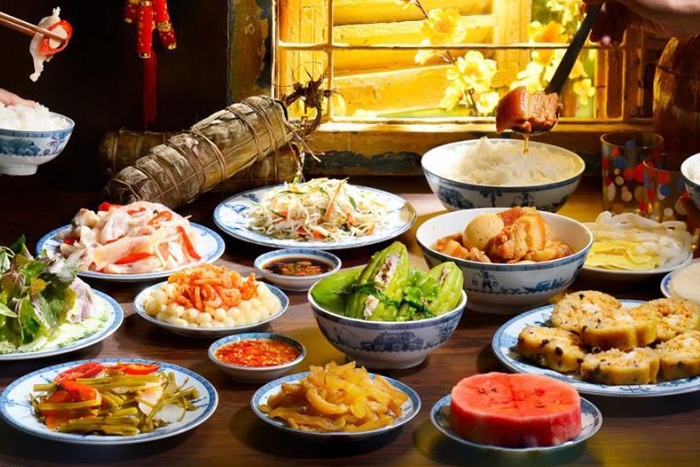
When discussing Tet meals in the South, the opulence, variety, and innovation stand out prominently. The Tet feast in the Southern regions is distinguished by its array of flavors and offerings, where certain dishes hold indispensable places-braised meat with eggs, accompanied by pickles, bean sprouts, and the refreshing bitterness of melon soup, form quintessential components.
Additionally, the Southern palate leans towards Banh Tet, particularly favored in the Western provinces. Further enriching this culinary spectacle are delicacies like lotus root salad, Pha Lau, an assortment of spring rolls, pickled vegetables, dried shrimp, and pickled pork ears. To signify abundance and auspiciousness, Southern feasts on Tet amalgamate diverse and unconventional dishes, adding a touch of uniqueness to the holiday spread. For instance, dishes like pomfret steamed with ginger or beef stuffed with garlic and braised with eggs are introduced, enhancing the completeness and prosperity of the celebratory table.
In conclusion, this article will help you learn about the characteristics of Tet, from traditional rituals, typical dishes, to entertainment activities during Tet.
Tet holiday is imbued with the beauty of
Vietnamese culture and traditions .These are traditional cultural values of Vietnam for many generations. If you want to learn more useful information, don't hesitate to
contact us!









 FR
FR EN
EN