We arrived at Bangkok's Suvarnabhumi Airport in the late afternoon. Our guide and driver were waiting for us with a warm smile to take us to the hotel. That evening, no visits were planned – just enough time to soak up Bangkok's unique atmosphere and prepare for the busy days ahead.
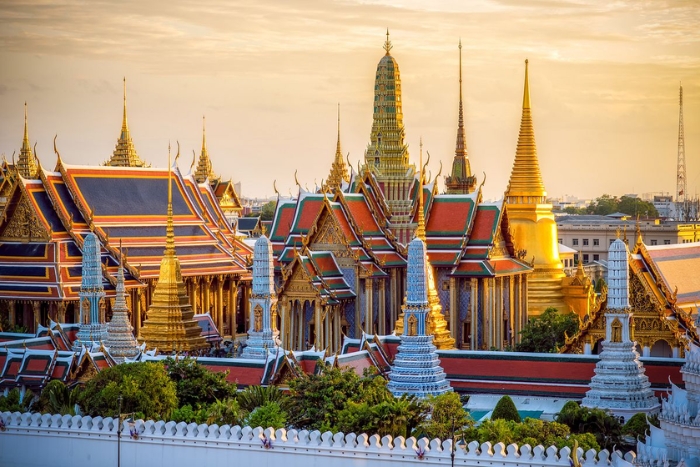
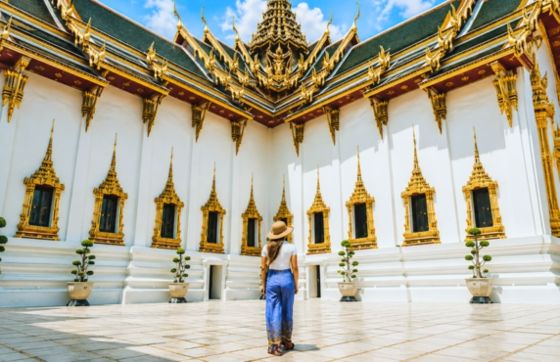
The first morning of our Thailand Vietnam 10-day trip began with a visit to the Grand Royal Palace, one of the most important cultural and historical monuments in Thailand.
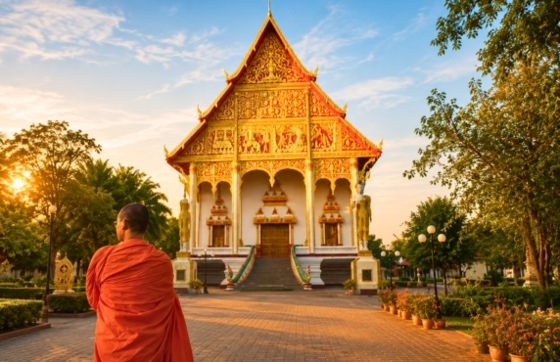
From the very entrance, we were struck by the magnificent architecture. Every detail was refined and carefully crafted. The golden rooftops, the walls and columns decorated with ceramic tiles and colourful reliefs gave this place a simultaneously majestic and vibrant appearance.
The palace grounds were very large and included many buildings. The most important was the Wat Phra Kaew temple, which houses the sacred Emerald Buddha. Even though we had already seen photos, seeing it with our own eyes made us feel the solemnity and the cultural and spiritual significance that the Thai people place in this site.
As it is a sacred place, we advise you to dress appropriately, covering your shoulders and knees. If you have forgotten, there is a spot at the entrance where you can rent or borrow clothing. Even though there were many tourists, standing in the middle of a monument that is both a historical site and a symbol of an entire nation made this visit unforgettable!
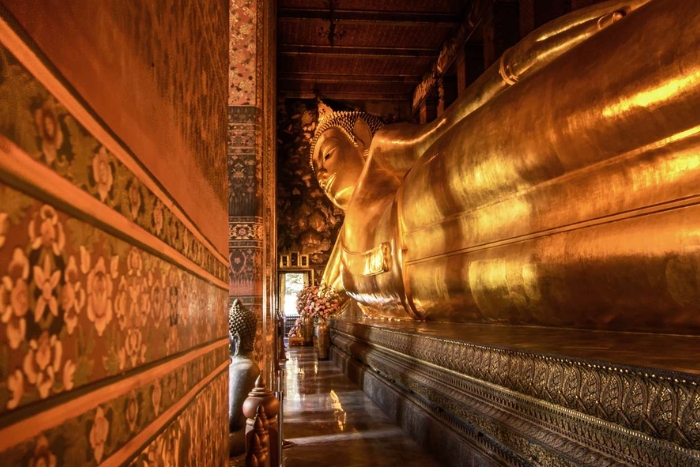
Next, we visited Wat Pho, located right next to the Grand Palace. It is one of the most famous and important temples in Bangkok. While the Grand Palace represented power and royal splendour, Wat Pho felt like a living art museum – a place where time seemed to have stood still.
Inside, we discovered its famous reclining Buddha, 46 metres long. The feet of this great statue are decorated with mother-of-pearl and depict 108 important symbols in the Buddhist religion.
After Wat Pho, we went to Wat Traimit. There, we saw a large golden Buddha weighing more than five tonnes. To end the day, we visited Wat Arun, also known as the Temple of Dawn. At sunset, its towers decorated with colourful ceramic pieces were reflected in the Chao Phraya River – a truly beautiful spectacle. This first day of sightseeing showed us why Bangkok is renowned as a great spiritual city in Southeast Asia.
The next stage of our Thailand Vietnam 10-day trip took us north to Ayutthaya. This city was founded in 1350 by King Uthong and is listed as a UNESCO World Heritage Site. Surrounded by rivers, it was once called the "Venice of the Orient" – an ancient capital home to many magnificent old temples.
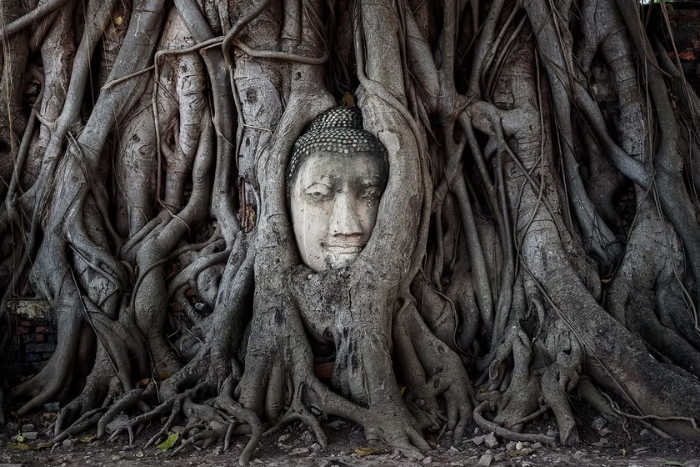
Our first visit was Wat Mahathat. There, we saw something extraordinary: a stone Buddha head nestled in the roots of a great banyan tree. It is the most iconic image of this entire Thailand trip. We then visited Wat Phra Si Sanphet with its three large towers, Viharn Phra Mongkol Bopit with its large bronze statue, and finally Wat Lokaya Sutha with its reclining Buddha bathed in light. Each temple was different and rewarding to discover.
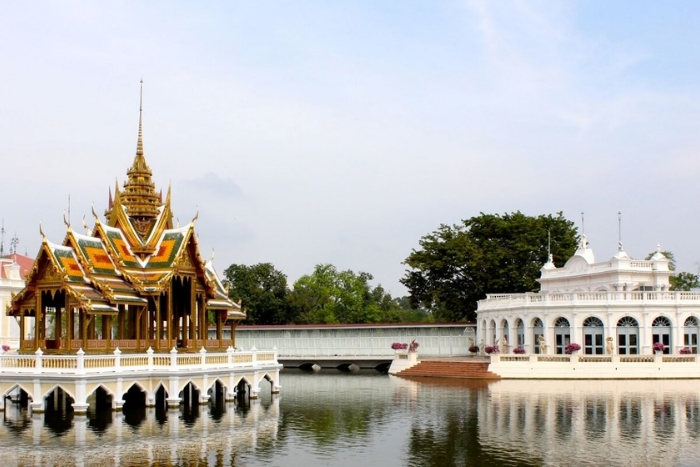
In the late afternoon, we headed to the Bang Pa-In Summer Palace. Admission was 100 THB per person. It was a very beautiful estate with large green spaces, perfect for a peaceful stroll. The site was spacious and pleasant. For visitors with mobility difficulties, golf carts were available for rent on-site (500 THB per hour).
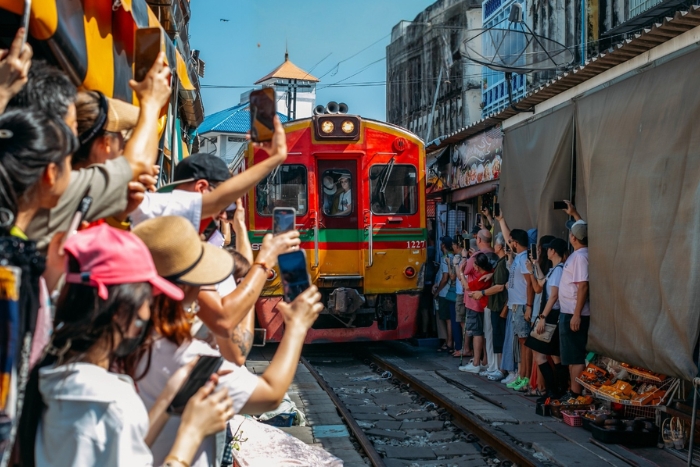
Our last day in Thailand began early with a trip to the Mae Klong Railway Market (Hoop Rom Market), southwest of Bangkok. The market stretches along the Maeklong–Ban Laem railway line, where the train runs slowly (approximately 3 to 5 km/h), making the journey perfectly safe for both vendors and visitors.
The most memorable moment was undoubtedly the passing of the train. As the locomotive approached, merchants folded their awnings and moved their goods with astonishing precision. Within seconds, the rails reappeared, allowing the train to pass within centimetres of the stalls and onlookers. Once the train had gone, the market sprang back to life as if nothing had happened. This perfectly choreographed spectacle was fascinating to watch and a testament to the everyday ingenuity of the locals. It is also a wonderful place to taste fresh produce and discover local cuisine at very affordable prices.
Back in Bangkok, the Jim Thompson House offered an elegant cultural interlude. This beautifully restored teak mansion tells the captivating story of an American who revived the Thai silk industry after World War II, before mysteriously disappearing in Malaysia in 1967. The rooms, steeped in Asian antiques, give the feeling of stepping into an adventure novel.
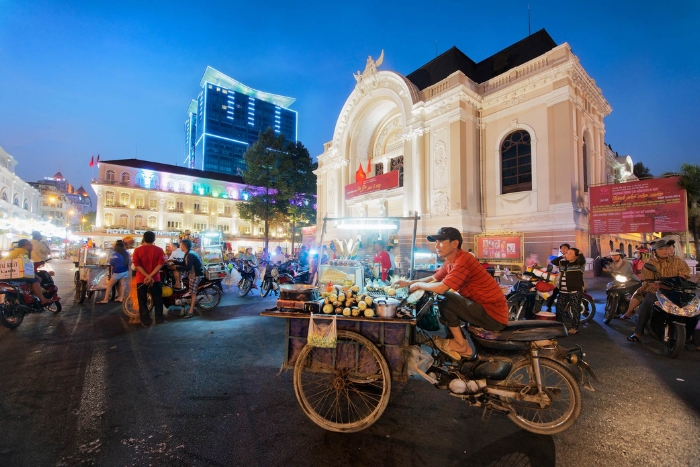
After a flight from Bangkok, we landed at Tan Son Nhat International Airport in Ho Chi Minh City, formerly Saigon – a new chapter of our Thailand Vietnam 10-day trip that took on an entirely different character. The city immediately wrapped us in its boundless energy: the endless flow of motorbikes, the fragrant alleyways of District 1, bánh mì eaten standing on the pavement… Vietnam has its own pace, its own intensity. This free evening was most welcome, giving us time to acclimatise and let ourselves be seduced by this extraordinary metropolis.
On our first morning in Vietnam, we discovered the Mekong Delta – a different Vietnam: slow, lush and deeply rural. We set off for Ben Tre at 8:30 AM from Ho Chi Minh City. This picturesque province, recognised for its ecotourism potential, turned out to be the natural heart of the region, often nicknamed the country's "rice basket."
At Ham Luong pier, we boarded a boat on the Ben Tre River to observe river life in all its authenticity: net fishermen, sand-laden barges, children diving from the riverbanks. The morning was packed with discoveries: a hand-made fired brick workshop, a coconut candy factory, and a small boat ride through shaded creeks toward a peaceful village.
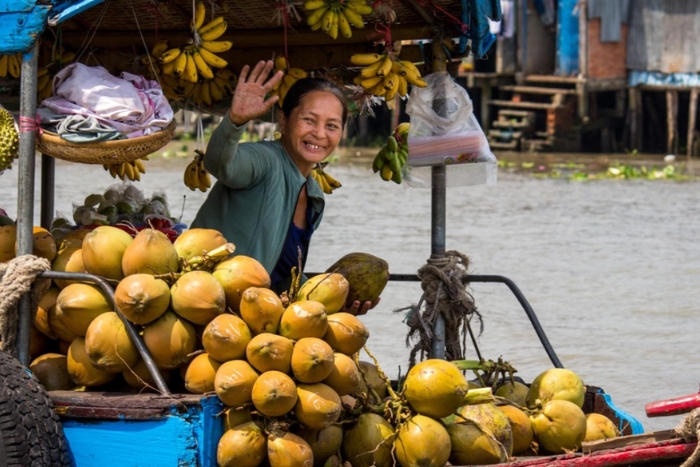
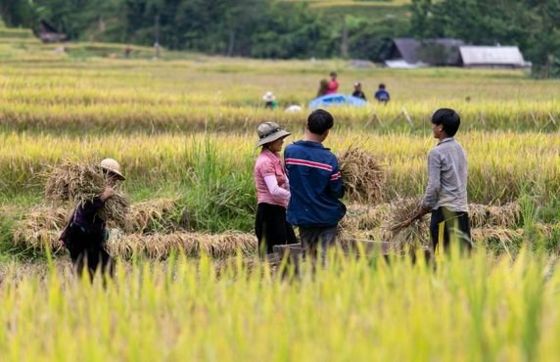
A family welcomed us for a mat-weaving demonstration, accompanied by fresh fruits and tea. The motorised cart ride along the green rice paddies was a moment of pure delight. Lunch served at the Hai Ho house confirmed that Mekong cuisine is delicious, simple and generous. In the late afternoon, we made our way to Can Tho for the night.
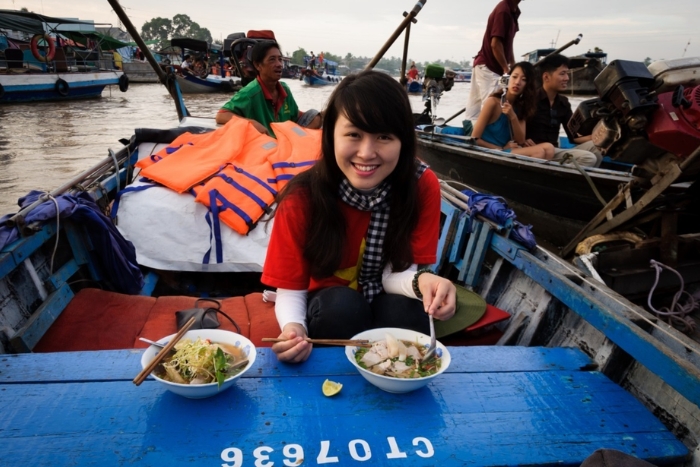
We woke up before dawn in Can Tho so as not to miss the Cai Rang Floating Market, one of the liveliest in the Mekong Delta. Heavily laden junks carrying watermelons, pineapples and vegetables crossed paths on the river, each vessel displaying a pole bearing its wares as a makeshift sign. We ordered a hot bowl of hủ tiếu (noodle soup with a clear pork or seafood broth) directly from a floating kitchen – a suspended moment in the morning mist, forever etched in memory.
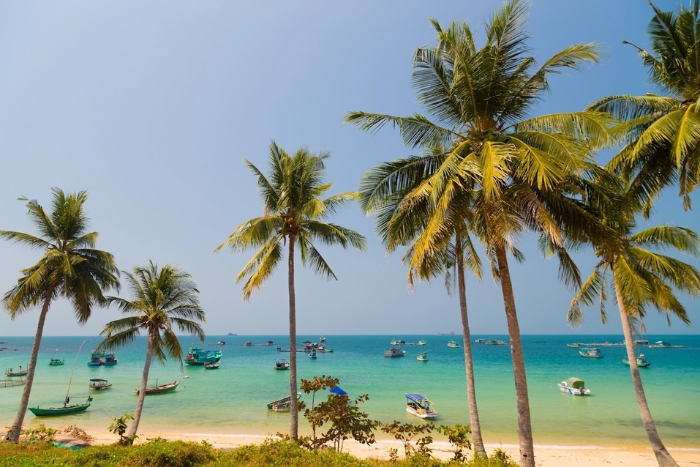
In the afternoon, we made our way to Rach Gia to board a speedboat to Phu Quoc island. Within a few hours, turquoise waters and white sandy beaches welcomed us for three well-deserved nights of rest.
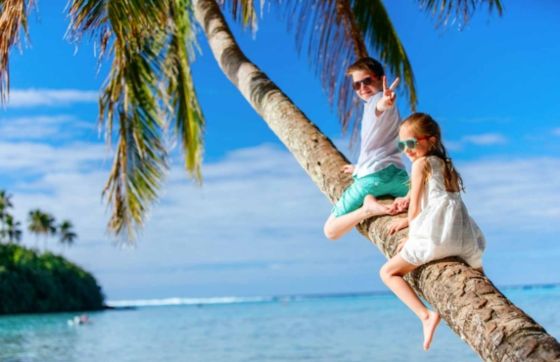
These three free days on Phu Quoc were the crown jewel of this Thailand Vietnam 10-day trip. The island had everything one could dream of: pristine beaches, preserved coral reefs accessible for snorkelling or diving, small islands to explore by boat, and night markets overflowing with fresh seafood at unbeatable prices.
I chose an excursion around the southern islets: the colourful corals, the clownfish and the stingrays encountered underwater were alone worth the journey. This island rhythm – between naps under palm trees and blazing sunsets over the South China Sea – was the perfect antidote to any fatigue built up at the start of the trip.
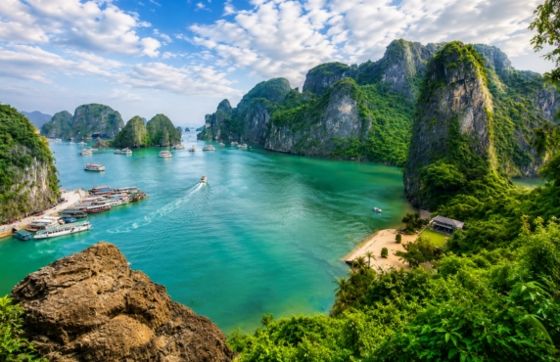
The last morning on Phu Quoc is savoured slowly, facing the sea. After breakfast, an independent transfer to the airport for the international return flight. This Thailand Vietnam 10-day trip draws to a close, suitcases full and eyes overflowing with memories: gilded temple rooftops, brilliantly green rice paddies and the infinite turquoise blue of the lagoons.
A Thailand Vietnam 10-day trip is exactly the ideal length of time to experience the very best of these two extraordinary countries without ever feeling rushed. Perfect for a first escape to Southeast Asia, this journey organised by Autour Asia – a travel agency in Asia – offers the comfort of a guided framework while leaving plenty of room for spontaneous wonder. An experience I wholeheartedly recommend to anyone who dreams of discovering two of Asia's finest gems in a single, unforgettable trip.





 FR
FR ITA
ITA