Thailand is an attractive destination for cyclists thanks to its combination of varied landscapes, rich cultural heritage, and diverse cycling routes. From the flat roads around Ayutthaya and Sukhothai, where you can cycle between ancient temples and rural villages, to the mountains and quiet countryside around Chiang Mai and Chiang Rai, there are options for different fitness levels and travel styles. Cycling in Thailand also offers a slower way to experience local life, passing through rice fields, small communities, markets, and less-visited areas that can be difficult to appreciate from a car. Thailand has also developed several low-carbon tourism routes that include cycling and aim to support local communities and more sustainable travel.
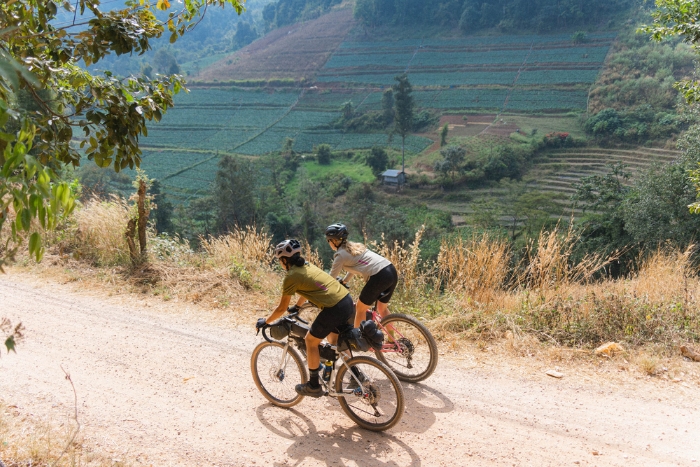
For most cycling routes in northern and central Thailand, November to February is generally the best time to cycle in Thailand. November marks the beginning of the cooler season, while December and January are usually pleasant for outdoor activities, although mornings can be chilly in mountainous areas.
February can still be a good month for cycling, but temperatures gradually start to rise as Thailand moves towards the hot season.
For southern Thailand, the ideal period depends on the coast you want to explore. The Andaman coast and the Gulf of Thailand have different rainfall patterns, so it is worth checking the local weather before choosing your route.
Overall, the best cycling itinerary in Thailand depends not only on your fitness level and interests, but also on the region and season of your trip.
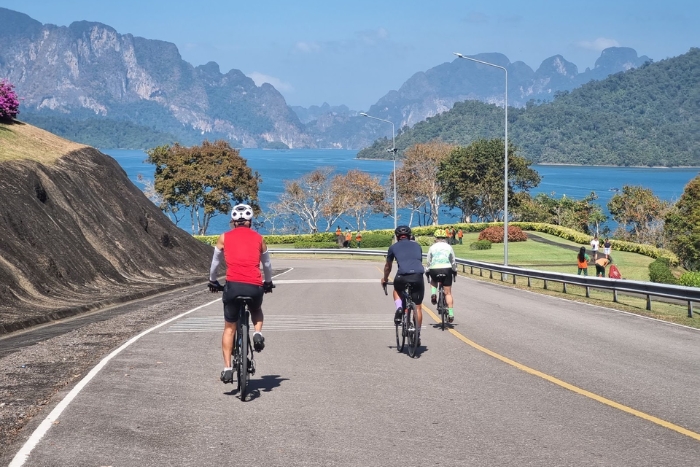
Thailand offers a wide range of cycling experiences, from quiet countryside roads and ancient temples to mountain passes and coastal landscapes. When choosing a cycling itinerary in Thailand, consider your fitness level, the season, and the type of scenery you would like to discover. Here are several routes worth considering, whether you are looking for a multi-day adventure or a shorter Thailand cycling tour.
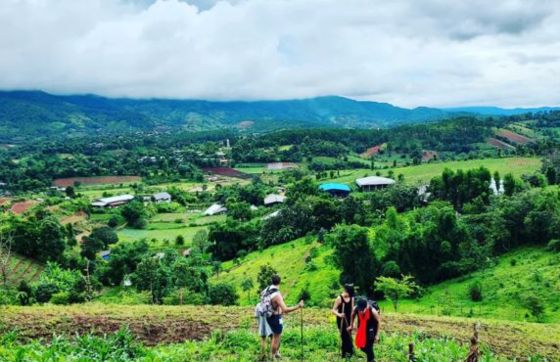
A bike tour from Chiang Mai to Chiang Rai is a good choice for travelers who want to combine mountain scenery, rural landscapes, and local culture. The route passes through green countryside, small villages, temples, and hilly areas in northern Thailand. Some sections involve climbs and descents, so a reasonable level of fitness is recommended.
Along the way, you can stop in local communities and discover the different cultures of northern Thailand. Compared with a standard road trip, cycling allows you to travel at a slower pace and enjoy the landscape between the main destinations. It is also possible to combine this route with other Thailand bike tours around Chiang Mai.
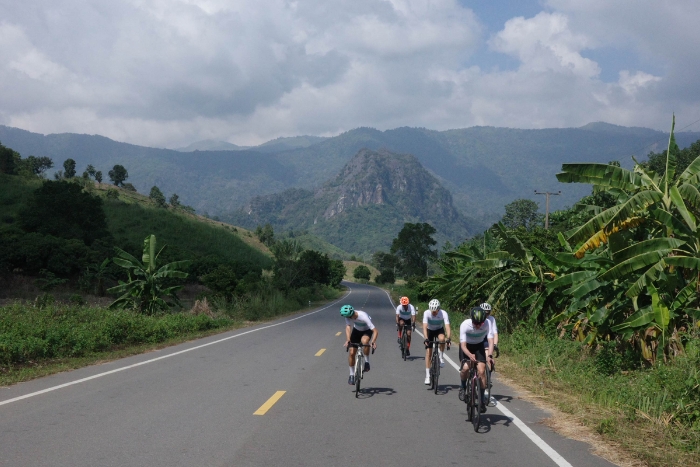
For experienced cyclists, the Mae Hong Son Loop is one of the more demanding options in northern Thailand. The full loop covers roughly 600 km and connects Chiang Mai, Pai, Mae Hong Son, and several rural areas along winding mountain roads.
The route is known for its steep climbs, long descents, forested hills, and quiet countryside. You can also visit traditional villages and experience the diverse cultures of northern Thailand along the way. This is a better option for cyclists looking for a physical challenge rather than a relaxed holiday. If you are interested in mountain bike in Thailand or longer mountain cycling routes, the Mae Hong Son area is worth considering.
For a different type of cycling itinerary in Thailand, consider a route connecting the southern mainland with the islands around the Gulf of Thailand. A Krabi-Koh Samui cycling trip combines coastal roads, countryside, beaches, and tropical scenery.
The route can include sections along the Andaman coast before continuing towards the Gulf of Thailand, with a ferry crossing to the island. Compared with the mountainous routes in northern Thailand, some sections are relatively gentle and focus more on landscapes and local life than demanding climbs.
Cyclists can also extend their trip with cycling in Koh Samui, exploring quieter roads, coconut plantations, beaches, and small villages at a relaxed pace.
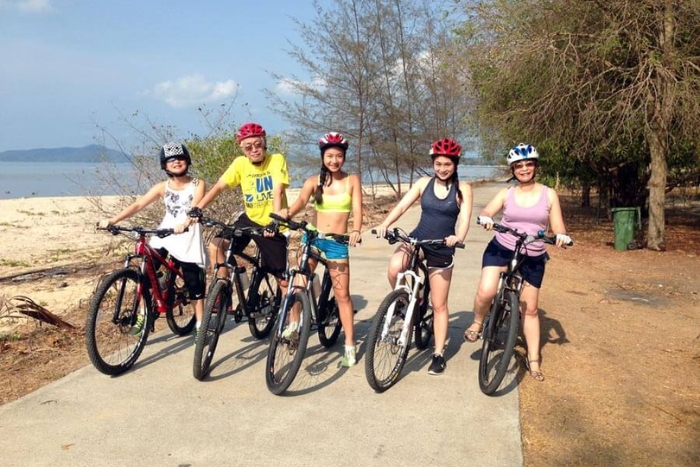
A bike tour Bangkok is a good option if you only have a day to discover Thailand by bike. Instead of staying on the busiest streets, some routes lead through quieter neighbourhoods, narrow lanes, canals, green areas, and local communities around Outer Bangkok. One documented countryside route covers around 35 km and takes about 6-7 hours, including stops.
This type of ride is less about covering a long distance and more about discovering a different side of the capital. You can combine cycling with local markets, temples, riverside areas, and short breaks along the way.
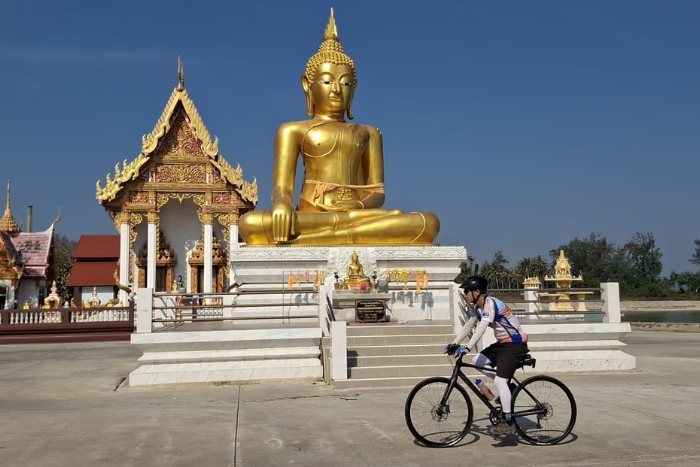
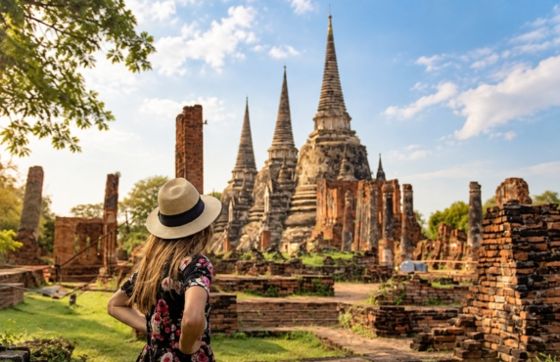
An Ayutthaya bike tour is a practical choice for travelers interested in history and culture. The relatively compact historical area makes it possible to cycle between several ancient temples and ruins without spending too much time on the road.
You can take a relaxed ride around the old city, stopping at temples, local markets, and riverside areas along the way. It is also easy to combine Ayutthaya with Bangkok as part of a longer cycling itinerary in Thailand, either as a cycling day trip or a short overnight stay.
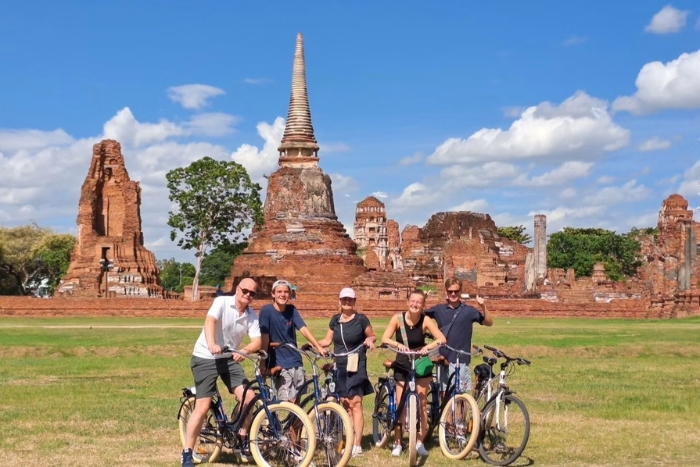
Cycling in Hua Hin works well for travelers who prefer shorter rides with a mix of coast and countryside. One local route around Hua Hin covers about 40 km, passing Khao Tao Reservoir, Pranburi Forest, and quiet roads through pineapple and palm plantations. Another route to Pranburi Mangrove Forest is shorter and mostly flat, with only a few climbs.
For a longer ride, you can continue south towards Prachuap Khiri Khan or inland towards the reservoir areas. A Bangkok-Hua Hin cycling route can also be divided into several stages, with one current route covering around 204 km in three sections.
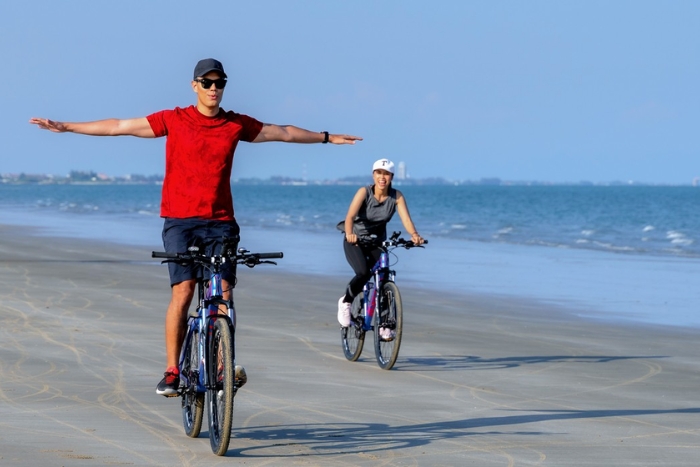
Cycling in Pattaya routes offer more variety than the busy beachfront area might suggest. Around the city, cyclists can choose short rides around Mab Prachan Reservoir or longer countryside routes through Chon Buri. Bikemap currently lists hundreds of cycling routes around Pattaya, ranging from short 10-20 km rides to routes of more than 100 km.
For a relaxed outing, a loop around Mab Prachan Reservoir is a manageable option, while longer routes towards the surrounding countryside are better suited to experienced cyclists. If you want a more demanding ride, the Bangkok-Pattaya route is considerably longer and involves significant elevation, making it more appropriate for experienced cyclists.
Plan your budget: Choose local guesthouses, small restaurants, and shorter routes to keep your bike tour in Thailand affordable.
Choose the right bike: Select a road, hybrid, gravel, or mountain bike according to the terrain. Check the brakes, tires, gears, and chain before setting off.
Stay safe on the roads: Thailand drives on the left. Wear a helmet, use lights, stay visible, and avoid busy highways and cycling at night whenever possible.
Start early: Ride in the morning to avoid the strongest heat, especially from March to May. Take regular breaks in shaded areas.
Stay hydrated: Carry enough water and consider electrolyte drinks on longer rides. Bring fruit or energy snacks to maintain your energy.
Pack light: Take breathable cycling clothes, sunscreen, a rain jacket, basic first-aid supplies, and a small repair kit.
Plan your route: Download offline maps and identify accommodation, restaurants, shops, and water stops before riding through rural areas.
Respect local life: Dress appropriately at temples, ask before taking photos, and support local businesses along your route.
Consider local support: A guide or support vehicle can be useful for remote or mountainous Thailand bike tours, especially if you need help with navigation, luggage, or mechanical issues.
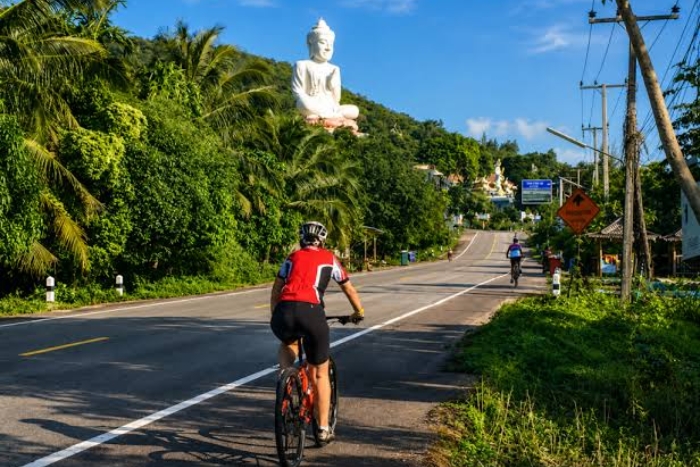
A cycling trip is an eco-friendly way to discover Thailand beyond its main tourist sites while enjoying a more active and relaxed way of traveling. From rural roads and mountain landscapes to historic towns and coastal areas, cycling lets you experience local life at a slower pace and stay active along the way. Whether you choose a short ride or a longer cycling itinerary in Thailand, good planning will make your journey more comfortable and enjoyable. With the right bicycle, accommodation, route, and local support, you can travel safely and at your own pace. If you are planning a wider Southeast Asia trip, Autour Asia - travel agency in Asia can also help you combine cycling experiences with a tailor-made Thailand itinerary.





 FR
FR ITA
ITA