Choosing agritourism in Cambodia means discovering the country differently, beyond the temples of Angkor and the lively atmosphere of Phnom Penh. You immerse yourself in rural Cambodia, where agricultural landscapes, villages and traditional know-how shape daily life. This rural tourism in Cambodia brings you closer to local people and allows you to better understand their relationship with the land, the seasons and traditions.
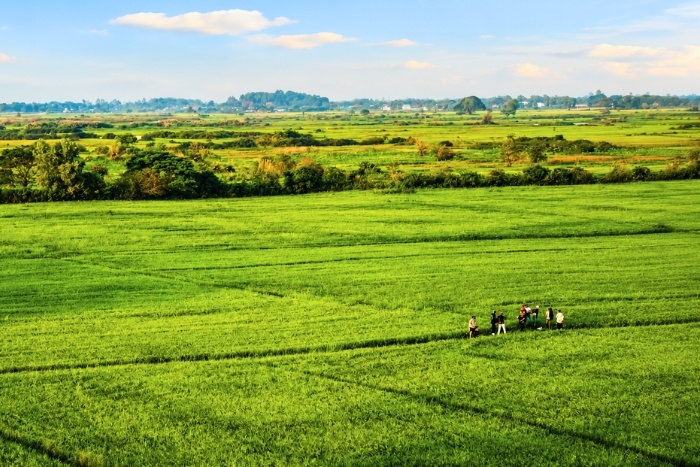
By choosing local producers, guides and accommodations, you also support rural communities and more sustainable agriculture. Combining nature, encounters and local products, this experience is suitable for couples, families, nature lovers and travelers seeking authenticity or slow travel. With Cambodia agritourism, you no longer simply visit the country: you take the time to discover its daily life and its most human side.
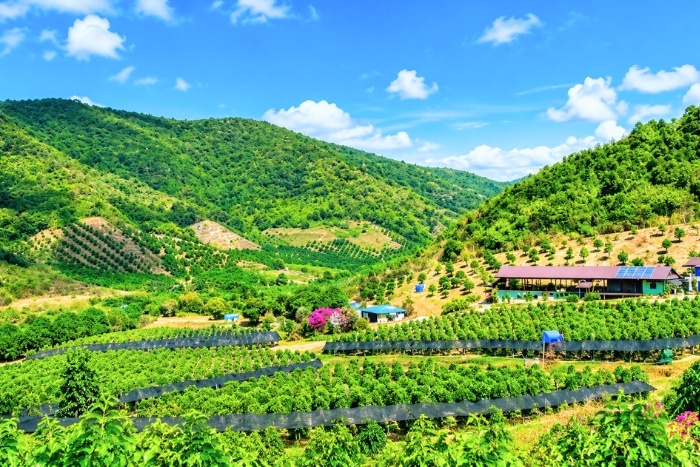
Between the sea and green hills, Kampot and Kep offer an ideal setting to discover agritourism in Cambodia through the flavors of their local produce. Start in the Kampot pepper plantations, where you observe the pepper plants, discover the stages of production and taste the green, black, red or white varieties. Continuing toward Kep, the plantations gradually give way to tropical orchards of mangoes, durians, rambutans and seasonal mangosteens.
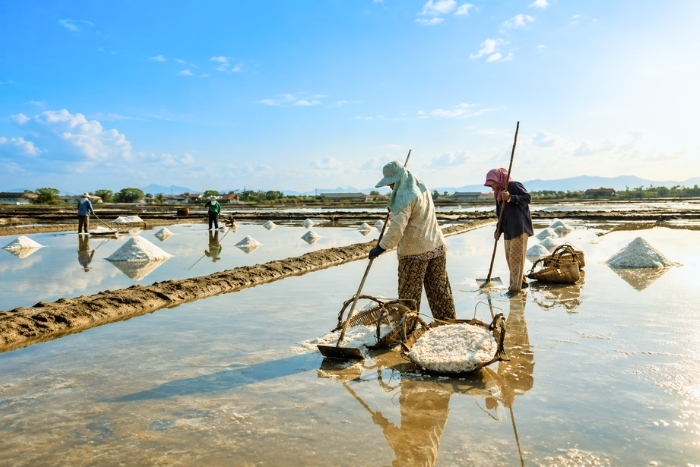
The agricultural landscape continues around Kampot with its salt fields, which are particularly interesting during the dry season when salt workers harvest the salt by hand. Between farm visits, tastings and walks along small rural roads, you discover a region where agriculture, gastronomy and landscapes naturally complement one another.
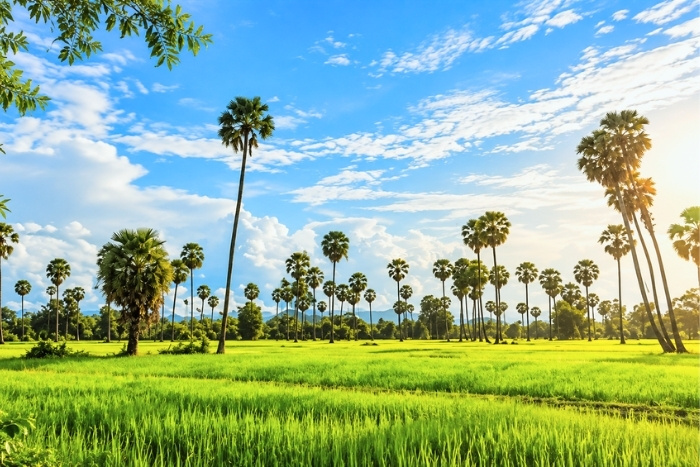
A few kilometers from the temples of Angkor, Siem Reap reveals a peaceful side, among rice fields, sugar palms and villages shaped by the seasons. During your Cambodia agricultural tour, leave the historical sites behind to cycle along country roads, observe work in the fields and discover the traditional production of palm sugar around Banteay Srei, close to local people.
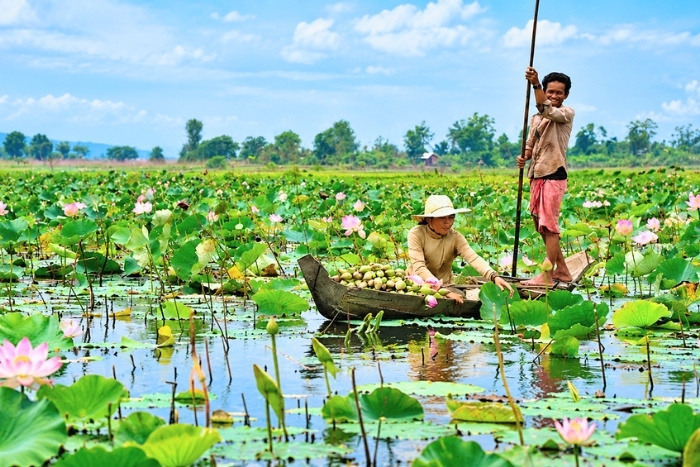
Further south, the wetlands near Phnom Krom invite you to discover lotus cultivation and its transformation into textile fibers. Vegetable farms, local gardens and village know-how complete this immersion near Angkor. To vary the experiences, devote a day to rural tourism in Cambodia in this countryside, a great way to combine heritage, agriculture and encounters with local people during your stay in Siem Reap.
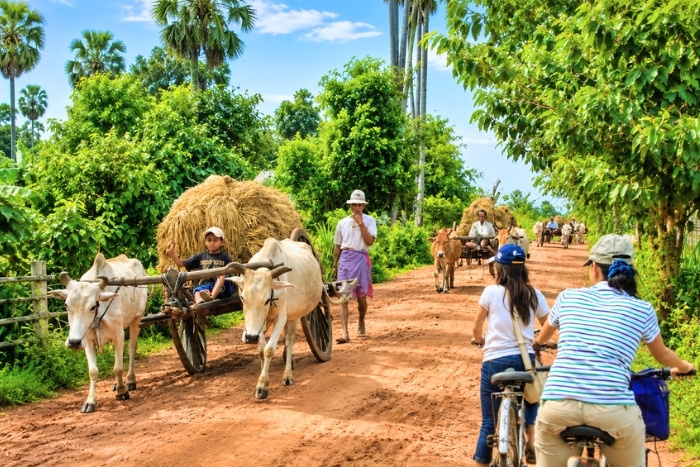
Nicknamed the “rice bowl of Cambodia,” Battambang immerses you in the heart of agricultural landscapes where rice fields, orchards and villages follow one another along the roads. By bicycle or tuk-tuk, you travel peacefully along roads lined with fields and observe rural life along the way.
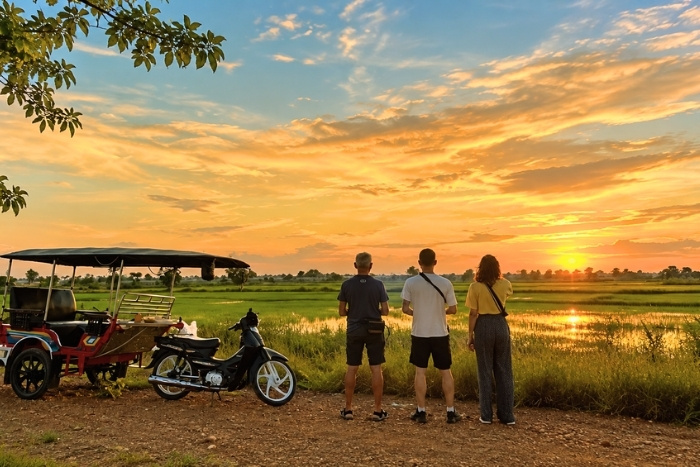
The discovery continues in the villages around the Sangker River and Ek Phnom, where families still process the harvests using traditional methods. You can see the preparation of rice cakes, sticky rice cooked in bamboo or dried bananas, before tasting a few specialties. Cambodia agritourism in Battambang thus offers a peaceful immersion in a lively countryside, among landscapes, flavors and the know-how of rural Cambodia.
In Mondulkiri, the scenery changes completely: the plains give way to hills, red soils and the forests of the eastern highlands. This geography gives agritourism in Cambodia another dimension. Around Sen Monorom and in rural areas, you discover rubber, cassava and cashew plantations, as well as rice fields and different crops adapted to the altitude.
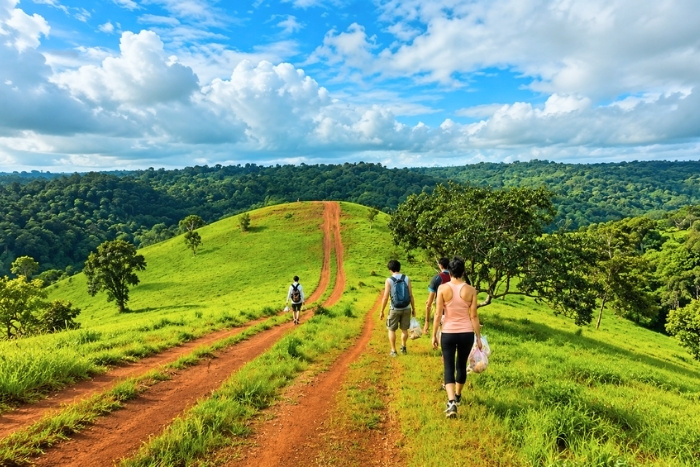
Some small farms allow you to understand local practices and the connection between agriculture, forests and rural Bunong communities. Here, the interest lies as much in the farms as in their natural environment. Mondulkiri is particularly suitable for a rural trip in Cambodia, combining agricultural discovery, hilly landscapes and nature, while revealing a wilder side of the Cambodian countryside.
Just a few minutes by boat are enough to leave Kratie and reach Koh Trong, a peaceful island revealing the gentle pace of rural life along the Mekong. By bicycle, you travel among houses, gardens, rice fields and orchards renowned for their pomelos, while observing how local people cultivate these fertile lands.
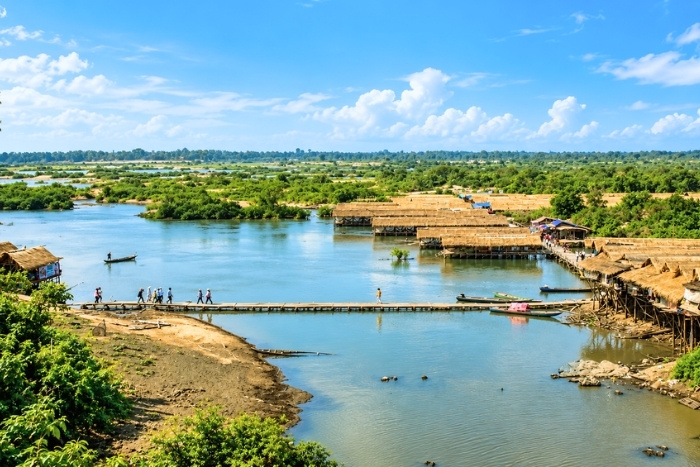
Here, agricultural activities follow the seasons and the fluctuations of the river. Further on, villages, small farms and crops grown on land uncovered by the receding waters extend this immersion. Rural tourism in Cambodia thus takes on a dimension linked to the Mekong in Kratie. The region is not limited to the famous Irrawaddy dolphins: you can combine observing them with an agricultural escape and enjoy a peaceful travel pace.
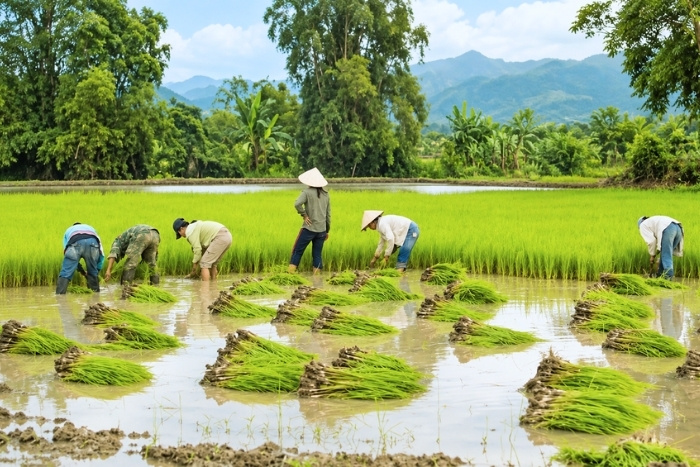
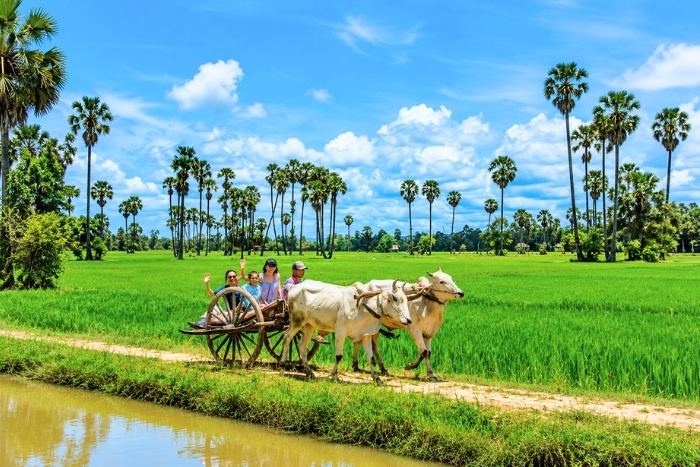
During a Cambodia agricultural tour, rolling up your trousers and stepping into the mud changes the way you see the rice fields. Depending on the season, transplant young rice plants by hand or join farmers in the golden fields. At harvest time, try cutting with a sickle and observe threshing and winnowing. In this way, you discover the work, water and seasons behind each harvest of rural life.
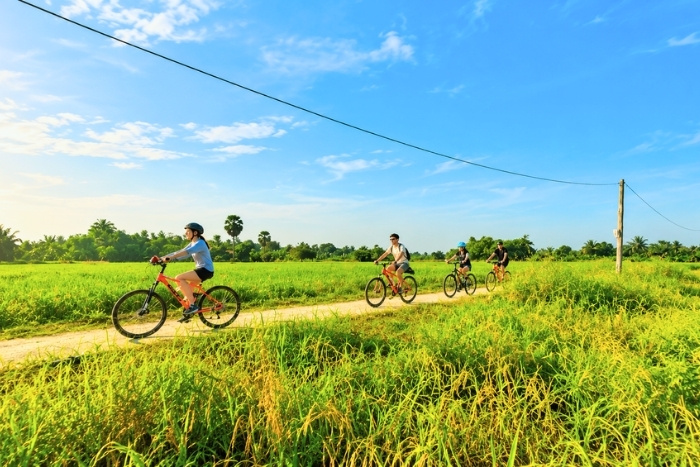
From Siem Reap, a few hours in the rice fields of Chreav or the countryside of Banteay Srei can be included between two visits, with a bicycle ride. In Battambang, Wat Kor and Ek Phnom allow you to travel through vast rice-growing landscapes, meet families and observe work in the fields depending on the season. A farm stay in Cambodia extends this discovery of daily rural life.
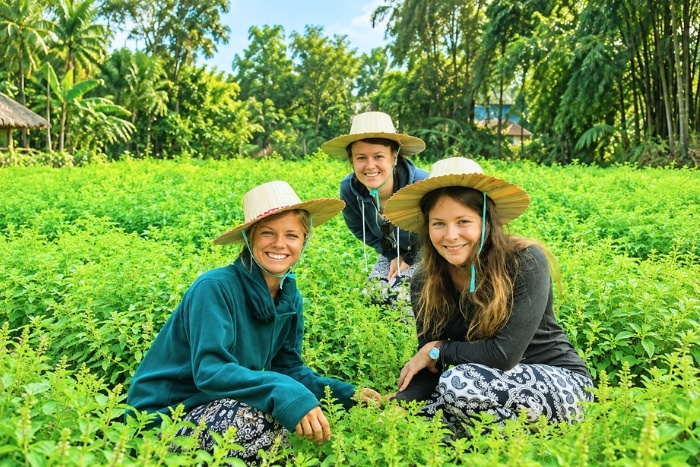
In the countryside around Siem Reap, step inside an agroecological farm to discover another side of agritourism in Cambodia, far from the temples. You walk among vegetable gardens, aromatic herbs and fruit trees, observe the harvests and discover how producers maintain their crops using compost, natural fertilizers and careful water management. Some visits also show the preparation of plant-, chili- or garlic-based solutions against pests.
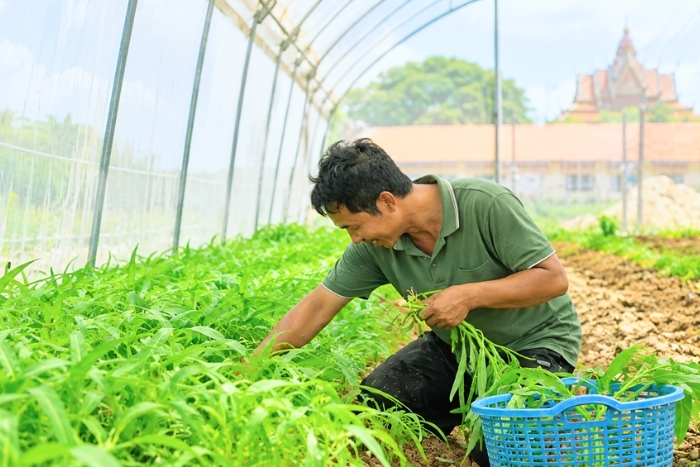
In Kampot, several plantations extend this discovery around spices, fruits and more sustainable agricultural practices. Above all, take the time to talk with the producers: their explanations about rainfall, seasons, soils and harvests bring the visit to life and allow you to understand the realities of Cambodian agriculture.
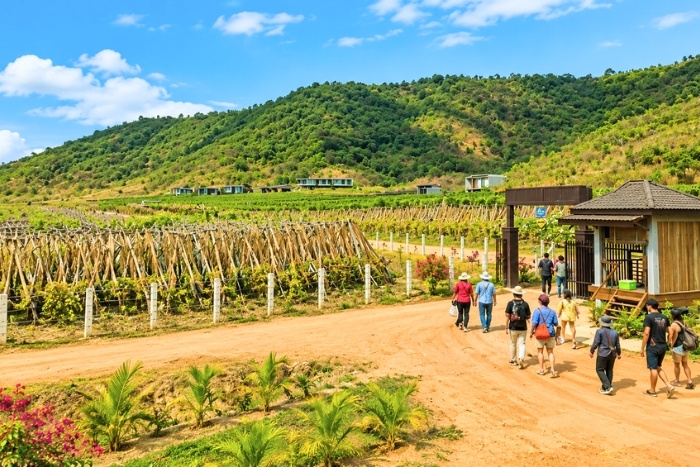
Fragrant pepper, mangoes, rambutans, mangosteens, coconuts or jackfruits: rural tourism in Cambodia is also discovered through the aromas and flavors of plantations. In Kampot, walk along the rows of pepper plants, follow the development of the clusters and discover how the peppercorns are harvested, processed and then sorted. The visit becomes more flavorful in the orchards, where tropical fruits and spices grow side by side throughout the seasons.
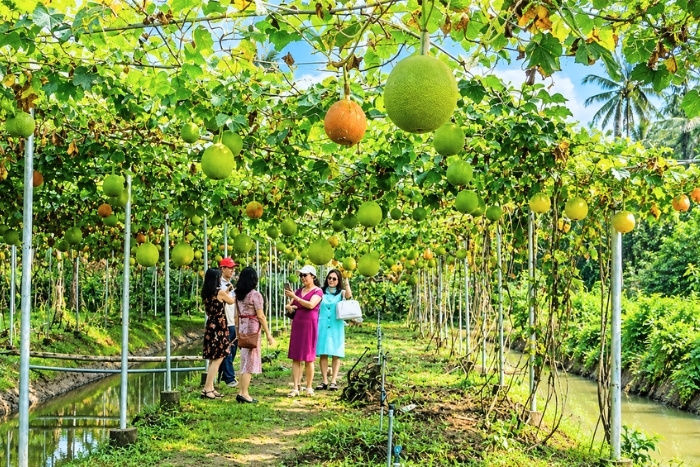
Depending on the region and the season, you may sometimes take part in the picking and, above all, taste the products directly on site. Other areas offer their own discoveries, such as the pomelo orchards of Koh Trong in Kratie. Allow a few hours: between walking, tasting and purchasing from producers, these agricultural activities in Cambodia connect agritourism with local gastronomy.
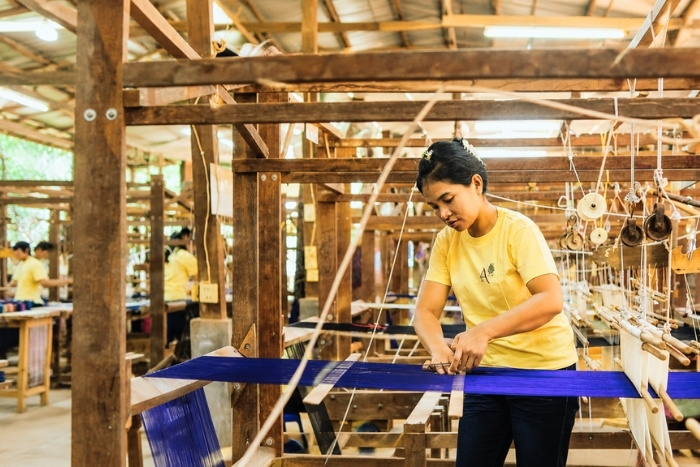
Before reaching a loom, Cambodian silk begins in the mulberry fields. You follow the raising of silkworms, then observe how the cocoons become threads before dyeing and weaving. Around Siem Reap, the silk farms of Pouk offer a Cambodia agritourism experience, while Phnom Srok, in Banteay Meanchey, also preserves this rural sericulture tradition.
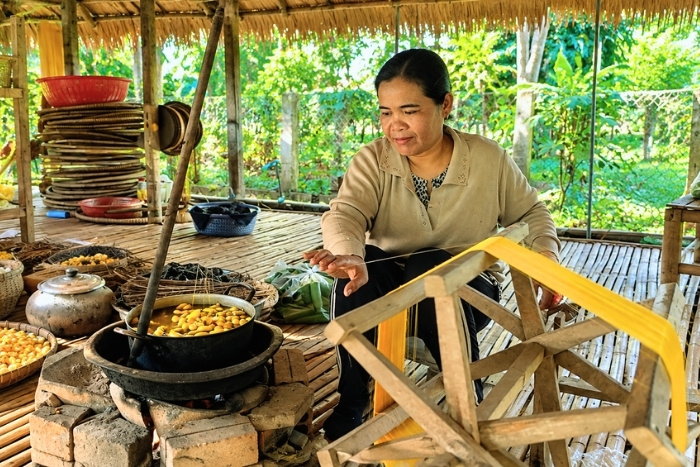
During a Cambodia agricultural tour, Koh Dach, near Phnom Penh, offers a different atmosphere: by bicycle, cross this “Silk Island” and meet families working on traditional looms. Depending on the workshop, observe the artisans, try a few weaving techniques and buy a piece of fabric on site. Choose handwoven pieces to support this Khmer know-how.
Your agritourism experience in Cambodia begins in the garden, basket in hand, where you harvest lemongrass, turmeric, galangal, kaffir lime, vegetables and fresh herbs. Then move to the kitchen to discover the aromas of Khmer spices and pound your kroeung in a mortar. With your host’s guidance, you then prepare an amok, a lok lak seasoned with Kampot pepper or a few family recipes before sharing the meal on site.
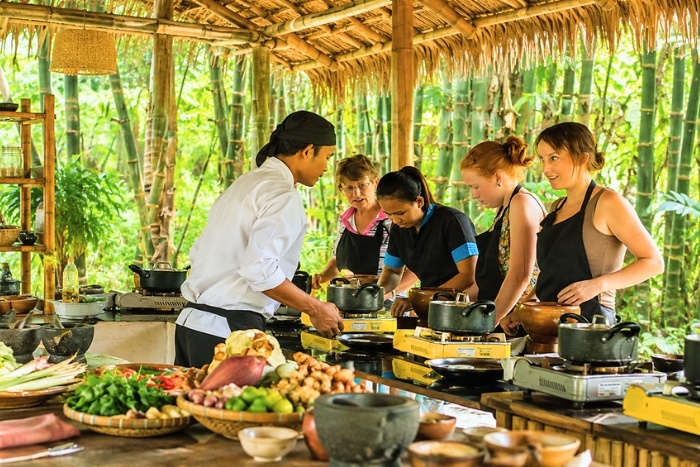
In Kampot, some estates combine plantation visits and cooking around spices, while the Siem Reap countryside offers “farm-to-table” experiences using produce from local gardens. In half a day, you thus discover Cambodian cuisine from harvesting the ingredients to the pleasure of tasting them.
A farm stay in Cambodia immerses you in the heart of the countryside and rural life. In the evening, share local rice, freshly picked vegetables or fish with your hosts in a warm atmosphere. In the morning, the village comes back to life: walk through the fields, accompany the family to the vegetable garden or take part in agricultural activities before exploring the surroundings.
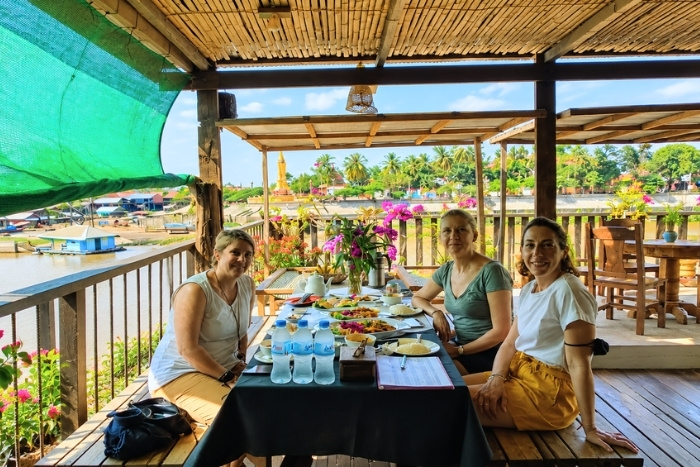
On Koh Trong, near Kratie, you stay on an island dotted with orchards, while Battambang and Kampot offer other rural stays. A farm stay welcomes you directly on a farm, while a homestay focuses on living with a local family. Comfort is sometimes simpler than at a hotel, but this closeness to local people is what gives rural tourism in Cambodia all its charm.
Short itinerary of 3 to 4 days:
A getaway in the South suitable for travelers with little time or those wishing to add a rural break to their stay.
Phnom Penh → Kampot: Head to the countryside to discover pepper plantations, spices, orchards and agricultural landscapes.
Kampot: Visit a farm, taste local products or take part in a “farm-to-table” cooking workshop.
Kampot → Kep: Enjoy the coastal countryside and the crab market before returning to Phnom Penh.
Intermediate itinerary of 5 to 7 days:
This route easily combines Angkor and agritourism in Cambodia, without devoting your entire stay to agricultural activities.
Siem Reap: Combine the temples of Angkor with a first discovery of villages and rice fields.
Siem Reap countryside: Cycle through the fields and discover rice cultivation, palm sugar, farms and sericulture.
Siem Reap → Battambang: Travel through an important agricultural region dotted with rice fields, orchards and villages.
Battambang: Explore the countryside and meet families processing rice, fruits and local products. An overnight homestay can complete this stage.
Complete itinerary of 10 to 14 days:
With more time, this itinerary allows you to discover several local regions while maintaining a balanced pace.
Siem Reap: Combine Angkor with rice fields, villages, farms and sericulture workshops.
Siem Reap → Battambang: Discover rice-growing landscapes, family-run production and rural crafts.
Battambang → Phnom Penh: Take a cultural break among heritage, markets and gastronomy.
Phnom Penh → Kampot: Explore pepper plantations, orchards and farms, with a tasting or cooking workshop.
Kampot → Kep: Finish among countryside, seafood and the flavors of the coastal region.
To discover the East, choose Kratie and Mondulkiri as a separate extension to explore the Mekong, the orchards of Koh Trong and highland crops without multiplying long transfers.
The best time for agritourism in Cambodia mainly depends on what you want to observe. From November to April, the dry season makes travel, bicycle rides and plantation visits easier.
Temperatures are more pleasant from November to February, while March and April are hotter. This period allows you to witness certain rice harvests, discover the salt fields and, depending on the time, Kampot pepper.
From May to October, the green season offers a completely different atmosphere: more lush countryside and lively rice fields. However, showers can make some rural excursions more difficult.
For a Cambodia agricultural tour, there is no need to overpack your luggage. Above all, choose lightweight, comfortable items suited to outdoor activities.
Lightweight and breathable clothing: Pack lightweight trousers and a long-sleeved shirt to protect yourself from the sun and insects on farms and in rice fields. Choose simple clothes that you do not mind getting dirty or muddy.
Practical footwear: Bring comfortable closed-toe shoes for walking in the fields, as well as sandals that are easy to clean after a day in the countryside.
Protection against the climate: A hat or cap, sunglasses, sunscreen and mosquito repellent are particularly useful for outdoor activities. During the rainy season, add a poncho or a lightweight raincoat.
Essential accessories: A reusable water bottle and a small backpack will allow you to keep water and personal belongings within easy reach during excursions.
Respect for local life: Keep an outfit that covers your shoulders and knees for visiting temples or certain villages, and always ask permission before photographing local people.
Discovering agritourism in Cambodia means taking the time to see the country differently, closer to its countryside, traditions and local people. From the rice fields of the Northwest to the plantations of the South, each region offers a different experience depending on your preferences, the season and your pace. A few hours on a farm can easily complement a classic tour, while a longer stay allows you to fully enjoy local life. To include these experiences in your itinerary, Autour Asia, an authentic travel agency in Cambodia, helps you create a tailor-made trip combining rural tourism in Cambodia, culture, nature and encounters with local people.
Explore more:
- Eco-farm visit in Cambodia
- 2-day agricultural tour in Cambodia
- Vietnam or Cambodia for cycling
- Cambodia 15-day travel itinerary
- Cambodia Travel Guide
- Cambodia tour itinerary 2 weeks
- Cambodia Tours






 FR
FR ITA
ITA