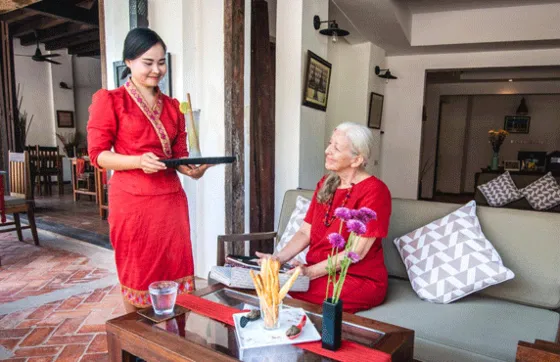
Your private guide speaks English, and every tour comes with your own guide and driver. See our Laos tours.
Yes. In Luang Prabang we can add a Lao cooking class: a morning at the market, then preparing laap, sticky rice and other local dishes and tasting them together.
We do. We book Laos – China railway tickets and domestic flights in Laos at the lowest fare available at the time of booking. The train from Vientiane to Luang Prabang takes about 2 hours, with an optional stop in Vang Vieng.
Two days on the water from Huay Xai on the Thai border, with a night in Pak Beng and stops in riverside villages. A lovely way to link northern Thailand and Luang Prabang; we arrange the border crossing, the boat and the transfers. See our Mekong cruises in Laos.
Yes, Laos is a peaceful country. On the Plain of Jars and in remote countryside stay on marked paths, as unexploded ordnance may remain. Take care when swimming or kayaking in the rainy season and drink bottled water.
In the dry season, from about November to April, the water is a clear turquoise and you can swim in the natural pools. In the rainy season the falls are more powerful but the water is cloudier. Go early in the day for more peace.
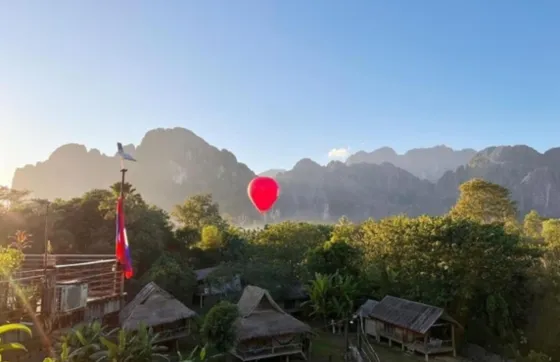
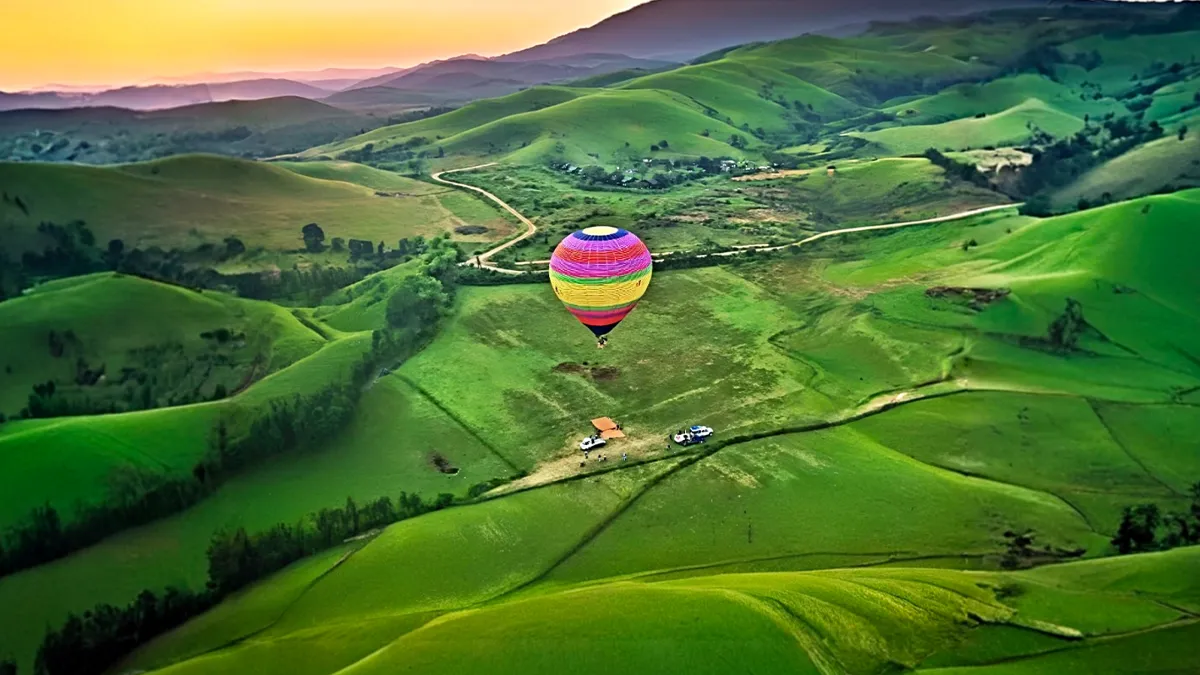
Not as it used to be. Vang Vieng has become quieter and is now about nature: limestone peaks, rice fields, blue lagoons, caves, kayaking on the Nam Song and hot-air balloon flights at sunrise. We choose quiet accommodation outside the centre.
You will find ATMs in Vientiane, Luang Prabang, Vang Vieng and Pakse; elsewhere they are rare. Bring enough cash for the countryside and the 4,000 islands. The currency is the kip (LAK); hotels often accept cards. Read our guide to Lao currency.
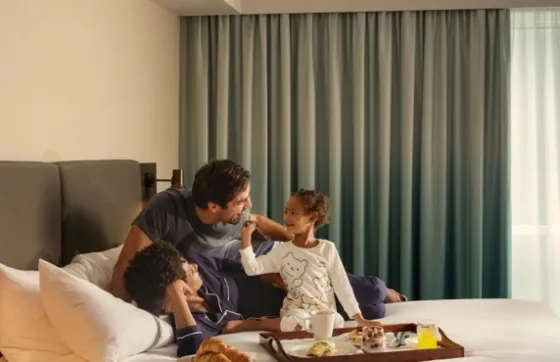
Yes. Children love the Kuang Si waterfalls, boat trips on the Mekong, cycling between villages and the caves of Vang Vieng. We keep travel days short and choose family-friendly accommodation. Read family holidays in Laos.
You fly from Vientiane to Pakse. From there it is about 3 hours by road to the 4,000 islands (Si Phan Don), with Wat Phou in Champasak or the Bolaven Plateau on the way. Allow three to four days for the south.
The only landlocked country in Southeast Asia, Laos lives to the rhythm of the Mekong. Travellers come for the gentle charm of Luang Prabang, the northern mountains, ethnic minority villages, waterfalls and the islands of the South, and for the quiet warmth of its people. It is an ideal country to slow down. This Laos travel guide brings together our team’s advice: stops not to miss, the right season, how long to stay, getting around and useful precautions.
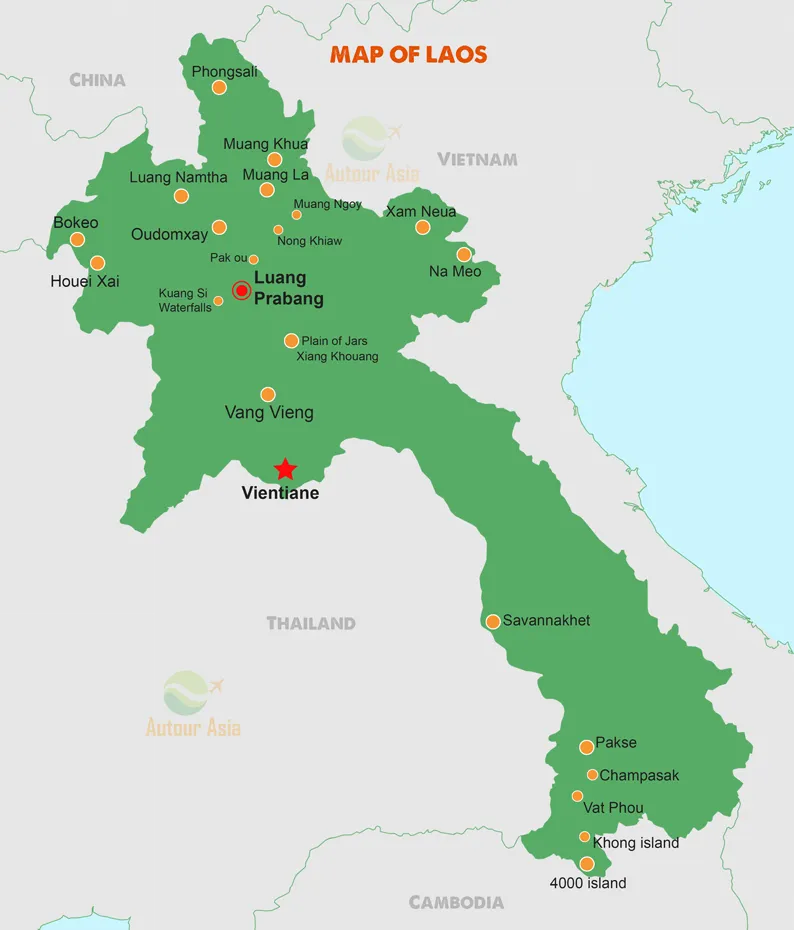
Map of Laos: from the mountainous North to the 4,000 Islands
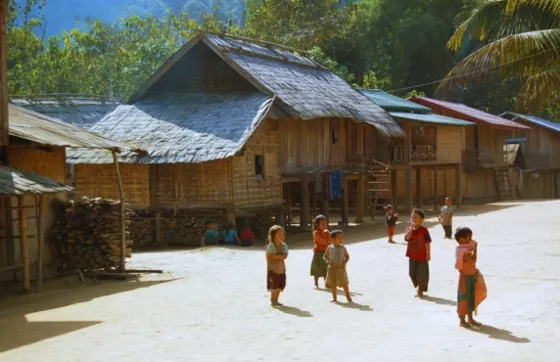
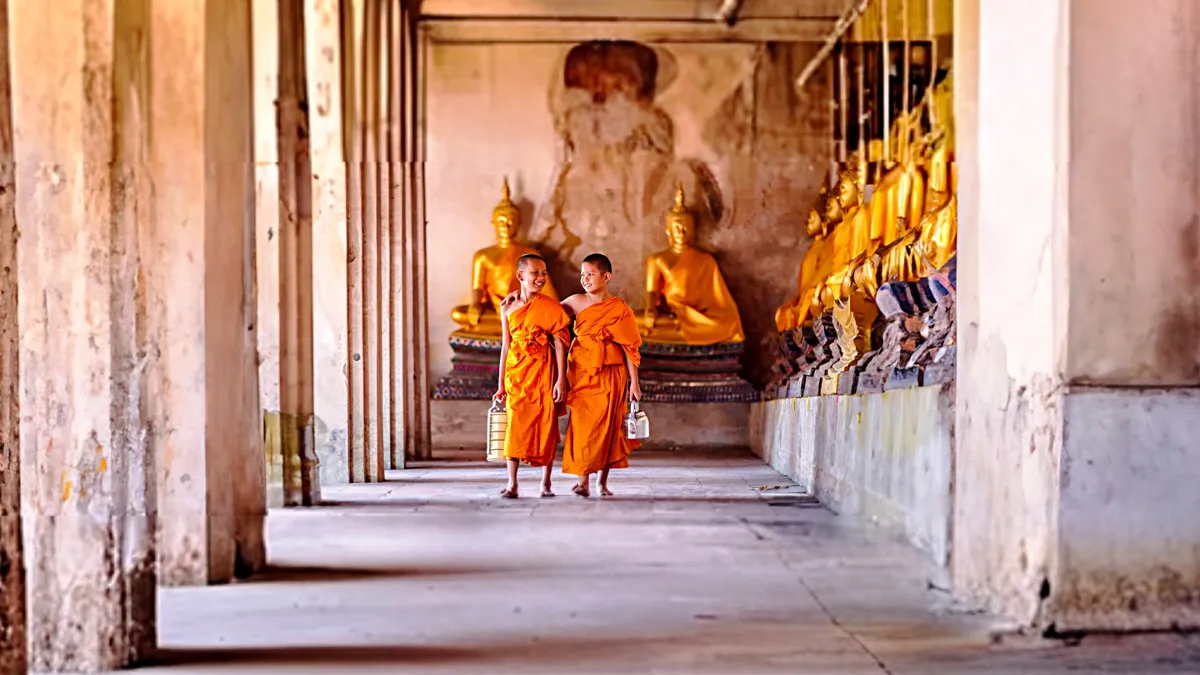
Once the kingdom of “a million elephants” (Lan Xang), Laos has kept a very living Buddhist heritage: monks in saffron robes, golden temples, water festivities at Pi Mai (Lao New Year, mid-April) and boat racing festivals at the end of Buddhist Lent. The country officially recognises around fifty ethnic groups, including Lao, Hmong, Khmu and Akha, and has a very young population.
History has left its mark: French protectorate, then the Indochina wars and the bombing of the 1960s and 1970s, whose traces are still visible in some provinces. Since opening to tourism, Laos welcomes travellers simply, far from the bustle of its neighbours. Roads are slow, villages peaceful and time seems to stretch: a stay here is savoured rather than rushed.
Laos suits travellers who enjoy nature, Buddhist culture and soft adventure: easy treks, kayaking, cycling between villages, boat trips. It also fits perfectly into a wider journey through Indochina, between Vietnam, Cambodia and Thailand.
For an itinerary built around your interests, see our Laos tours and Laos package tours.
Visa, money, health, luggage: our practical articles answer the questions that come up before every trip.
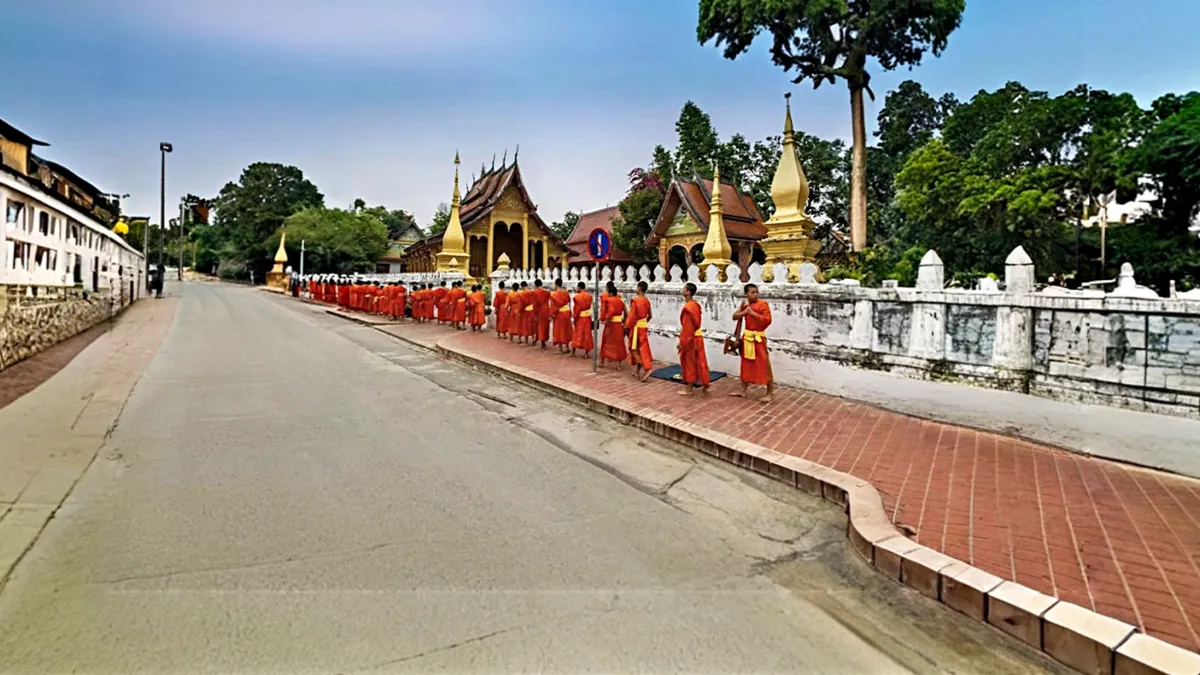
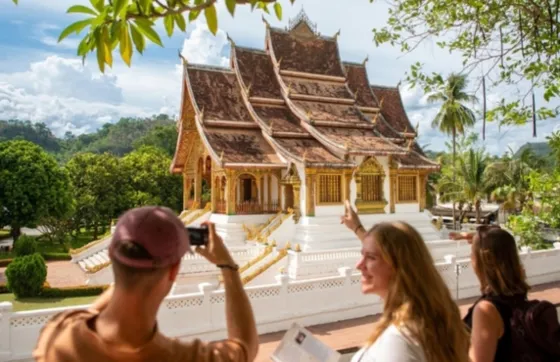
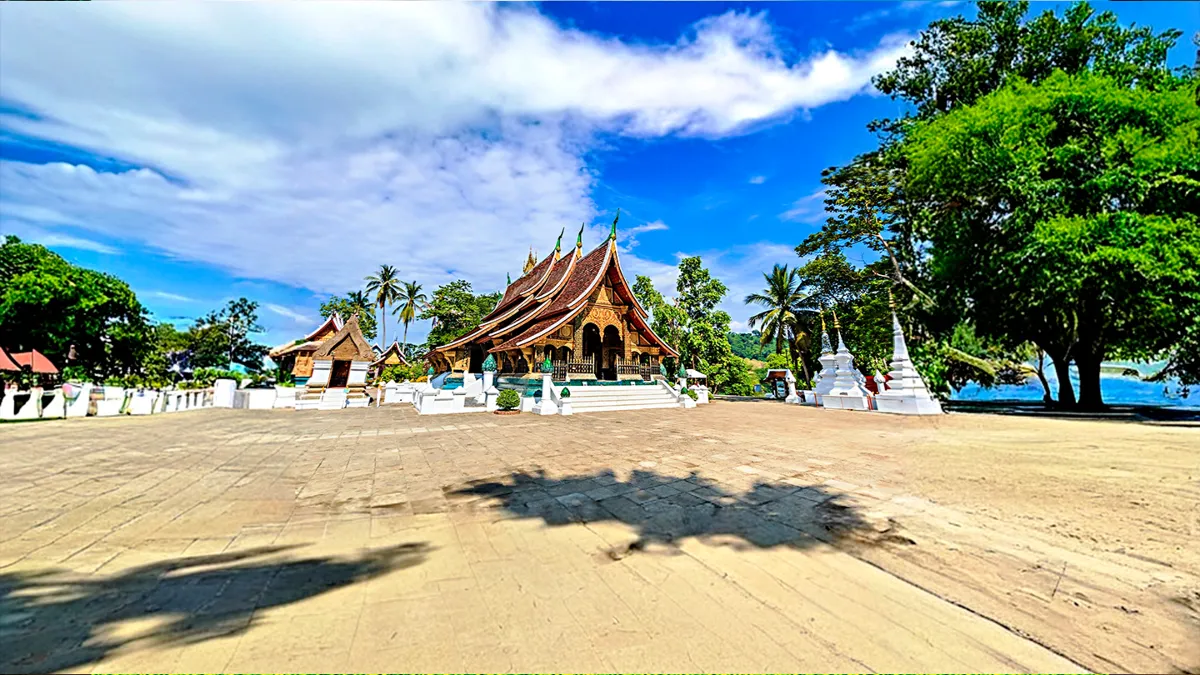
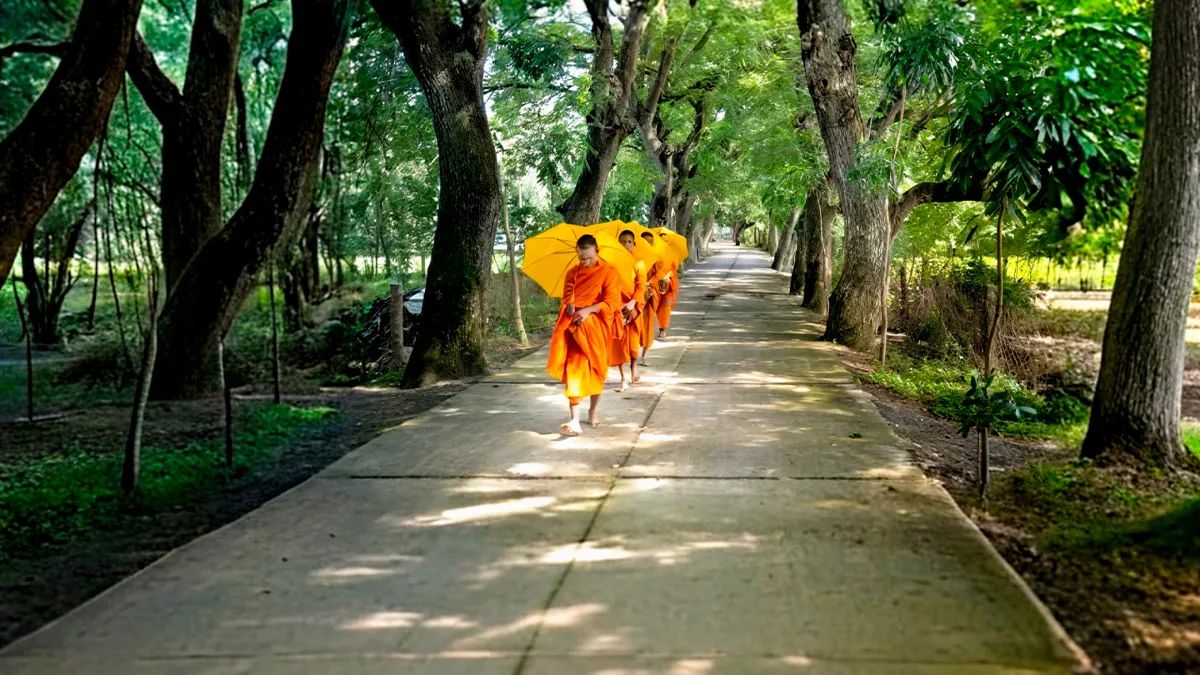
A UNESCO World Heritage site, Luang Prabang is often the favourite stop of the trip: a peninsula between the Mekong and the Nam Khan, colonial houses, more than thirty temples including Wat Xieng Thong, and a handicraft night market. At dawn, the procession of monks receiving sticky rice (tak bat) is a powerful moment, to be experienced in silence and at a respectful distance.
Around the town, the turquoise Kuang Si waterfalls, the Pak Ou caves filled with Buddha statues (about 2 hours by boat on the Mekong), weaving villages and Mount Phousi at sunset complete a three-day stay.
In the evening, the night market on Sisavangvong Road offers textiles, mulberry paper and silverware. For a more personal experience, a bike ride through the villages on the other bank of the Mekong, a baci ceremony (a Lao blessing ritual) or a visit to a weaving centre leave lovely memories. The town is explored on foot, without hurrying.
Good to know: In Luang Prabang, we can add a Lao cooking class: morning market, preparing laap and sticky rice, then tasting. Questions? Email us at [email protected] or WhatsApp +84 971 337 708.
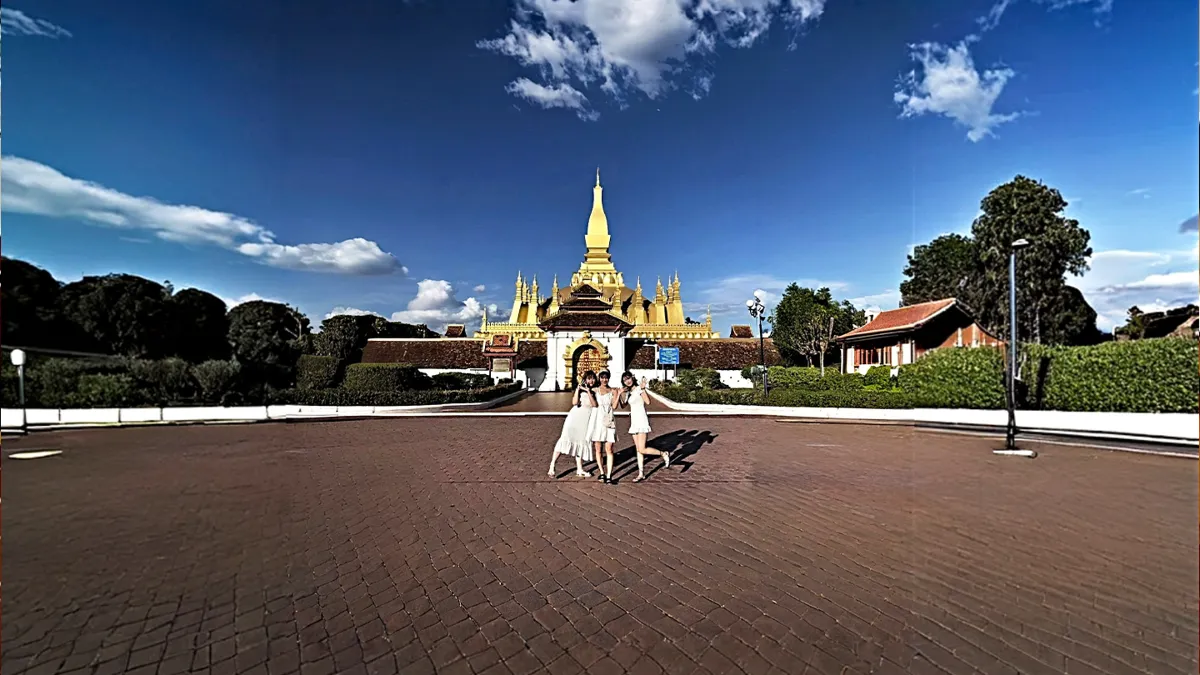
A peaceful capital on the banks of the Mekong, Vientiane can be explored in one or two days: the golden That Luang stupa, Wat Sisaket and its thousands of small statues, the Patuxai arch, the Buddha Park and the evening walk along the river.
The COPE centre, which supports victims of unexploded ordnance, helps you understand the country’s recent history. Cafés and bakeries inherited from the French period are also part of the city’s charm.
About 1 hour away by train, Vang Vieng has found its calm again: karst peaks, rice fields, blue lagoons, caves, kayaking on the Nam Song river and hot-air balloon flights at sunrise. The Tham Chang and Tham Phu Kham caves are easy to visit, and trails through the rice fields lead to small villages where you are greeted with a smile. A lovely nature stop between the capital and Luang Prabang.
We choose quiet places to stay, away from the centre, with mountain views. One day is enough for the main activities, two to enjoy the pace of village life.
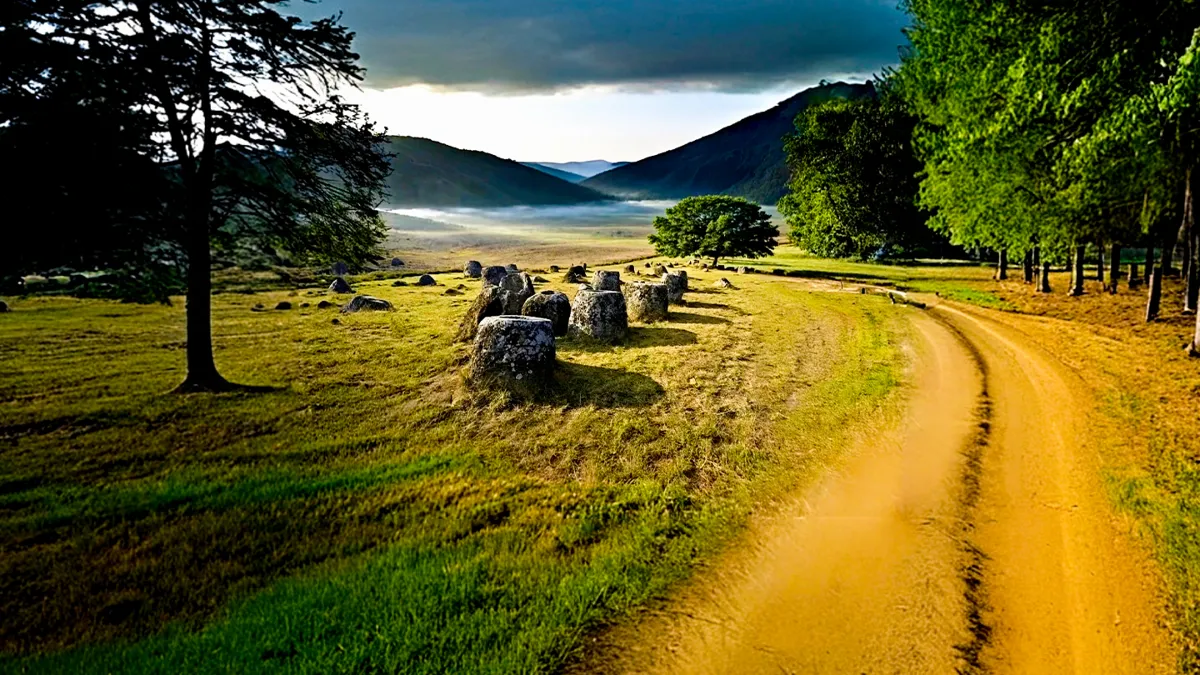
North of Luang Prabang, Nong Khiaw and Muang Ngoi offer mountain and river landscapes: treks to Khmu and Hmong villages, viewpoints and boat trips on the Nam Ou. Further east, the Plain of Jars in Xieng Khouang province intrigues visitors with hundreds of ancient stone jars scattered across the hills.
Travellers looking for authenticity continue to Luang Namtha and the Phongsaly region, known for its tea plantations and ethnic groups. These stops require more time on the road: allow at least three weeks to include them.
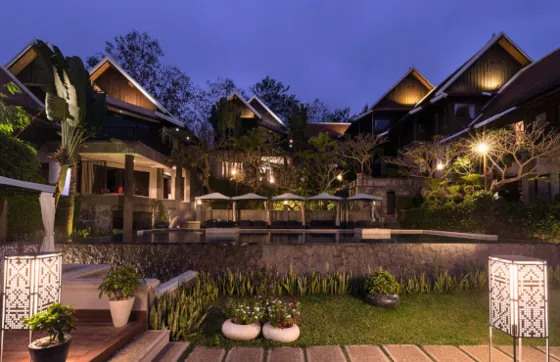
In these regions, accommodation is simpler, but a night in a homestay or eco-lodge lets you share villagers’ daily life: meals around the fire, weaving, work in the rice fields. Our local guides know the families and the trails.
The South is reached by flight from Vientiane to Pakse. The Bolaven Plateau is known for its waterfalls and coffee plantations. In Champasak, the Khmer temple of Wat Phou, a UNESCO site, overlooks the plain at the foot of the mountain.
In the far south, Si Phan Don, the 4,000 Islands, invite you to rest: cycling on Don Khone and Don Det, the Khone Phapheng falls, hammocks by the river. The South combines easily with Cambodia, notably Kratie and the Irrawaddy dolphins on the Mekong, then Siem Reap. See our article on family holidays in Laos and our Indochina tours.
On the Bolaven Plateau, about 1 hour from Pakse, small family coffee farms welcome visitors, and the Tad Fane, Tad Yuang and Tad Lo waterfalls are easy to reach. Allow three to four days for the South to combine Wat Phou, the plateau and a stay on the islands at a gentle pace.
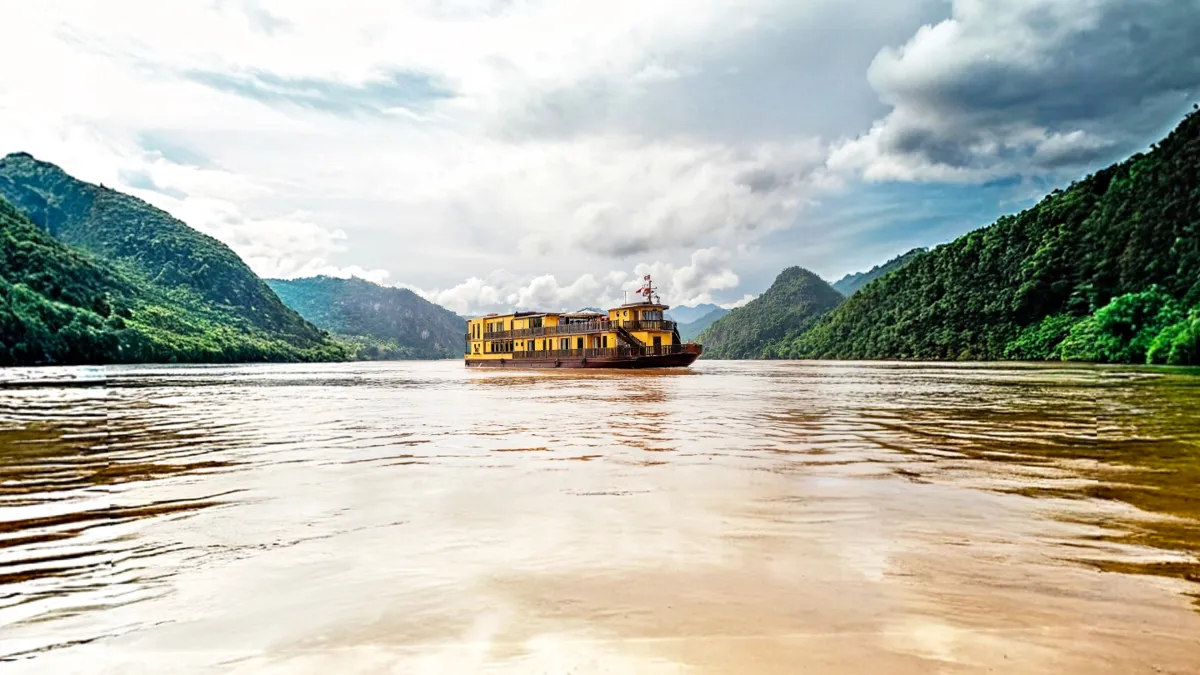
Sailing down the Mekong between the Thai border (Huay Xai) and Luang Prabang is a unique experience: two days on the water, a night in Pak Beng, stops in riverside villages. Several boats, from simple to more comfortable, make the journey. In the dry season, the landscape of sandbanks and rocks is particularly beautiful; in the rainy season, the river is higher and faster. Discover our Mekong cruises in Laos.
Our advice: The cruise fits perfectly between northern Thailand and Luang Prabang: we arrange the border crossing, the boat and the transfers. Questions? Email us at [email protected] or WhatsApp +84 971 337 708.
| Period | Climate |
|---|---|
| November – February | Dry and cool season: the most pleasant period; cold nights in the mountains. |
| March – May | Hot and dry; haze from field burning possible in the North. |
| June – October | Rainy season: green landscapes, high rivers, some roads slower. |
In 10 days in Laos, you link Vientiane, Vang Vieng, Luang Prabang and the North. In 2 weeks or 3 weeks in Laos, add the Plain of Jars and the South. More details in our article on Laos weather by region and month.
Good to know: We book your Laos – China train tickets and domestic flights in Laos at the lowest fare available at the time of booking. See our Vietnam and Laos tours and multi-country tours. Questions? Email us at [email protected] or WhatsApp +84 971 337 708.
Fresh and fragrant, Lao food is eaten with sticky rice rolled by hand:
Also try kaipen, dried river weed with sesame from Luang Prabang, coffee from the Bolaven Plateau and Beerlao, the national beer.
Meals are shared: several dishes in the middle of the table, and everyone helps themselves with sticky rice. Morning markets in Luang Prabang or Pakse are a chance to discover herbs, Mekong fish and rice crackers.
Laos is a calm country. A few precautions:
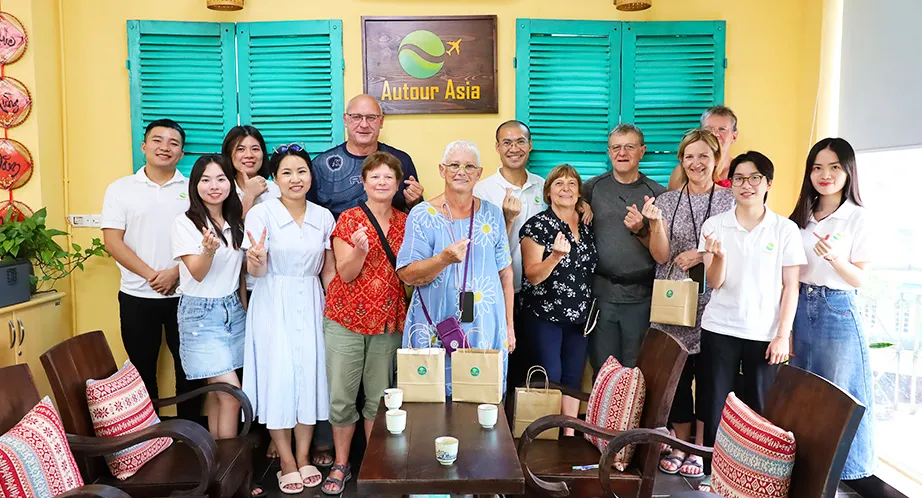
Autour Asia is a local travel company whose founder has more than 20 years of experience in Southeast Asia. Our team designs private tailor-made tours in Laos, with guide and driver, books trains and domestic flights and stays reachable throughout your stay. We adapt the pace to each traveller: short days for families, treks for walkers, homestays for the curious. Many travellers also combine Laos with Vietnam or Thailand in a single trip.
Your tailor-made trip: Send us your dates and wishes: detailed itinerary and free quote within 24 hours. Questions? Email us at [email protected] or WhatsApp +84 971 337 708.
Yes for most travellers: e-visa online or visa on arrival at airports and main border crossings. See our Laos visa guide.
About 10 days for Vientiane, Vang Vieng, Luang Prabang and the North; 2 to 3 weeks to add the South.
The train is the most practical option: about 2 hours, with a possible stop in Vang Vieng. We book the tickets.
Yes: flights Hanoi – Luang Prabang or Vientiane, Luang Prabang – Siem Reap, or overland through the South to Cambodia.
Yes: waterfalls, cycling, boats and a relaxed pace appeal to children.
The kip; dollars and baht are sometimes accepted in tourist areas. Details in our article on the Lao kip.
It depends on hotel level, length of stay and domestic flights. Our article on the cost of a trip to Laos gives benchmarks; we then price your exact tour.
Yes, in Luang Prabang at dawn, staying discreet, at a distance, without flash, and buying rice from local residents rather than street sellers.
Ready to go? Talk to our team about your project, first exchange with no commitment. Questions? Email us at [email protected] or WhatsApp +84 971 337 708.



 FR
 ITA
